

Cirencester Off-Road...
Sun 12th February 2012
Cirencester Off-Road...
Sun 12th February 2012
Ironman 70.3 Panama
Sun 12th February 2012
Damp Dash Aquathlon
Sun 12th February 2012
Damp Dash Tristars A...
Sun 12th February 2012
Wadenhoe Quadmire Du...
Sun 5th February 2012
Tewkesbury Aquathlon...
Sun 5th February 2012
Exeter Tri Dawlish A...
Sun 5th February 2012
Asics Off Road Race ...
Sat 4th February 2012
Asics Off Road Race ...
Sat 4th February 2012
|
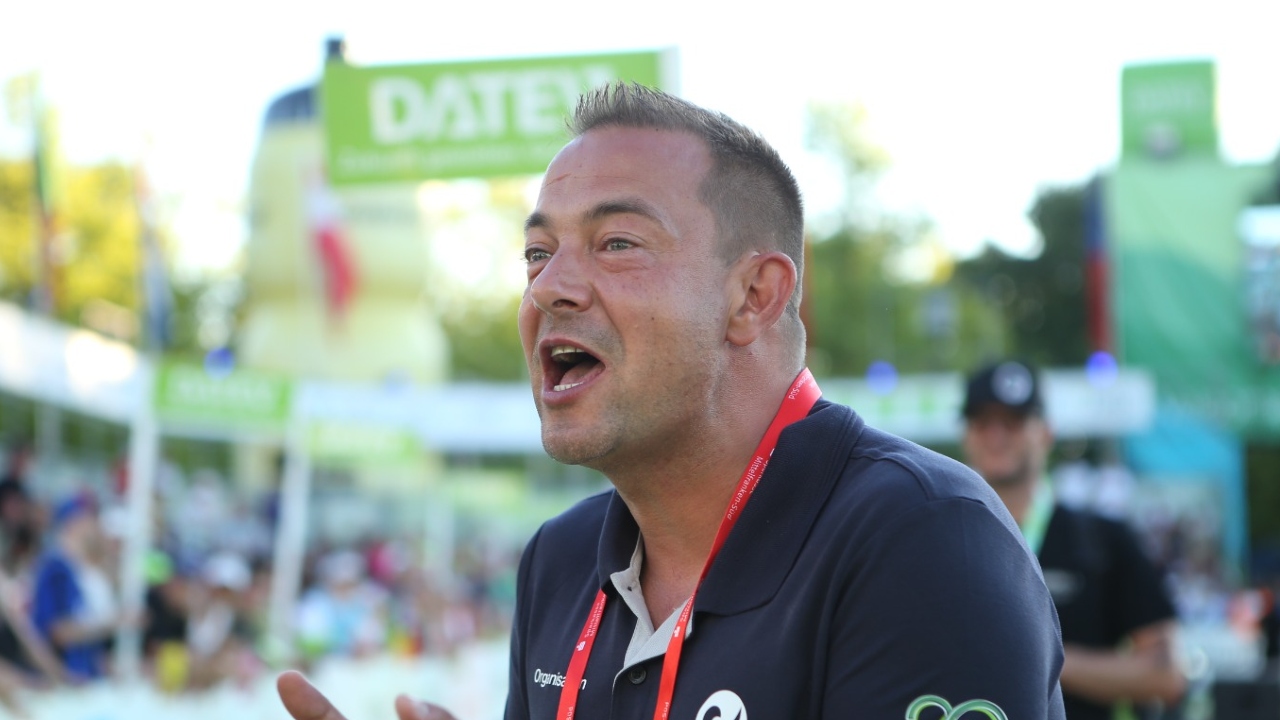
![]() Friday Interview: Don Ryder (pt 2) Posted on: Friday 14th September 2007 Bookmark This | Print This Page | Send To A Friend | Post A Comment Following his third time announcing at the Ironman UK race at Sherborne, Tri247 managed to track down veteran race announcer Don Ryder prior to his departure for the 70.3 event at Monaco. His 20 plus years involvement in the sport as athlete, announcer, volunteer and race owner; combined with an infectious enthusiasm for all things triathlon, make him a fascinating person to talk to, as Mike Clyne found out! This is part two of the interview which we started last week. Tri247 How do you describe the Ironman atmosphere to people who haven’t experienced it? DR I believe it is combination of athletic achievement and a celebration. It is almost like a combination of say, the FIFA World Cup and Mardi Gras – a magical mélange of both human achievement and the emotion and joy of celebrating life itself. I also tell them it is like a family or a secret society. When I travel to and from races I always wear some kind of race t-shirt or something with Ironman on it and almost every time someone on the plane or train or at the airport will talk to me about how they or someone they know has done an Ironman and it is an instant bond with others. You get to meet people and it feels like a family – no them and us, it’s just us. To have everyday athletes being able to be on the field of play with the best in the world and that the pros will share their race stories and lives with everyone else is so unique in sport. I think anyone who finishes an Ironman should be proud of their accomplishment. There aren’t many opportunities available to modern life to be able to test yourself and this is one. It is a mental, spiritual and physical test of oneself. Tri247 As a race announcer what is important to you? DR It’s very simple; I want to celebrate every finisher that crosses the line. If I have the information that tells me it’s a PB then I will mention it. If it isn’t a PB then they are still a finisher but to me it’s all about celebration of their trying, their effort and their success. I think anyone who is willing to train to even get to the start line is amazing and takes a lot of courage. You need gratitude not attitude to enjoy your Ironman race. It’s about having a good time, not finishing in a good time. That isn’t to mean that I don’t respect anyone who pushes themselves to excel and win or place in their AG – I admire them but as long as they enjoy it as well I think that is the ultimate achievement. An example would be someone like Charlie Stannett from Ipswich Tri Club, who gives out mints to spectators and aid station volunteers during the run course and loves his day. Tri247 From your position what have been the main changes over the last ten years in Ironman? DR The most obvious one is the volume of people who now compete – as an announcer it gets harder to know everyone or nearly everyone like I may have done when it was a few hundred people. When a race has 2,000+ athletes it is much harder. I love the fact though that there are so many people taking up the challenge and with chip timing, laptops etc, some of the announcing prep work can be automated but it is still a big task. However, I do see a lot of the same faces at races year on year and also often see a person from one race at another in a different part of the world later in the year. Also, I think the 70.3 series is opening the door to many more people who may step up from standard distance without the immense time commitment required for an Ironman. The series now has more races than the full distance events and it is offering people either the additional challenge or the step up to Ironman. Tri247 How do you prepare for the races? DR Other than the year-round preparation, I arrive at the events quite a few days ahead to get organized and ready. Sometimes, the athletes, or their supporters come and tell me things. For those that I don't know, I often get information about the athletes either from themselves or from the race organizers and this allows me to review it and try to learn as much of it as possible. At some races this is then linked to the chips that allow us to know who is coming into the finish chute and to announce them in. Also I have a reasonably good knowledge of the pro athletes and continue to update this on an ongoing basis. I will also research the AG records, birthdays, and all kinds of statistics for the event so that anyone who is going to break a record can be honoured. And of course, triathlon is a lifestyle that people choose to adopt and so there are a group of athletes who continue for years and years in the sport, so one simply gets to know them. I love hearing people's stories. Tri247 Athletes ‘only’ have to swim, bike and run with the race crew doing everything for them. How do you keep going from 4am to midnight? DR Ever since I have been doing race announcing, I have felt the massive buzz on race day that comes from the energy all around from athletes, their friends and families and the volunteers. It sounds corny to say it but I truly believe that I am a mirror, which just reflects that energy back. I may eat or drink here or there but my sustenance is the pure enjoyment of the day. Of course the next morning I am exhausted and wonder how I will recover but then get to the award ceremony and the buzz returns. I must tell you that there are times on the microphone when I get choked up and moved by people finishing whom I know have amazing stories – then I have to hand over to my colleagues for a moment. Tri247 Your enthusiasm for the sport is obvious to all, but what specific stories or events stand out for you? DR Among the many I have ever seen there are probably two that stand out. The first was a guy called Patrick Rummerfeld who in the mid 90s finished in Kona on crutches. At 16 years old, when driving home through a canyon in California, his convertible car went off the road, turning over pinning him in the car. He wasn’t discovered for three days and later in the hospital was told by the doctors that he would be a paraplegic and never walk again. Whilst in the hospital he saw the Ironman on TV and told his parents “one day I will do that”. No matter what his parents and doctors told him he stuck to his guns and ten years later achieved his aim. Later he was setting motorbike speed records on Bonneville Salt Flats. That was one of the occasions where I had to hand over my announcing as I was overcome with tears. After the race I was able to meet him and told him what a hero I considered him to be. The other one in 1997 that still stands out was Bob Jordan, an FBI agent from Washington DC whose four year-old daughter Emily was terminally ill with leukaemia. Emily wrote to the Ironman organizers to ask them to give him a slot so she could see him do an Ironman before she died. Unfortunately she didn’t get to see him race but he did wearing a T-shirt saying ‘Racing For Emily’. So those were the two that stand out for me but then again there is Bob McKeague - at 80 the oldest person ever to finish Hawaii, Sister Madonna Buder, Rick and Dick Hoyt, John Maclean, Marc Herremans, Carlos Moleda, Jim Mclaren – the very first amputee to finish Hawaii and do so as an age grouper with no special category back in the 80s, Sarah Reinertsen and all the physically challenged athletes who really prove the Ironman motto that ‘Anything is possible’ and the list goes on to virtually every amazing participant, who sacrificed in order to achieve their dreams. If there are a thousand athletes in an event, every one of them has an amazing story of their journey to the start line and ultimately the finish line. Tri247 20 years on, are you tempted to give the Ironman another go? DR I had a bad car accident 12 years ago which I was very fortunate to survive and which damaged my back but I’ve been having all sorts of treatment which they tell me will allow me to give it another go at some point. Swim and run would be fine but the aero position on the bike is the stumbling block right now. When I participate (not race) again it will be in memory of my brother and best friend growing up, David John Ryder, who was killed in a motorbike accident at the age of 32 leaving behind a wife and a young family. He was just two years older than me so we did everything together from an early age. That would make it very special and meaningful for me and will help to keep me motivated and focused. Tri247 When working a race have there ever been bad moments? DR Luckily nothing serious but the hardest times are seeing people miss the various cut-offs, especially the finish. Also when you see someone whose equipment has let them down, usually on the bike, because that just seems so tough to deal with – sometimes it is simply beyond their control such as a complete failure of a mechanical part. The events I work at are so well organized there are rarely routine problems but every once in a while there may be power failure or something like that. In those cases I just grab a megaphone and read the names from a written start list so I do what I can! After all, Ironman is all about overcoming challenges - not giving in to them. Tri247 You work a lot of races and have said that every one has its unique aspects. What struck you about Sherborne that you tell others about?
Tri247 You’ve seen the top end of this sport – what are your predictions for the podium at Hawaii this year and who would be your wildcard choices? DR For the men I think Macca (Chris McCormack) would be my prediction for the win. After finishing just over a minute behind Normann (Stadler) in 2006 I think this will have given him the extra little motivation to win. As for the other spots I would put Normann and Faris (Al-Sultan) both past champions. My wildcard for the men would be Marino Vanhoenecker who won Austria the last two years and this year set a new course record. He’s in great shape this year and was in the top 10 in Kona last year so if he puts his race together well he could get in. As for the women, I would pick Michellie Jones again as the favourite. She is an amazing athlete who can do it all, Olympic Silver medallist, world champion, etc. To round out the podium I think it will be Natascha (Badmann) and Lisa Bentley. A wildcard for the women? We aren’t sure what Samantha McGlone is capable of at this distance as it will be her first ever Ironman. However, she is has had some amazing debuts and results. She won at her first ever 70.3 distance race, then broke a long-standing course record at Wildflower, won the Clearwater 70.3 world champs in 2006 and this year has already beaten Michellie at the Honu 70.3. I think she is a strong runner in the mould of Lori Bowden, Kate Allen and Heather Fuhr. Tri247 What about your predictions for the future – who are the ones to watch? DR Samantha McGlone and Craig Alexander. I think Craig is a strong and versatile athlete who has long-term potential. He’s an athlete who either wins or is a threat at any distance he races. Tri247 The number of full distance and 70.3 races has risen exponentially over the last few years but what race would you love to announce at? DR I’ve always wanted to be a part of Ironman Germany in Frankfurt. I've heard about it and seen it on the Ironman website for years and I watched it this year and I think it is really well done and they have amazingly passionate crowds plus the finish area is just stunning. On the 70.3 series I would love to go to the new 70.3 South Africa event in Buffalo City. I really enjoy working at Ironman South Africa and think it would have the same atmosphere and it is such a beautiful scenic country with warm friendly people. As a bonus it would be nice to get away from the January rains in Vancouver! Tri247 What else would you like to see growing within the sport? DR Athletes putting back in to the sport and the events. This is our sport and it is a community and we need to get involved to help sustain and grow it for the benefit of both current and future generations of triathletes. I would always recommend athletes to volunteer in some way at least once a year. It will give you a totally different perspective to racing and you will gain an appreciation of how much effort goes into the event. Not only that but it’s fun and you will be able to encourage the athletes with inside knowledge. I really liked Ben Fertic (the President of WTC) saying that he would love to have all athletes validate their slot for Kona by having volunteered at least once that year at a children’s race in order to help inspire them to get into sport or an active lifestyle. I would also encourage all tri clubs to aim to go to races to volunteer or cheer people on, especially your own two official Ironman/70.3 events here in the UK. Just remember what it felt like when you raced somewhere else in the world and the spectators and volunteers support and encouragement and cheering made it all so special for you or a loved one. Why not return the favour and do give other triathletes the same unbelievable experience? As Kahlil Gibran said in his book The Prophet, "You give not when you give of your possessions - it is when you give of yourself that you truly give." Tri247 Finally if you had a couple of minutes chat with someone who was to be doing their first Ironman, what advice would you give? DR Firstly I would suggest they follow a structured training plan and do their research – the internet is an amazing resource as are the various triathlon magazines. No sense injuring yourself or having a bad experience through lack of proper preparation. Better to stay healthy and happy and embrace the triathlon lifestyle on a long-term basis. Clubs and fellow club members are a marvellous source of information and a fantastic source of support and encouragement. Next, set yourself a goal and then immediately almost ignore it. What I mean by that is to have realistic and appropriate expectations. The first time the most important thing is to finish, and learn from it. The real goal should be to enjoy your race, interact with other athletes, spectators and volunteers, and look at the scenery and so on. It is such a special occasion that you cannot afford to miss any of it as you become part of the Ironman family. Finally, after the race, remember that nobody does an Ironman on their own, so recognise and support the friends and family who also sacrificed and helped get you there to the start line. ![]()
![]() 0 comments | Post a comment |