Mon 21st May 2012
EventsResultsTrainingSwimBikeRunProductsNutrition
© Morguefile
Sleeping your way to the top
Posted by: The Altitude Centre
Posted on: Thursday 25th October 2007


Bookmark This  |  Print This Page  |  Send To A Friend

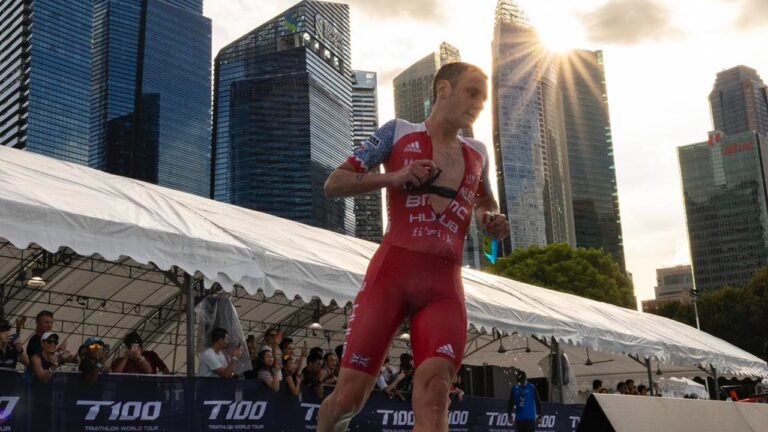
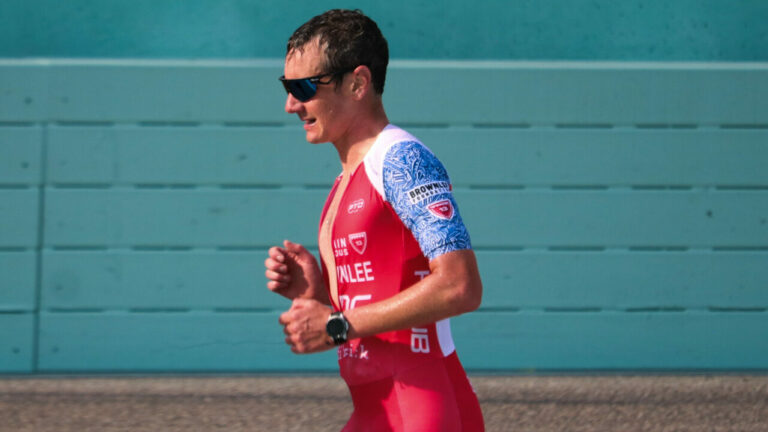
Alastair Brownlee has had a great year. Coming back from injury, Alastair secured some impressive results; Silver medals at both the World Junior Duathlon and Triathlon Championships; an impressive European Championship Gold; and an awesome Silver medal at the World Cup in Rhodes amongst a stacked senior field. Not at all bad for an athlete who is still just 19 years old.

Like all good athletes, Alistair is sleeping his way to the top. Each night, when other athletes hit the sack, Alistair is committed to getting in that one extra training session. Each night he climbs into a hypoxic tent provided by The Altitude Centre and sleeps in rarefied air.

Top athletes know the commitment needed to be one step ahead of the rest. Remembering the words of Daley Thompson, who always said that he exercised twice on Christmas Day, just in case his main rival was training only once, Alastair is able to train whilst his rivals simply sleep. That’s why six of the last seven Ironman World Champions use simulated altitude training, it’s not possible to sleep if you know your rivals are training.

Interestingly, Chrissie Wellington, who recently won the Ford Ironman World Championship in Hawaii, spent five years living in Nepal at an altitude around 5,000 meters and now uses two training camps; one in Phuket where she is able to train in heat and humidity, and the other in Leysin, Switzerland at an altitude of 1,250 to 2,200 meters.

The 'Sleep High' technique is used by all top distance athletes and is the most common form of altitude training, often preferred by the American athletes. Sleeping at simulated altitude can actually be better than sleeping in the mountains themselves. To sleep at simulated altitude you will need:

  • A hypoxic air generator
  • A space to contain the rarefied air
  • A carefully controlled altitude training programme

Portable hypoxic generators are available to rent or buy and they can produce simulated altitude environments up to 12,500ft/3,810m. The rarefied air then needs to be contained around the athlete for a duration of approximately eight hours a night for three weeks or more. A range of tents and cubicles are available for this purpose, from portable solutions to more permanent structures. Some athletes even choose to have their whole bedrooms converted for seamless comfort. The Altitude Centre has recently installed a room system in a multi-million pound penthouse apartment in London, making it arguably the highest simulated altitude apartment in London and possibly the world. The installation came with a state of the art climate and altitude control, where the user can simply dials in their desired sleeping altitude, “Hmm, I think I’ll sleep at Le Plaz tonight, darling”.

As well as having the right kit, it is important to set the right training programme to ensure your get a positive effect from this training stimulus. The Altitude Centre work with athletes to pinpoint their main goals for the season, then design altitudes training strategies around their goals, ensuring they peak for the key event.

Sleep is the key

Sleeping is hugely important for recovery, it is the time when a lot of the body's repair work is done. Top athletes are aware of the fine balance between training and recovery, if you over do it you risk falling ill and all the good work done in training goes out the window. Training in your sleep will improve your physiology and your performance, but it is important to maintain the balance between training and recovery, even in your sleep, so the key with altitude training is to start off gradually and build into it. Too many athletes go too high, too quickly.

After a couple of nights of sleeping in the hypoxic tent at a moderate altitude your body starts to adjust to the low oxygen through its own natural adaptive process, it’s at this stage when you can then increase the altitude slightly until you adapt again to the increased stimulus. Just like climbing a mountain, you should go a little higher each day and allow your body time to adjust. After a period of sleeping in the tent people often remark that their sleep quality has improved. The equipment used by The Altitude Centre pumps in over 100 litres of air per minute, this ensures the environment is fresh and clean and totally safe. The tent is not sealed as it is important to flush the hypoxic air through, rather than trapping it inside, so there’s no worry Alastair would get shrink wrapped if the machine accidentally got switched off!

Athletes normally stop using their tents a week before key competition, but the more they are used the more the body adapts to be able to cope with the stimulus so it is possible to use the tent all the way up to competition. Athletes also use hypoxic tents whilst injured to maintain fitness and to speed up the body’s own genetic potential to recover, and this has been covered in an earlier article.

The benefits are well documented for the 'sleep high' modality. This mild form of gradual acclimatisation seems to work mainly on a blood level to boost the oxygen carrying red blood cells. The benefits include:

  • An increase in red blood cell mass which means more red blood cells to transport oxygen to the muscle cells.
  • An increase in total blood volume, which moves oxygen more efficiently through the blood stream. Greater blood volume increases the stroke volume of the heart improving the oxygen carrying capacity of the blood.
  • An increase in heamatocrit, the ratio of red blood cells to total blood serum resulting in a greater percentage of blood cells carrying oxygen.

Levine & Stray-Gundersen are the classic reporters of the “Living High-training Low” technique and their research published in 1997 showed the following improvements in elite athletes:

  • 5% VO2 improvement
  • 9% red cell mass volume improvement
  • 13.4 second time trial improvement over 5,000m

The benefits of sleeping at altitude can be found from as little as 1,200 meters. The altitude ‘dose’ required to stimulate the bodies own genetic potential to adapt to cope with the altered environment varies from athlete to athlete. It is not how high to sleep for maximum effect it’s more about finding the right height for you. That’s why simulated altitude training can be better than heading to the mountain. The user can control the precise altitude that gives them maximum effect without the risk of over doing it. For example if you have had a particularly hard training day you might decide to sleep at a lower simulated altitude as the extra work your body is having to do in the repair process of the days training will effect the amount of oxygen your body needs to process during your sleep. At real altitude the air is thinner, because the air pressure is lower, that’s why sprint times are faster at altitude - the body moves through the thin air more easily. The same happens in the lungs, even though there is less oxygen in the air, the air passes through the lungs easier, this can lead to a de-training effect upon the lung, even with increased ventilation due to the reduced oxygen the lung membrane doesn’t have to work as hard. Simulated altitude air is the same density as ambient air so there is no de training effect upon the lungs.

Simulated altitude training can be done from the comfort of your own home, it enables athletes who are not able to live permanently at altitude the ability to compete side by side. like all forms of altitude training it can only enhance your own genetic potential and as WADA (World Anti Doping Agency) concluded it is a legal means of improving sports performance and will remain off the List of Prohibited Substances and Methods in Sport. Sleep well!

Levine, B.D., & Stray-Gundersen, J. (1997). Living high-training low: effect of moderate-altitude acclimatization with low-altitude training on performance. Journal of Applied Physiology, 83, 102-112.


The Altitude Centre offer consultations on all elements of hypoxic training. They also have simulated altitude systems to rent or buy. For further information contact Richard Pullan on 0870 950 4479 or email richard@altitudecentre.com or visit www.altitudecentre.com


Related Articles
©
The organisers of the GE Blenheim Triathlon...
Posted on: Tue, Apr 24, 2012 at 12:32
While the UK triathlon season may be a few months off yet, the past weekend was for...
Posted on: Sun, Jan 8, 2012 at 21:11
Perhaps a sign of things to come in 2012 - we can only hope - the Brownlee...
Posted on: Sun, Jan 1, 2012 at 15:06
The World Champion Brownlee brothers managed to burn off their Christmas turkey once...
Posted on: Tue, Dec 27, 2011 at 17:36
 
Speedo Triathelite App - Find Out More

Official Results Service - British Triathlon