



Jelle Geens questioned the chaotic opening stages of the T100 French Riviera bike after claiming that athletes who followed the rules risked being shuffled towards the back of the group.
The Belgian ultimately produced a tremendous late surge on the run to overhaul Kyle Smith and finish second behind Hayden Wilde, securing another podium just six days after relinquishing his IRONMAN 70.3 world title to the New Zealander.
But speaking in his finish-line interview on the official broadcast, Geens admitted he had initially struggled to negotiate a tightly packed race in which numerous red RaceRanger warning lights were visible.
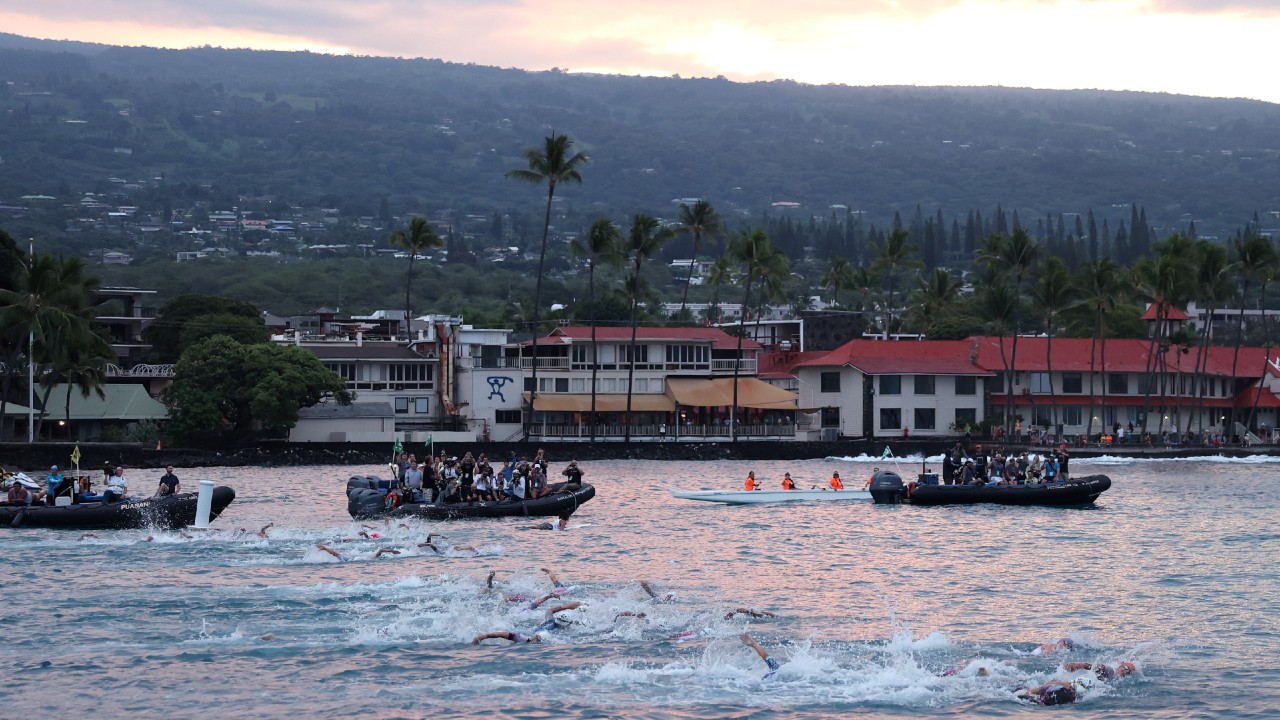
“The swim went well,” he explained. “I had a good start and I was quite near the front.
“It got a bit messy – a lot of bodies in a tight spot – and that pulled me back a bit. But I was quite happy with the swim and tried to save energy there.”
‘Very, very messy’
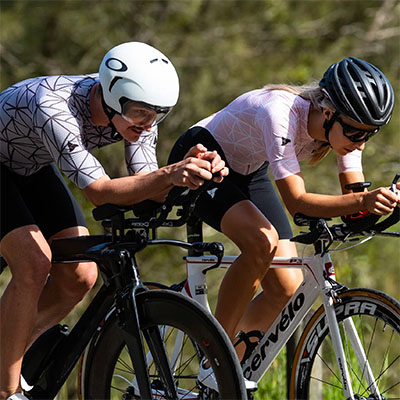
Just 10 seconds separated the first 14 athletes out of the water, ensuring there was considerable congestion when they began the bike.
Numerous RaceRanger lights appeared to flash red, but no penalties were issued during those early stages.
“The start of the bike was also very, very messy,” Geens said.
“There were lots of red lights and it was hard. If you followed the rules, all of a sudden you were just all the way at the back, and that’s what I had.
“Then, at one point, I just decided to go to the front and try to stick there.”
Asked whether he had needed to reassess his strategy, Geens said there had been little opportunity to do anything other than fight for position while attempting to avoid a penalty.
“There wasn’t much time to think about strategy, to be honest,” he explained.
“The first lap was just trying to get position and then trying not to get a penalty.”
Race begins to open up
The complexion of the bike changed when Rico Bogen and Smith moved off the front, ending the congestion which had characterised the opening lap.
“When Rico went, everything got a bit cleaner on that bike,” Geens said. “Then it was just trying to push.
“The first two laps were really, really hard and then the pace settled as well.”
Wilde launched a powerful move from the chasing group during the second lap and Geens recognised that he could not afford to let the newly crowned 70.3 world champion escape.
“I tried to close it myself first and then Hayden came across, and that was a really tough lap,” he added.
“Once we were there, I think everyone felt that fast lap and the pace settled a bit.
“Then it was basically just riding to the 80km and preparing for the run.”
Geens digs deep
Geens initially moved to the front of the race on the opening run lap, but Wilde and Smith pulled clear during lap four of six.
While Wilde went on to complete a commanding victory, Geens began to close markedly on Smith on the final lap.
“With one lap to go, I was like: ‘Okay, I’m going to try one more time,’” Geens explained.
“Heading into the last lap, I started to accelerate and I could see that Kyle became a bit bigger and bigger.
“I also heard time gaps. I think it was 30 and then 20, and then I timed it myself at the U-turn and it was 15.
“My stomach was getting quite upset there, running that quickly. But I just knew I had to catch him and then wait for the sprint, and that was my tactic.”
Geens executed that plan perfectly, passing Smith during the closing stages and finishing 20 seconds behind Wilde.
And he later posted on his social media channels the effort that had taken – with his heart rate 185 or higher for a 10-minute spell, peaking at 193, saying: “What it takes to hunt down Kyle Smith in the last lap of a T100 race.”
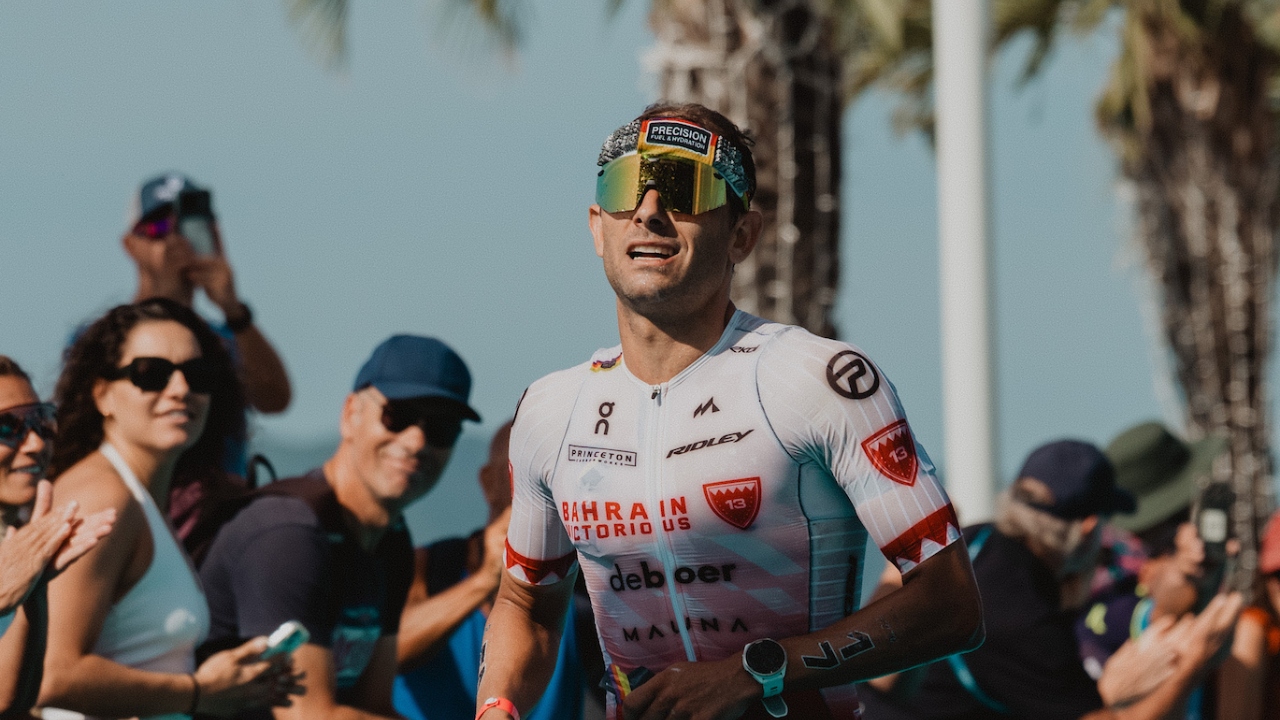
The result continued Geens’s outstanding record over the 100km format, although he acknowledged that Wilde has too often been the athlete standing one step higher on the podium.
“I guess the distance suits me well,” he said. “I’ve been second quite a few times and very often behind Hayden.”