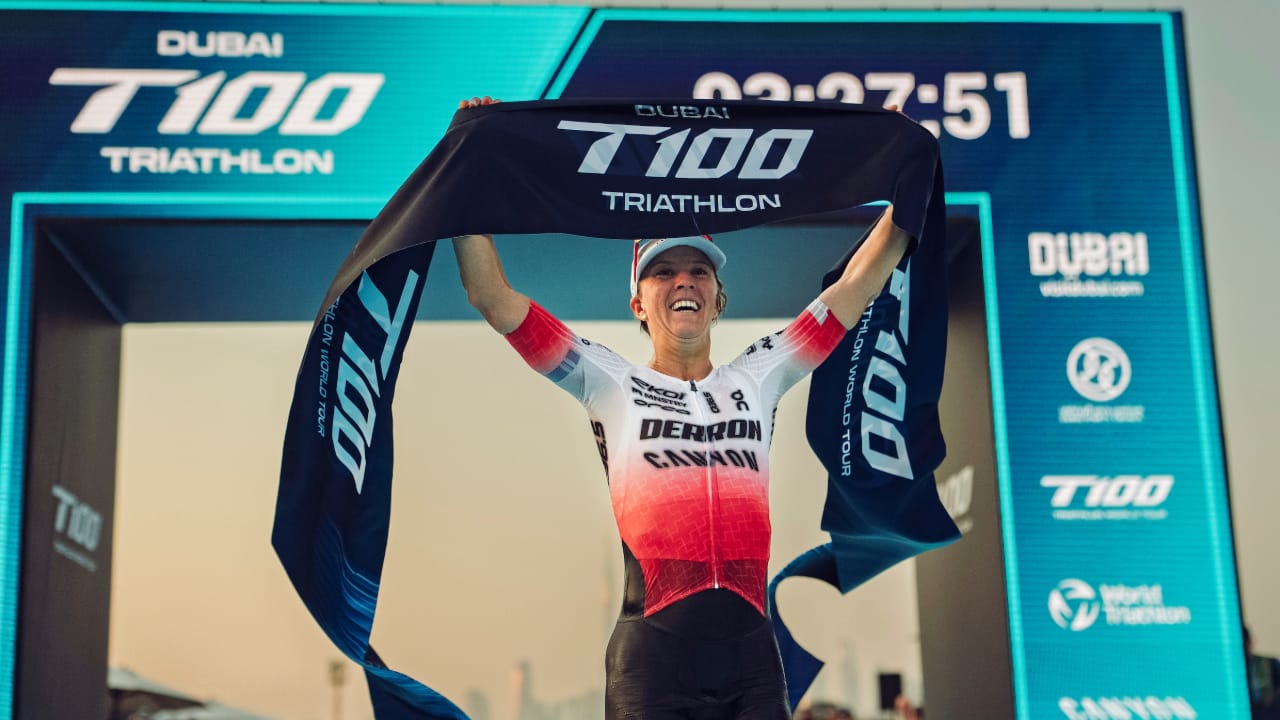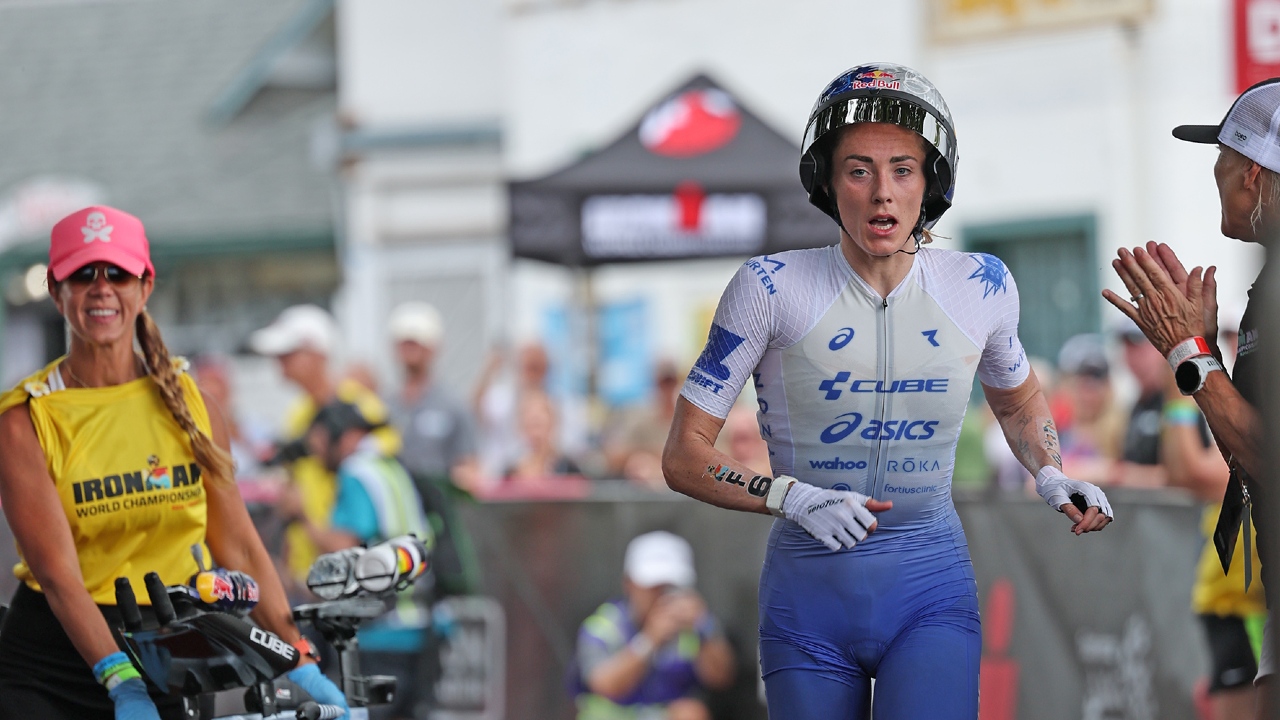




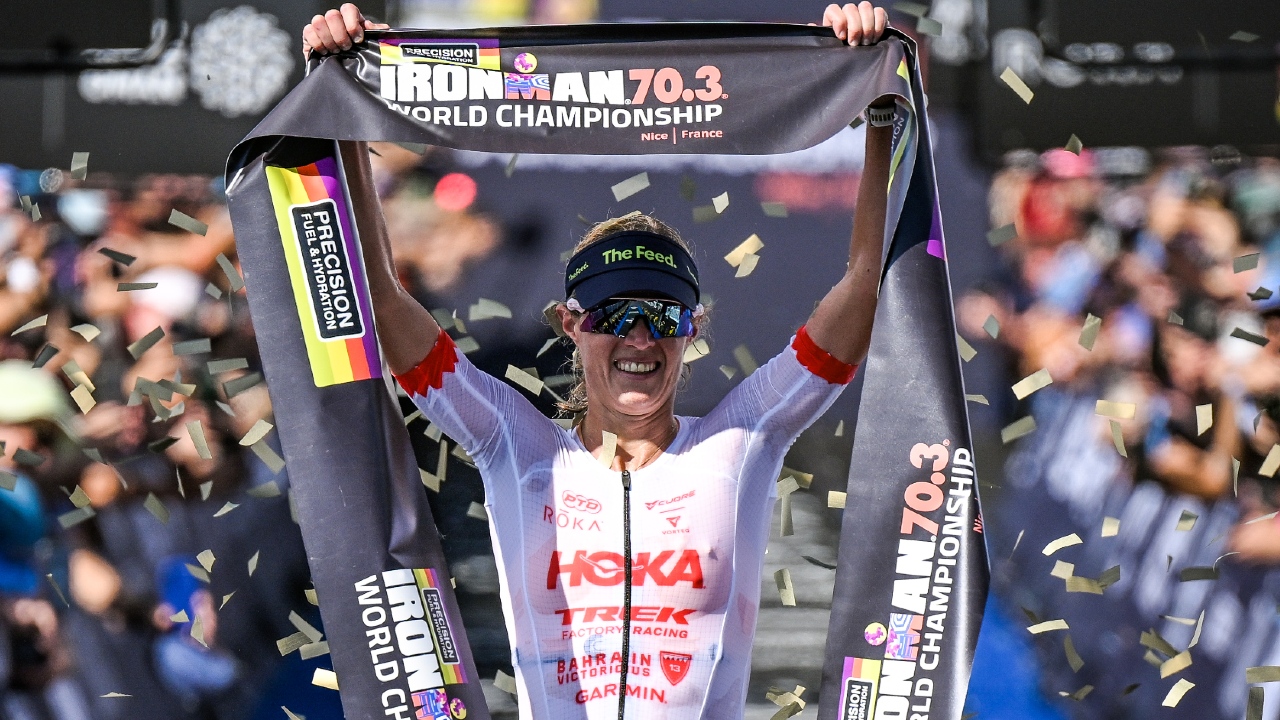
Taylor Knibb produced one of the most dominant performances in IRONMAN 70.3 World Championship history as the American superstar destroyed a world-class field to regain her title in Nice.
The outcome was effectively settled long before the finish on the Promenade des Anglais after Knibb emerged with the leaders from the swim before delivering a devastating bike display, building such an enormous advantage that not even Switzerland’s Olympic silver medallist Julie Derron’s charge into second place on the run could put the result in meaningful doubt.
Knibb stopped the clock in 4:19:24 for her fourth IRONMAN 70.3 World Championship title, smashing Daniela Ryf’s previous Nice course record of 4:23:04 by three minutes and 40 seconds.
Behind her, Derron produced an extraordinary 1:13:04 run split to charge through the field and take second in 4:23:30.
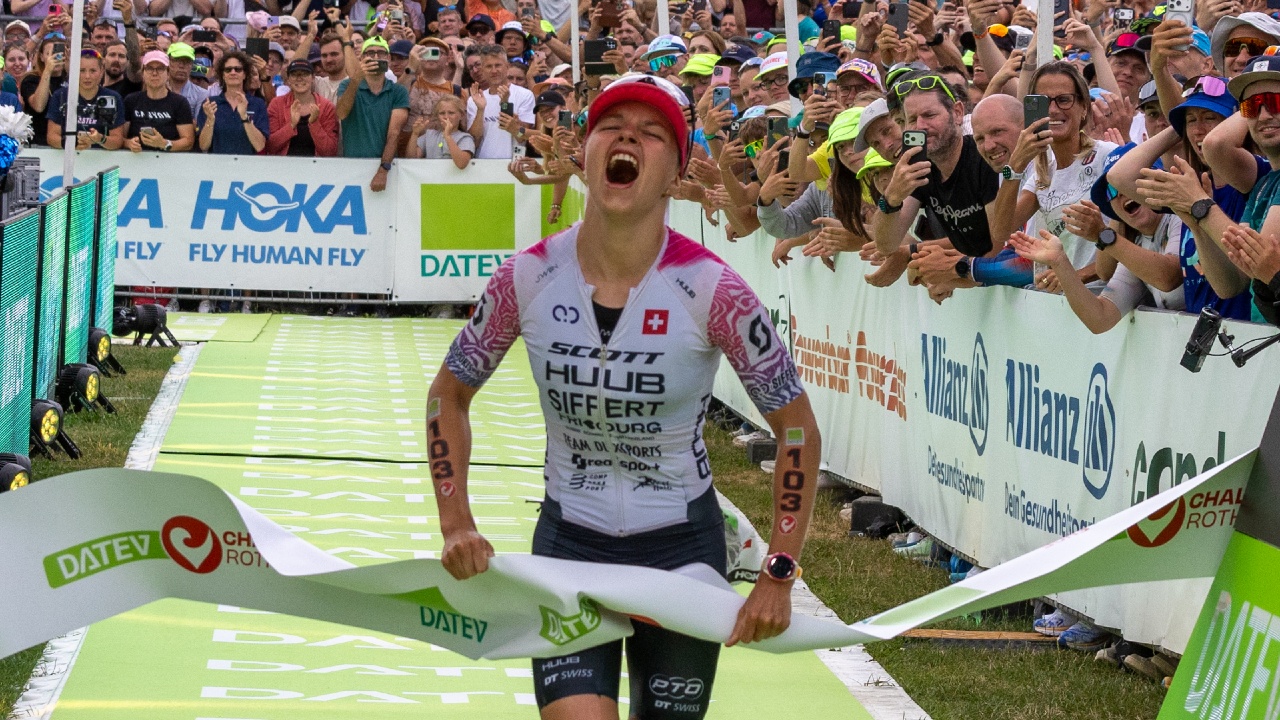
Challenge Roth champion Alanis Siffert (SUI) rounded out the podium in 4:25:10 as she just held off reigning IRONMAN World Champion Solveig Løvseth (NOR).
Swim – favourites split as Evans helps set the pace
As expected, the race began with a non-wetsuit swim after the water temperature was measured at 25°C.
The air temperature stood at 19°C shortly before the start and, although there was barely a cloud in the sky, the Mediterranean offered a little chop and swell. Fireworks signalled the start just five minutes before sunrise, with almost all the leading contenders choosing the left-hand side of the beach.
The field had already begun to string out by the opening buoy, only 300 metres into the 1.9km swim. Britain’s Sophie Evans (GBR) – who had “won” the practice swim two days earlier – and Jenna Campbell (USA) led the way, with short-course convert Kirsten Kasper (USA) also prominent.
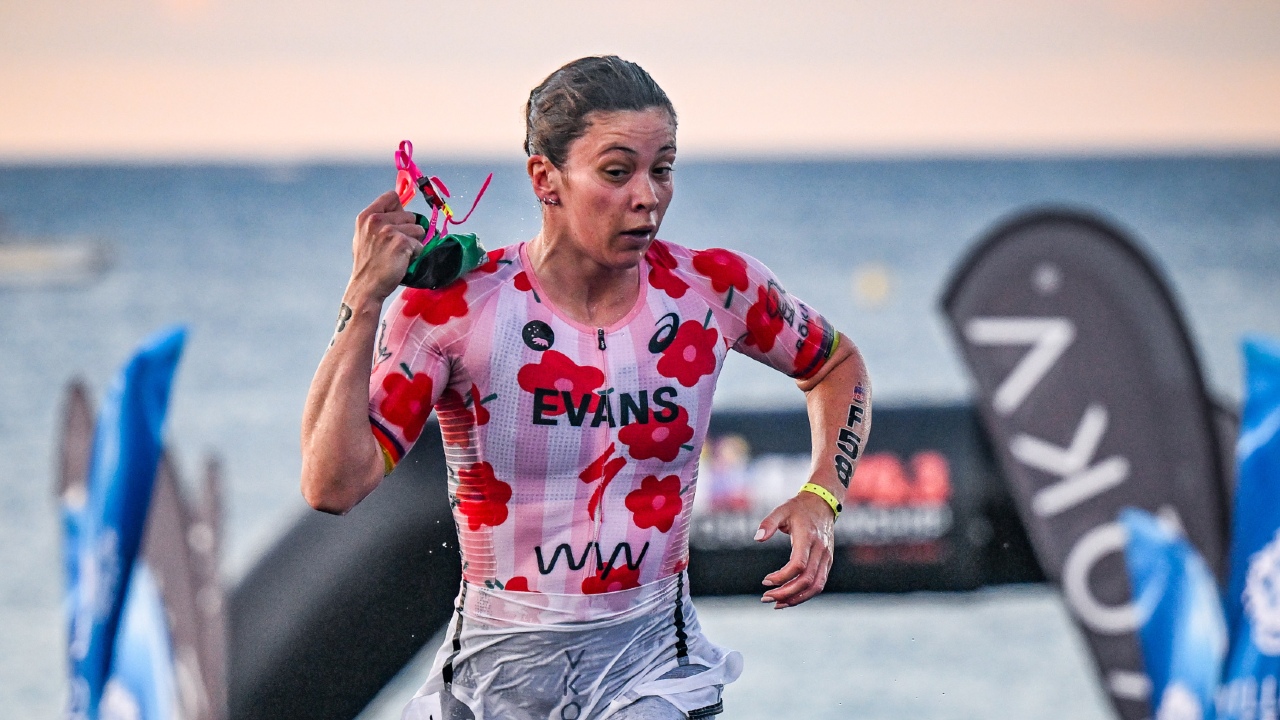
Of the principal favourites, Knibb and Siffert were best positioned during the opening stages. Campbell subsequently moved to the front from Kasper, with Evans settling into third.
Pâmella Oliveira (BRA) and Lena Meißner (GER) also progressed into that leading group, while gaps began to appear beyond halfway as the front swimmers continued to exchange turns and drive the pace.
By the 1,400-metre mark, with only 500 metres remaining, the leaders had succeeded in stretching the field and creating potentially significant separation between some of the biggest names.
The pattern continued and out of the water first was Evans in 25:49, just ahead of Meißner, Campbell, Kasper and Knibb. Next in sixth came Imogen Simmonds (+10s) and she was closely by followed Siffert, Marta Sanchez (SPA), Oliveira, Bianca Bogen (GER), Audrey Merle (FRA), Diana Marcela Castillo (COL), Caroline Pohle (GER) and Lotte Wilms (NED) – with just 26 seconds covering the first 14.
At just over 90 seconds adrfift in 15th was Derron and right alongside here were Marjolaine Pierré (FRA), Cathia Schär (SUI), Ellie Salthouse (AUS), Paula Findlay (CAN) and Kat Matthews (GBR) who completed the top 20 – and could potentially form a super-strong bike group.
Løvseth was within touching distance of them but more isolated was Laura Philipp (GER), with over three minutes to make up.
Crucially, Knibb had no such deficit. She had negotiated the swim alongside the leaders and was perfectly positioned to begin imposing herself immediately.
Bike – Knibb masterclass on Col de Vence
Out onto the eagerly anticipated bike course, it was Simmonds who initially led the way. Just 34 seconds separated the leading 12, with Castillo and Wilms having lost contact with the front 14 from the swim.
Moving in the opposite direction – and on roads she knows so well – was Pierré, who climbed to 13th place and reduced her deficit to 1:18.
As the race began to settle, it was no surprise to see two of the strongest cyclists in the field, Siffert and Knibb, move to the front and put the hammer down.
Challenge Roth winner Siffert was one of the few leading contenders without one eye on the IRONMAN World Championship in Kona a month later. But despite committing fully to the chase, she was still no match for Knibb, who will compete at the UCI World Time Trial Championships in Canada next week.
Knibb was producing a masterclass. She first moved clear and then put more than a minute into Siffert inside the opening 20km, with her advantage continuing to balloon before the long ascent of the Col de Vence began after 25km.
The gap stood at 2:11 at that point, with Siffert joined by Simmonds, Meißner and Merle. Pierré and Bogen followed in sixth and seventh, another 30 seconds behind.
Among the other pre-race favourites, Matthews occupied 12th place at 4:41, closely followed by Findlay, Derron and Løvseth. Philipp was 20th, 6:17 behind Knibb.
The climb only stretched the field further as Knibb set a new record of 29:48 for the ascent. Siffert was the second athlete to reach the summit but now trailed by just over six minutes, with Merle alongside her and Simmonds fourth at 6:49.
To put Knibb’s performance into context, she had gained more than four minutes on her principal rivals during the climb alone.
Pierré was more than eight minutes behind at the summit, while Derron and Matthews were just over nine minutes down and had now been joined by Philipp. Even at that relatively early stage, Knibb’s advantage already appeared insurmountable barring a mishap.
Any suggestion that she might surrender significant time on the technical descent was quickly dispelled. After 60km, Knibb remained 6:12 ahead of Siffert and 6:30 clear of Simmonds.
There was movement behind her, however, as Pierré worked her way up to fourth and closed to within 6:52.
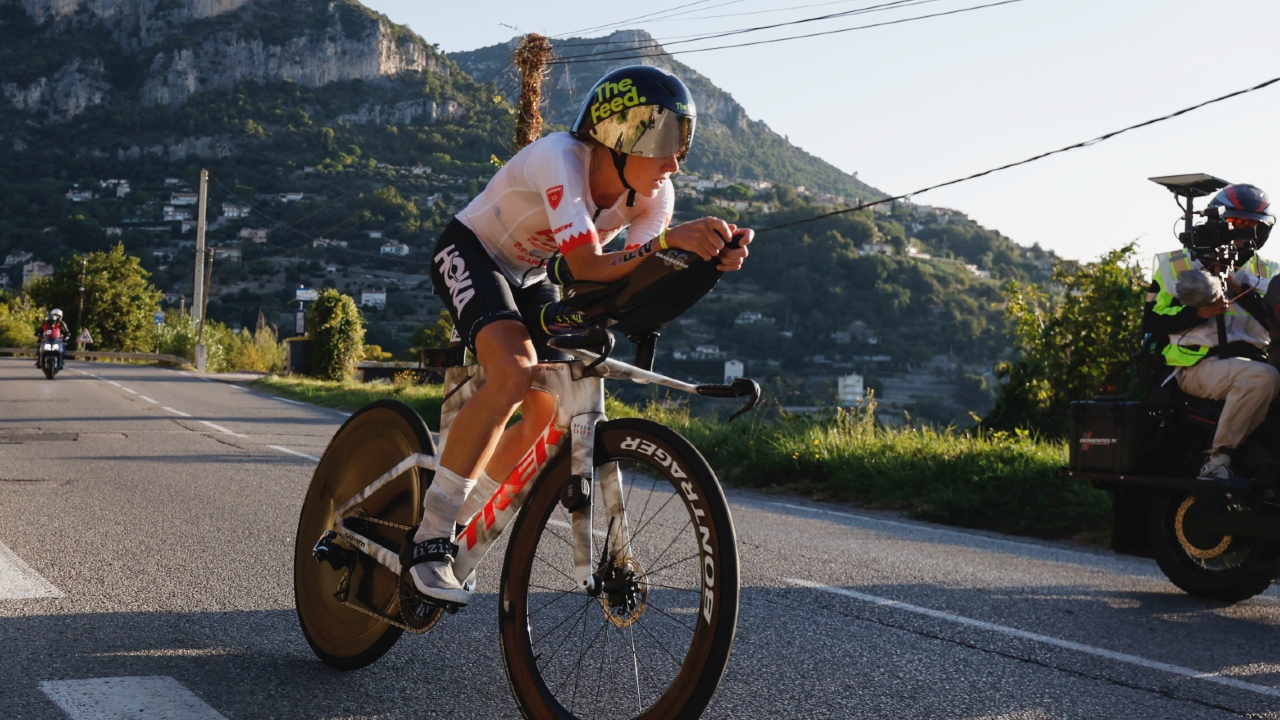
The gaps finally began to contract during the closing section towards T2. Pierré moved into second and reached the dismount line “only” 4:24 behind Knibb, with Simmonds at 5:23 and Siffert at 5:34.
However, in terms of the fastest runners, the likes of Løvseth (in fifth at +7:56), Matthews (+7:59), Philipp (+8:36) and Derron (+8:41) had much more ground to make up.
Knibb therefore started the half marathon firmly in pole position, although there was a brief reminder that nothing was guaranteed when she handed her bike to a volunteer in T2 and then almost collided with it.
Run – Derron flies but Knibb cannot be caught
Having already put her socks on in T1, Knibb was always likely to produce one of the quicker second transitions. That proved to be the case despite her brief scare while handing over the bike.
Behind her, Derron was the big mover. Starting the half marathon in ninth place after she made up two places in T2, she was soon up into sixth after flying past Matthews and then quickly overhauled Løvseth for fifth.
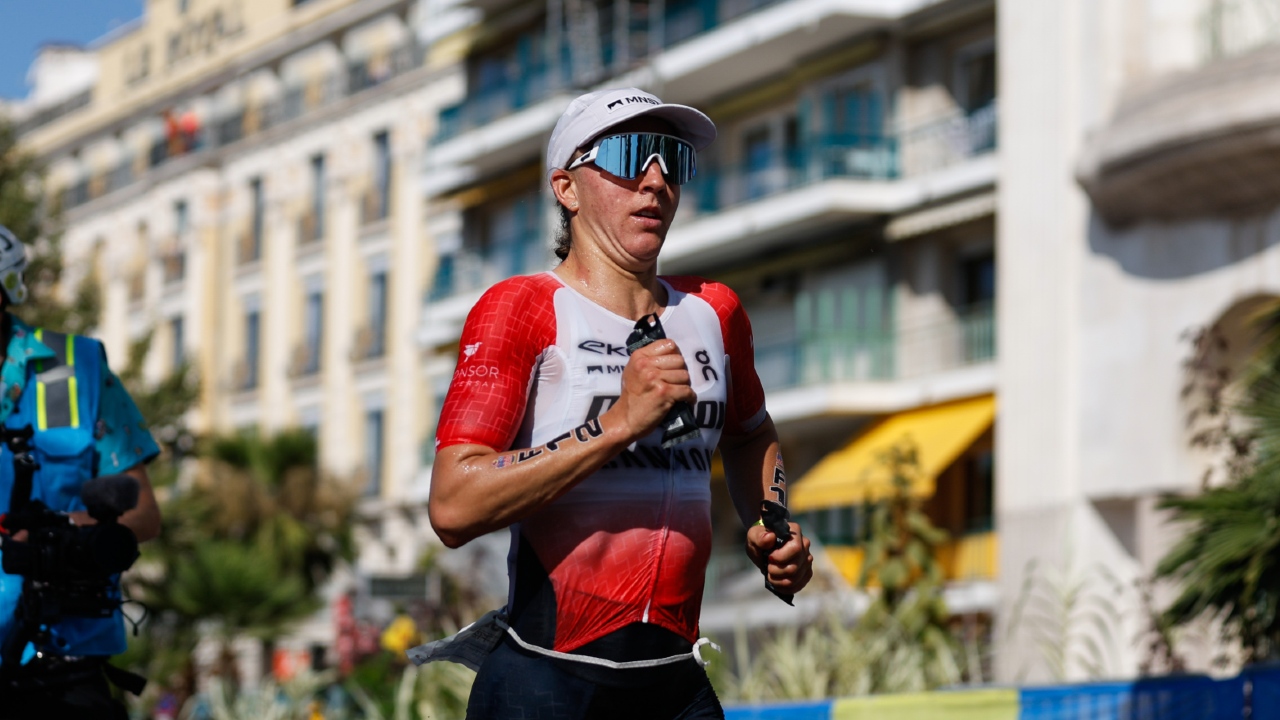
Simmonds was next in her sights and Derron passed her at the end of the first of two laps. All the while, however, Knibb looked comfortable and was setting impressive run splits herself.
At the halfway point, Knibb remained 6:24 ahead of Siffert, with Pierré another 10 seconds behind. Derron soon moved into third and then passed Siffert for second after 12.5km, but the leader continued to hold firm.
With five kilometres remaining, Derron appeared to be running as if she were contesting a 5km rather than the closing stages of a half marathon. The gap was coming down, but only fractionally, with Knibb still possessing a commanding cushion of 5:34.
Siffert held third at that stage, with Løvseth up to fourth and Pierré slipping to fifth. Philipp was losing further time, while Matthews had dropped completely out of podium contention.
Knibb continued in splendid isolation all the way to the finish, though the effort and emotion came out after she crossed the line.
Her 1:17:56 run split for an overall 4:19:24 completed a spectacular swim-bike-run display in which none of her principal rivals ever raced ahead of her.
Derron followed 4:06 later after producing the performance of the day on the run. Her remarkable 1:13:04 split smashed the run course record and was just five seconds slower than Tamara Jewett’s 1:12:59 at Oceanside in 2023 – the fastest women’s half-marathon split ever recorded in an IRONMAN 70.3 race.
Siffert held on for third in 4:25:10, ensuring that the two Swiss athletes who had chased Knibb so hard in contrasting ways were rewarded with the remaining places on the podium.
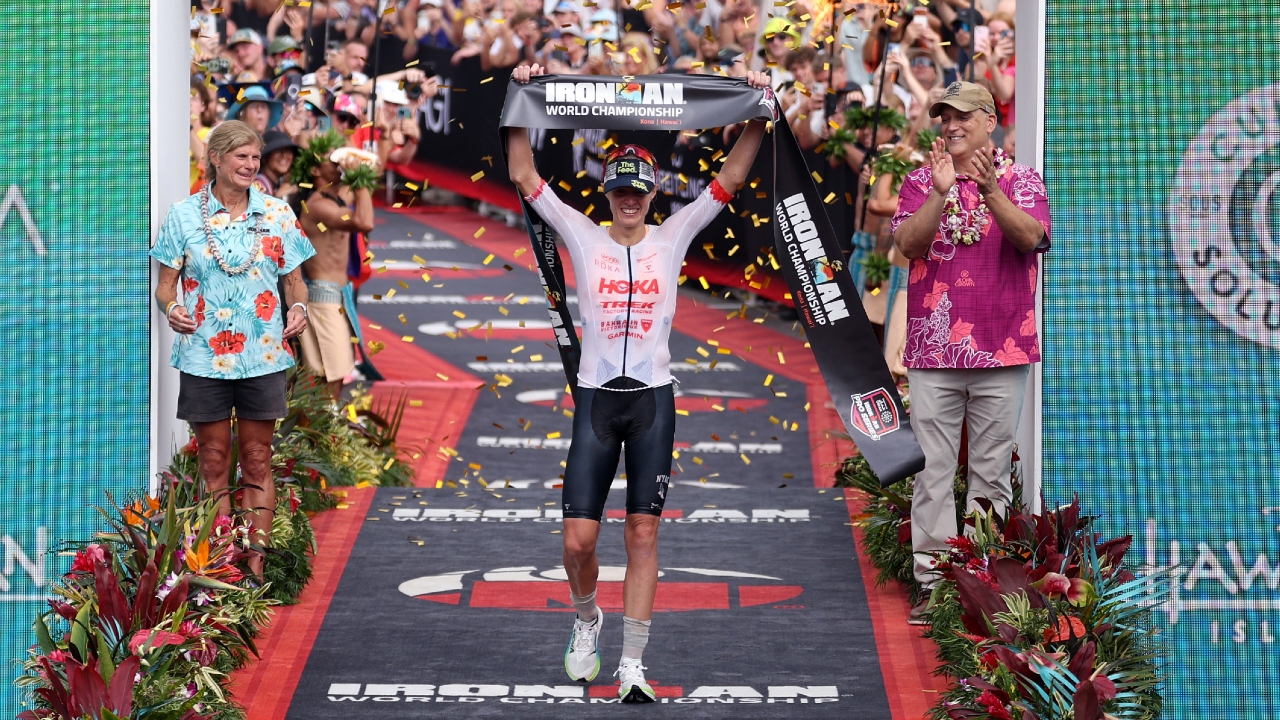
But the day belonged emphatically to Knibb. After winning in 2022, 2023 and 2024 and finishing second to Lucy Charles-Barclay (GBR) last year, she reclaimed the crown with arguably her most complete IRONMAN 70.3 World Championship performance yet.
IRONMAN 70.3 World Championship results
Saturday October 12, 2026 – Nice, France [1.9km swim / 90km bike / 21.1km run]
Pro Women
| Position | Athlete | Nationality | Swim | Bike | Run | Overall time |
|---|---|---|---|---|---|---|
| 1 | Taylor Knibb | USA | 25:59 | 2:32:07 | 1:17:56 | 4:19:24 |
| 2 | Julie Derron | SUI | 27:20 | 2:39:40 | 1:13:04 | 4:23:30 |
| 3 | Alanis Siffert | SUI | 26:03 | 2:37:40 | 1:18:06 | 4:25:10 |
| 4 | Solveig Løvseth | NOR | 27:29 | 2:38:46 | 1:16:03 | 4:25:50 |
| 5 | Marjolaine Pierré | FRA | 27:21 | 2:35:23 | 1:20:27 | 4:26:38 |
| 6 | Laura Philipp | GER | 28:54 | 2:38:00 | 1:16:57 | 4:27:28 |
| 7 | Imogen Simmonds | SUI | 25:59 | 2:37:47 | 1:20:52 | 4:28:01 |
| 8 | Audrey Merle | FRA | 26:09 | 2:40:20 | 1:19:16 | 4:29:08 |
| 9 | Paula Findlay | CAN | 27:26 | 2:39:25 | 1:20:05 | 4:30:33 |
| 10 | Caroline Pohle | GER | 26:10 | 2:40:42 | 1:20:25 | 4:30:53 |
[Click here for full finishing order, 1st to 50th]