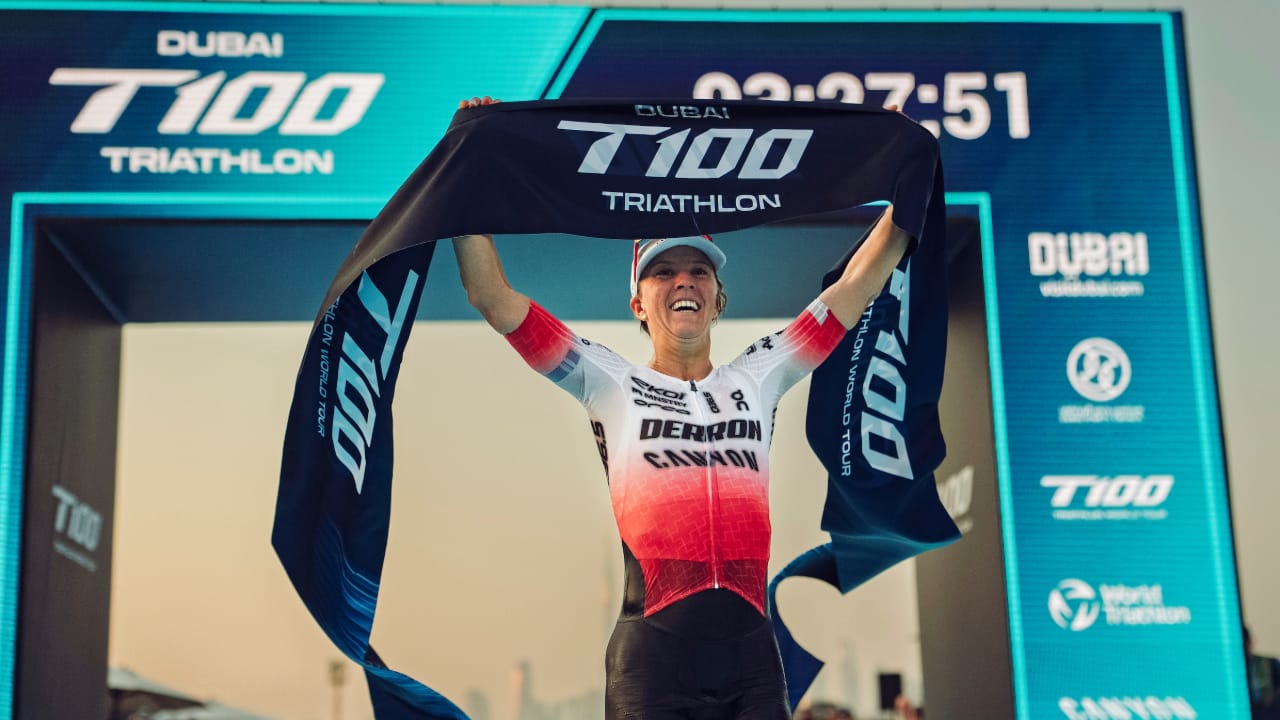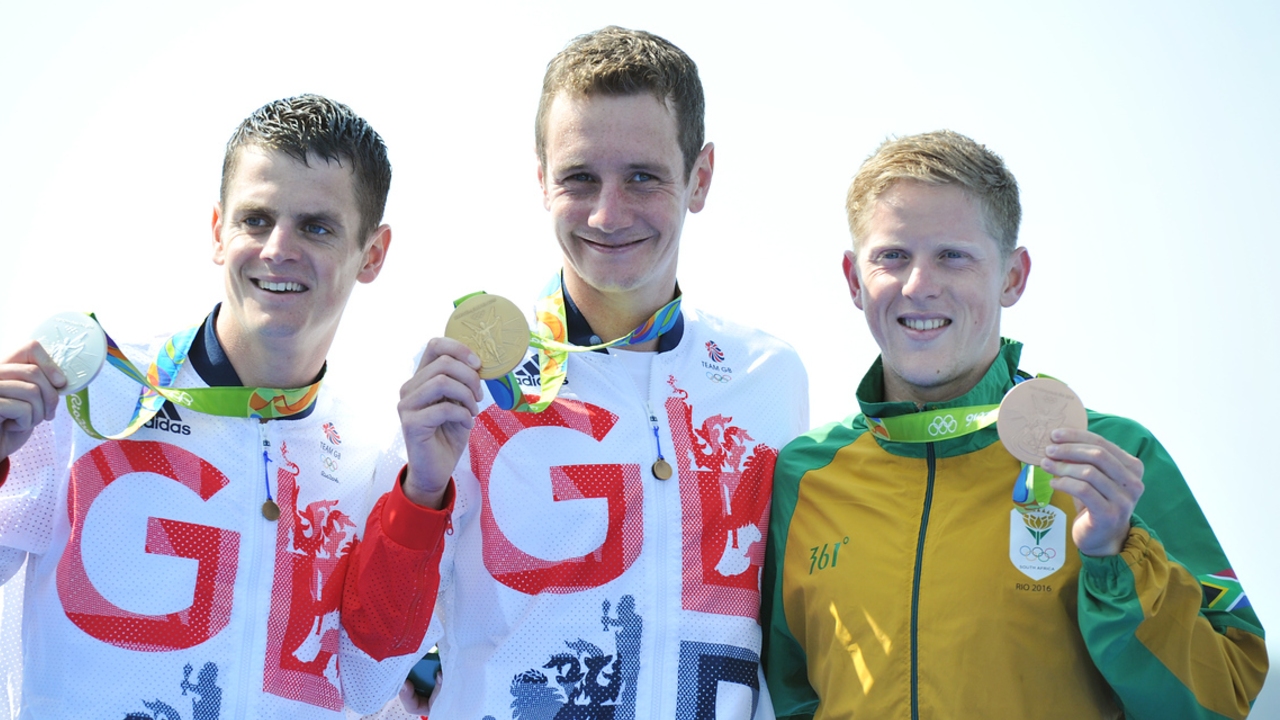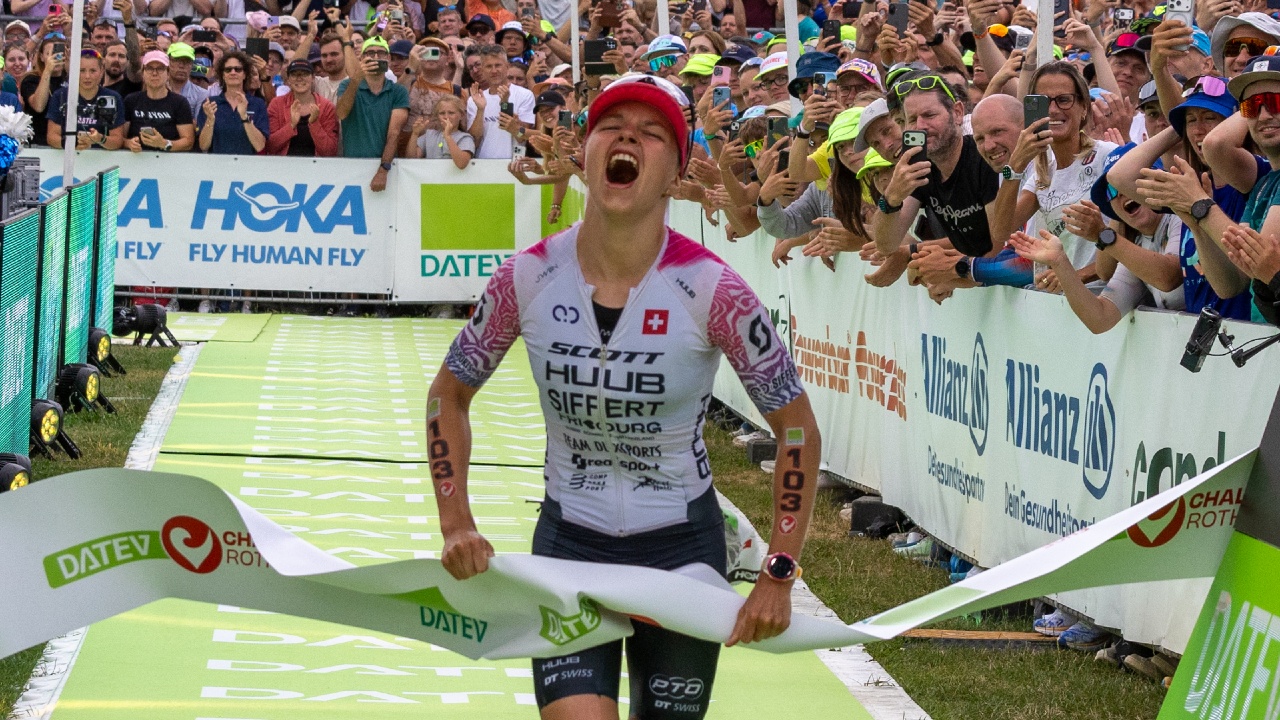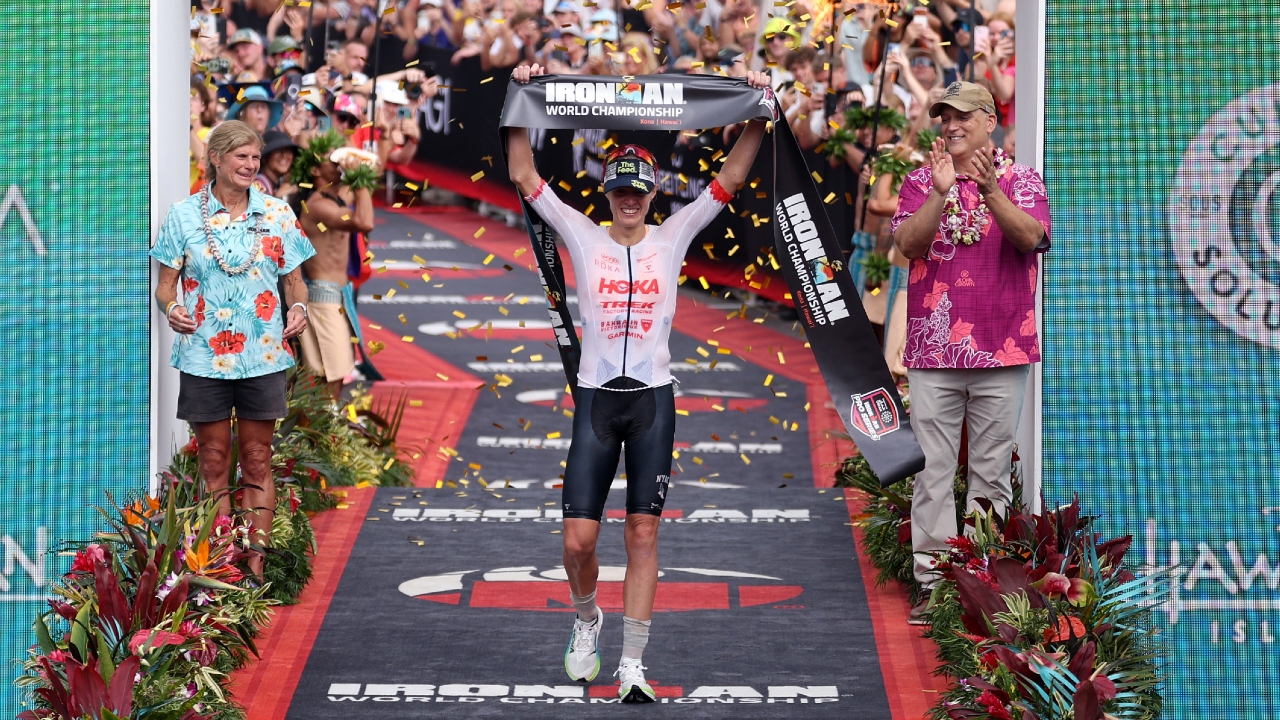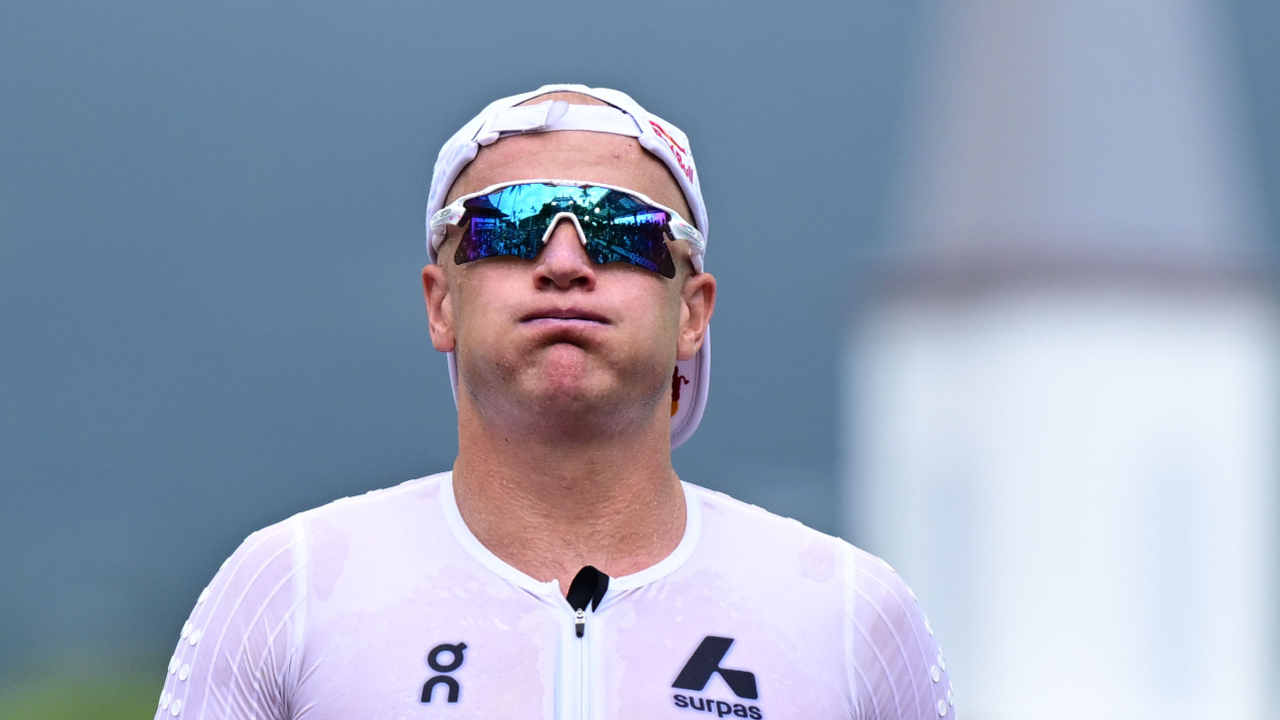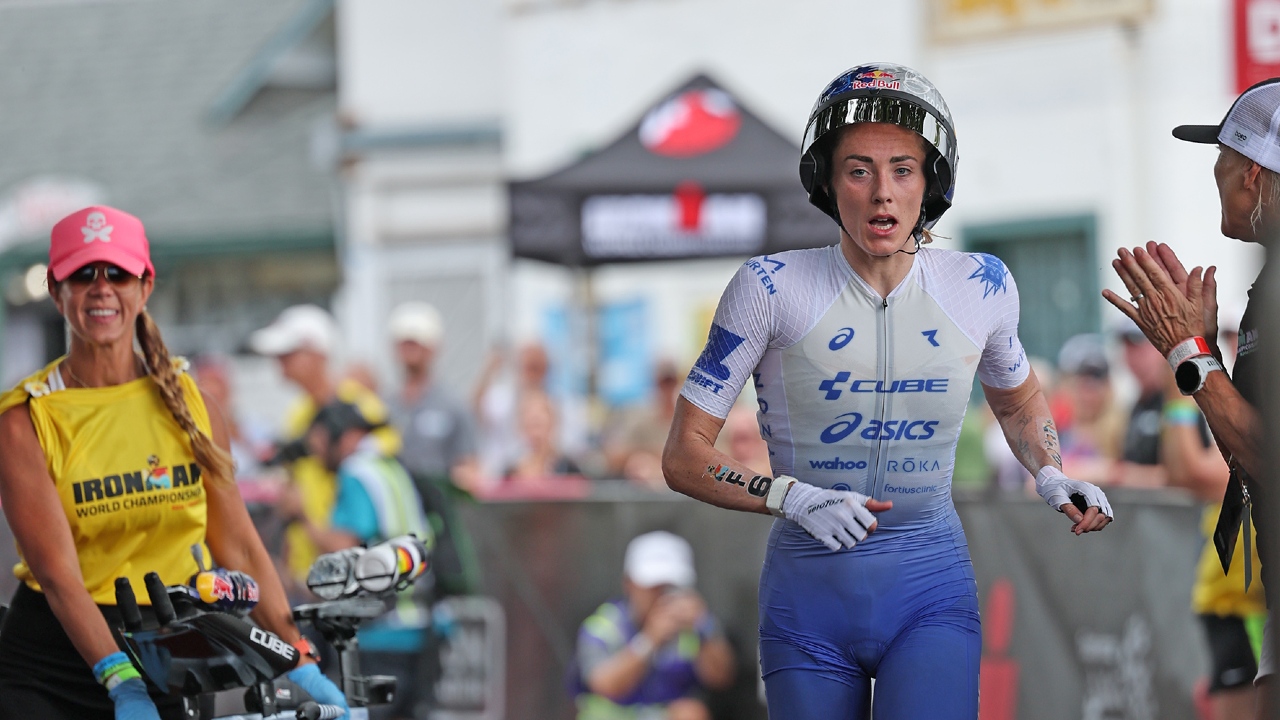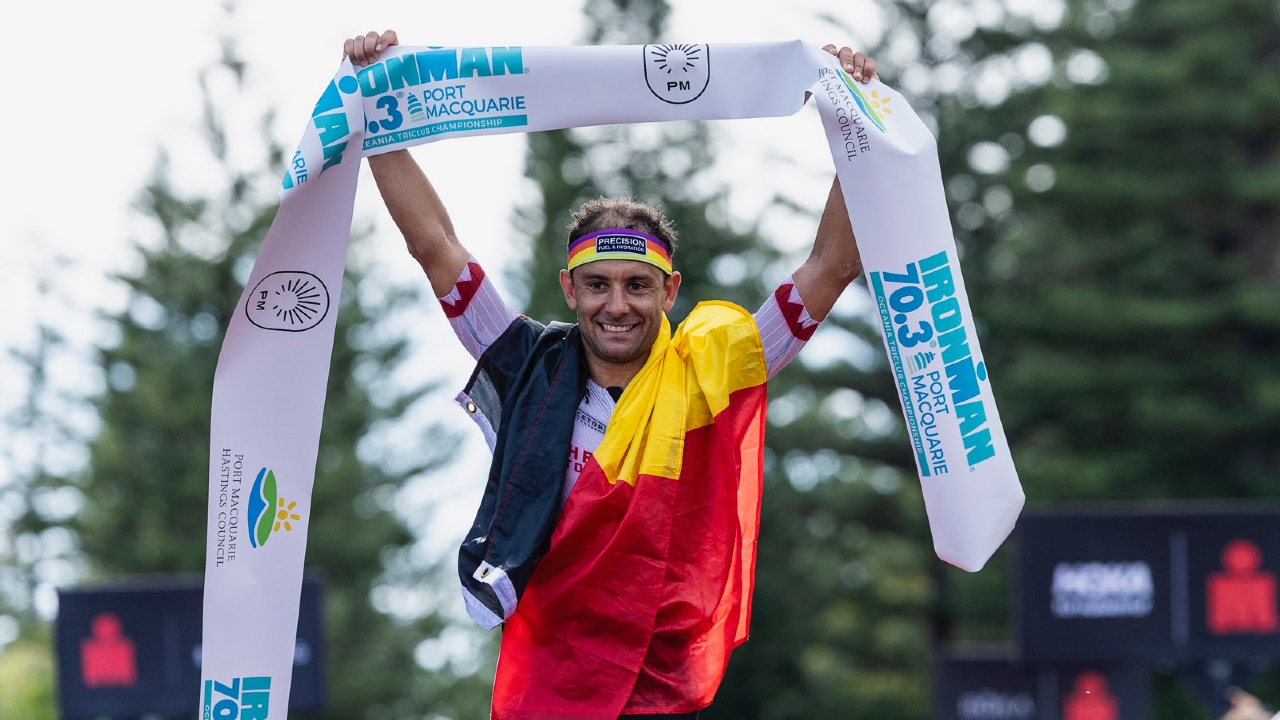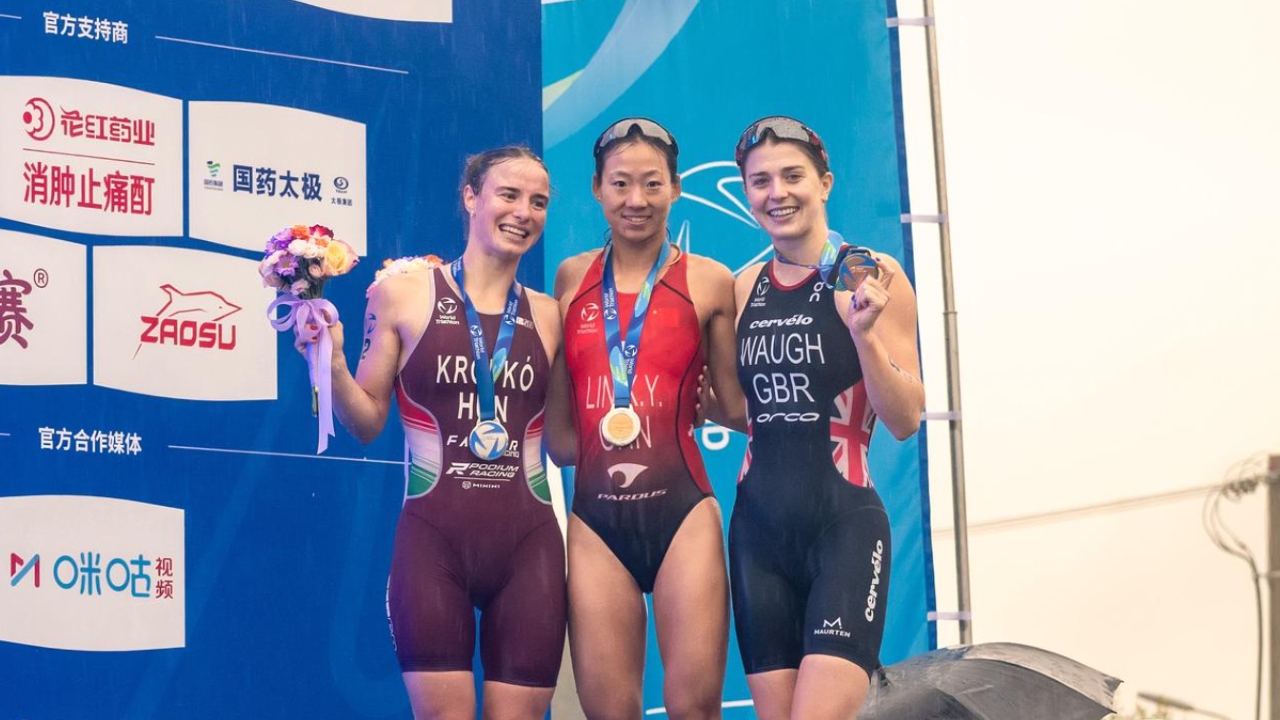




Lasse Priester knew the level would be high when he committed to middle-distance racing.
What he perhaps did not know was quite how quickly he would become part of that elite himself.
The German has yet to finish outside the podium places in a middle-distance race this season – second to Sam Laidlow at 70.3 Valencia, third at 70.3 Aix-en-Provence with a blistering 1:07 half marathon before underlining his credentials with second place at T100 San Francisco.
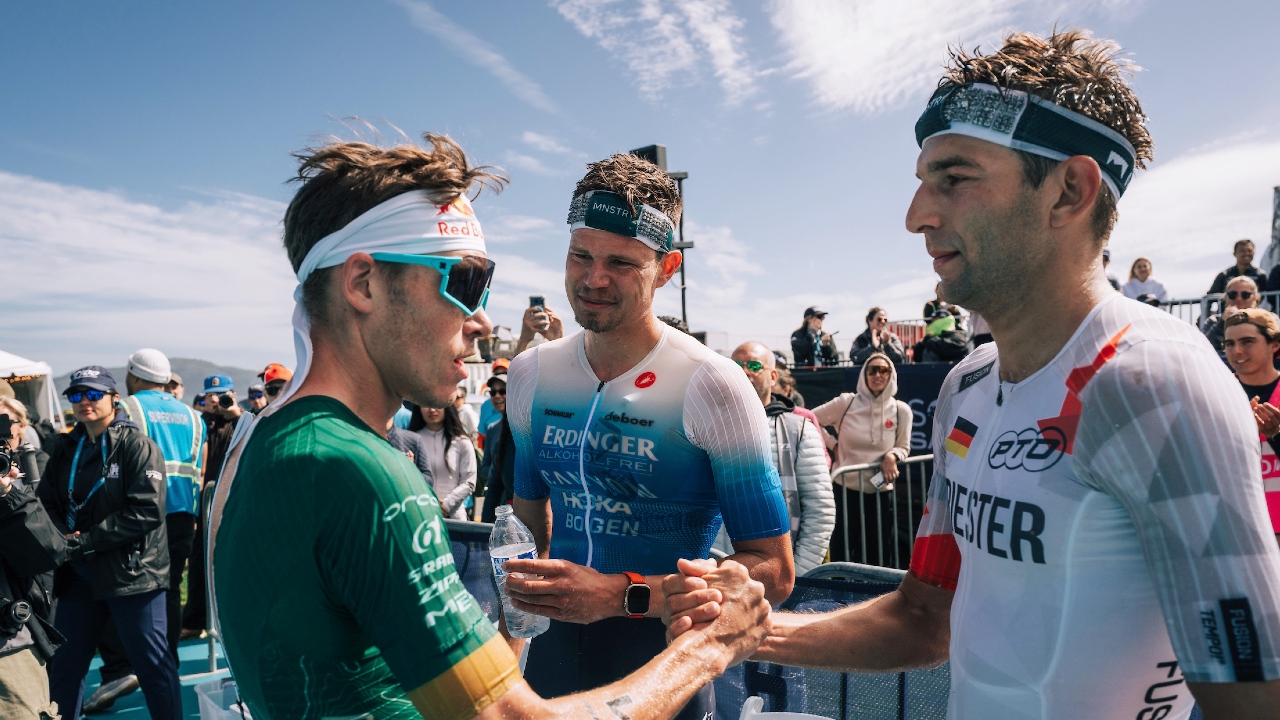
There, on one of the most spectacular and demanding courses on the calendar, Priester found himself going head-to-head with compatriot Rico Bogen – one of the strongest cyclists in the sport – before finishing runner-up ahead of Hayden Wilde.
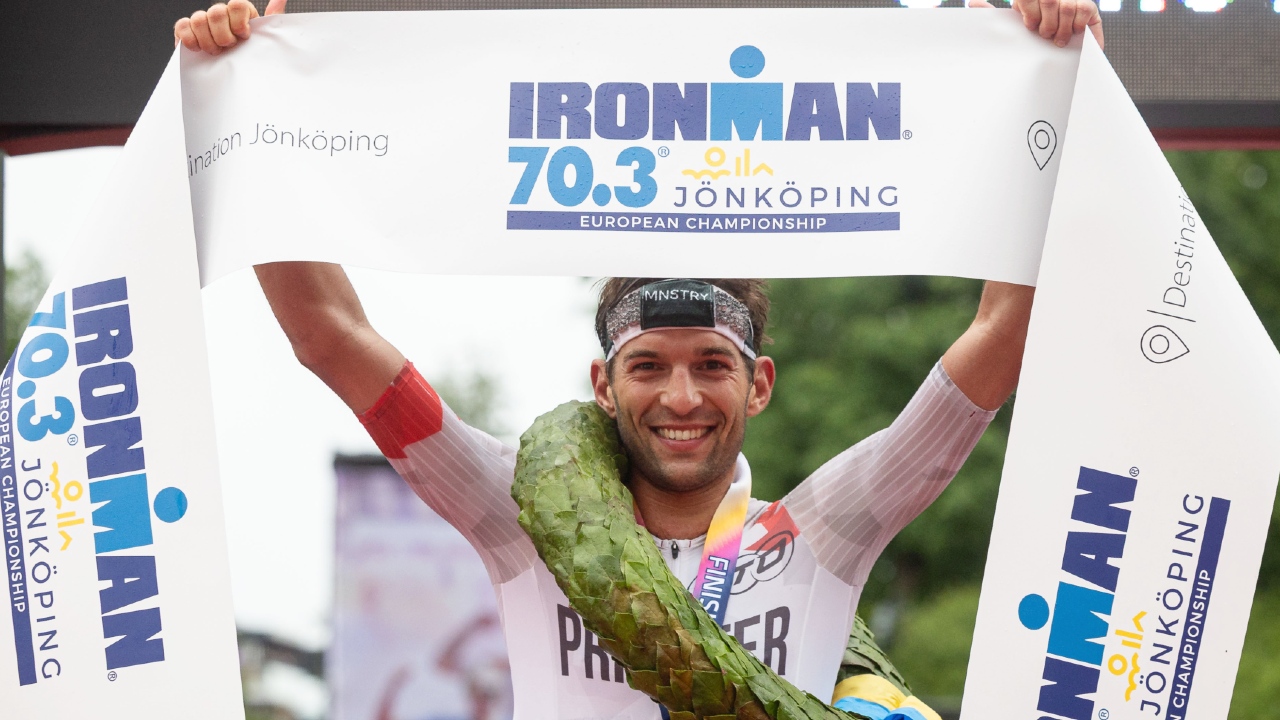
He then headed to the 70.3 European Championships in Jönköping where this time he stood on the top step of the podium.
All of which have been another major step in a transition which has already exceeded expectations.
“Of course I’m very happy with how things are going,” Priester told TRI247 in an in-depth interview, the first part of which covers his remarkable recovery from a heart scare two years ago.
“The step to middle-distance racing – I’m really enjoying it. There were a couple of new challenges, of course, and new things, but I feel it was the right time to try something new.
“I think I had a good package from short distance, but then there is a little difference and you have to do your homework somehow.
“I really enjoyed that process and, of course, it’s good to see the results.”
Learning what it takes
Priester had already been given a glimpse of the standard required at the very top of middle-distance racing before the start of this season.
His experience at the 2025 IRONMAN 70.3 World Championship late last year provided motivation throughout the winter as he set about adapting a short-course skillset to a very different style of racing.
“I really saw how high the level is in middle-distance and 70.3 races, especially when you race the top guys,” he explained.
“I took that experience with me into the winter and was quite motivated to improve my bike performance and the overall package.”
That work has quickly translated into results.
But heading into T100 San Francisco, Priester was still stepping into something of the unknown.
He knew many of his rivals from short-course racing, but non-drafting middle-distance competition presents a different test – particularly on the bike.
“I was hoping to do well and I knew I could perform well,” he said.
“But there were also some big names in the race. I knew them from short distance, but it’s a different race, non-drafting, and it’s a little bit about the strength of people.
“I tried really to go all in. Basically, I was ready to suffer.
“I knew the T100 bike level is quite high and I was also ready to take some risks there.
“I did not expect that specific place, but somehow it was my goal to be in the top five.”
He did considerably better than that.
Taking on Rico Bogen
Priester’s race in San Francisco brought him up against one of the benchmarks of modern middle-distance racing.
Bogen, the 70.3 World Champion in 2023, ultimately took the victory – for the second year running – but for much of the bike leg Priester attempted to stay with his fellow German rather than waiting to rely solely on his renowned running ability.
“I knew Rico would be the dominant guy in the race, but I think it was also a good strategy to just try to stay with him,” Priester explained.
“I know Rico quite well and I’ve raced him before. I felt maybe he can, or he will, also get a little nervous seeing that I’m behind him, as I was running a little faster in the 70.3 than he was.
“But he has such class on the bike.
“It was quite impressive – not only that he’s biking that fast, but also never giving up and pushing again and again until I couldn’t stay with him anymore.
“That was really a cool race. He’s always racing so hard and for me that was a super experience, also to see how good he is and what it takes.
“I feel quite motivated since that experience.”
For a man whose running ability has long been his greatest weapon, the temptation might have been to race conservatively and wait for the final discipline.
Priester does not see that as the route to becoming the athlete he wants to be.
“I know my strength is to run and I try also to play that part,” he said.
“But when it’s necessary to take the risk or to put in the effort already on the bike, I also don’t fear doing this.
“The long-term goal is putting both together.
“I think that’s what it takes at the 70.3 World Championships, but also in the future to maybe one day win one of these big races.
“I need to bike at my best level, or even improve a little, and get back to my best run.”
That last point is perhaps an ominous one for his rivals.
Despite finishing second in San Francisco, Priester believes he was still short of his very best on the run.
“In San Francisco I think I was missing a little bit of my best run performance,” he added.
“That’s okay for the moment, but it’s also the goal to get back to adding these two things.”
Everything points towards Nice
For all the success Priester has already enjoyed this season, there is one race which has shaped virtually every decision he has made.
The IRONMAN 70.3 World Championship in Nice is the overriding target.
“It’s all focused on the World Championships in Nice, already since the beginning of the year,” he told us.
“That was my main goal.
“Somehow, in every race that I did in the past, I was thinking about Nice.”
The demands of the French Riviera course also help explain why Priester has been willing to test himself so aggressively on the bike.
He does not expect the world title to be won by an athlete who simply survives the first two disciplines and waits for the run.
“I’m pretty sure in Nice it will take a strong bike and a strong run as well,” he said.
“Everything is focused on Nice and my thoughts are really going in that direction.”
Last weekend Priester briefly returned to his short-course roots at the German sprint-distance national championship since when he’s headed to altitude for a training block.
The contrast is striking: a sprint race at one end of the spectrum and a season increasingly dominated by longer-distance ambitions at the other.
But Priester believes his short-course background is one of the reasons the transition has worked so well.
Why the short-course stars are taking over
Priester is far from alone.
Hayden Wilde has become one of the dominant forces in T100 racing, while a growing collection of short-course converts are bringing increasingly high levels of speed to middle and longer distances.
Priester believes the trend is no coincidence.
“We’re used to the speed,” he said.
“We’re used to the racing – U-turns and such high power – but then even sprint distance is still endurance sport. It takes one hour.
“I think we are benefiting from that racing and then the speed in the training, while still doing a lot of hours and high volumes for many years.
“That’s why probably the transition is working quite well.
“I think it’s fair to say that it’s just getting faster at the moment.”
And Priester expects the competition to become tighter still.
Wilde has set an extraordinary standard in the T100 in recent seasons, but the German believes an increasing number of athletes could soon make the biggest races less predictable.
“Hayden was the top guy in the past years and he still is,” Priester said.
“But I think it would be cool if other people are coming up as well and it’s becoming even closer racing.
“Sometimes it was quite clear from a certain point in the race that he was likely to be the winner.
“If it’s maybe levelling up in the next one or two years, that is also good – running better until the end, like in WTCS racing.”
Priester has already shown that he intends to be part of that battle.
Could full distance be next?
For now, the 70.3 World Championship remains the priority.
But with every middle-distance race, Priester admits another possibility is becoming increasingly intriguing.
A full-distance debut.
“At the beginning of the year, my plan was until getting the qualification and getting as ready as I can for that race,” he explained.
“Now, when I get a little bit more into it and get more experience race by race, I feel there’s some interest coming up in going long as well.”
Watching the evolution of full-distance racing has only increased that curiosity.
The old idea that athletes must wait until late in their careers before stepping up to an IRONMAN is disappearing, while the racing itself is becoming increasingly fast and aggressive.
“I see you don’t have to be an old person to double the training or triple the training and just do long runs to perform there,” Priester said.
“I think it’s changed a lot. It’s also fast racing, what these guys are doing now.
“So there’s a lot I’m quite fired up about and also trying, hopefully soon.”
Priester is deliberately stopping short of committing to anything just yet.
After a season built around one overriding objective, he wants to reach Nice before making decisions about what comes next.
“I think it’s better to decide it with a little less emotion, maybe in the winter after the season, and with a little time to reflect.
“But definitely I would like to see myself racing there also.”
For now, the focus remains on becoming the best middle-distance athlete he can be.
Priester already possesses the running speed to hurt the very best. San Francisco showed he is increasingly willing and able to take the fight to them on the bike as well.
The next challenge is putting everything together on the same day.
And if he can do that, his first victory on one of the sport’s biggest stages may not be far away.