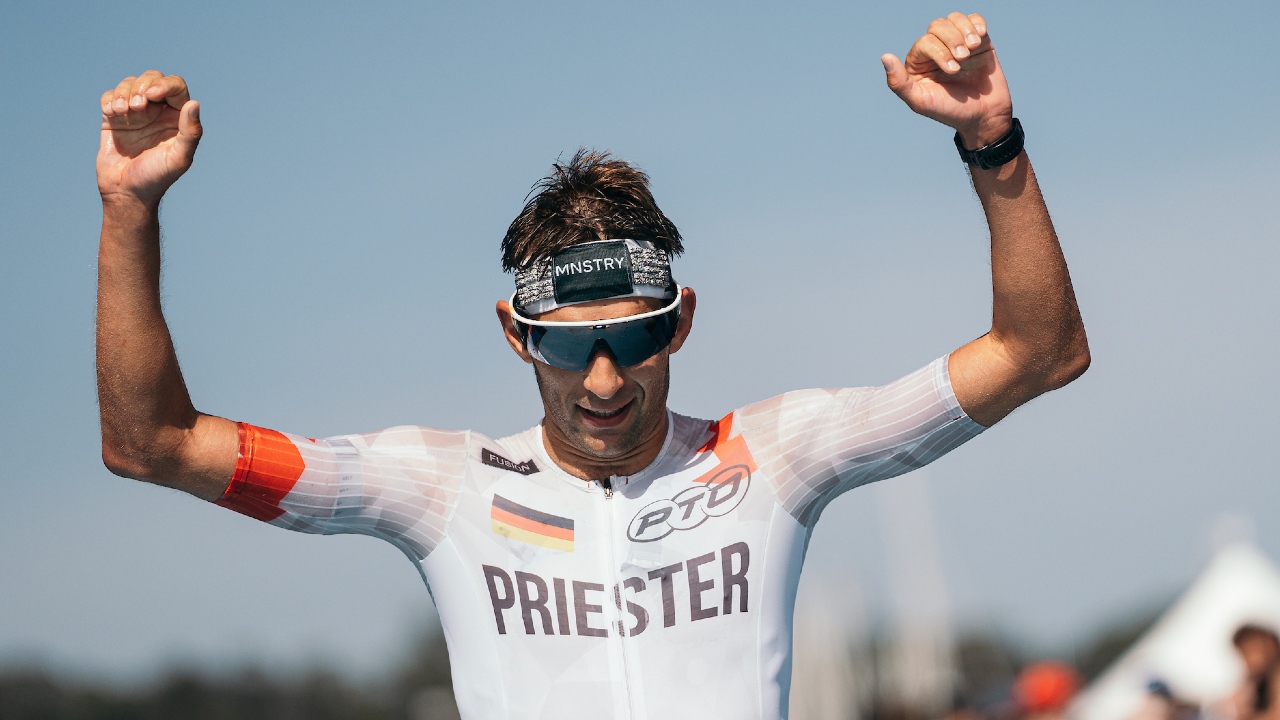




Lasse Priester is enjoying one of the best seasons of his career.
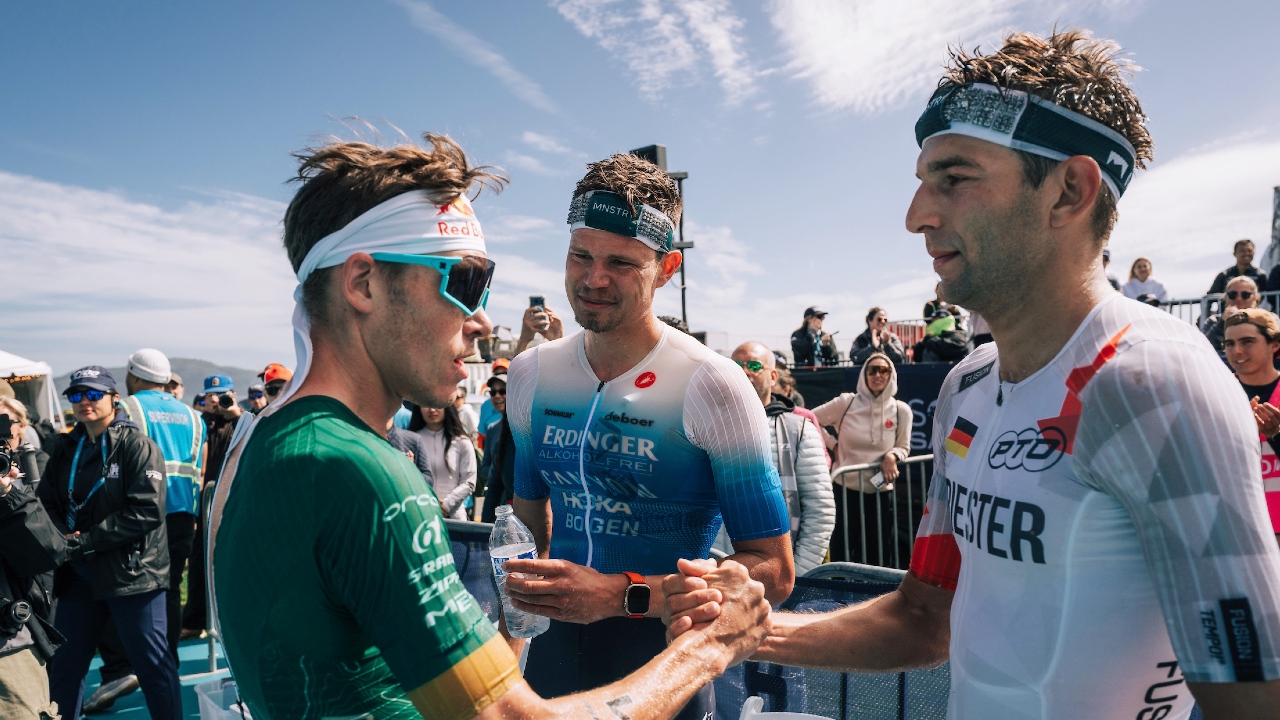
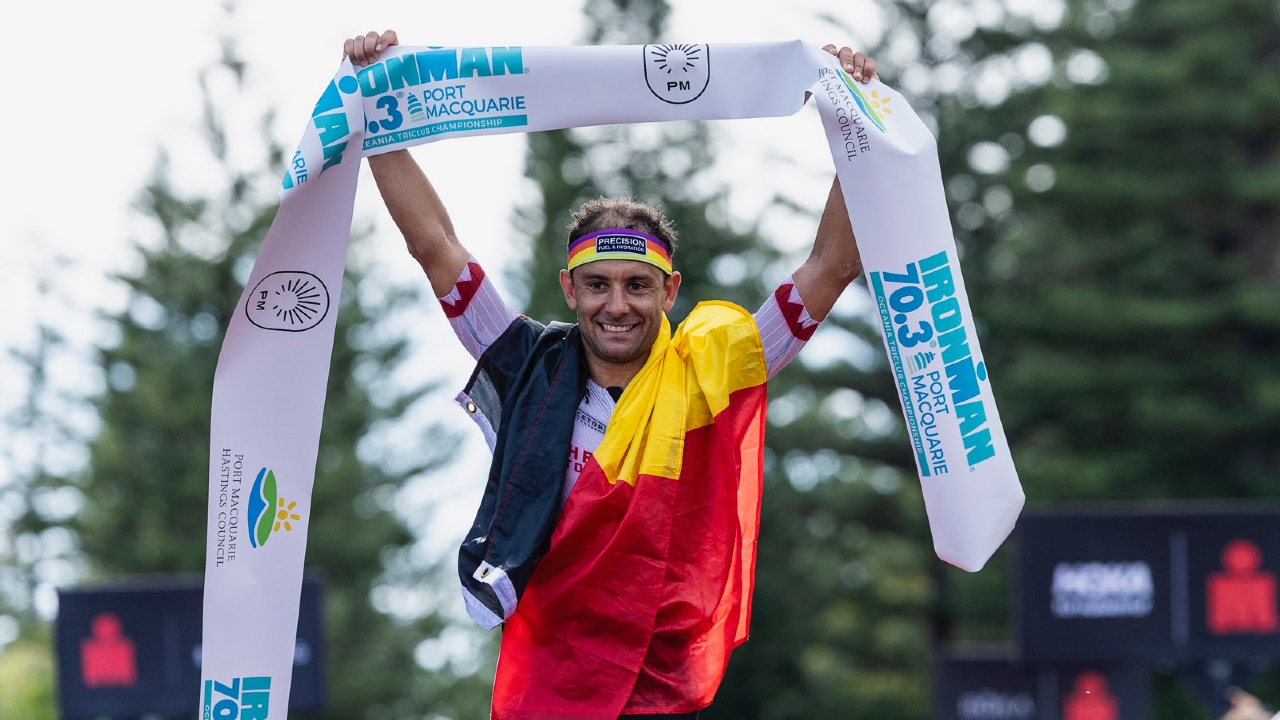
The German has yet to finish off the podium in a middle-distance race this year, highlighted by a brilliant second place at T100 San Francisco, where he took on some of the biggest names in the sport, and then a win at the IRONMAN 70.3 European Championships in Jönköping.
But the results tell only a fraction of the story.
Just over two years ago, Priester was dealing with a heart problem which forced him to confront questions far bigger than whether he would ever race professionally again.
Unbeknown to him at the time, he had suffered a minor heart attack in a race in Chengdu in April 2024, an event in which he was hoping to collect points to aid his bid to qualify for the Paris Olympics. He went on to race WTCS Yokohama, World Cup Samarkand and WTCS Cagliari in May before the full extent of what had happened became apparent.
And while he has now returned to the top level of triathlon, the 30-year-old admits there was a period when the sport itself became almost irrelevant.
“Sometimes you have injuries and you have to take a break or you have to rest for a while,” Priester told TRI247.
“But in that case it really had an impact on my life and it was quite scary also.
“All my thoughts went into that problem and also understanding what happened, also understanding what it means for my future.
“In that case, you really speak about other things than professional sport.”
Eight months of uncertainty
Priester’s route back was a gradual one.
As time passed and the results of his medical tests continued to move in a positive direction, the possibility of returning to sport slowly began to enter his thoughts.
But one thing was non-negotiable. He would not return unless he had the full backing of medical experts.
“I always knew that I don’t want to risk something,” he explained.
“So firstly I needed the green light from the doctor – or in that case from the doctors.
“I think it’s quite difficult when it’s just one person to decide or take the responsibility. And also you don’t want to have an influence on that doctor, so it was quite good that they didn’t know me.”
Priester’s case was assessed by a group of doctors in Europe and, after around eight or nine months, he finally received the clearance he had been waiting for.
That might sound like the end of the uncertainty. In reality, it presented him with another huge decision.
“I remember when I got the green light, it was a different situation then because then it was up to me,” he said.
“Until then, the responsibility was a little under the doctors. And then it changed and it was up to me if I wanted to keep on doing the sport or if I preferred changing my life a little and finding happiness and a career somewhere outside of the sport.”
‘I would have stopped immediately’
Priester was 28 when the problem occurred and admits he initially associated heart conditions with people far older than himself.
Learning more about what had happened brought its own difficult moments.
“You’re realising what was going on, but then you already know that it happened a few weeks ago,” he explained.
“And then you understand how dangerous it was.
“I was 28 at that time. You’re not really an expert on heart stuff. This is something I thought normally happens to older people.
“You also start Googling the things that are going on, or you’re more sensitive when there are things in the world and also in the sports world where you see that people were not so lucky like me.
“Especially in that period, that was quite a strange period.”
The more information Priester received, however, the more he began to understand his own individual circumstances.
He also stresses that continuing his career was never something he would have considered against medical advice.
“It would have been okay if the doctor had said, or from the medical side someone had said, this is too risky.
“I would have stopped immediately.
“But I’m very happy it was not like that.”
A different relationship with triathlon
Once the medical experts had given their approval, Priester still had to decide whether returning to professional triathlon was the right choice for him.
The answer ultimately came with conditions of his own.
He reflected on the previous years of his career, the way he viewed the sport and what he would need to change if he was going to come back.
“I thought a lot about my past years and how I see my view on the sport and all these things,” he tells us.
“Somehow it became quite mental.
“I decided to change a couple of things and felt that if I changed these things, there might be a good chance that I feel good and that I enjoy it.
“There’s always the possibility also to stop in case I don’t feel quite good or comfortable in my body or in what I’m doing.
“But right now I feel, I would say, better than ever. I feel there’s a good balance in my life and I can really enjoy doing the sport.
“That is, of course, already a big success for me.”
The experience has inevitably changed the way Priester sees racing.
He says he now feels less stressed by competition and more grateful for the opportunity to be there at all.
“My whole point of view changed a little and I feel a little less stressed about racing,” he says.
“I was not sure if I could be 100%, but now I feel like it’s possible for me. That’s of course something really cool too.
“Maybe that’s also why I’m in general quite positive going into the race, because somehow I’m enjoying it a little bit more.
“I’m a little bit more grateful than I used to be.”
Why middle distance suddenly mattered
The heart scare also played a part in a major change to Priester’s sporting career.
For years, his focus had been overwhelmingly on short-course racing and the Olympic pathway.
But when faced with the possibility that his professional career could be over, Priester found himself thinking about an opportunity he might never have explored.
“If I stopped then, I was regretting a little that I was always just focusing on the Olympic journey and so much sticking to the short distance,” he revealed.
“There was always a voice inside me telling me I might be quite solid on the longer distances.
“I felt like I was never the super, super strong guy for the first 100 metres, for example, in the swim. In the WTCS I was always struggling there.
“But you feel in training your strengths and your weaknesses. I felt that maybe I could hold a high pace for longer than others.
“So from one side I was thinking, ‘Why did I never try this? I should.’”
The timing ultimately proved right for several reasons – his recovery, the year after the Olympic Games and the chance to explore a different side of the sport.
And once he tried middle-distance racing, the answer quickly became clear.
“I started and I felt super good. I enjoyed it,” he said.
The comeback – and first middle-distance race – came at 70.3 Jesolo in Italy in May 2025, quickly followed by a hugely impressive and no doubt emotional victory on home roads.
He recalls: “I won 70.3 Kraichgau – and really enjoyed the half marathon after the bike there – getting into a rhythm and running longer.
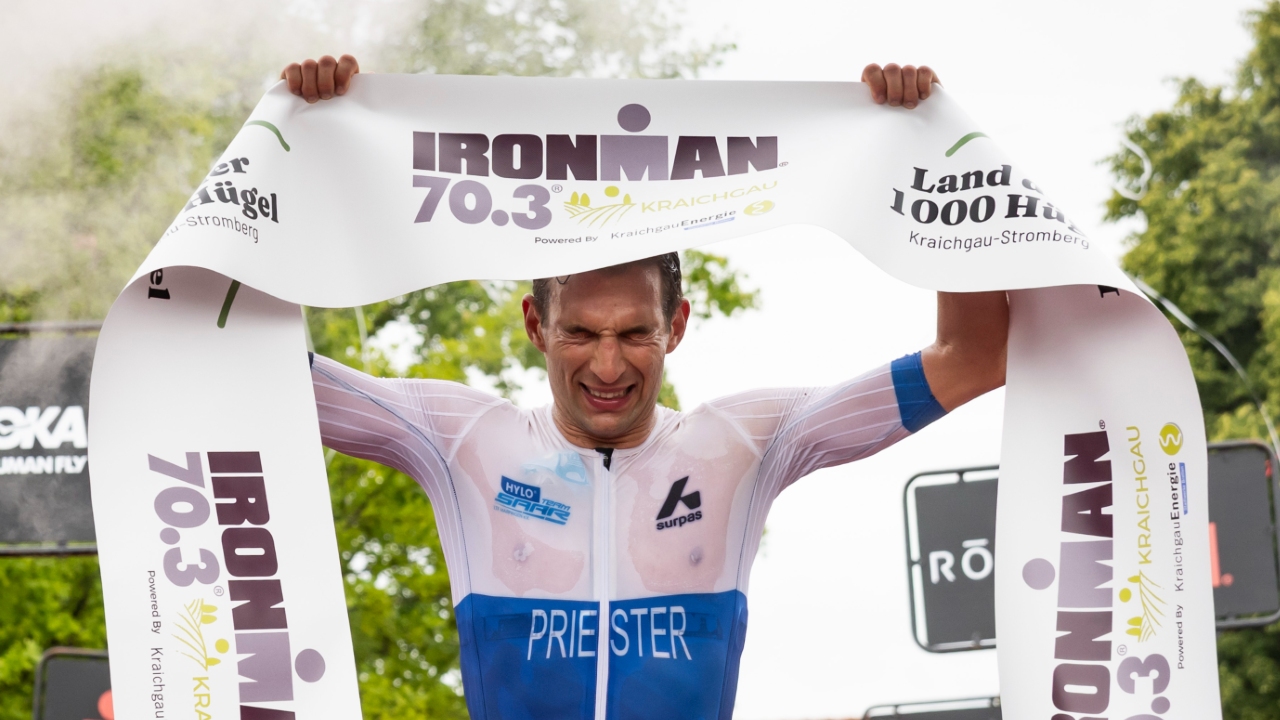
“Then also the new stuff of nutrition, maybe aerodynamics, a different bike, all that stuff – I still enjoy it now.”
Back – and better than ever
Priester’s transition has already produced remarkable results.
This season he has not finished outside the podium places in middle-distance racing, with his second place at T100 San Francisco providing perhaps the clearest indication yet of how far he has come.
On a demanding course, he was willing to take risks on the bike and tried to follow the formidable Rico Bogen before ultimately producing another strong run to hold off Hayden Wilde for second.
For Priester, though, the significance of his comeback extends far beyond results.
He knows that returning to elite sport means accepting the same demands as every other athlete on the start line.
“There is not really a category for over-30-year-old people that had a heart problem and are racing!” he smiles.
“I always knew, in case I go back to racing, it’s still quite tough and still elite sport.
“To get a podium in any of these races, you need to be 100% mentally and in the body.”
Priester once did not know whether that would be possible again.
Now, after everything that has happened, he has his answer.
“I was not sure if I could be 100%.
“But now I feel like it’s possible for me.”
READ MORE: For the second part of our Lasse Priester interview, click HERE.