




This is a preview – click here to read about another sensational victory for Cassandre Beaugrand.
The women’s world title will be decided at the WTCS Grand Final in Pontevedra on Saturday, with Cassandre Beaugrand holding a commanding – but not yet unassailable – lead.
The French star has won all four of her WTCS appearances this season and will arrive in Spain with the maximum possible regular-season score of 4,000 points.
A podium finish in Pontevedra will guarantee Beaugrand her second world title, following her Olympic and WTCS double in 2024.
But Beth Potter, rising Swedish star Tilda Månsson and defending champion Lisa Tertsch all retain mathematical hopes of denying her – and we all know what happened last year, when Tertsch upset the odds as she stunned Beaugrand and Potter in Wollongong.
With 1,250 points available to the winner – 25 per cent more than at a regular WTCS race – the Grand Final has repeatedly demonstrated its capacity to transform the standings and here is everything you need to know.
Start time and how to watch live
The elite women’s race at the 2026 World Triathlon Championship Finals will take place on Saturday 26 September.
The race starts at 18:00 local time, which is 17:00 in the UK, 18:00 CEST, 12:00 Eastern Time and 09:00 Pacific Time.
As ever, the action will be shown live on the official World Triathlon streaming platform, TriathlonLive.io.
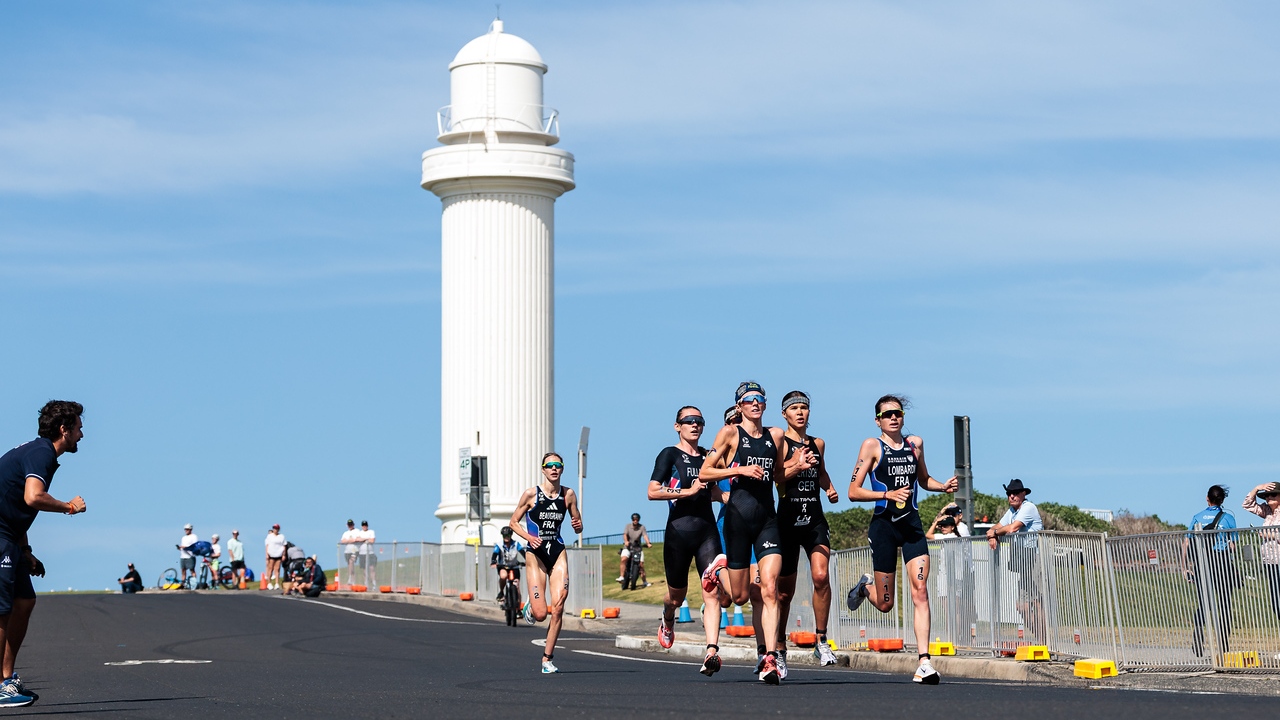
How the WTCS standings work
An athlete’s final WTCS score is made up of their best four results from the regular season plus their result in Pontevedra.
A victory at a normal WTCS race is worth 1,000 points, but that rises to 1,250 at the Grand Final.
Beaugrand has already recorded four victories – in Alghero, Quiberon, London and Weihai – to reach the maximum regular-season total of 4,000 points.
Potter is 225 points behind on 3,775, with Månsson third on 3,636.26 and reigning champion Tertsch fourth on 3,561.26.
| Position | Athlete | Nationality | Points |
|---|---|---|---|
| 1 | Cassandre Beaugrand | FRA | 4000.00 |
| 2 | Beth Potter | GBR | 3775.00 |
| 3 | Tilda Månsson | SWE | 3636.26 |
| 4 | Lisa Tertsch | GER | 3561.26 |
| 5 | Leonie Periault | FRA | 3389.18 |
| 6 | Jeanne Lehair | LUX | 3294.16 |
| 7 | Georgia Taylor-Brown | GBR | 3145.83 |
| 8 | Taylor Spivey | USA | 3027.96 |
| 9 | Emma Lombardi | FRA | 2751.39 |
| 10 | Jolien Vermeylen | BEL | 2685.63 |
What does Beaugrand need to win the world title?
The equation for Beaugrand is relatively straightforward: finish on the podium and she will be world champion, regardless of what anybody else does.
She will also take the title with a lower finish if Potter, Månsson and Tertsch fail to capitalise.
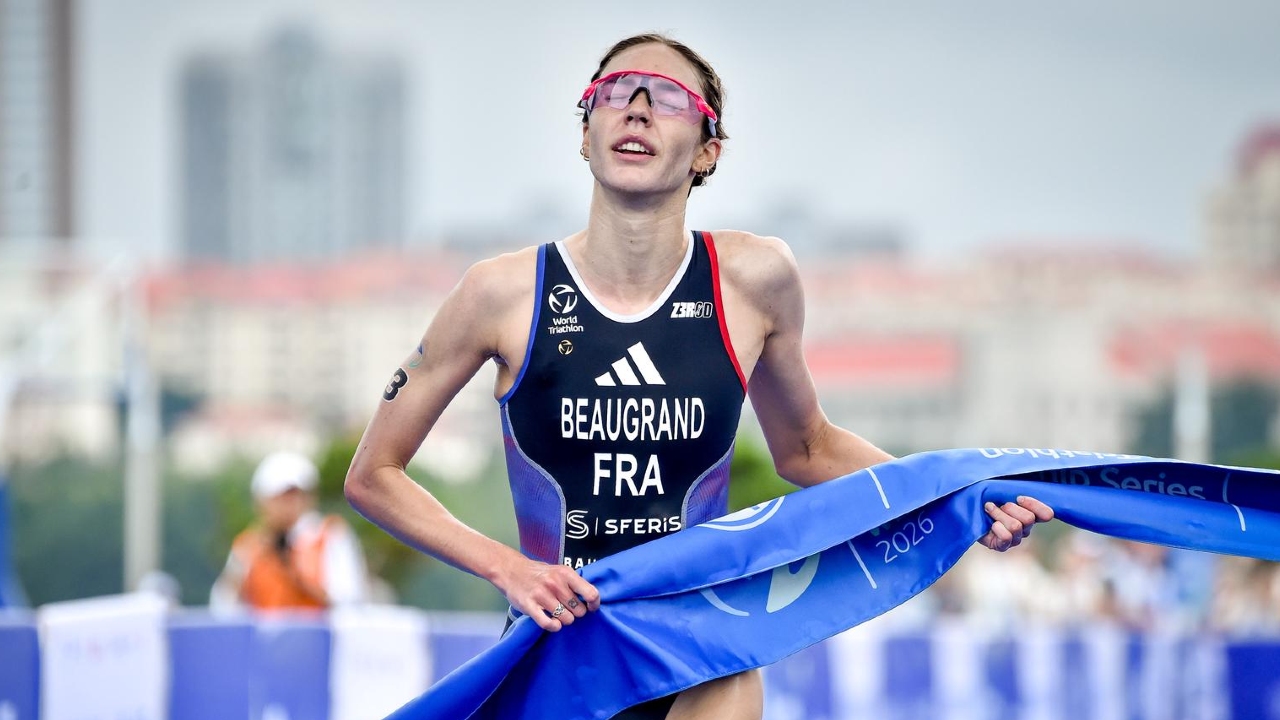
Beaugrand has been unbeatable in WTCS competition this season, but history offers her rivals some encouragement.
Only two of the five women who have led the Series going into the Grand Final during the 2020s have converted that position into the world title.
Those two were Flora Duffy in 2021 and Beaugrand herself in 2024.
The Grand Final was in Pontevedra just three years ago too, when Potter came out on top.
How can Potter win the world title?
It’s Potter who remains Beaugrand’s closest challenger, but the Briton now needs assistance from elsewhere in the field.
The clearest route is for Potter to win the race and Beaugrand to finish fourth or lower.
Potter could also become world champion by finishing second if Beaugrand is fifth or worse, although that would bring the results of Månsson and Tertsch into the equation.
Her sixth place at WTCS Karlovy Vary meant she was unable to reduce the 225-point deficit before Pontevedra.
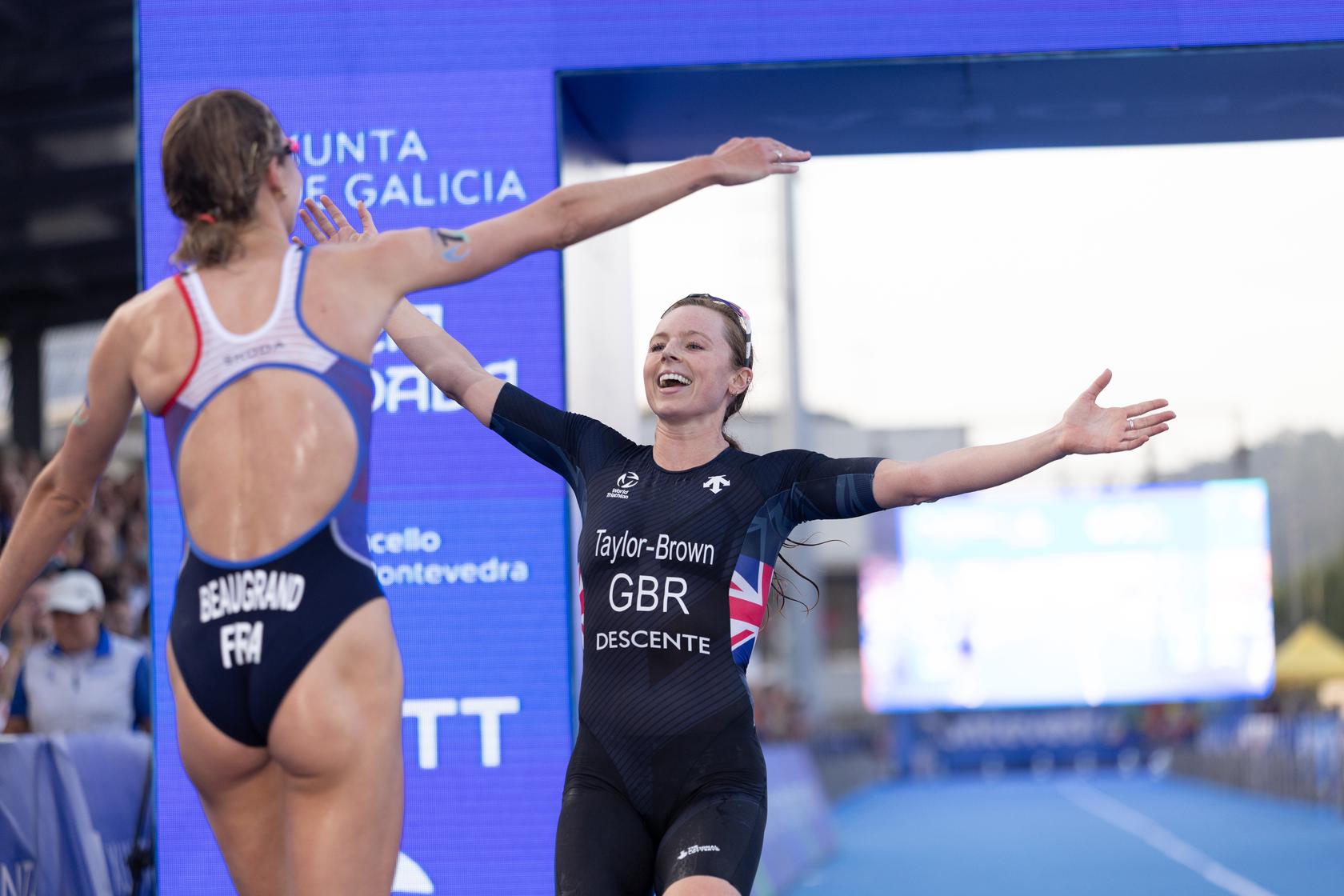
But the 2023 world champion will be supported by a strong British team which includes Karlovy Vary winner Georgia Taylor-Brown.
Taylor-Brown’s ability to break races apart on the bike could be pivotal. A repeat of her most recent performance might either help Potter or take away one of the positions Beaugrand needs to secure the title. Fellow Brit Jess Fullagar is another likely to be in the equation for a bike breakaway while the Brits are strong all round with 2023 Pontevedra Grand Final runner-up Kate Waugh another in the mix.
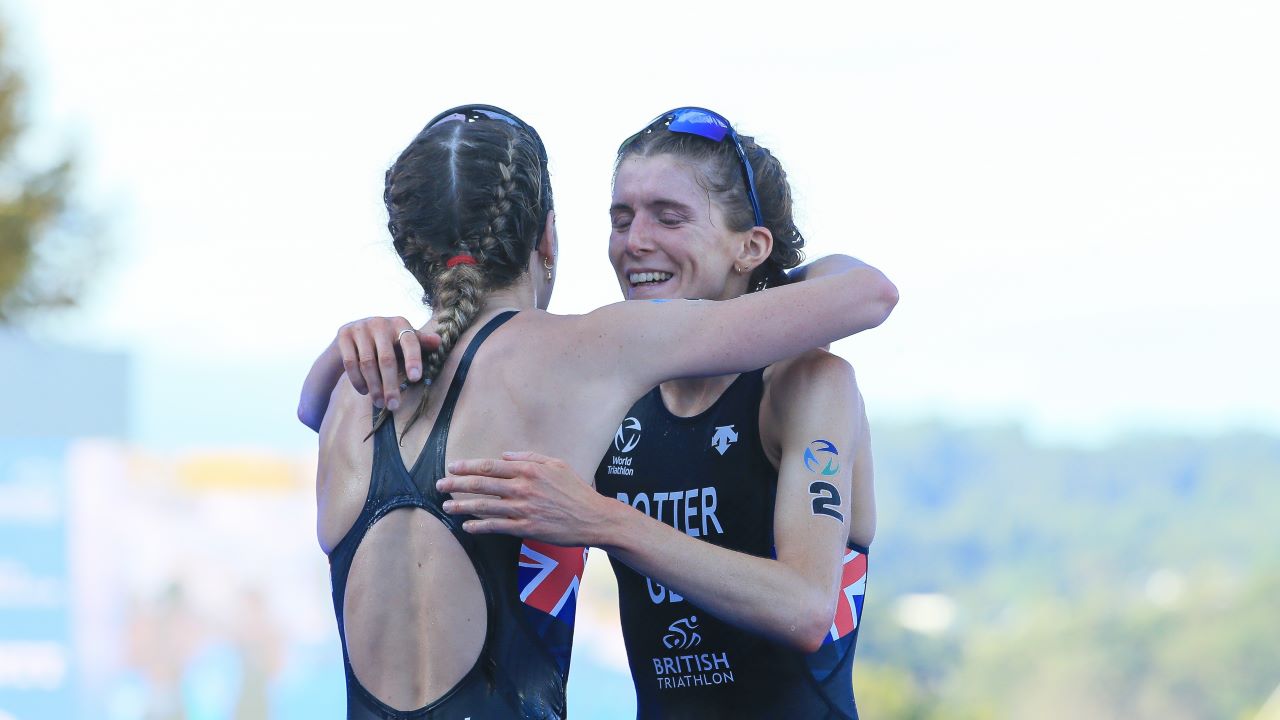
Can Månsson or Tertsch pull off an upset?
Månsson skipped the final two regular-season races in Weihai and Karlovy Vary to focus fully on Pontevedra.
That decision left her third in the standings, having already collected three WTCS medals during a breakthrough campaign.
The Swede defeated Potter to win in Yokohama and pushed Beaugrand closely in Quiberon, demonstrating that she can challenge both of the leading title contenders.
Månsson’s clearest path to the world crown would be to win in Pontevedra, with Beaugrand sixth or lower and Potter third or worse.
Victory would also make her the first woman born in the 21st century to win the season finale.
Tertsch knows better than anybody how quickly the Grand Final can change the championship picture.
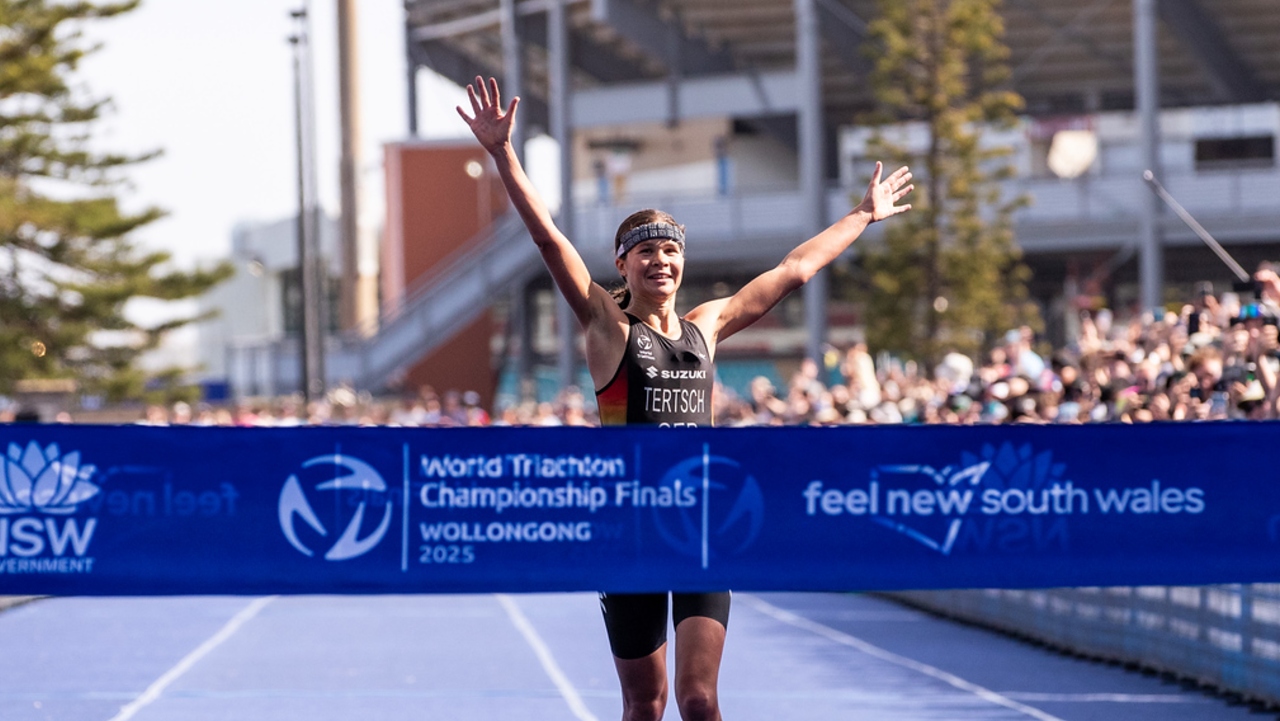
The German climbed from fourth in the standings to first at Wollongong last year, producing that dramatic victory to claim her maiden world title.
She enters the 2026 Final in fourth place again, but this time has a larger deficit to overturn.
The simplest winning scenario for Tertsch would require her to defend her Grand Final title, with Beaugrand seventh or lower and Potter fourth or worse.
Who else could shape the title race?
The strength of the field means the four title contenders will have no shortage of athletes capable of taking vital positions away from them.
Taylor-Brown arrives after a brilliant victory in Karlovy Vary, where she helped force the decisive breakaway before running clear of Taylor Spivey and Tertsch.
Spivey has claimed silver medals in each of her last two WTCS appearances and has the consistency to challenge for another podium.
Emma Lombardi has won bronze at the last two Grand Finals, while Bianca Seregni finished second behind Tertsch in Wollongong last year.
Jeanne Lehair, Jolien Vermeylen, Gwen Jorgensen and Leonie Periault have all demonstrated that they can finish among the leading places at this level too.
That depth presents a double-edged sword for Beaugrand’s rivals. They need other athletes to push the Frenchwoman down the order, but those same contenders could just as easily take valuable positions away from Potter, Månsson or Tertsch.

Course and distance
The elite women will race over the standard Olympic distance – a 1,500m swim, 40km bike and 10km run.
The swim comprises two laps in the Lérez River, with the athletes then entering the first transition on its northern bank.
The bike features nine laps through Pontevedra, with each main circuit measuring 4.17km.
World Triathlon’s detailed course profile shows 54.8m of elevation gain per lap, giving approximately 493m of climbing across the nine circuits.
The highest point is only 20m above sea level, but the climb includes a maximum gradient of 11.1%, while the descent reaches 15%. The repeated acceleration, climbing and descending could therefore prove more demanding than the modest maximum elevation might suggest.
Such a compact and repetitive circuit will also place a premium on positioning. Anyone caught behind an early split may find it difficult to organise an effective chase, particularly once fatigue begins to accumulate.
The closing 10km run consists of three laps of approximately 3.37km.
Each circuit includes 46.8m of elevation gain, producing a total of around 140m across the run.
Both the bike and run pass through central Pontevedra, including the area around Praza da Ferraría, before finishing at the CGTD, a small municipal sports stadium.