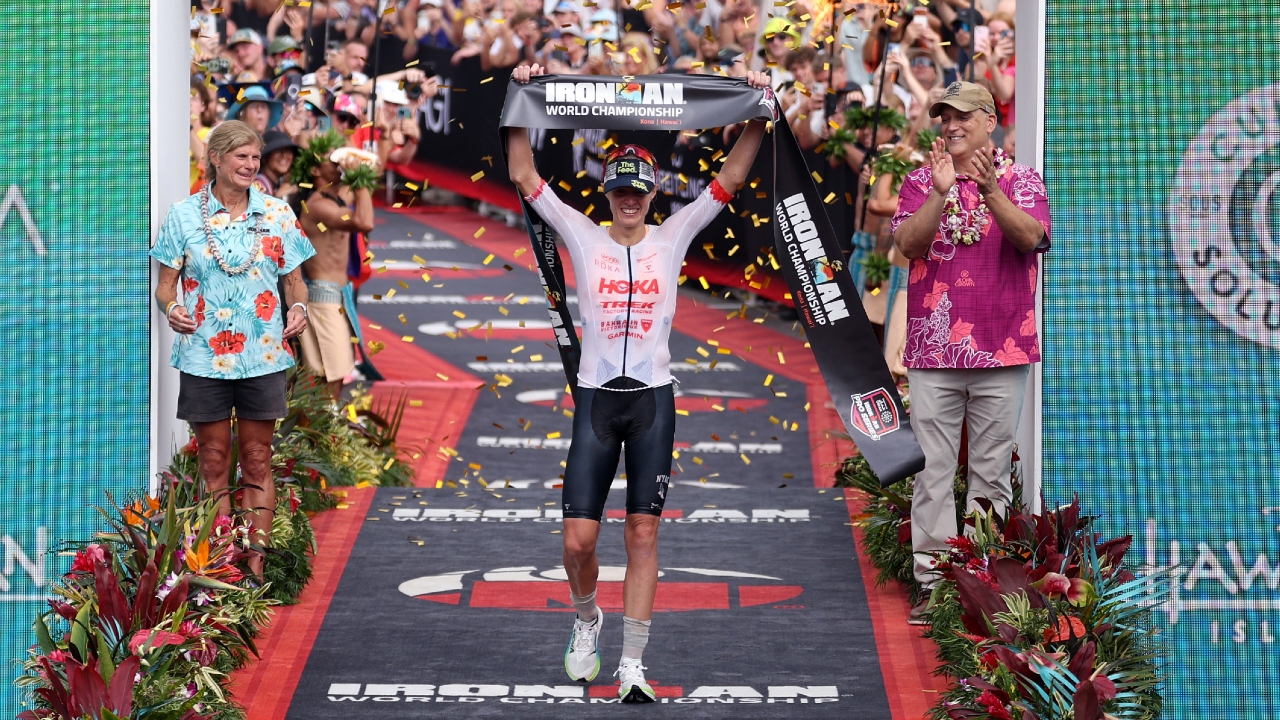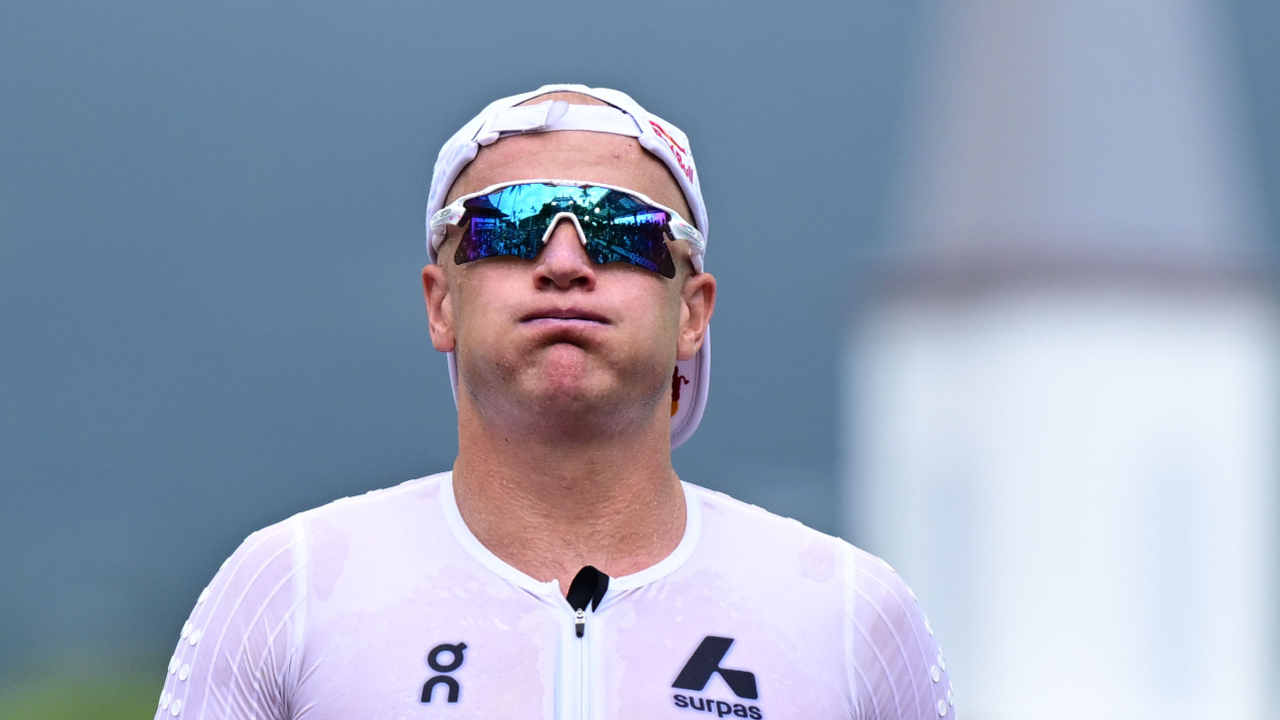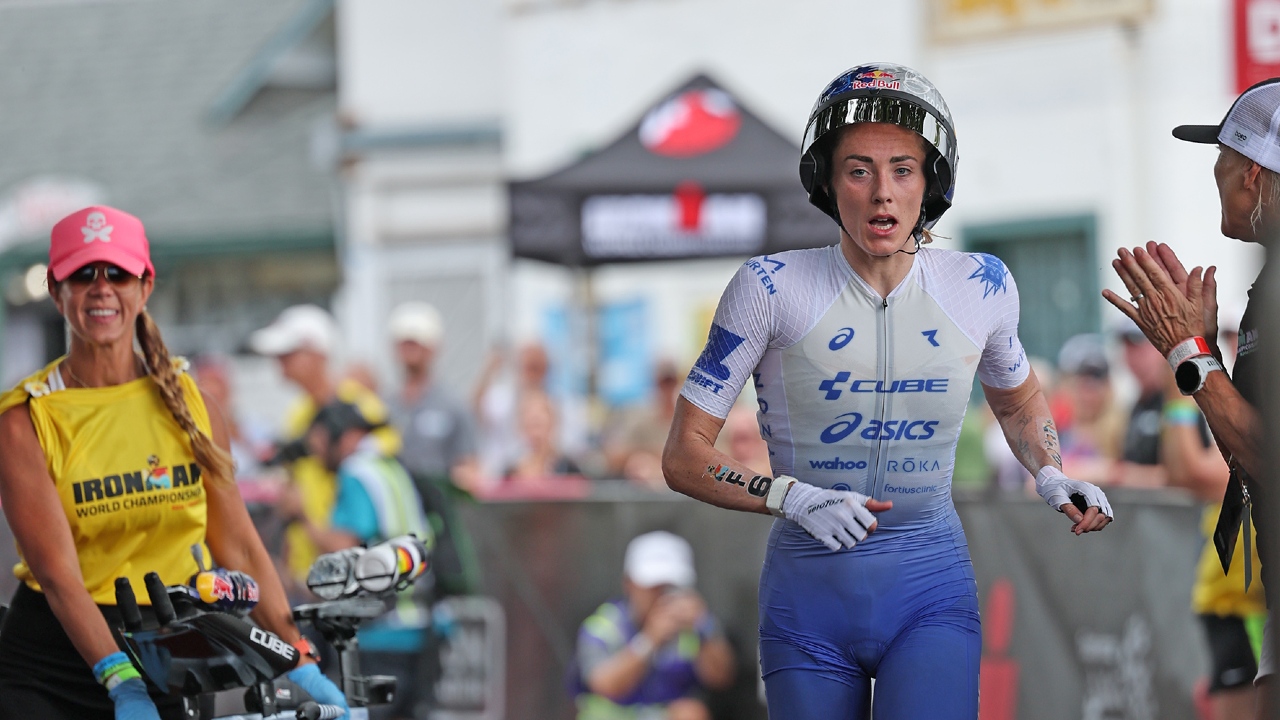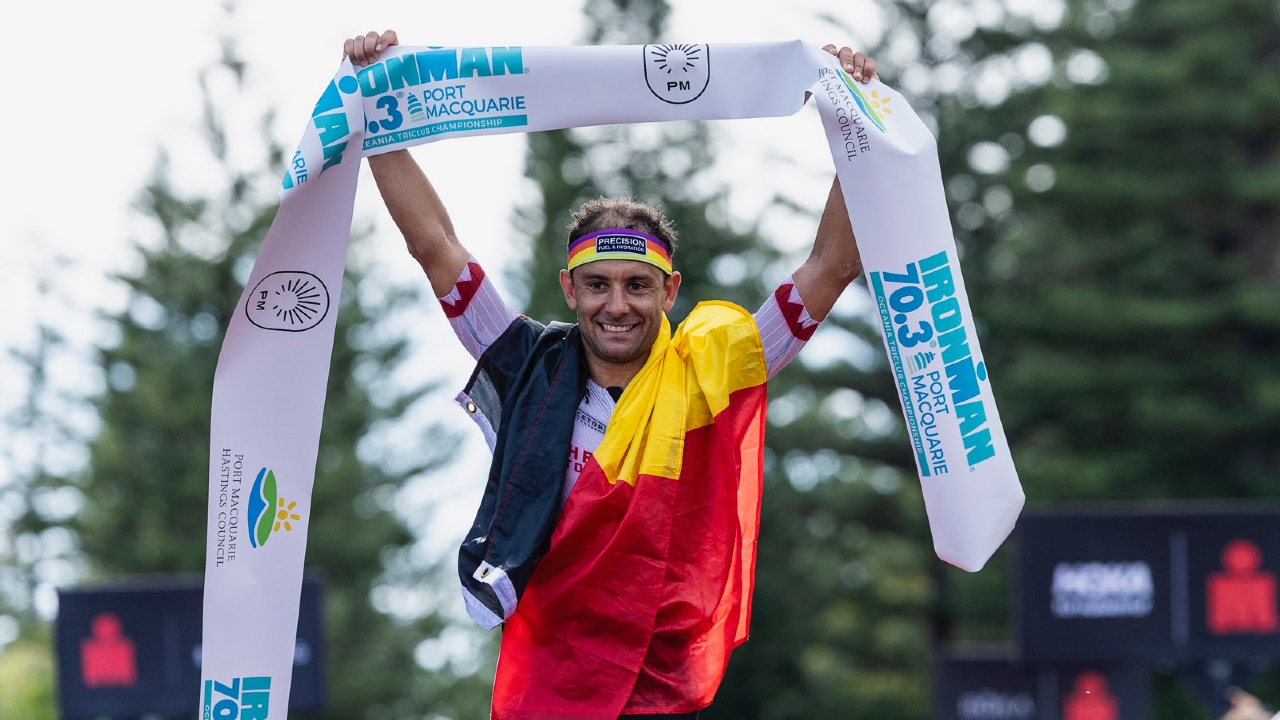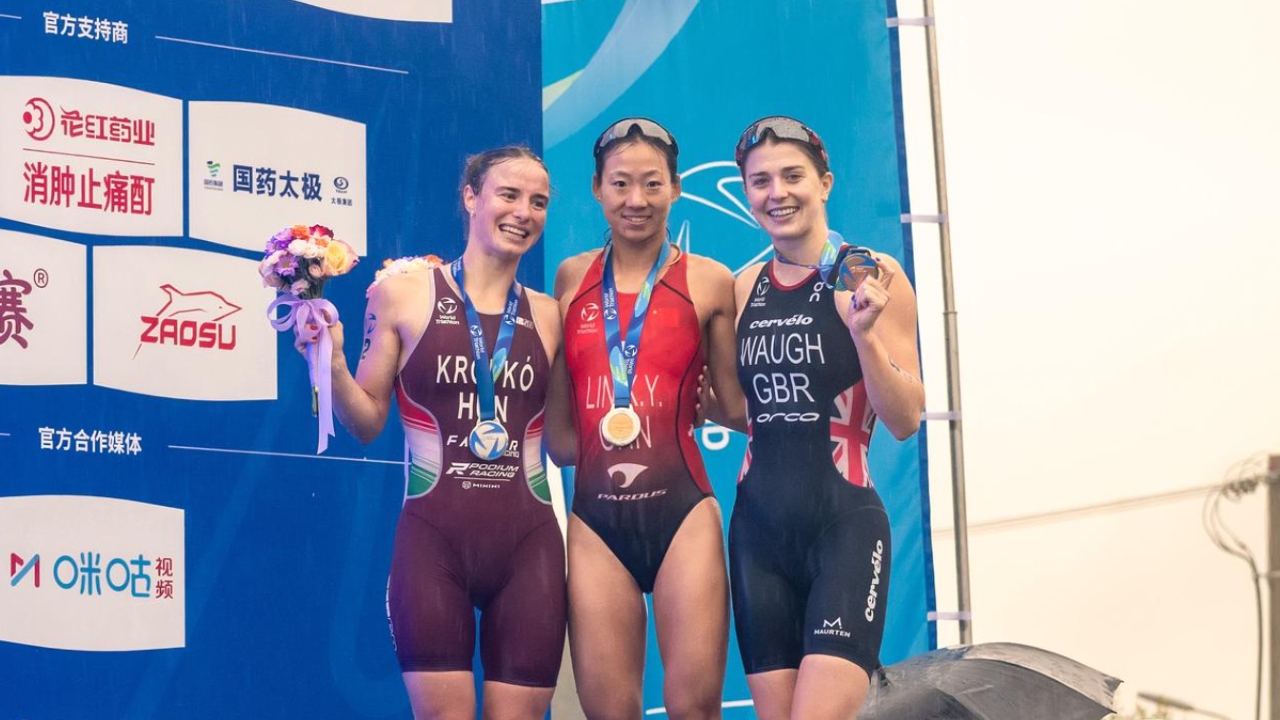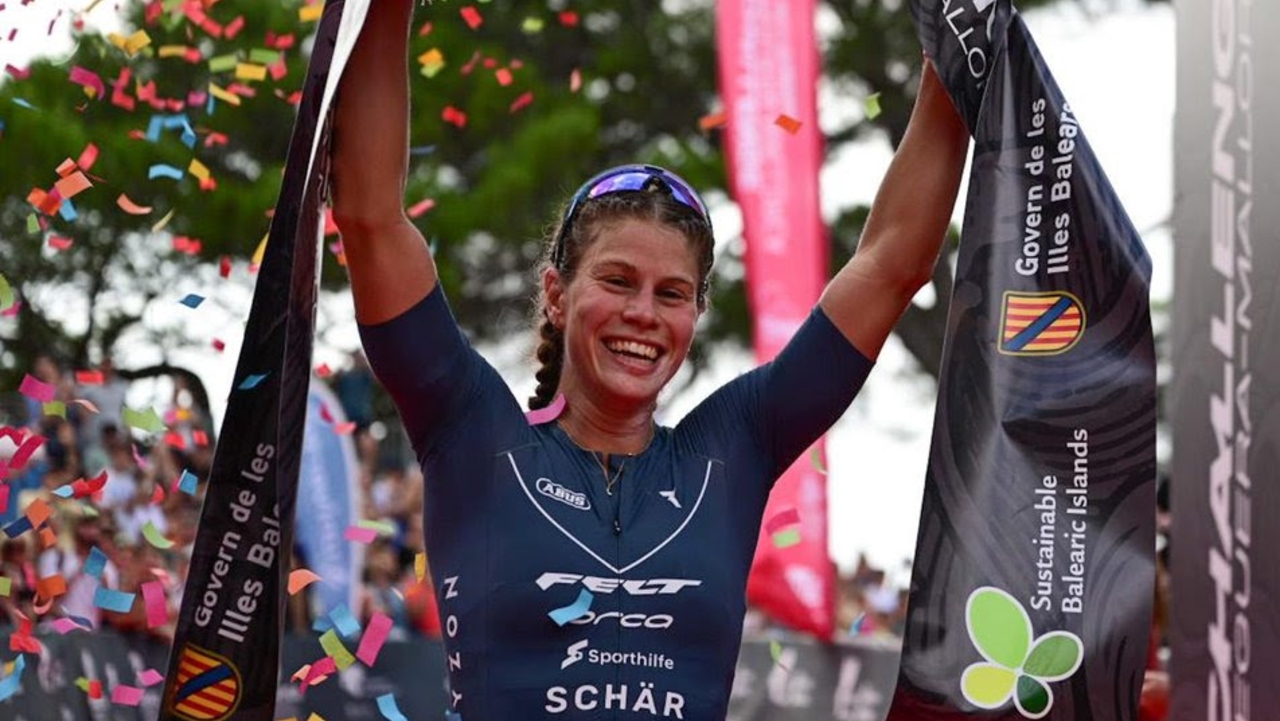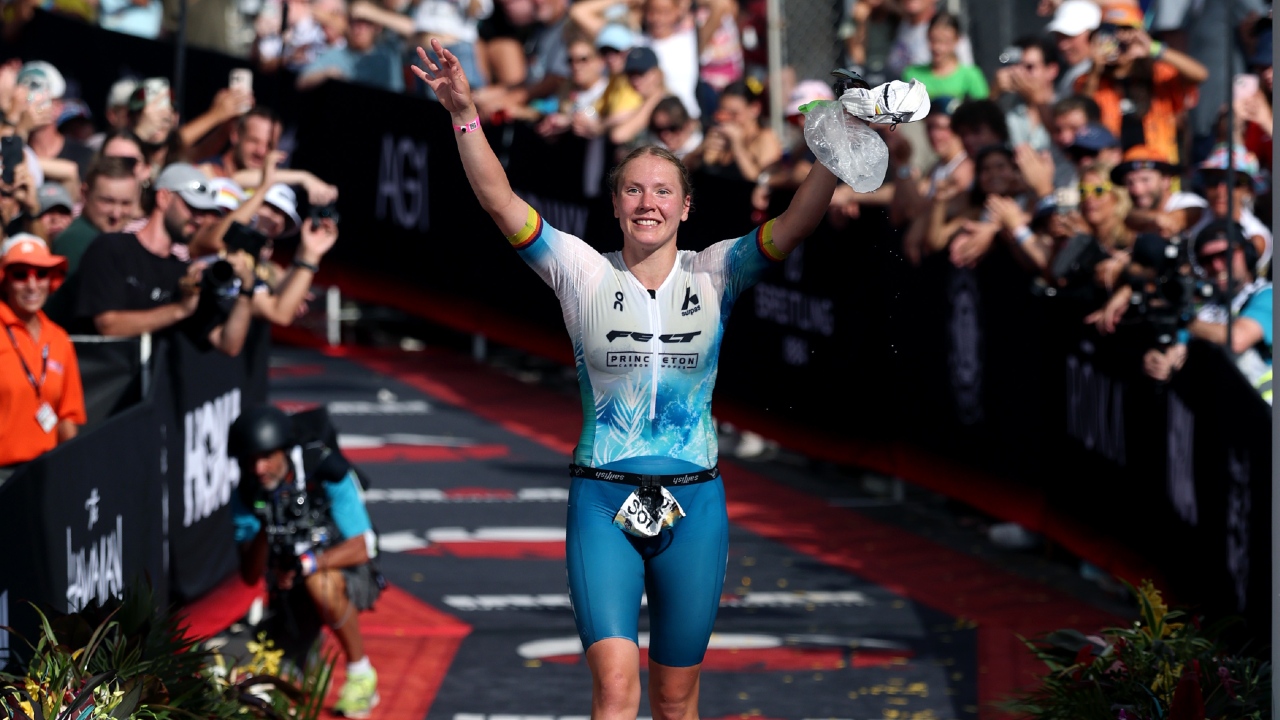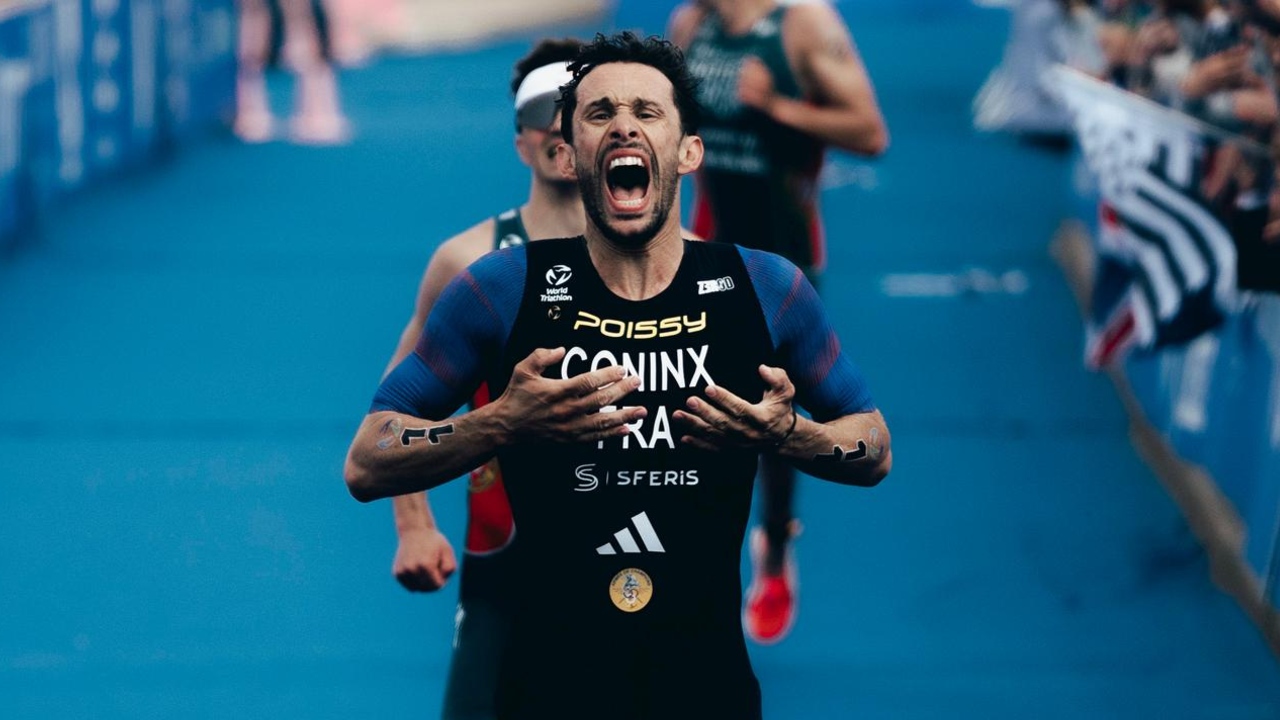





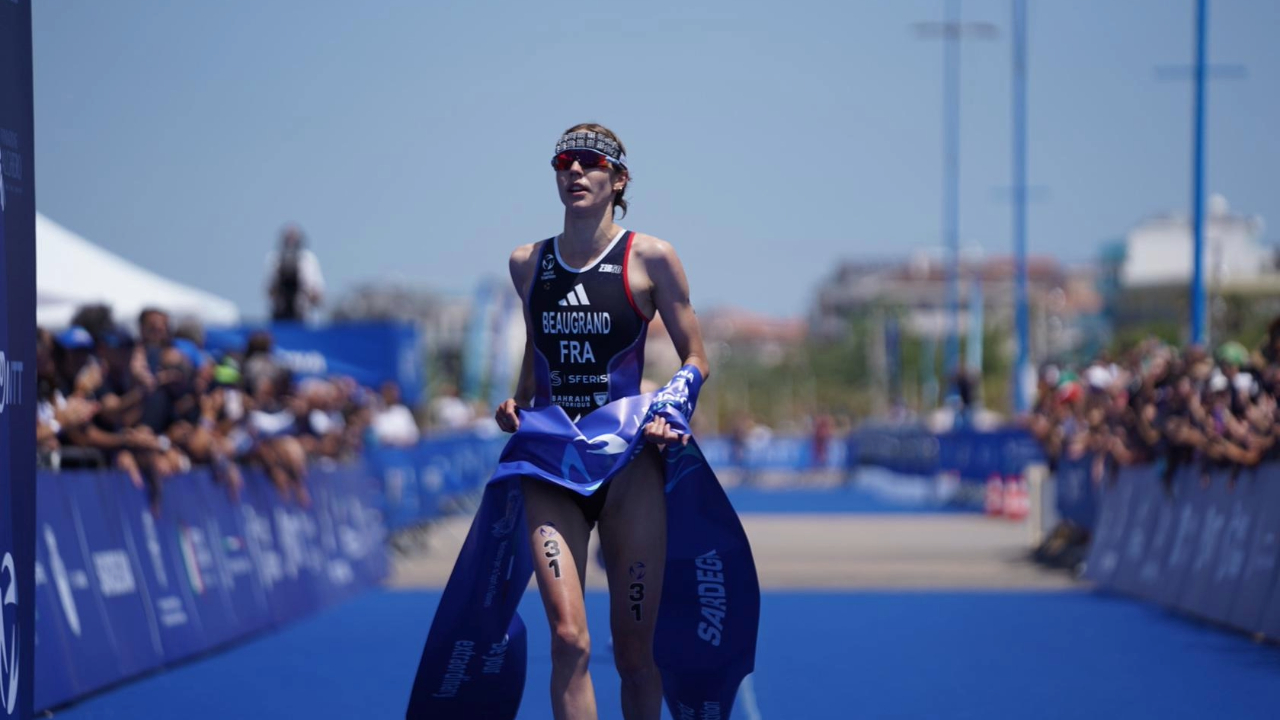
This is a preview of the event – click on the names to read about fantastic individual victories for French duo Cassandre Beaugrand and Dorian Coninx. And then to round things off Les Bleus won the Mixed Team Relay too!
A new venue for the WTCS sees the world’s leading triathletes arrive on the French peninsula of Quiberon seeking both individual and team glory as the first of the season’s LA28 Mixed Relay qualifying races promises to thrill and excite in equal measure.
Big names like Matt Hauser, Hayden Wilde and Beth Potter may be missing from the starting lists, but there is still plenty of quality on show as the race for both Series and Olympic points continues apace.
Quiberon is also the first sprint-distance WTCS race of the 2026 season, and if you throw in the forecast high temperatures and possible wetsuit uncertainty, a beach start and a four-loop bike circuit, not to mention the much-anticipated showdown between Cassandre Beaugrand and Tilda Månsson, you can understand why this race is set to be a real firecracker.
Start time and how to watch
The Elite men will get things underway on Saturday, June 20, at 10:00 local time in France, with the medal ceremony planned for 11:05. This is a Central European time zone, which means the start time will be 09:00 in the UK, 04:00 on the USA’s East Coast, 03:00 in Central USA, and 01:00 on the Pacific Coast.
In Western Australia (AWST), it gets underway at 16:00, Central Australia (ACST) at 17:30, and Eastern Australia (AEST) at 18:00. The race starts in New Zealand at 20:00.
The Elite women will start at 12:00 local French time, which will be 11:00 in the UK, 06:00 on the East Coast, 05:00 in Central USA, and 03:00 on the Pacific Coast. This means an 18:00 start AWST, 19:30 ACST, and 20:00 start AEST. The women start at 22:00 in New Zealand.
The Mixed Relay event will take place on Sunday, June 21, with the athletes expected to enter the water at 17:00 local French time. This will be 16:00 in the UK, 11:00 on the East Coast, 10:00 in Central USA, and 08:00 on the Pacific Coast.
In Western Australia (AWST), it gets underway at 23:00, Central Australia (ACST) at 00:30 Monday, and Eastern Australia (AEST) at 01:00 Monday. The race starts in New Zealand at 03:00 on Monday.
All the action will be available to watch live via Triathlonlive.tv
The Quiberon course
Quiberon is a commune in the Morbihan department in Brittany. It is located at the southern end of the famous Quiberon Peninsula, facing the Atlantic Ocean. The area is a popular destination for its seascapes and mild ocean climate.
The swim consists of a single 750m lap in Port Maria, where the temperature should be between 14.9C and 19.3C.
The bike course is a generally flat 22km ride around four laps of the town. The course is not particularly technical overall, although some urban sections include tight changes of direction and turns. Coastal sections may be exposed to windy conditions, which could influence race dynamics.
The 5km running course is also flat, with the route taking in a coastal out-and-back course.
The Mixed Relay course on Sunday includes a different run section, which takes the athletes more into the local town centre.
Elite men – Can anyone stop Vilaça from winning again?
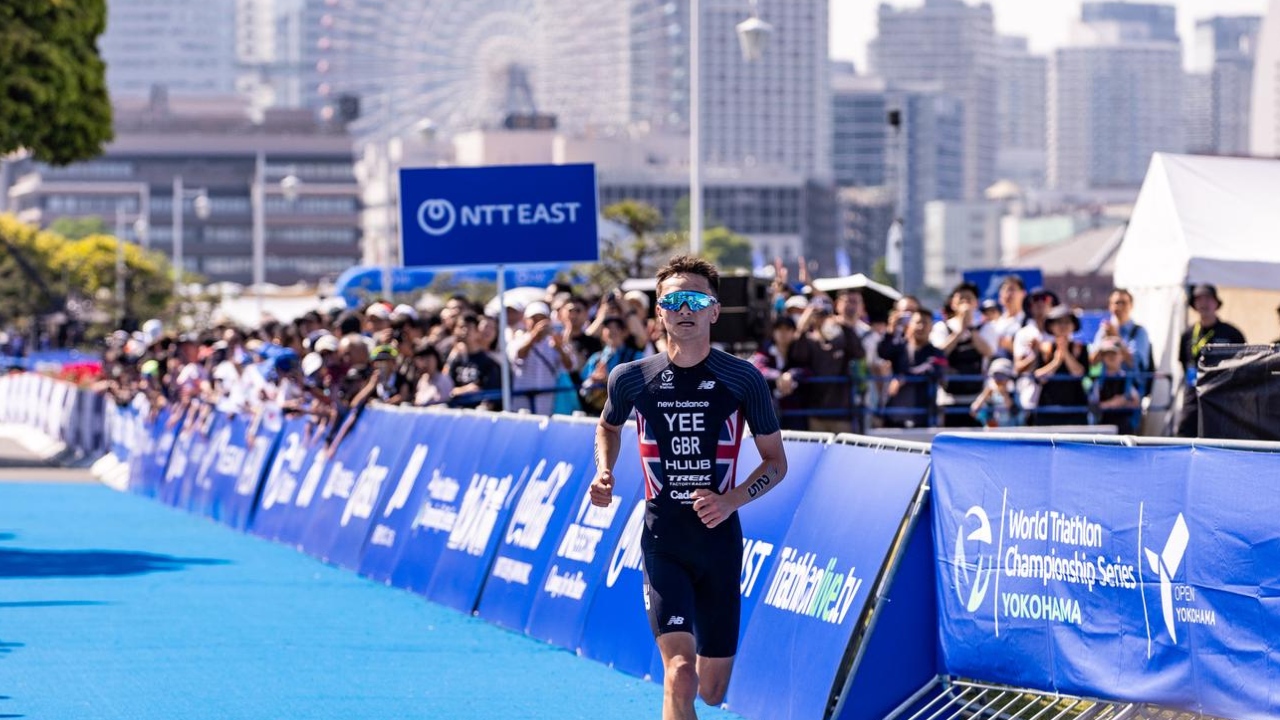
Two starts, two wins; now that Portugal’s Vasco Vilaça finally has a taste for success, it is going to take something special from his nearest rival, Miguel Hidalgo (BRA) or the likes of Alex Yee (GBR) and Henry Graf (GER) to stop him at Saturday’s inaugural event in Quiberon.
Huge wins in Samarkand and Alghero – his only races so far this campaign – have put Vilaça on top of the Series. The second of those was arguably his most impressive, seeing off the 2025 Alghero winner Hidalgo and a start list – if not finish list – that included Matt Hauser (AUS) and Alex Yee (GBR).
Neither of the big names finished, but the points speak for themselves.

Arguably, Vilaça’s finest result before this season was when he pushed Hauser all the way over the same distance, in similar heat, in the French Riviera last year, and this could again be the Vasco show.
Yee was close to catching up in Alghero before the gap widened on the bike to something insurmountable, and he will not want to let that happen again. But 20 seconds was all the front pack needed out of the water in the Riviera race to make their break stick, so that will again be the goal for them here.
Hidalgo led from the swim there, and Henry Graf (GER) also threatened. With two and one silver medals, respectively, this year so far, both are in form and ready to let rip over the shorter distance. Graf’s DNF after a double crash in Alghero will no doubt have left him hungrier and wiser.
Ricardo Batista finally hit the Series podium for the first time in Alghero after years of knocking on the door. The Portuguese no.2 starts third as a result and can be a strong ally for his teammate.
Of the French athletes, Yanis Seguin is the top-ranked after his first top-ten finish in Alghero, but Dorian Coninx could be an even bigger threat thanks to a fourth place in Italy that suggests he is back near his prime.
Elite women – Beaugrand and Månsson set for showdown
Two of the three race winners in the women’s 2026 WTCS will face off against one another for the first time of the season at this weekend’s inaugural WTCS Quiberon.
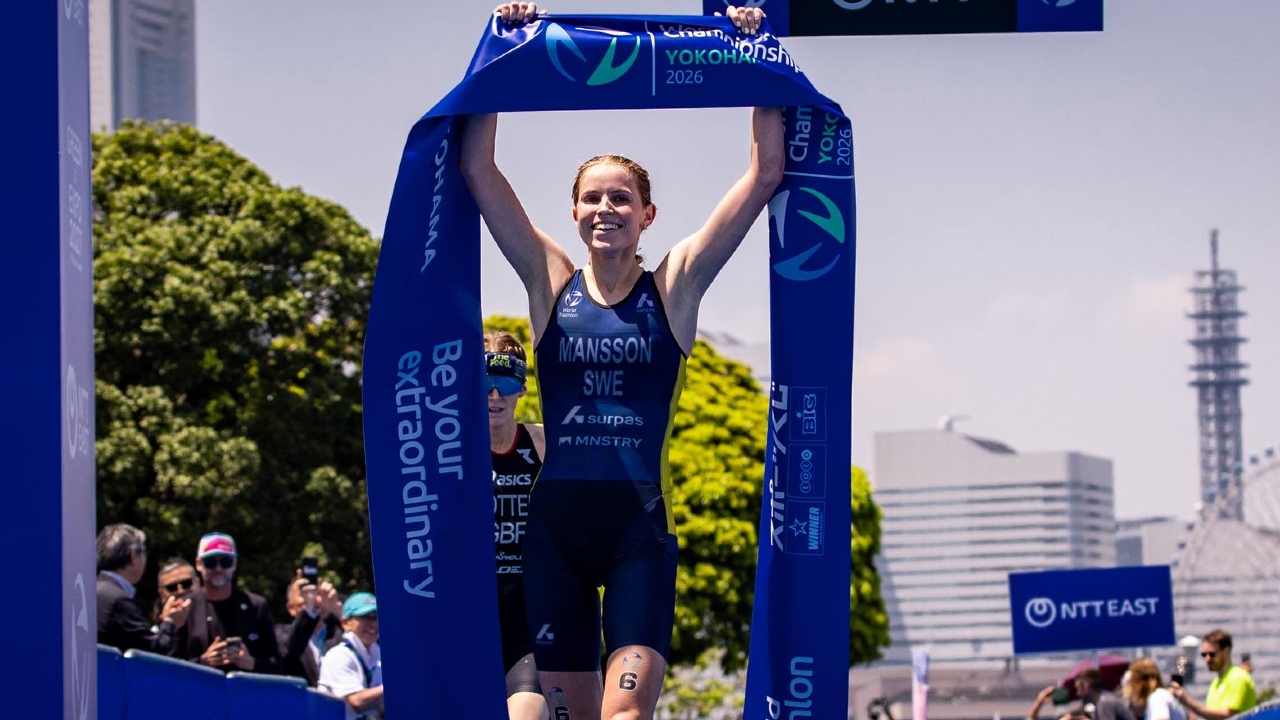
With Beth Potter (GBR), winner of the season opener in Samarkand, absent, the duel between Alghero winner Cassandre Beaugrand (FRA) and Yokohama victor Tilda Månsson (SWE) could define the race on the Atlantic peninsula. Indeed, their contest could well prove the first instalment of the clash between the sport’s present and its future.
For the past two years, Beaugrand has been peerless in women’s triathlon. Seven WTCS finishes have yielded six wins since the start of 2024, with the Olympic title thrown in too.
Her wins at WTCS French Riviera, the T1 World Cup in Lievin and the Paris Olympics show how much she enjoys competing for her country on home turf, and she will once again be the big favourite to spring home on Saturday afternoon.
Månsson, the shock winner in Yokohama, is just as adept over the sprint distance. Three times a World Cup winner in the format, the 2022 World Junior champion is one of the few women to possess the raw speed that could potentially trouble Beaugrand.
Given the age and experience disparity between the two athletes, Beaugrand will inevitably arrive in Quiberon as the favourite. But if Månsson is to follow anything like the trajectory of the Olympic champion in the coming years, this could be a chance to lay down an early marker.
The late withdrawal of newly crowned European champion Lisa Tertsch (GER) means Leonie Periault (FRA) is the only other sprint distance WTCS winner from the past two seasons starting.
Periault stunned Beaugrand in Hamburg last summer with a truly scintillating run. Should she produce anything similar, there is a good chance neither Beaugrand nor Månsson will be able to stop her from adding another Series gold to her collection.
Periault is joined by fellow 2025 race winner Jeanne Lehair (LUX) – already twice a WTCS medallist this year – and two familiar faces to the podium: Emma Lombardi (FRA) and Georgia Taylor-Brown (GBR). In addition, Bianca Seregni (ITA) was a double WTCS medallist last year and will be looking to open her account for 2026.
Thrilling Mixed Relay sets up qualification battle
The first Mixed Relay event of the LA28 qualification period ensures there will be crucial ranking points and plenty of excitement on offer when attention turns to team matters on Sunday at 17:00 local French time.
There are 18 nations lined up to take part in this opening event, with Australia, Great Britain, France, Germany, Italy, Hungary, the Netherlands, Switzerland, the USA, Spain, New Zealand, Belgium, Japan, Portugal, the Czech Republic, Brazil and Luxembourg all expected to line up.
The final teams of two men and two women must be declared by 15:00 on Sunday, with the order of woman, man, woman, man, and then seeing the athletes complete a 250m swim, 9km bike ride and 1.25km run before tagging their next teammate.
For individual athletes, the LA28 qualification period opened in May and runs until May 2028. Athletes score points through WTCS races, World Cups, Continental Championships and the Championship Finals. Nations earn quota places rather than individual athletes qualifying directly.
Up to three athletes per gender can be selected by a nation if it has three athletes in the top 30 of the Olympic Qualification Ranking. Otherwise, they can select a maximum of two athletes per gender.
The relay route effectively provides a shortcut to Olympic qualification. If a nation qualifies a Mixed Relay team for LA28, it receives two men’s quota places and two women’s quota places, which can then be used to select athletes for both the individual races and the relay.