

CONTENTS
- Understanding why familiar training can feel different
- Why sleep belongs in the recovery conversation
- Fatigue needs an assessment of its own
- Fuelling and bone health should remain part of the picture
- What a menopause consultation should help clarify
- Making room for the athlete and the person
QUICK SUMMARY
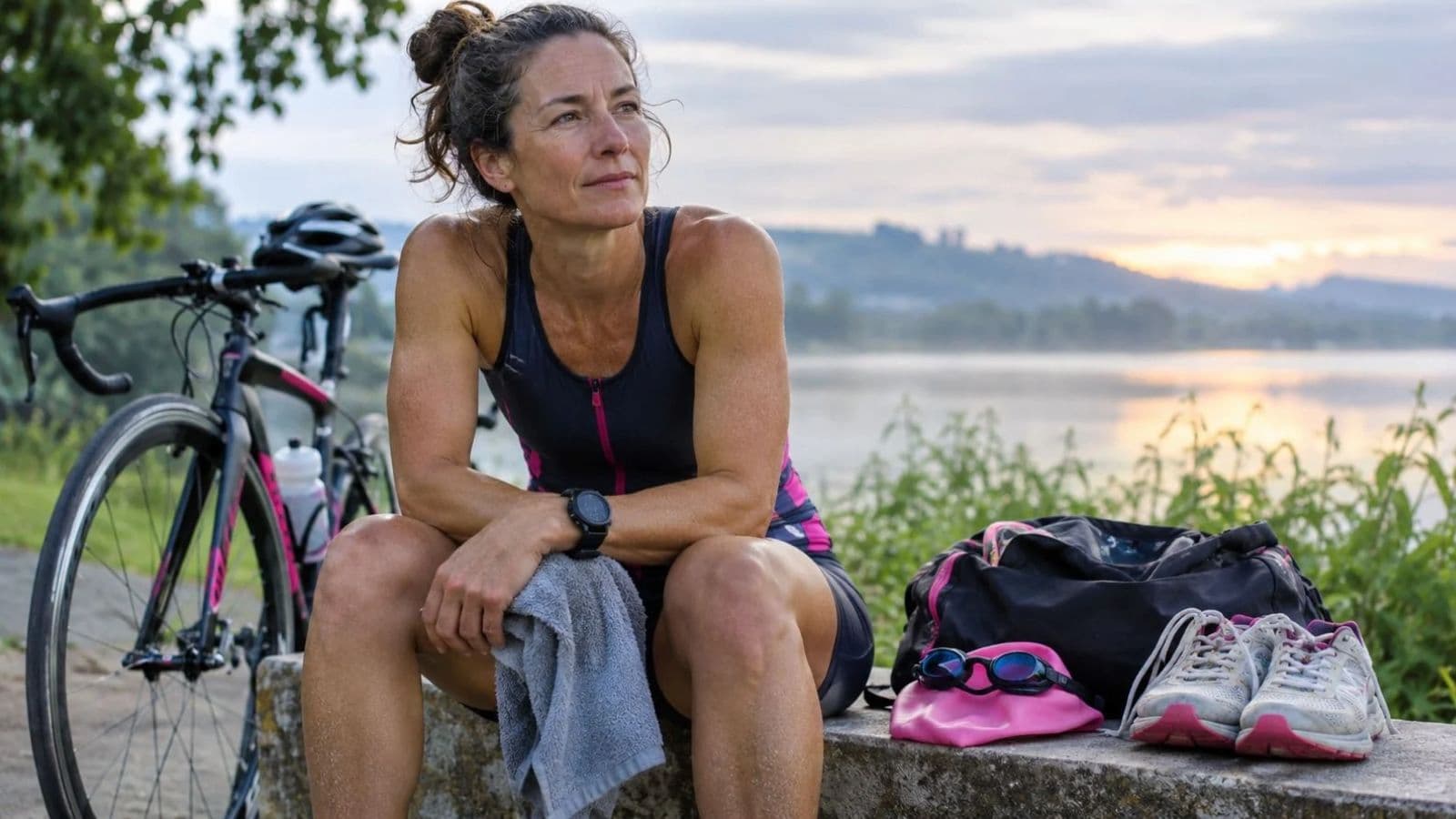
The menopause transition can bring changes in sleep, mood and physical comfort that make familiar training feel different. For triathletes, understanding these changes means considering symptoms alongside training demands, nutrition and everyday pressures. Appropriate assessment can identify other causes of fatigue, guide menopause treatment where needed and help athletes make informed decisions about recovery and their goals. A triathlete who finds herself unusually tired may first look at her training plan. Has the mileage increased? Was the weekend ride too demanding? Does she need another rest day? These are reasonable questions. But if her sleep has become unsettled, her periods are changing and she no longer feels like herself between sessions, the conversation needs to include her health as well.
In a consultation, I want to understand what has changed beyond the swim, bike and run. Is she waking during the night? Are there new pressures at work or home? Has eating become difficult to fit around training? Is she experiencing symptoms she has not thought to mention because they seem unrelated to sport? Perimenopause may be part of that picture. It should be taken seriously, without becoming an explanation for every symptom. The aim of a consultation should be to understand what is affecting the individual and what support would make a meaningful difference.
Understanding why familiar training can feel different
Perimenopause is the transition before menopause, when hormonal changes can bring symptoms while periods are still occurring. Menopause is generally identified after 12 months without a period, provided hormonal contraception does not obscure the picture. The NHS describes a wide range of possible symptoms, including night sweats, sleep problems, anxiety, difficulty concentrating and muscle or joint discomfort. Some women experience little disruption, while others find that symptoms affect work, relationships and daily routines.
For someone who trains regularly, the first concern may be a change in how exercise feels. A familiar pace seems less comfortable, motivation becomes harder to find or the time between sessions feels insufficient. Those observations are useful, but they do not establish the cause on their own. I’m cautious about treating menopause as a predictable decline that every athlete must manage in the same way. Two women at a similar life stage may have very different symptoms, responsibilities and training ambitions. Advice needs to reflect those differences.
Why sleep belongs in the recovery conversation
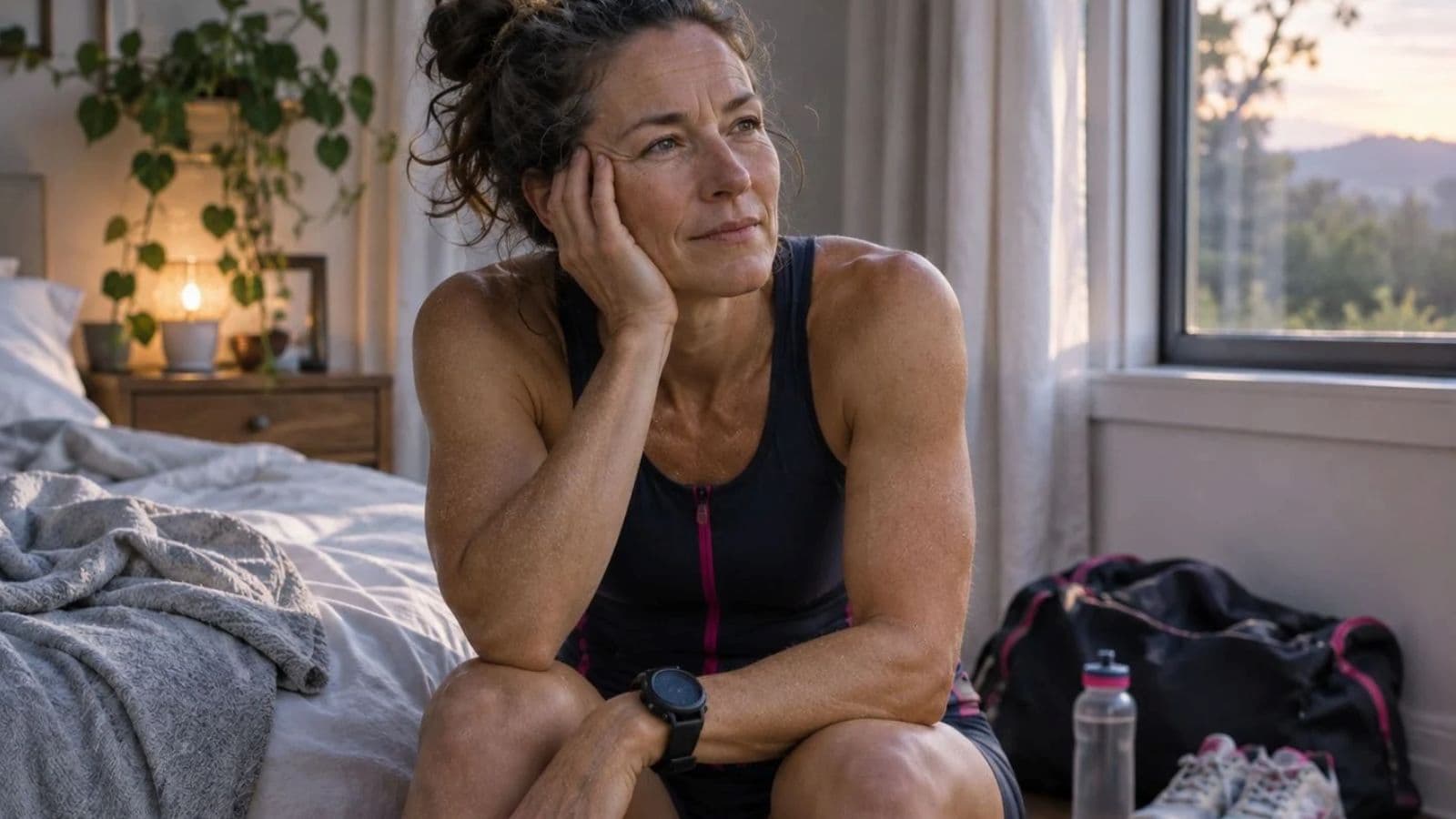
When recovery feels difficult, it is tempting to concentrate on what happens after a workout: stretching, a recovery drink or another piece of equipment. Yet it is also worth asking what happens during the night. Night sweats can interrupt sleep, and anxiety may make it difficult to settle again. A triathlete might then shorten the night further to reach an early pool session, while fitting work and family life around the rest of the day. Looking only at the training load can miss that wider context. I’d want to discuss whether the schedule allows enough time for sleep, whether late caffeine or alcohol seems to affect it, and whether a regular evening routine is realistic. NHS advice includes regular sleep routines and a comfortable sleeping environment. These measures can be helpful starting points, but persistent sleep problems deserve assessment rather than repeated advice to relax.
Moving a demanding session after several unsettled nights is one option to discuss with a coach. It allows the plan to respond to the person, rather than expecting the person to meet every session regardless of circumstances. Sleep symptoms also need to be considered on their own merits. Loud snoring or episodes of choking or gasping overnight, for example, can point towards sleep apnoea and should be mentioned to a clinician.
Fatigue needs an assessment of its own
One thing I want to avoid is an athlete feeling that persistent exhaustion is simply something to put up with because she is approaching menopause.
Fatigue can have several explanations. Iron deficiency anaemia can cause tiredness, breathlessness and palpitations; heavier menstrual bleeding is relevant to that assessment. Thyroid conditions, recent illness, disrupted sleep and psychological strain may also need consideration. A GP consultation should bring those possibilities together with the training history. When did the change begin? Is tiredness limited to exercise, or does it affect ordinary activities? Has there been a change in bleeding, appetite, medication or body weight? The answers help determine whether examination or targeted investigations are appropriate.
Blood tests can be useful when there is a clinical reason for them. They should answer a question, rather than become a standard package offered to every athlete who feels below her best. Likewise, taking iron without establishing whether it is needed may leave the underlying explanation unexplored. This is separate from diagnosing menopause. NICE generally recommends identifying typical perimenopause or menopause clinically in otherwise healthy people aged 45 or over, without confirmatory hormone tests. Different considerations apply at younger ages or where the situation is less clear.
Fuelling and bone health should remain part of the picture
The menopause conversation should also leave room to discuss food without judgement. A training week can look well organised on an app while meals are being missed between early starts, meetings and family responsibilities. The International Olympic Committee describes how problematic low energy availability can affect health and performance through Relative Energy Deficiency in Sport, known as REDs. This concerns insufficient energy available for the body’s needs after exercise, and it should not be overlooked because an athlete is also experiencing menopause symptoms.
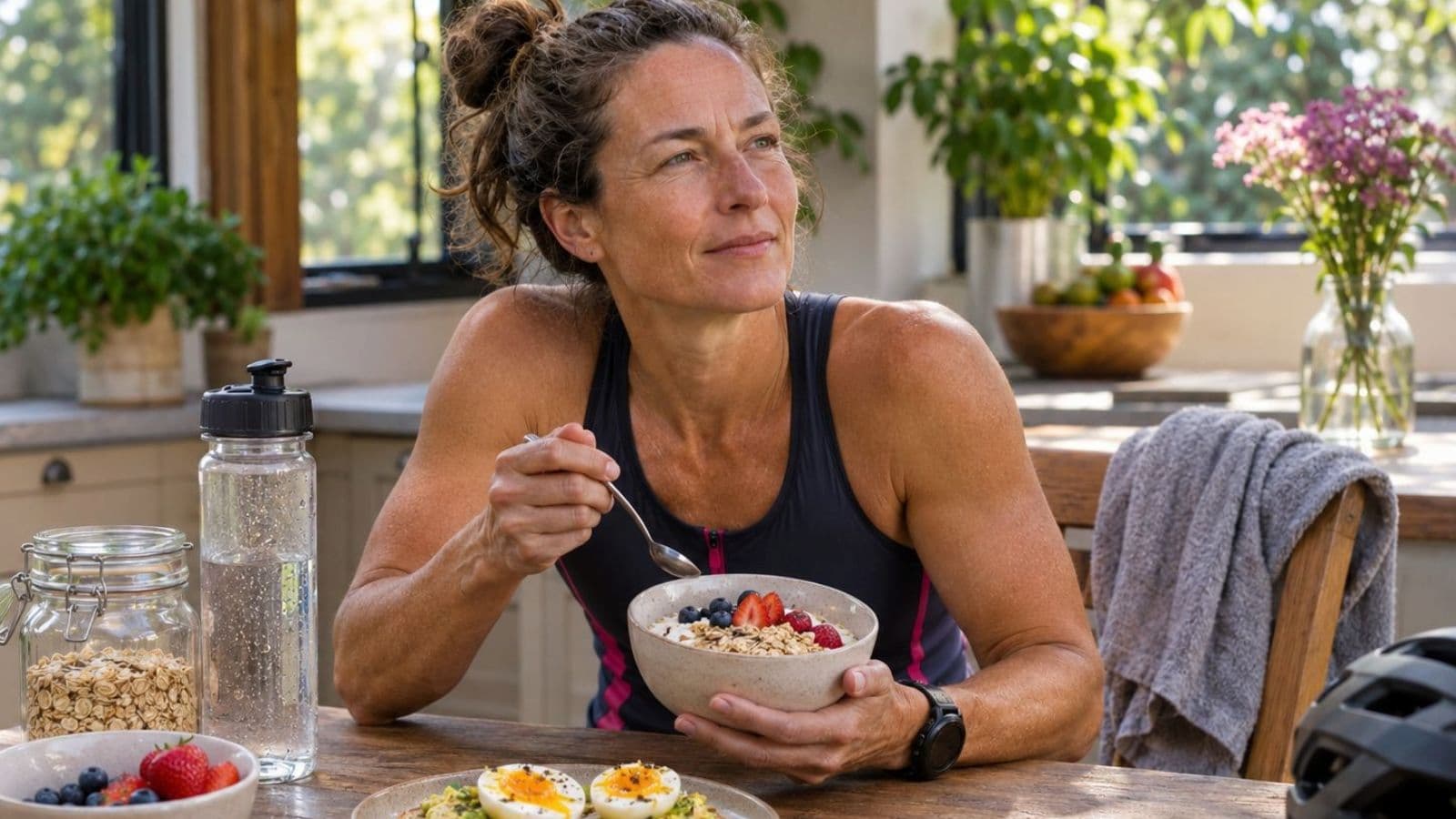
I’d want to understand whether eating has kept pace with training, whether there are restrictive habits or worries about weight, and whether a referral to a registered sports dietitian would help. There is little point discussing recovery in isolation from the food available to support it.
Bone health matters too. Lower oestrogen levels are relevant to osteoporosis risk, and NHS and RCOG advice includes weight-bearing activity, strength-building exercise and appropriate nutrition. A coach or physiotherapist can help consider how these fit within an existing programme, taking account of previous injury and experience. That discussion should include any history of fractures, persistent localised pain or early menopause. Adding more exercise without reviewing the total demand is unlikely to be the most useful starting point.
What a menopause consultation should help clarify
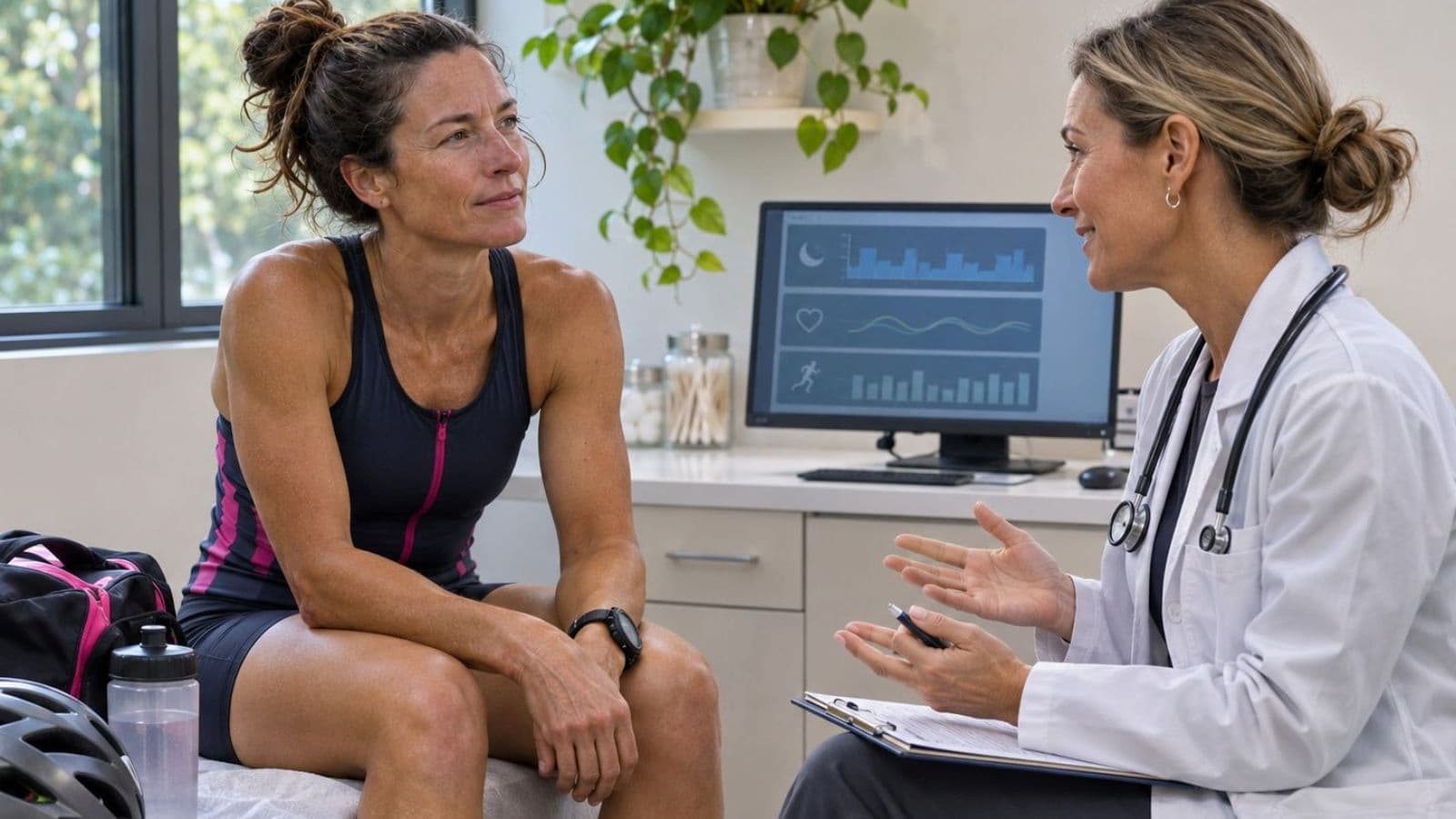
A useful consultation should give someone space to explain both her symptoms and what she wants to continue doing. For a triathlete, being able to enjoy training or prepare for an event may be an important part of that conversation. Treatment options can include lifestyle support, hormone replacement therapy (HRT) and other approaches selected according to symptoms and individual circumstances. HRT can help hot flushes, night sweats and menopause-related sleep problems, but the benefits and risks need to be discussed in the context of the person’s medical history and preferences. I’d want that discussion to cover what treatment is intended to help with, how its effects will be reviewed and what to do if symptoms persist. A clinical treatment decision should not be based on a promise of faster race times.
NICE also recommends considering menopause-specific cognitive behavioural therapy for sleep difficulties associated with hot flushes and night sweats. Vaginal dryness or urinary symptoms deserve attention as well, particularly when they are making exercise uncomfortable; local treatment may be appropriate.
There are symptoms that should prompt further help. Any vaginal bleeding after 12 months without periods needs assessment, even when it happens only once. Unexpected bleeding while taking HRT should be reported so it can be assessed in context.
Stop exercise and contact NHS 111 for new, unexplained breathing difficulties. Call 999 for severe breathing difficulty, fainting during exercise, or persistent chest pain, especially with spreading pain, sweating, sickness or breathlessness.
Making room for the athlete and the person
Triathlon can provide more than a finishing time. It may offer friendship, confidence, time outdoors and a part of life that feels personally meaningful. Those reasons for taking part deserve a place in conversations about health. A brief record of symptoms, sleep and training can help explain what has changed. It can also make a conversation with a coach more specific: which sessions remain enjoyable, when fatigue is most noticeable and what adjustments might be manageable. It should support discussion, rather than become another score to worry about.
The same principle applies when seeking menopause care at Private Medical Clinic or elsewhere: an assessment should consider symptoms in the context of the person’s wider health and priorities. Feeling persistently unwell should not be dismissed as an inevitable part of getting older, and training goals should not prevent someone from asking for help. Understanding what is happening creates room for a more useful plan. That might involve treatment, a change in training, nutrition support or further investigation. The starting point is a conversation that takes both the symptoms and the athlete seriously.
Disclosure: Dr Teresha Jayawardena is affiliated with Private Medical Clinic, which offers menopause consultations. Any agreed publication fee or other commercial relationship will be disclosed to TRI247.