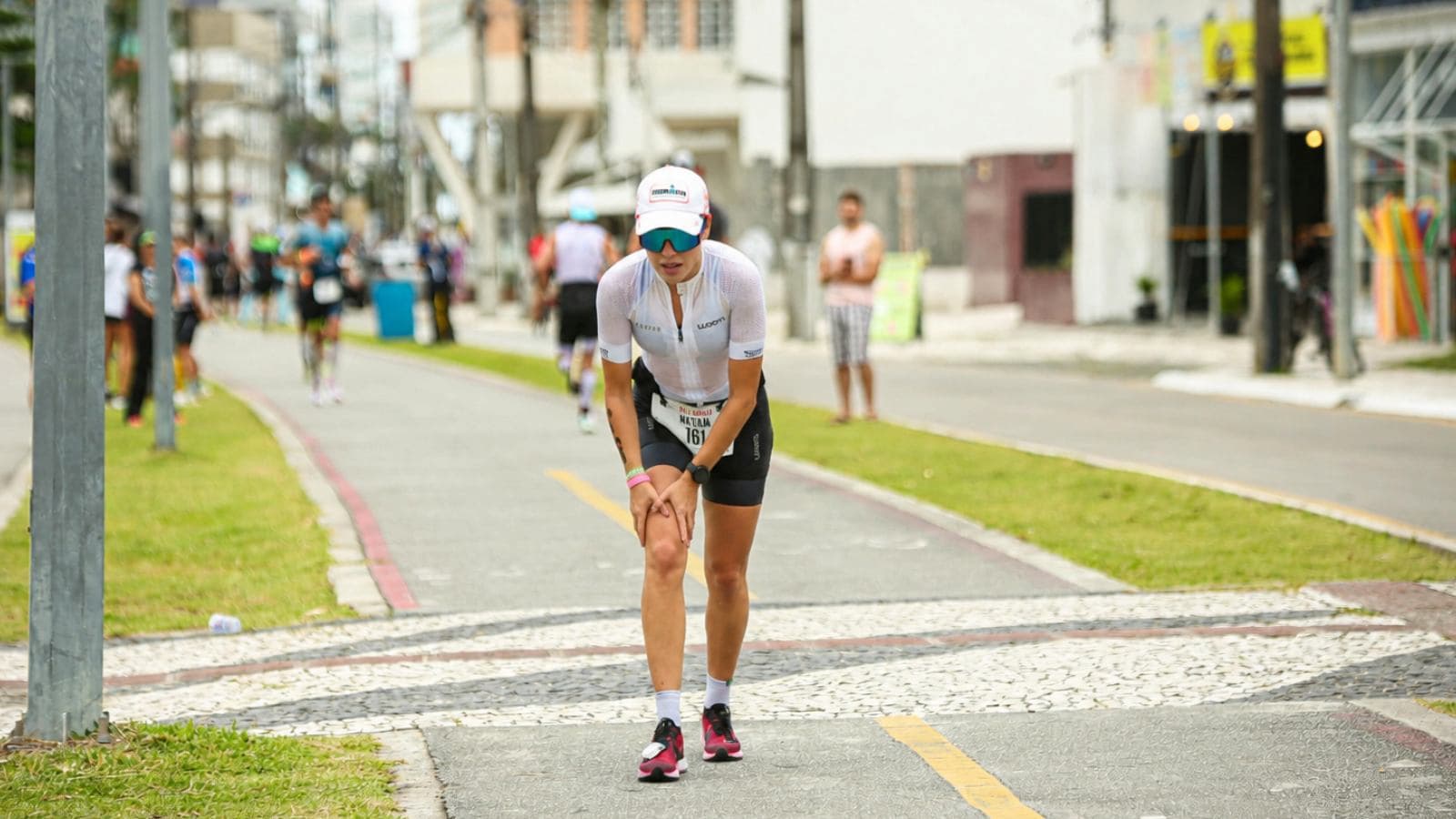


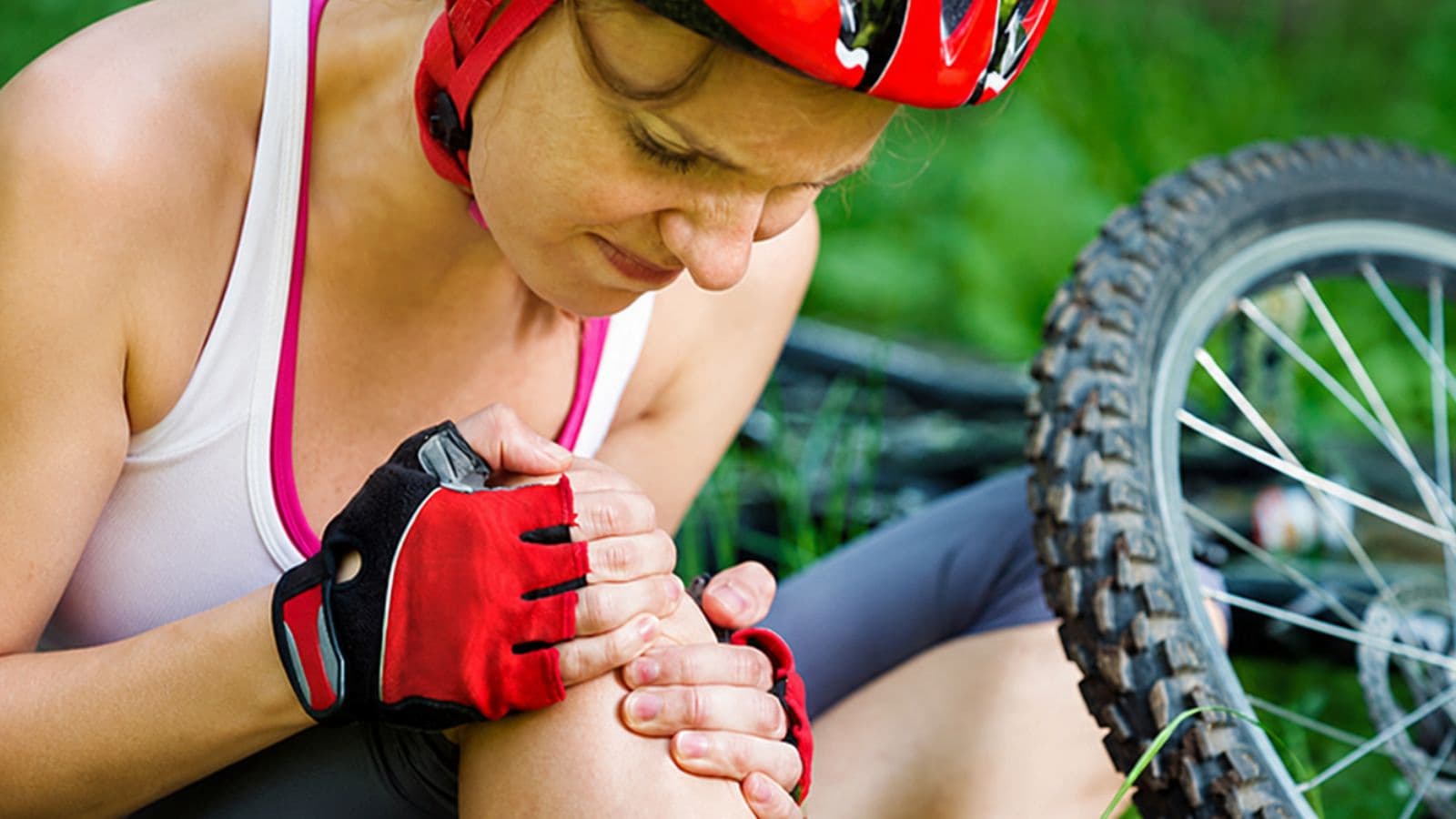
Knee swelling after running a triathlon usually means the joint or surrounding tissues have become irritated during or after prolonged exercise. Possible causes include overuse, an acute injury, irritation inside the knee joint, tendon or bursa problems, or aggravation of a previous knee issue. The run may be when you notice the problem, but the cause is not necessarily running alone. Cycling places repeated demands on the knee before the run even begins, and fatigue can change how you move later in the race. A small amount of temporary discomfort after an unusually demanding event is different from obvious joint swelling. A knee that becomes significantly swollen, painful, unstable, locked, red, or difficult to bear weight on should not simply be treated as normal post race soreness.
In Short
- Knee swelling is different from normal muscle soreness.
- High training or racing load can irritate the knee.
- Cycling can contribute before the run begins.
- Previous knee injuries may become irritated.
- Sudden twisting or impact can cause acute swelling.
- Swelling inside the joint can limit knee movement.
- Do not repeatedly train through unexplained swelling.
- Severe or persistent swelling requires medical assessment.
Why Does the Knee Swell?
Swelling is part of the body’s response to irritation or injury. Fluid can accumulate within the knee joint or in tissues around it. Depending on the cause, the knee may look visibly:
- Larger
- Feel stiff
- Become warm
- Lose some of its normal range of motion
The timing provides useful information. Swelling that develops gradually after a long race may suggest a different problem from swelling that appears rapidly after a fall, twist, or sudden sharp pain. Whatever the timing, swelling should be treated as a symptom rather than a diagnosis.
A Triathlon Creates Repeated Knee Loading
The knee works through thousands of repetitions during the bike and run legs. A well prepared athlete can tolerate substantial training and racing loads, but tissues still have limits. Problems can develop when race demands exceed what you have progressively prepared for. This is why what training habits increase injury risk in runners remains relevant to triathletes.
- Rapid training increases
- Insufficient recovery
- Excessive hard sessions
- Continuing through pain
can all increase the chance of developing problems. Race day often exposes issues that were already developing during training.
The Bike Leg Can Contribute
Knee swelling noticed during the run may have started with irritation accumulated on the bike. Cycling repeatedly bends and extends the knee. A poorly positioned saddle or unsuitable bike setup can change how that load is distributed. A saddle that is:
- Too low
- Too high
- Otherwise poorly positioned
can contribute to discomfort in some riders. Triathletes experiencing repeated bike related knee problems should review how to prevent your knees from hurting during long cycling rather than assuming the run is always responsible.
The transition from cycling to running then places a different type of load on already fatigued legs.
Bike Fit Should Be Checked
Small position problems become more important when repeated for thousands of pedal revolutions.
- Saddle height
- Saddle position
- Cleat setup
- Overall bike fit
can all influence how the legs move. A rider who is uncomfortable may also compensate by changing hip, knee, or foot movement. Learning how do you adjust your bike for a better fit can help identify basic setup problems, although persistent knee symptoms may require assessment by a qualified bike fitter or healthcare professional.
Do not repeatedly change several fit variables at once. It becomes difficult to determine which adjustment helped.
Running Volume Can Exceed Your Current Capacity
A triathlon run is particularly demanding because it begins after swimming and cycling. Your legs are already fatigued when running starts. If training has not adequately prepared you for the race distance or total workload, the run can expose that gap. Gradual progression is therefore important. The principles in how to avoid running injuries as mileage increases in a triathlon apply even when running is only one part of your weekly training.
- Sudden jump in long runs
- Race distance
- Hills
- Intensity
can increase stress faster than tissues adapt.
Fatigue Can Change Running Mechanics
Running form naturally changes somewhat as fatigue develops. The problem occurs when fatigue becomes severe enough that you lose control of your normal movement. Your stride may become:
- Heavier
- Stability can decline
The knee may experience loading differently than when you are fresh. Developing how to improve your triathlon running form can help you recognize efficient movement, but form should not be treated as the only explanation for knee swelling.
- Training load
- Previous injury
- Strength
- Race conditions
- Recovery
can be equally important.
Patellofemoral Irritation Can Cause Knee Symptoms
Pain around or behind the kneecap is common in runners. Patellofemoral pain can become more noticeable during running, hills, stairs, or after sitting with the knee bent for long periods. It does not always produce dramatic swelling, so obvious joint swelling deserves a broader assessment rather than automatically being labeled runner’s knee.
- Training changes
- Strength
- Movement
- Previous symptoms
can all contribute.
If pain around the kneecap repeatedly returns during triathlon training, address it early instead of waiting for race day.
Tendons and Bursae Can Become Irritated
Not every swollen area means fluid is accumulating inside the knee joint. Tendons around the knee can become irritated, while bursae, small fluid filled structures that reduce friction around joints, can also become inflamed. These problems may produce more localized tenderness or swelling. Where the swelling appears and which movements cause pain can help a healthcare professional identify the involved structure.
Avoid trying to diagnose the exact tissue based only on appearance.
Previous Injuries Can Flare Up
A knee with a previous injury may respond differently to a large training or racing load.
- Old cartilage
- Ligament
- Meniscus
- Tendon
- Other joint problems
may become symptomatic when volume or intensity increases. This does not mean every episode represents a new serious injury. However, recurrent swelling deserves attention because it suggests the knee is reacting to something. Strength and load management can be important parts of prevention. How to prevent running injuries with strength and mobility training in a triathlon provides a broader framework for improving physical capacity rather than relying only on rest whenever symptoms appear.
Sudden Injuries Need More Caution
Triathlon running can include uneven surfaces, crowded courses, sharp turns, curbs, and wet ground. A fall or sudden twisting movement can injure structures inside or around the knee. Rapid swelling following an acute injury is more concerning than ordinary post race muscle soreness. Seek prompt medical assessment if you cannot bear weight normally, the knee gives way, becomes locked, develops substantial swelling, or you experienced a clear traumatic event.
Do not try to run through those symptoms.
Pacing Can Affect Late Race Fatigue
Starting the run too aggressively can accelerate fatigue. As the effort becomes unsustainable, movement can become harder to control and existing discomfort may worsen. A sensible pace is particularly important after a demanding bike leg. Understanding why is your starting pace important for long distance running can help triathletes avoid spending too much energy early in the run and struggling badly later.
Pacing cannot prevent every knee problem, but it can reduce unnecessary late race fatigue.
Strength Helps the Legs Handle Load
The knee does not function independently.
- Hips
- Quadriceps
- Hamstrings
- Calves
- Trunk
all contribute to controlling the leg during running. Strength training can improve the capacity of these muscles to tolerate repeated loading. A program based on what strength routine should triathlete runners do to stay injury free can complement swimming, cycling, and running rather than waiting for weakness to become obvious late in a race.
Strength training still needs gradual progression and adequate recovery.
Recovery After the Race Matters
Do not immediately return to normal hard training because the event is finished. If your knee is swollen, reduce activities that clearly aggravate it and monitor how symptoms change. Recovery needs depend on:
- Race distance
- Training history
- Symptoms
- Individual response
Continuing to run on an obviously swollen knee may repeatedly irritate the problem. If swelling does not settle, keeps returning, or is accompanied by significant pain or loss of function, get it assessed rather than repeatedly testing it with another run.
Common Mistakes
- Assuming visible knee swelling is normal soreness.
- Blaming the run without considering the bike leg.
- Increasing running mileage too quickly.
- Ignoring recurring knee swelling during training.
- Making several bike fit changes at once.
- Continuing hard training on a swollen knee.
- Assuming every knee problem has the same cause.
- Returning to intense training before symptoms settle.
- Trying to diagnose a significant injury without assessment.
Practical Tips
- Note when the swelling first appeared.
- Compare the swollen knee with the other knee.
- Reduce activities that clearly worsen symptoms.
- Review recent changes in training volume or intensity.
- Check whether bike position has recently changed.
- Build running mileage progressively.
- Include appropriate strength training.
- Pace the bike and run realistically.
- Seek medical assessment for significant or persistent swelling.
Actionable Takeaways
Knee swelling after running a triathlon can result from overuse, joint irritation, an acute injury, previous knee problems, or stress accumulated across both the bike and run. Do not automatically assume running is the only cause. Consider your recent training load, race distance, bike fit, previous injuries, pacing, and whether a specific incident occurred.
Mild symptoms may improve with appropriate recovery, but significant swelling is different from ordinary post race muscle soreness. If the knee is very painful, rapidly swollen, unstable, locked, red or hot, difficult to bear weight on, or the swelling repeatedly returns, seek medical assessment.