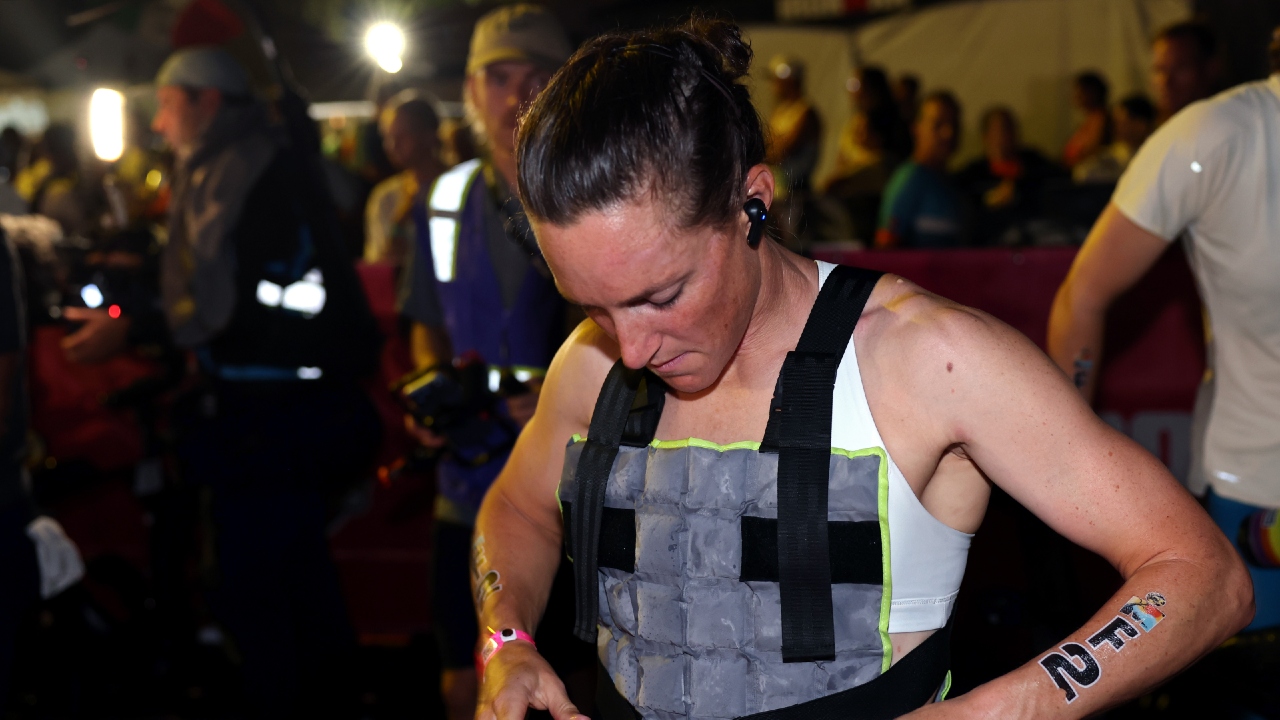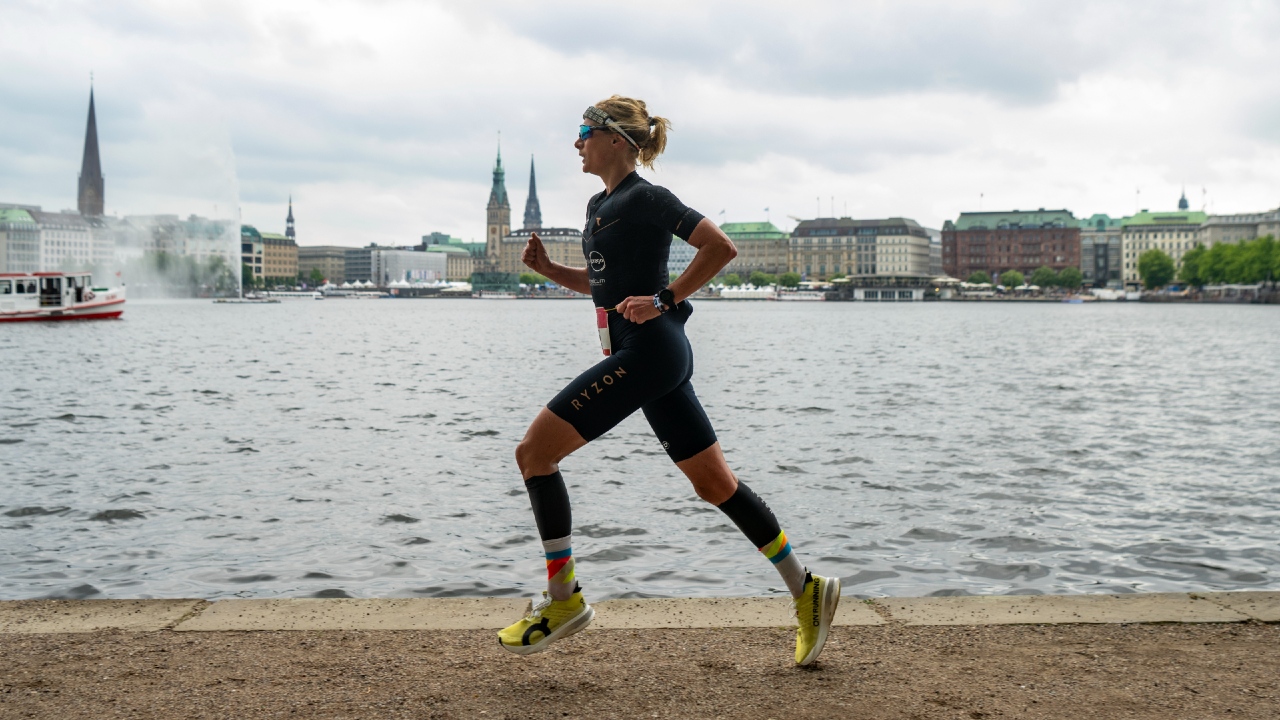


Running form matters in triathlon because you rarely start the run with fresh legs. By the time you leave T2, you’ve already completed the swim and bike, and fatigue can change your posture, stride length, cadence and overall movement. Improving your form doesn’t mean trying to create a textbook-perfect running style. Every athlete moves slightly differently because of differences in anatomy, mobility, strength, speed and experience. Instead, the goal is to remove unnecessary tension and movement while developing a stride that remains comfortable and efficient as fatigue increases.
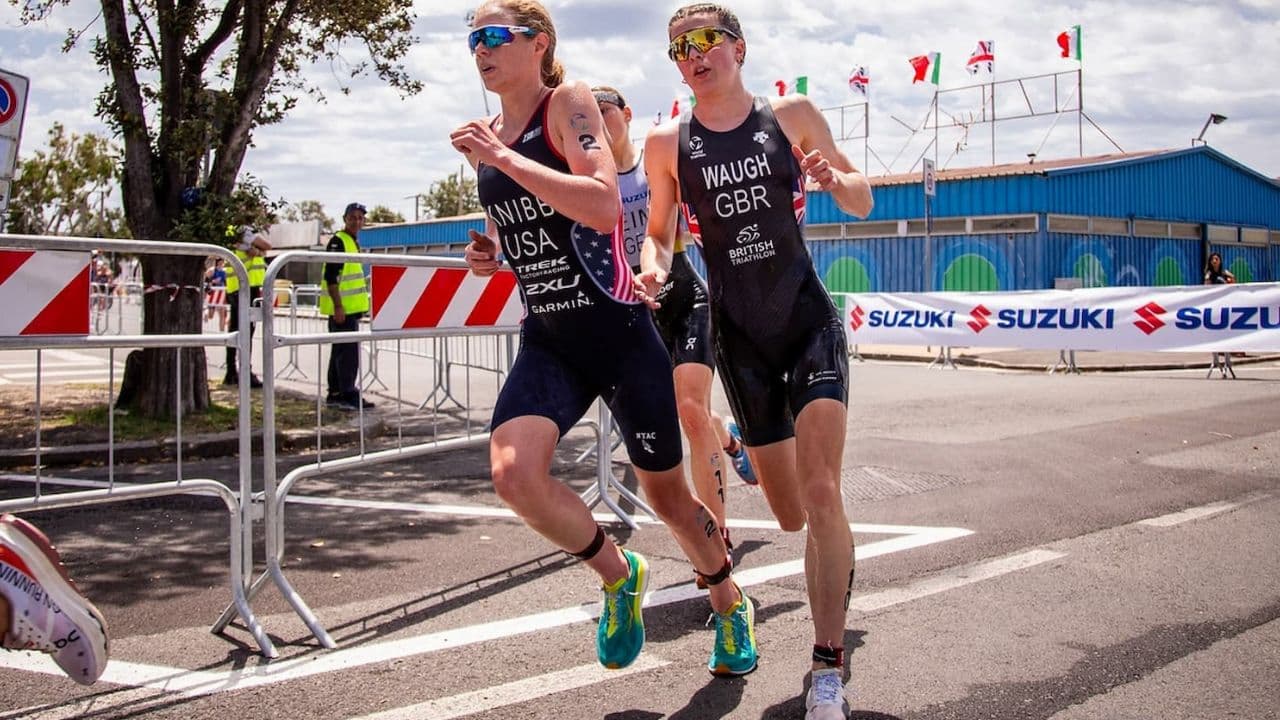
For triathletes, this means practicing good running habits during normal training and learning to maintain them after cycling. Small improvements in posture, cadence, arm movement and pacing can be more useful than attempting to completely rebuild your natural stride.
In Short
- There is no single perfect running form.
- Maintain tall but relaxed posture.
- Avoid deliberately overstriding.
- Let cadence develop naturally with speed.
- Keep your shoulders and hands relaxed.
- Practise running after cycling.
What Does Good Triathlon Running Form Look Like?
Good running form is less about appearance and more about whether you can move economically and comfortably.
Useful characteristics generally include:
- Stable posture.
- Relaxed shoulders.
- Natural arm swing.
- Controlled foot placement.
- Smooth rhythm.
- Minimal unnecessary movement.
Your technique will also change slightly depending on speed, gradient and fatigue. The principles in how to become an efficient triathlon runner are particularly relevant because efficiency matters more than trying to make every athlete run with identical mechanics.
Start With Your Posture
Posture provides the foundation for the rest of your running movement. Aim to run tall while remaining relaxed. Your head should sit naturally over your shoulders rather than being pushed dramatically forward, and your torso shouldn’t feel excessively hunched. Avoid consciously forcing yourself completely upright. Running involves a natural forward orientation, but it should come from the body as a whole rather than bending significantly at the waist. Understanding how does posture affect triathlon running performance can help you recognize how alignment influences the rest of your stride.
Keep Your Upper Body Relaxed
Fatigue often creates tension in the upper body.
You may notice yourself:
- Raising your shoulders.
- Clenching your fists.
- Tightening your jaw.
- Holding your arms rigidly.
This tension doesn’t help you move forward. During easy runs and brick sessions, occasionally check your shoulders and hands. If they feel tight, relax them without trying to completely change your stride.
Let Your Arms Swing Naturally
Your arms help counterbalance the movement created by your legs. They should generally move forward and backward in a comfortable rhythm rather than swinging dramatically across your torso. Keep your elbows naturally bent and avoid locking them into one exact angle. Learning how do arm swings improve triathlon running form can help you understand how relaxed upper-body movement contributes to rhythm and balance.
Avoid Deliberately Overstriding
Over-striding generally refers to reaching the leg excessively far ahead of the body. This can create additional braking forces and make your stride feel less fluid.
Rather than deliberately shortening every step, think about:
- Running smoothly.
- Keeping your feet moving beneath you.
- Avoiding exaggerated reaching.
- Allowing stride length to change naturally with speed.
Your foot doesn’t need to land in exactly the same position at every pace.
Don’t Force a Specific Foot Strike
Triathletes may naturally land on the:
- Heel.
- Midfoot.
- Forefoot.
There isn’t one universally correct foot strike that every runner needs to adopt. Changing foot strike deliberately can alter where stress is placed through the lower leg and foot. Unless you’re experiencing a specific problem that has been professionally assessed, forcing yourself onto your forefoot simply because it looks faster may create unnecessary stress. Focus first on overall movement rather than obsessing over which part of your shoe contacts the ground first.
Understand the Role of Cadence
Cadence is the number of steps you take per minute.
Some runners naturally use a higher cadence, while others use a lower one. Your cadence also changes with:
- Speed.
- Height.
- Terrain.
- Fatigue.
There isn’t one universal number every triathlete should chase. Instead, cadence can be useful when an athlete has a noticeably slow, reaching stride. Small adjustments may encourage quicker, lighter steps.
Don’t Chase 180 Steps per Minute
The commonly mentioned 180-steps-per-minute figure isn’t a mandatory target for every runner. A tall athlete running easily may naturally use a different cadence from a shorter athlete racing quickly.
Instead of forcing an arbitrary number, look at whether your stride feels:
- Smooth.
- Controlled.
- Relaxed.
- Appropriate for the pace.
Cadence should support your movement rather than become another number you’re constantly trying to satisfy.
Practise Running Off the Bike
This is where triathlon running differs significantly from standalone running.
After cycling, your legs may initially feel:
- Heavy.
- Stiff.
- Uncoordinated.
- Unusually fast or slow.
Short brick runs help you become familiar with this sensation. You don’t need to complete a long run after every ride. Even 10–20 minutes of controlled running can provide useful transition practice.
Don’t Sprint Out of T2
The beginning of the run often feels deceptively strange. Some athletes run faster than intended because their perception of speed has been altered after cycling.
Starting too aggressively can quickly increase:
- Heart rate.
- Breathing rate.
- Muscular fatigue.
Use the opening section to settle into your running rhythm. Understanding what is a negative split in triathlon running can help reinforce why controlled early pacing can produce a stronger overall run.
Maintain Form as Fatigue Builds
Your running form will naturally change during longer races.
Common fatigue-related changes include:
- Increased forward bending.
- Reduced arm rhythm.
- Excessive shoulder tension.
- Longer ground contact.
- Less stable posture.
You don’t need to constantly analyse every movement.
Instead, use a few simple cues:
- Run tall.
- Relax your shoulders.
- Keep your steps light.
- Look ahead.
Simple cues are easier to remember when you’re tired.
Build Your Aerobic Endurance
Technique deteriorates more quickly when you’re operating beyond your sustainable fitness. A stronger aerobic system allows you to maintain a controlled effort for longer before fatigue significantly affects movement. That’s why how to build an aerobic base for running a triathlon should be part of improving form rather than treating technique as an isolated skill.
Good mechanics become easier to maintain when the pace itself is sustainable.
Use Easy Runs to Practise Technique
Hard intervals aren’t always the best time to completely rethink your movement.
Easy runs provide an opportunity to practise:
- Relaxed shoulders.
- Stable posture.
- Natural arm swing.
- Smooth cadence.
- Controlled foot placement.
Because the intensity is low, you have more mental capacity to notice how you’re moving. Make one small adjustment at a time rather than monitoring five technical cues simultaneously.
Running Drills Can Improve Movement Awareness
Simple drills can help develop coordination and body awareness.
Examples include:
- Marching drills.
- A-skips.
- High knees.
- Strides.
- Short accelerations.
Drills aren’t magical corrections for poor technique. Their value comes from allowing you to practise specific movement qualities before applying them naturally during running.
Keep them controlled and technically clean.
Strides Can Help Develop Smooth Faster Running
Strides are short, controlled accelerations commonly performed after easy running.
For example:
- Accelerate gradually.
- Reach a fast but relaxed speed.
- Maintain it briefly.
- Decelerate smoothly.
- Recover fully.
The emphasis is relaxation rather than sprinting. Strides can help you experience faster movement without the fatigue associated with a complete interval workout.
Strength Training Can Support Better Form
Running technique depends partly on whether your body can maintain stable movement as fatigue develops.
Useful strength work can target:
- Glutes.
- Calves.
- Hamstrings.
- Quadriceps.
- Core.
- Hips.
Single-leg exercises are particularly relevant because running repeatedly requires you to support your body on one leg. Using what strength routine should triathlete runners do to stay injury free can help build the physical capacity that supports stable running mechanics.
Mobility Should Support Your Natural Movement
Limited mobility can sometimes affect running movement, but more flexibility isn’t automatically better.
Triathletes commonly benefit from maintaining useful movement through the:
- Ankles.
- Hips.
- Thoracic spine.
Mobility work should address genuine restrictions rather than trying to become as flexible as possible. If a restriction is significantly altering your stride or causing pain, professional assessment can be more useful than randomly adding stretches.
Hills Can Reveal Form Problems
Running uphill naturally changes your mechanics. Your stride usually becomes shorter, your arm movement may become more active and your overall pace decreases.
Hill running can help develop:
- Strength.
- Coordination.
- Power.
- Running economy.
The principles in how does hill running improve fitness strength and endurance can help you use climbing as part of a broader running program rather than simply treating hills as hard efforts.
Downhill Form Is Different
Descending usually increases speed and places different demands on the legs. Avoid reaching dramatically forward with each stride simply to increase speed.
Instead:
- Stay balanced.
- Keep steps responsive.
- Look ahead.
- Allow gravity to assist without losing control.
Triathlons with hilly run courses make downhill technique particularly important because poor descending can create substantial quadriceps fatigue.
Use Video Carefully
A short video can reveal movements that are difficult to notice while running.
Useful angles include:
- Side view.
- Front view.
- Rear view.
Look for obvious patterns such as excessive crossover, significant asymmetry or large changes in posture. However, don’t assume every unusual-looking movement needs correcting. Individual variation is normal.
Don’t Change Everything at Once
A runner trying to simultaneously change their:
- Cadence.
- Foot strike.
- Arm swing.
- Posture.
- Stride length.
may end up running more awkwardly than before. Choose one meaningful issue and introduce the change gradually. Following what training errors slow down running progress in a triathlon can help you avoid making training unnecessarily complicated when simple consistency may produce better results.
Form Changes Shouldn’t Cause Pain
Some muscular awareness can occur when adjusting technique, but persistent or increasing pain isn’t something to ignore.
If a running-form change causes discomfort:
- Stop forcing it.
- Return to comfortable movement.
- Reduce training if necessary.
- Seek appropriate professional assessment if symptoms persist.
Running form should support sustainable movement, not create a new problem.
Common Mistakes
- Trying to copy another runner’s technique.
- Forcing a 180-step cadence.
- Deliberately changing foot strike without a reason.
- Overstriding when trying to run faster.
- Holding the shoulders and arms rigidly.
- Sprinting out of T2.
- Changing several form elements simultaneously.
- Ignoring technique when fatigue develops.
Practical Tips
- Run tall but relaxed.
- Keep your shoulders and hands loose.
- Let your arms swing naturally.
- Avoid exaggerated reaching with the feet.
- Practise short brick runs regularly.
- Use simple form cues when tired.
- Add strength work consistently.
- Make technique changes gradually.
Actionable Takeaways
Improving triathlon running form isn’t about creating one perfect stride. The goal is to develop comfortable, economical movement that you can maintain when your legs are already fatigued from cycling.
Start with the fundamentals: relaxed posture, natural arm movement, controlled foot placement and a cadence appropriate for your speed. Use easy runs to practise technique, strength training to improve durability and brick sessions to make efficient movement after cycling feel familiar.
Most importantly, avoid constantly interfering with your natural stride. Small, purposeful changes practised consistently are usually more useful than attempting to rebuild your entire running technique at once.