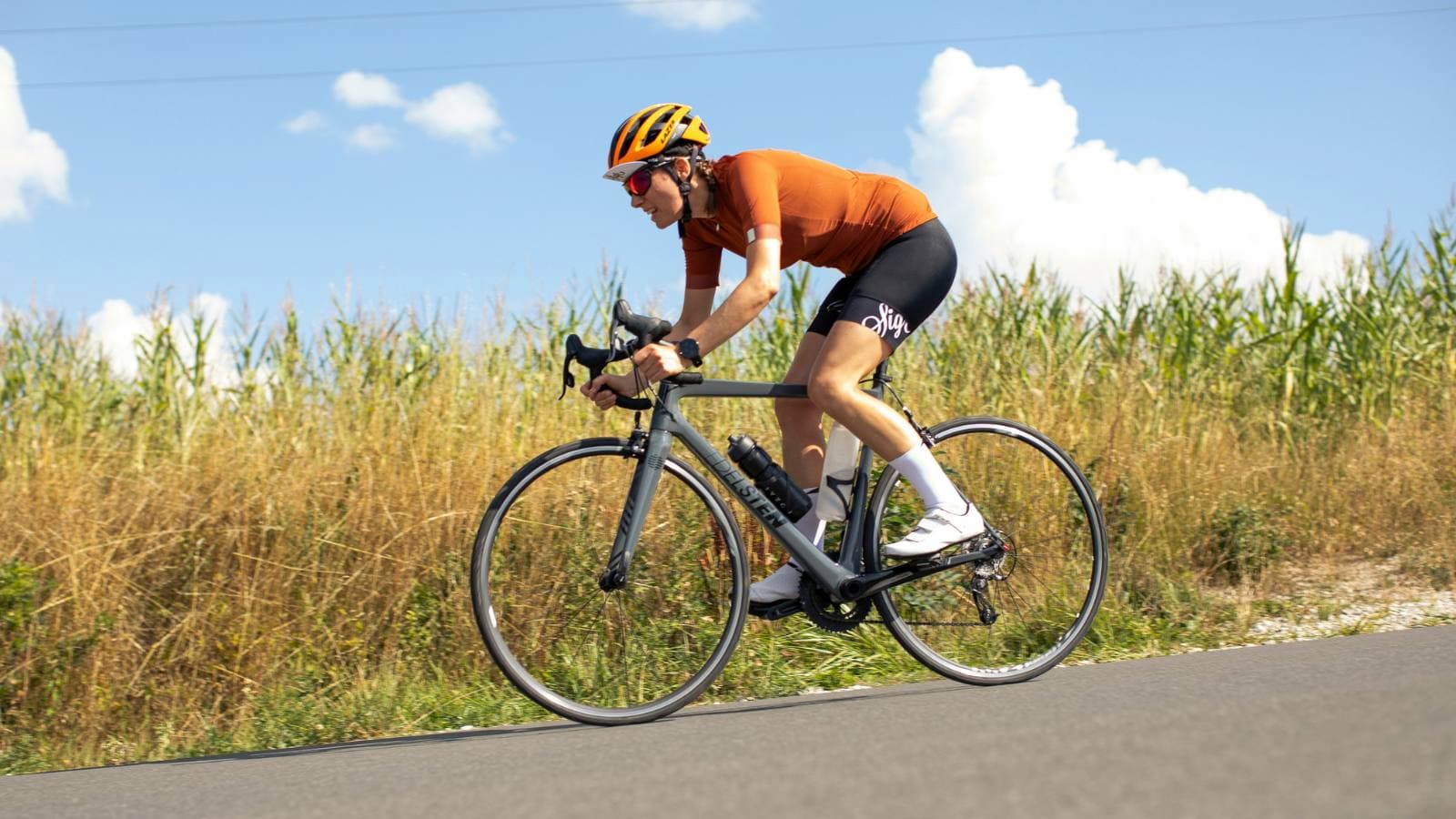


FTP, or Functional Threshold Power, is the highest average power you can sustain on the bike for approximately one hour. In triathlon, it is one of the most important performance metrics because it defines how hard you can ride without rapidly fatiguing. It directly influences pacing, training zones, and overall race performance.

What FTP Actually Means?
FTP represents your sustainable power output. It sits just below the point where fatigue increases sharply, often linked to lactate threshold. It is measured in watts and reflects how efficiently your body produces and sustains energy over time. A higher FTP means you can maintain a higher power output while staying controlled, which translates directly into faster bike splits.
Why FTP Matters in Triathlon?
The bike leg is the longest portion of most triathlons. How you manage effort here determines how well you perform on the run. FTP provides a clear reference for pacing. Riding too far above it leads to early fatigue and poor run performance. Riding too far below it limits overall speed.
Using FTP allows you to balance effort so you arrive at the run in a strong, sustainable condition.
FTP and Pacing Strategy
FTP is the foundation of triathlon bike pacing. Most race efforts are based on a percentage of your FTP rather than absolute power. Shorter races are performed closer to FTP, while longer races require a lower percentage to preserve energy. This ensures you distribute effort efficiently across the entire race.
Understanding how effort is managed across disciplines becomes clearer when linked to what is VO2 max in triathlon, where overall aerobic capacity defines your upper limits.
FTP vs VO2 Max
- FTP and VO2 max are closely related but serve different roles.
- VO2 max is your maximum aerobic capacity, your ceiling.
- FTP is how much of that capacity you can sustain over time.
- A higher VO2 max increases potential, but FTP determines usable performance during racing.
- Improving FTP allows you to operate at a higher percentage of your aerobic capacity without fatigue.
FTP and Training Zones
FTP is used to define training zones.
- These zones determine how hard each session should be and what adaptation it targets.
- Lower zones build endurance and efficiency.
- Mid zones improve sustained power.
- Higher zones develop speed and high-intensity capacity.
- This structured approach ensures every session has a clear purpose.
How FTP Affects Each Race Distance?
FTP plays a role in all triathlon distances, but its application changes.
- In sprint and Olympic races, athletes ride closer to FTP, pushing higher intensity.
- In half Ironman and Ironman, effort is reduced to a sustainable percentage to avoid fatigue.
This balance is critical. Riding too hard relative to FTP leads to a breakdown later in the race.
How to Measure FTP?
FTP can be measured through testing, typically using time trials or structured protocols on a bike or indoor trainer. The most common approach is a shorter test where power is measured and adjusted to estimate your one-hour capacity.
Regular testing helps track progress and refine training zones.

How to Improve FTP?
Improving FTP requires structured training that targets sustained power output.
Key sessions include:
- Steady efforts near threshold
- Longer intervals with controlled recovery
- Progressive rides that build intensity
Consistency is more important than occasional hard efforts.
Improvements come from repeated exposure to controlled, challenging efforts.
FTP and Fatigue Management
FTP is not just about power, it is about managing fatigue. Riding at or near FTP requires careful control. Going above it for extended periods leads to rapid fatigue accumulation. Understanding your FTP helps prevent pacing errors and supports consistent performance across the race.
This is especially important in longer events where energy management determines overall outcome.
Common Misconceptions
- FTP is not the same as maximum effort, it is a sustainable limit.
- A higher FTP does not guarantee better performance without proper pacing and endurance.
- Testing FTP too frequently without structured training provides little benefit.
- Focusing only on FTP ignores other critical factors like nutrition and recovery.
Practical Checklist
- Determine your current FTP through testing
- Use FTP to guide pacing and training zones
- Include structured sessions to improve sustained power
- Monitor effort to avoid exceeding sustainable limits
- Reassess regularly to track progress
What You Should Do?
- Start by identifying your current FTP using a controlled test.
- Use this value to structure your training and pacing strategy.
- Focus on consistent, targeted sessions rather than random high-intensity efforts.
- Balance FTP work with endurance training to support overall performance.
- Track progress over time and adjust your training zones accordingly.
- FTP is one of the most practical tools for triathletes.
- When used correctly, it provides a clear framework for training and racing.