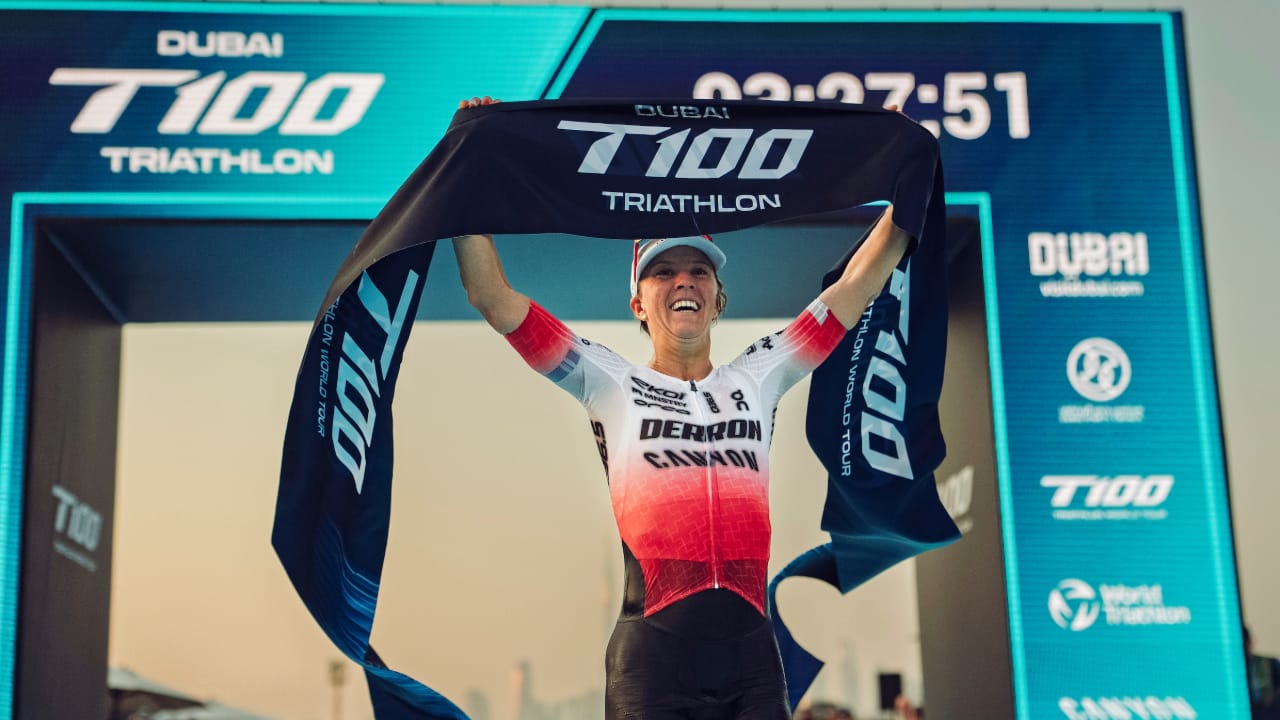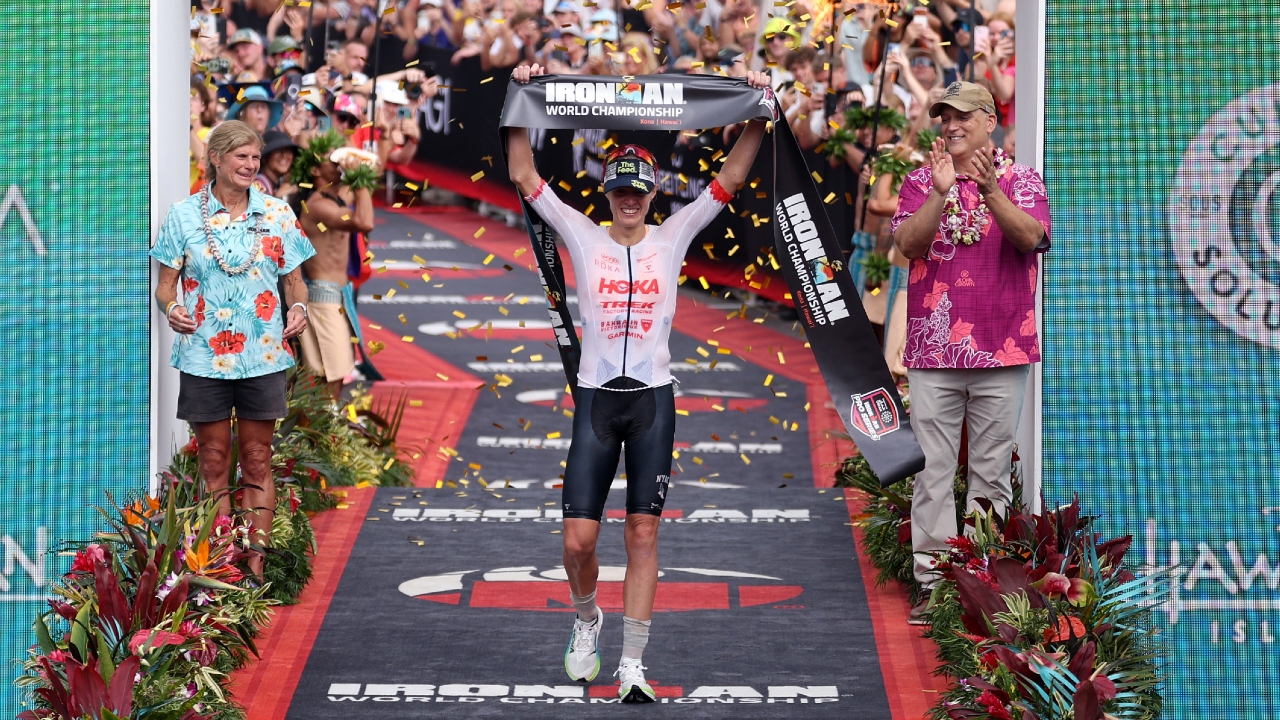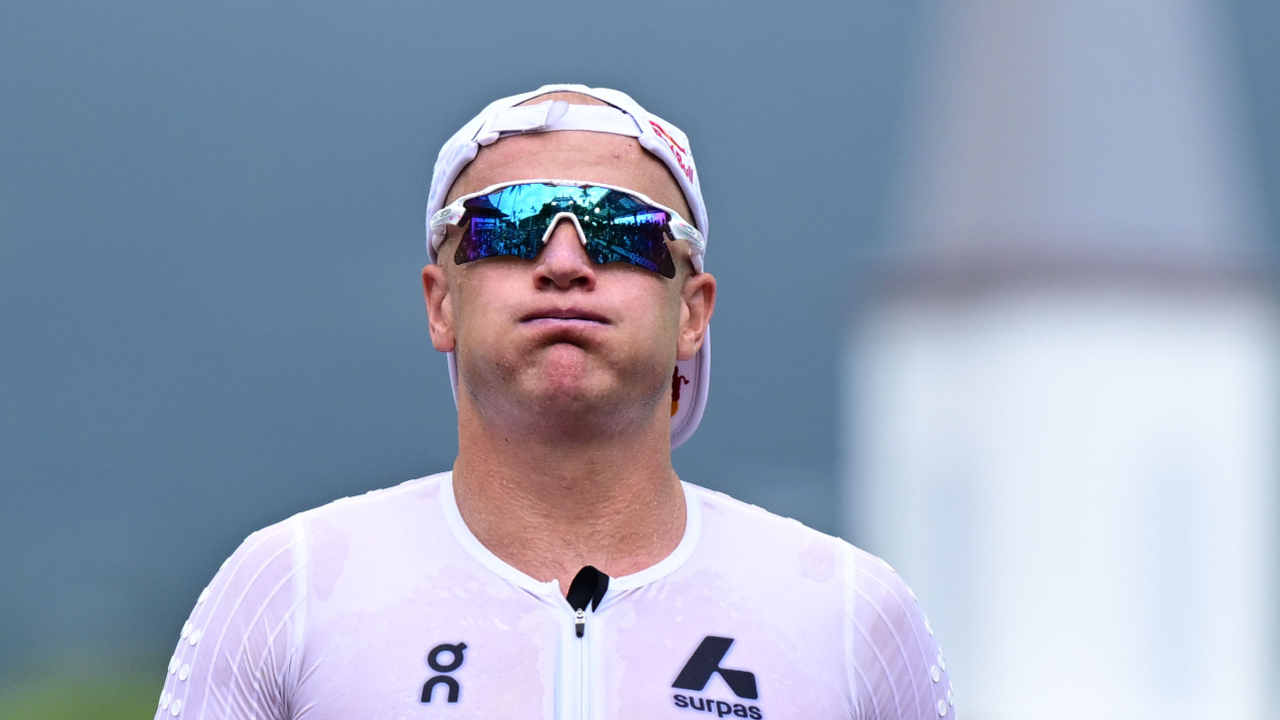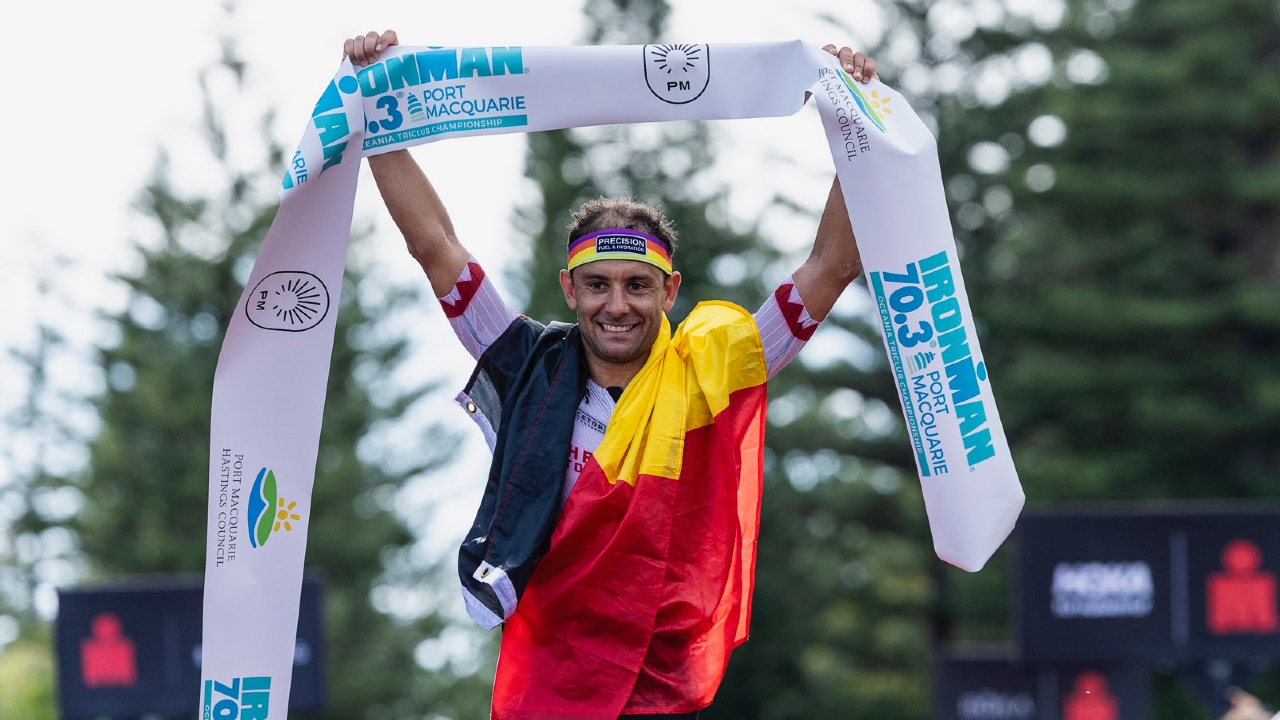




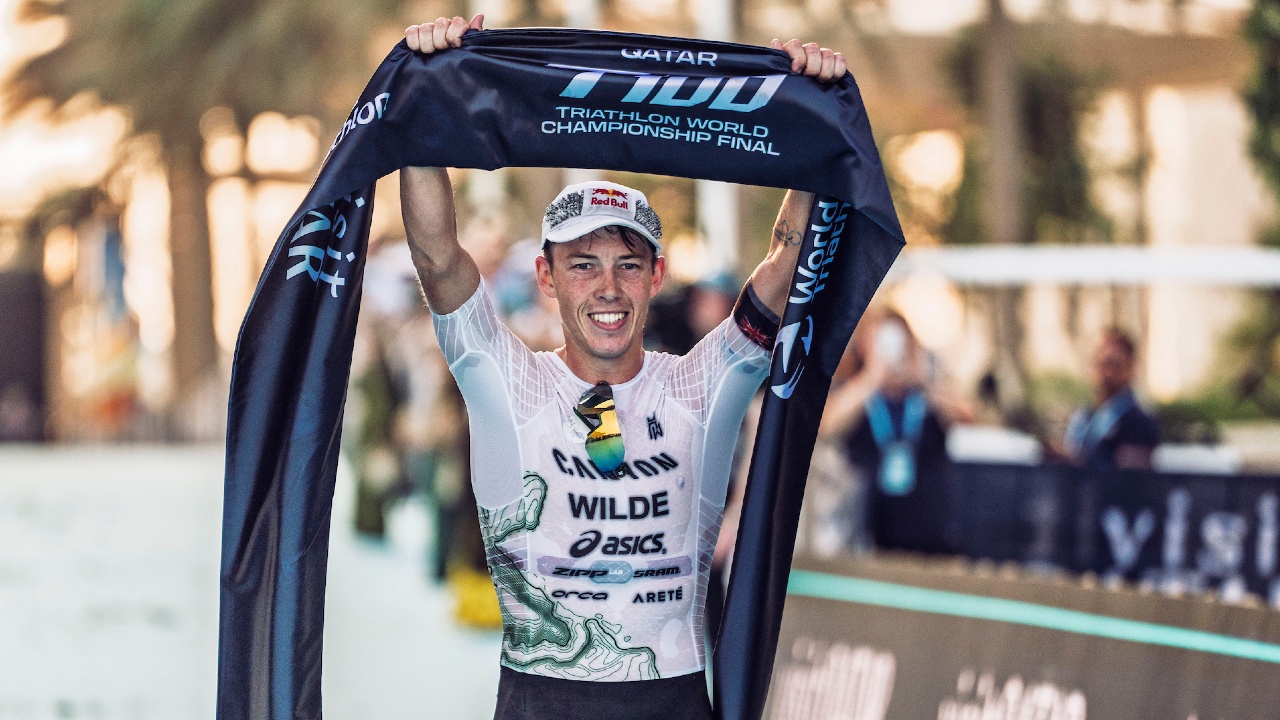
When Hayden Wilde crossed the finish line in Qatar to seal his T100 World Triathlon Tour title, the Kiwi superstar completed what must surely go down as one of the greatest sporting injury comebacks of all time.
A mere 226 days earlier – Sunday, May 4, to be precise – he had slammed his bike into the back of a truck on a quiet Japanese road, sustaining a series of injuries that left specialists wondering if he could ever compete again, let alone win a major championship.
His journey from that fateful day on the banks of the Sumida River through to the final day of the triathlon season in mid-December, via his emotional comeback win in London, was not only remarkable but also inspirational.
An incredible ‘Road To Recovery’
For the thousands who eagerly tuned in to watch his regular ‘Road To Recovery’ YouTube channel updates, the fact that Wilde had been able to return to professional competition with such strength, skill and power was probably not that much of a surprise – they had, after all, seen first-hand the lengths that this man was willing to go to in order to achieve his goals.
The hard work certainly paid off, as he returned to T100 having already won the opening race of the season in Singapore and not only won in London but also recorded victories in France, Spain, Wollongong and Qatar to record an incredible six wins out of a possible seven races.
Here, we take a look back through old interviews and videos to chart how this ‘superhuman’ of a man went from career-threatening injury to T100 champion – writing his name into triathlon folklore as he set new standards for all to follow.
The accident in Japan
It was a quiet Sunday afternoon in early May, and Wilde was heading out for a ride on a bike track in Tokyo when his world came to a shuddering halt.
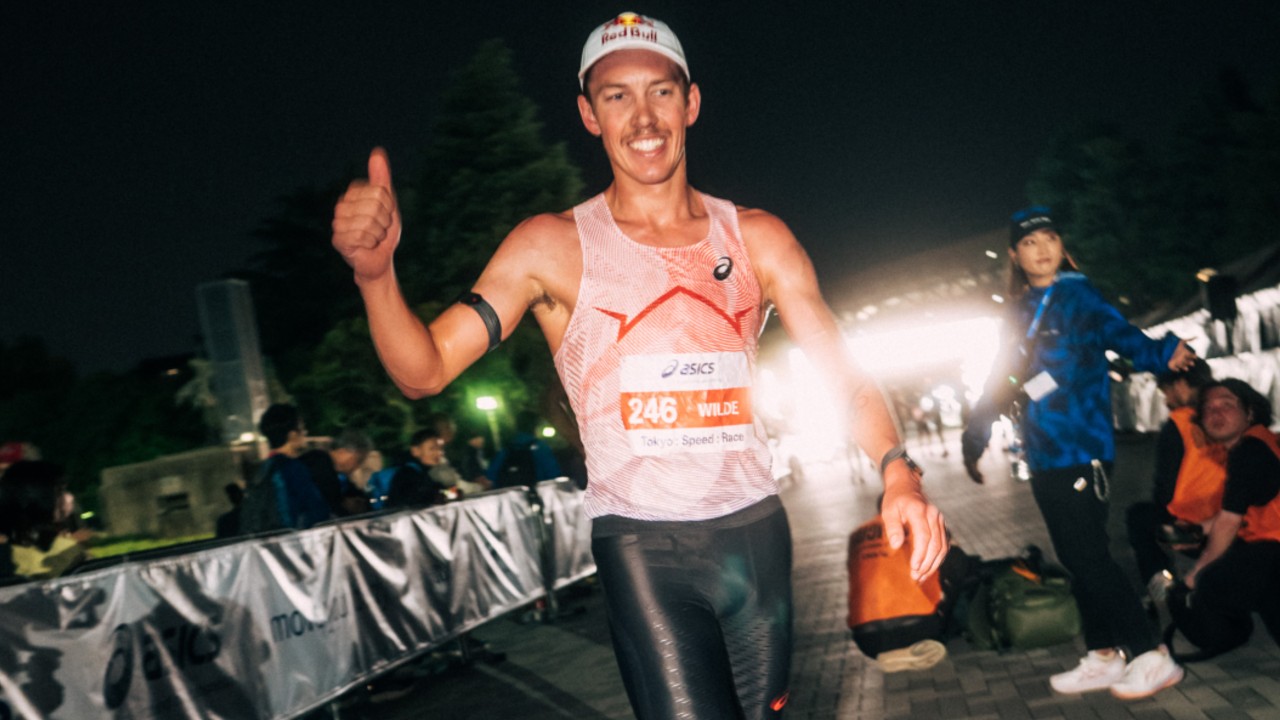
Less than 24 hours earlier, he had taken part in the ASICS Tokyo Speed Race, a 10km showdown in which he finished seventh with an impressive time of 27:39.
“I had the crash on the 4th of May. I remember everything,” he said. “Luckily, I wasn’t knocked out, so I could get things organised on the ground. It was a Sunday, super quiet, and I was looking at my GPS to see where I had to turn right, onto a Tokyo river path, and a truck went past and parked up down the road.
“I didn’t see that, and the next minute I look up, and he’s right there. I just managed to miss it in the final seconds, but instead, I take a full impact on the scapula. Then I find out that along with the broken scapula, I have six broken ribs and a punctured lung.”
Accident aftermath
As the seriousness of his injuries became apparent, Wilde posted on Instagram to give an update, complete with an image of him lying on a hospital bed surrounded by a medical team.
He wrote: “Just thought I would update you all. I’ve been in a bike crash. Broken ribs. Scapula broken. Injured lungs. Surrounded by the best help. Keep you posted. Pretty gutted after such a nice day yesterday.”
He added that the damage to his lungs meant he would be unable to travel out of Japan any time soon; however, there were already fears among specialists that he would need to get specialist surgery as quickly as possible to limit the threat of future complications.
Speaking at the time, he added: “We were in a bit of a situation where it was essentially a career-threatening set of injuries. I couldn’t get the surgery within two weeks in Japan, so we had to get a medical emergency flight to Belgium a week later, which was a pretty big process to go through, but thankfully, we got there in the end.
“The operation was a successful one, but obviously it was a long process, five hours of operating, and now I’m facing a 12- to 15-week rehabilitation programme. For me, it’s all very new. I’ve never had an injury like this before, so it’s a new experience, but hopefully we can come back out of this stronger, and I’m looking forward to getting this left ‘wing’ ready to go, and hopefully being on a start line by the end of the year.”
He would later reveal that those first few days post-op were some of the hardest in the recovery process, as he was in pain, was unable to move properly and was sleeping in a wicker garden chair because that was where he felt the most comfortable.
The long road to recovery begins
Talking through his recovery timetable, Wilde explains that his daily stints in a hyperbaric chamber are helping to increase the levels of oxygen in his body and are speeding up the process. Although he admits it may take some time for the operation scar to heal.
“The scar looks like I’ve been eaten by a shark,” he said. “They were meant to do a little incision just below the armpit. But when they got me flat on the bed, they decided to change the procedure because they didn’t want to damage the nerves, and they opened the skin around my scapula.
“I asked the nurse if she could take a video or a photo. because I actually hadn’t seen it. When I looked at it, I was like, ‘I wasn’t expecting that!!’.
“I’m no scientist, but I think your body only produces 70 to 75% of oxygen, but these chambers bring that level up to 95%, so the recovery rate is good. It’s my second time using oxygen therapy, so it seems to be good for scars and recovery.”
Medical experts reveal their concerns
His team of personal trainers, doctors and physios were on hand throughout the recovery process, with GP and sports medical specialist Sam Mayhew laying the true picture on the line when he said: “I thought if we don’t get this shoulder sorted, he might not ever swim again, might not have a career again. It was certainly a question of, ‘Will he even be able to race again?’
While Wilde was being well looked after, he accepted that it was his own responsibility to drive himself toward the levels of recovery that were required.
“It was super nice. There was such a good vibe there with the personal trainers and the physios and the doctors making sure you can be the best you can be, and you know that they’re always wanting the best outcome as well,” he says. “But I still kind of did it in my own way, and keeping myself accountable and always turning up on the day and not always getting my hand held, I think, is super important.”
Stepping things up
Two weeks into his recovery process, and Wilde is already back in the saddle as he starts to do some indoor work on the bike, and it isn’t long before he is back running again, thanks to the expert support given to him by the Red Bull Performance Centre in Austria.
He is put through his paces on a state-of-the-art AlterG Anti-Gravity treadmill, which can help to reduce the impact and pressure of gravitational forces on an athlete’s injured limbs by as much as 80%.
Talking before stepping onto the treadmill, he says: “Getting on the AlterG for the first time will either be a successful stepping stone or an absolute disaster. It will be nice to start running again. It’s been nearly two weeks. It’s good fun. But, it’s gonna hurt. It’s gonna hurt.”
In one day at the Red Bull centre, situated in Thalgau, just outside Salzburg, he undergoes a series of medical tests, blood checks, heart-rate and lung checks as well as physio sessions, meetings with doctors and a whole host of gym work – with all of the specialists delighted and somewhat surprised by the speed of his progress.
His manager, Simon Bayliff, says: “The progress he has made in such a short space of time… There is a long way to go still, but it’s crazy.”
Potential return date revealed?
Following meetings with physios, strength and conditioning coaches, surgeons and lung specialists, the New Zealander appears to be ready to amp up his rehabilitation after getting the “all-clear” in relation to his lung injury, which has resulted in a build-up of fluid.
Strength and conditioning coach Elisabeth Obermuller agrees things are looking good: “Hayden’s been progressing really well in the gym. We’ve been working a lot on lower-body power and doing some shoulder rehab exercises. We’ve tried to come up with additional exercises which support his cycling. He has been working really well.
“He’s in a good place at the moment, and he’s able to do more and more in the gym, and he’s getting more confidence in the shoulder.”
And that eagerly awaited possible return date?
“Progress-wise, ribs are looking good, scapula looking good, and it’s all secure,” says Wilde. “The lungs are kind of on the mend, which is really, really cool, and now it’s just kind of a slow build back to fitness and a full range of motion.
“Maybe something in August, maybe something in September – I don’t really have a goal in mind, but if I can get to something at a good fitness and be confident enough to get onto a start line.”
The final hurdle is cleared
In mid-July, Wilde takes two major steps on his recovery path as he ventures into the Andorran mountains for an outdoor bike ride and then takes to the pool in anger for the first time since the accident.
Having set up camp close to the Pyrenees, he rides to the top of the Coll d’Ordino mountain pass: “The shoulder’s feeling pretty good. The benefit of being up in the mountains is that the roads are actually pretty smooth here in Andorra, so there is not a lot of vibration in the shoulder.
“It is good; there is no pain. When I am running, I feel smooth; the muscle memory is all there. It is just good to remind the body what it can do,” he said. “Ask the body a question, and then hopefully the body just responds.”
Proof that his fitness is improving comes from partner and fellow triathlete Hanne De Vet, who says: “I’ll get the camera in the water and show you this guy’s new stroke. To be honest, it actually looks better than it used to be before. He probably should have got the surgery before the Paris Olympics; that would have made his life way easier.
“I can’t follow him anymore on the bike, so his fitness is definitely growing. That means that he’s close to getting racing again. I think he’s enjoying the way back to fitness as well because he can see his numbers improving.”
London T100 date with destiny is set
“The rate at which Hayden’s body healed and adapted certainly exceeded my medical expectations… it was borderline superhuman,” says one of his medical team as Wilde’s return to competition grows ever closer.
His name appears on the London T100 start list in mid-July, and the Kiwi admits: “I’m in a pretty good place; there is definitely a lot of fire in the belly to try and line up in London. I think having a little bit of a forced rest period and watching everyone race makes me hungry to get back on the start line.

“It just makes you think a little bit more that being at the top of the sport was obviously a privilege, and it always has been, but this reiterates that it is. It’s a special place to be, and hopefully I can get back to that level.”
The fact that he only started to swim using both arms a couple of weeks before putting his name on the start list shows just how determined he is to compete once again.
Back competing… and back winning
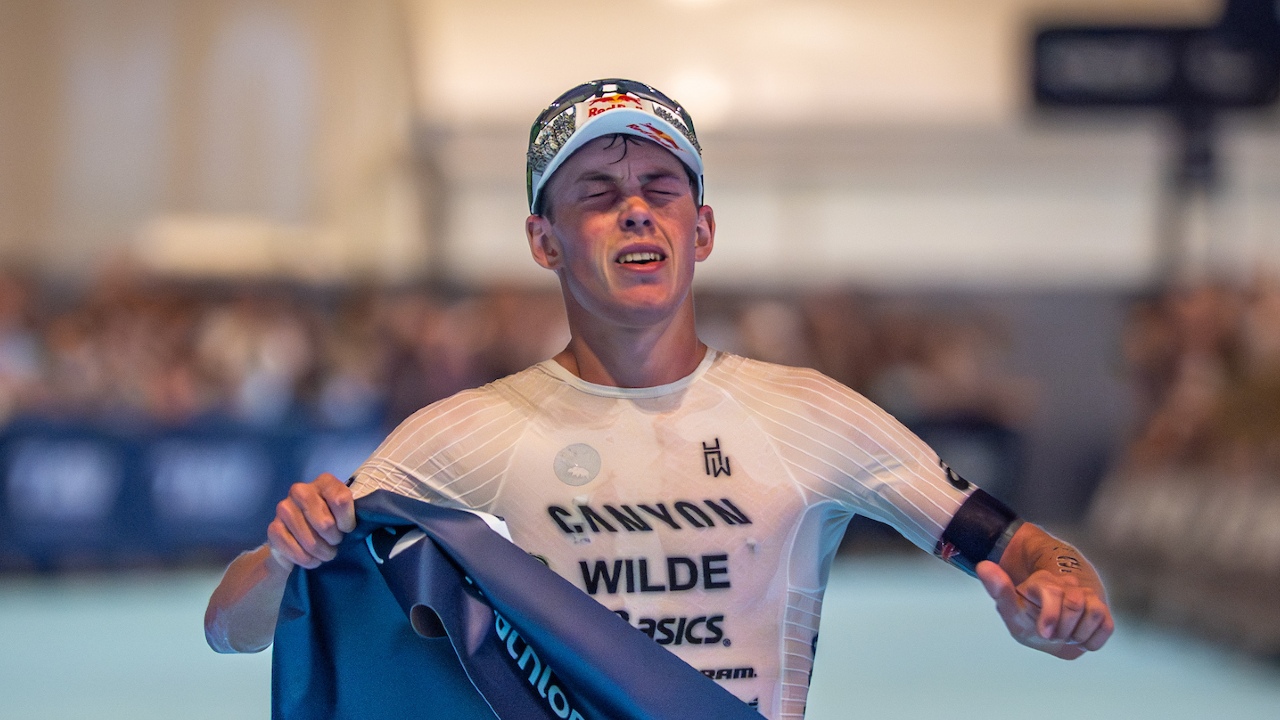
Just 98 days after his horrific crash, Hayden Wilde lines up for the London T100 race… and promptly goes on to win it in a quite astonishing display of athleticism.
Hailed a ‘superfreak’ by triathlon great Jan Frodeno, Wilde was less than a minute back in the swim, looked strong on the bike and then unleashed an incredible run to take the lead and power on to a famous win.
Wilde added: “I wasn’t afraid of the race at all. I’m used to racing these guys. I know what the level is. I knew what my level was going into it.
“You have a big injury, you have three months off, and you do have some negative thoughts in your mind. That was the first swim bike I’ve had since Singapore. Three months without doing that, you’re always a bit cautious.
“It’s been a big three months. I’m going to chill out now, as it’s also been a big mental effort as well as a physical one.”
It would go on to be the start of a remarkable, indeed ’superhuman’, end to the season for one of triathlon’s greatest ever competitors.