



Matthew Marquardt has added his scientific voice and medical reasoning to the drafting distance debate by insisting the evidence is there for IRONMAN to launch a trial season at the longer range of 20 metres.
A student at the Ohio State University College of Medicine, the 28-year-old is more than used to crunching numbers and diving deep into data as he devotes his time to working on a cure for cancer.
However, as a professional triathlete, he is also keen to let science do the talking when it comes to the current hot topic of whether IRONMAN drafting distances should be set at 12 or 20 metres.
Will IRONMAN follow the T100 lead?
While 20 metres has been in operation at T100 World Tour events for some time, the IRONMAN and 70.3 events remain at 12 metres – although a recent trial involving pro athletes has tested the impacts of 12, 16 and 20 metre zones, with the results currently being analysed.
A survey of professionals, carried out by Pro Tri News, showed there was overwhelming support for a switch to the longer distance, while Canadian superstar Lionel Sanders recently declared: “The 12-metre draft zone is no longer, not even remotely, sufficient to make non-drafting biking”.
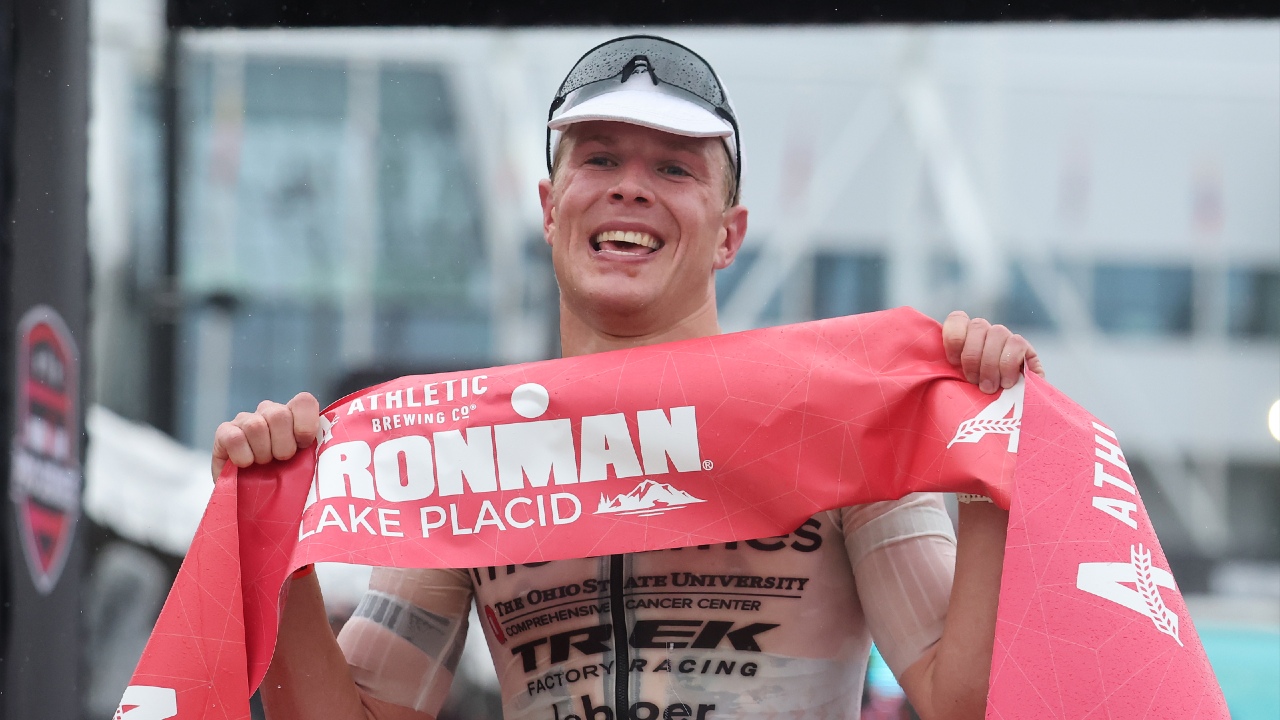
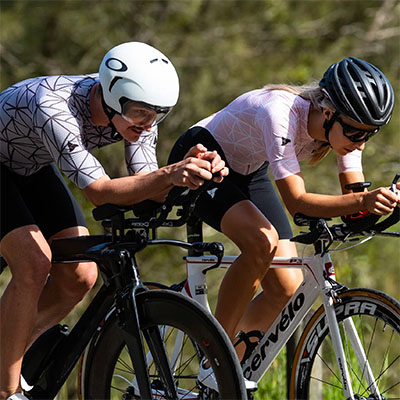
With major improvements in bike technology allowing athletes to achieve vastly superior times in the saddle, many are backing a change that would bring the IM drafting rules in line with today’s modern equipment and ensure that the middle discipline remains as fair as possible.
Marquardt has laid out some of the science behind the issue via his Instagram page, using a series of graphics to highlight the significant impact of extending the drafting zone.
Finding the ‘clinically significant’ difference
“It is unlikely that there is a feasible draft distance where athletes experience zero draft benefit from the person in front of them,” he writes. “So the question becomes, what is the minimum distance where drafting does NOT confer an athlete a meaningful advantage?
“It is obvious that there is a ‘statistically significant’ difference in draft benefit between 12 metres and 20 metres, but what matters is what we call in medical research a ‘clinically significant’ difference.
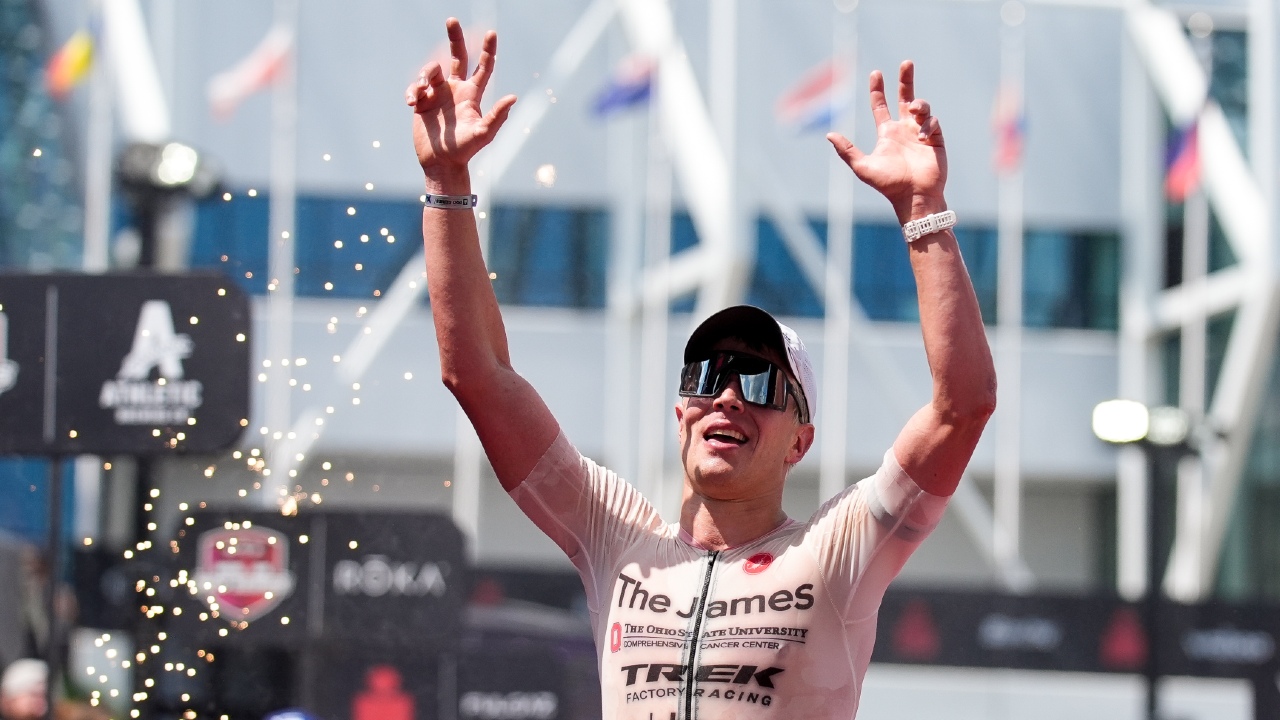
“In this case, that is the drafting distance that meaningfully impacts race outcomes.”
His latest post this week also includes a video where he suggests a trial season at 20 metres should be announced to determine once and for all if it is the best course of action.
‘No one’s safety or life is at risk’
“This is a complex decision with pros and cons to both options. However, in the grand scheme of life, the stakes are pretty low, so in my mind, there is a best way to make this decision.
“I spent a lot of my time in medicine around life and death decisions, so I want to offer my perspective on the Ironman 12 versus 20 metre draft debate. Ironman is known as non-drafting racing, so at its core, it’s about individual effort, and we could spend all day getting into the weeds about 12 versus 20 metres, but the reality is simple.
“Changing to 20 metres is something that over 75% of the top 100 Ironman pro athletes want. No one’s safety or life is at risk, and it’s not a permanent change, which means that if it doesn’t work, it can be reversed.
“There is evidence that 20 metres reduces the aerodynamic benefit of being in a group compared to 12 metres, but the only way to know how that actually affects real Ironman racing is to test it in real races.
Time to test theory in the ‘real world’
“So why not pilot 20 metres for a season, collect the data, then decide? In medicine, research done in the lab is only the start. When the risks are low and the information that could be gained is high, we test in the real world, then argue what is best. This feels like one of those moments.”
When TRI247 asked IRONMAN whether a decision is likely to be announced soon and whether any changes could be implemented for the start of the IRONMAN Pro Series at IRONMAN New Zealand on March 7th, a spokesperson confirmed they have “no plans to announce anything right now”, adding: “We have additional plans for in-event testing early this year to help us further validate findings in real-world conditions.”