




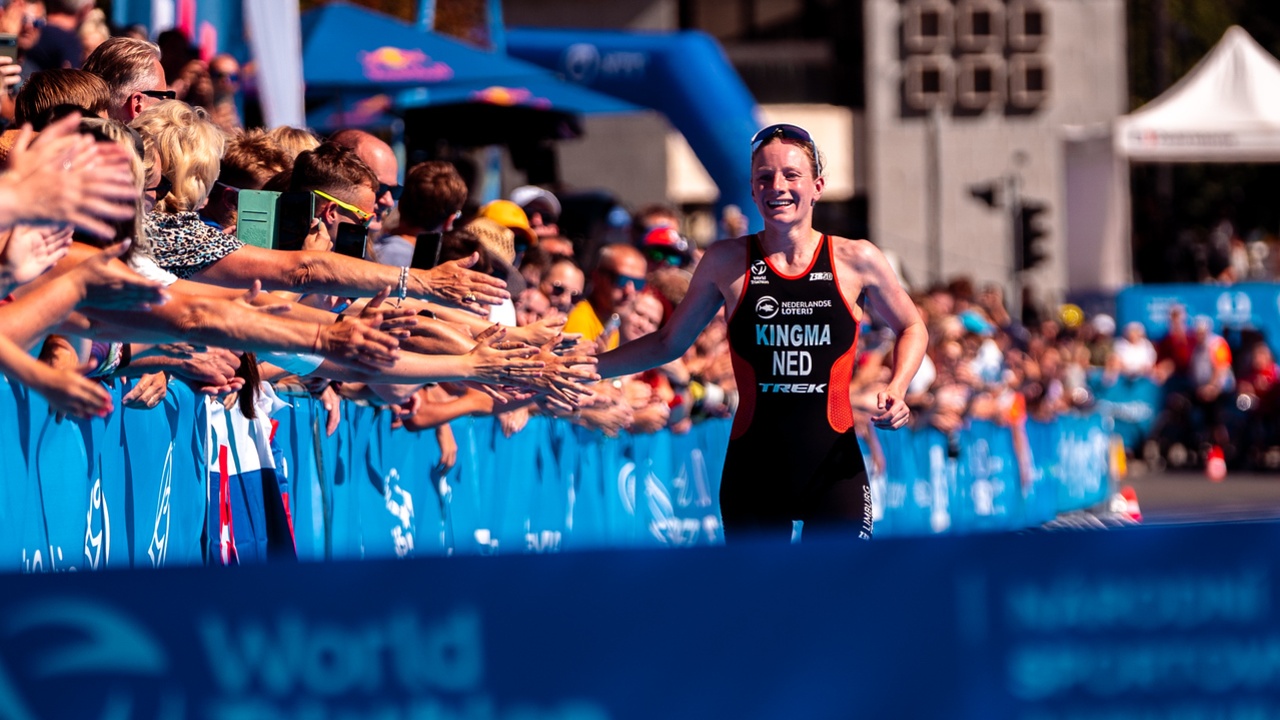
Maya Kingma was – and still is – a top triathlete as evidenced by an 11th and seventh at the last two Olympic Games plus a WTCS win in Leeds in 2021.
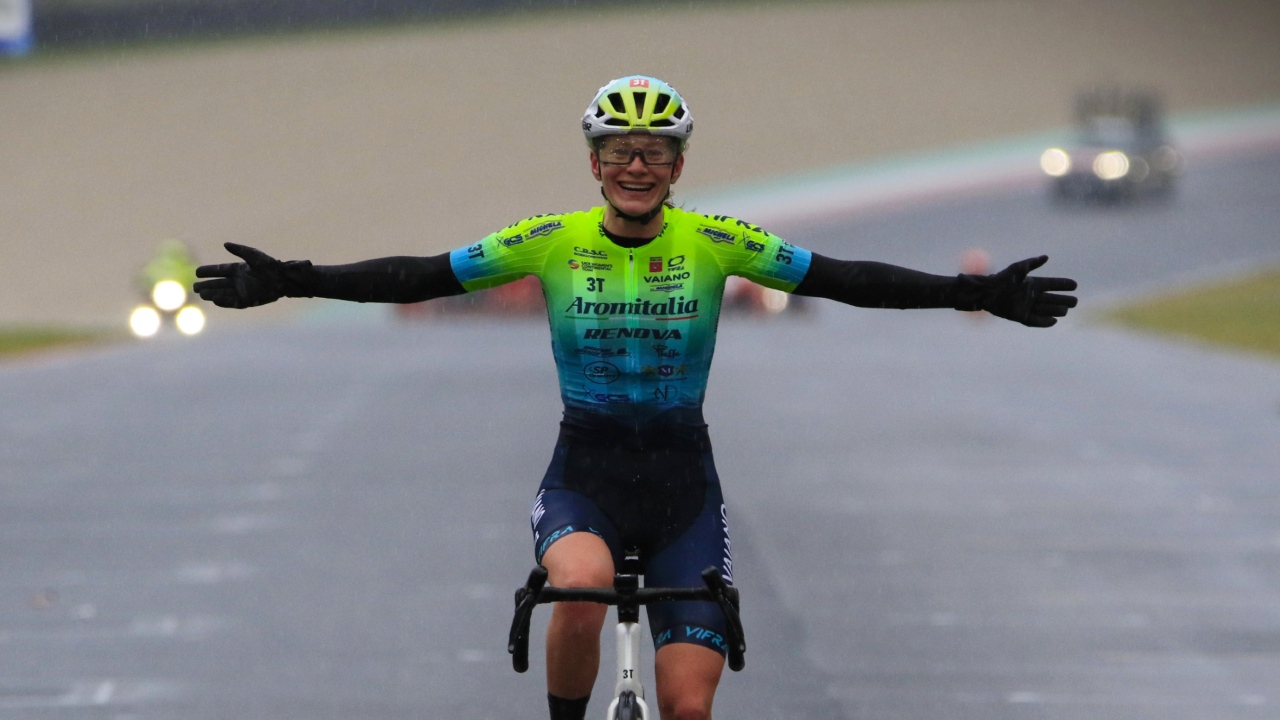
But this week the Dutchwoman will line up in one of cycling’s biggest races for the second year in a row – the women’s Giro d’Italia.
A crash ended her participation early 12 months ago but since then she’s joined UCI Women’s Pro Continental Team Aromitalia 3T Vaiano and will be one of their leading hopes, heading to Italy on the back of an altitude camp in Sierra Nevada.
Nine stages await, including the queen one which features the historic and punishing gravel climb of the Colle delle Finestre before the summit finish at Sestriere.
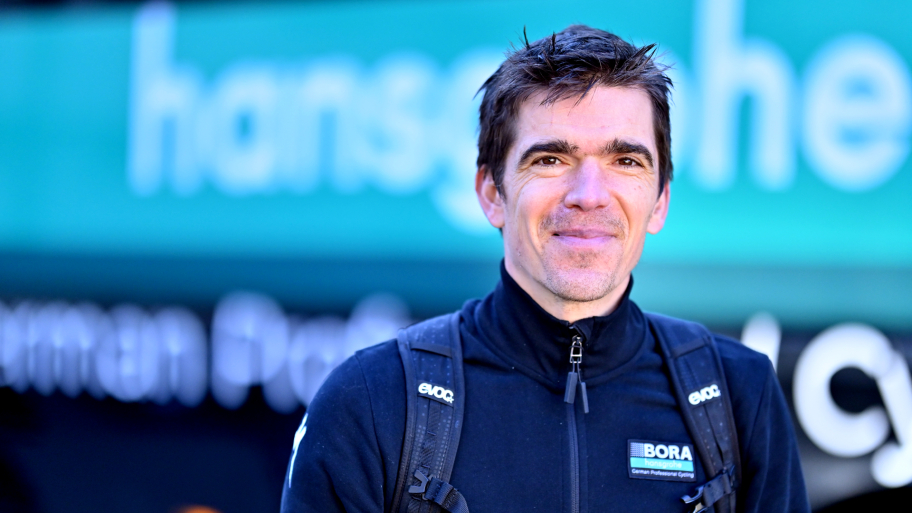
We caught up with her coach Dan Lorang to find out more about combining the two sports at the highest level – he is perfectly placed to understand the demands given his work with many triathlon greats as well as his role as Head of Performance at BORA – hansgrohe and now Head of Endurance Sport at Red Bull’s Athletic Performance Centre.
A passion that needed space
Kingma’s interest in cycling is long-standing. What changed was not her love for triathlon, but the context around it.
“She didn’t want to change sports completely,” Lorang explains. “But she wanted to focus more on cycling.”
That decision was driven first by enjoyment.
“She really loves cycling,” he says. “And that matters.”
But enjoyment alone doesn’t sustain a professional career.
The financial reality
For many short-course athletes, especially those without consistent federation backing, the financial landscape is fragile.
“In short course, if you are not really funded by the federation, it’s not so easy,” Lorang says, noting that changes within the Dutch system have added further pressure.
Cycling, by contrast, offers a clearer pathway to sustainability – provided the athlete is good enough.
“In cycling, if you are good enough, there is an opportunity to enter a team and finance your athlete life,” Lorang explains. “Just to be able to be an athlete.”
That reality made the move as practical as it was ambitious.
A harder leap than it looks
Even so, Lorang is quick to push back against the idea that strong triathletes can simply slot into the peloton.
“It’s completely different,” he says.
The contrast is not just physical, but psychological and social.
“In triathlon, you are alone,” Lorang explains. “Now you go to a training camp with a team. You are 24 hours with other people — on the bus, in the hotel. It’s a completely new environment.”
Then there is the racing itself.
“Can they adapt to riding in the peloton?” Lorang asks. “Can they be part of that team environment?”
Those questions cannot be answered in training alone.
Learning through exposure
Kingma’s pathway into cycling has been deliberately gradual. Early camps, limited racing opportunities, and inevitable setbacks — including that Giro crash which disrupted momentum — were part of the process.
“She didn’t really get the chances to compete in races where she could be good at first,” Lorang says.
Rather than forcing progress, Kingma chose patience, eventually securing an opportunity with a smaller team — a move that allowed her to learn in the right environment.
The first reward came earlier this season, with a road-race victory that offered tangible proof of progress.
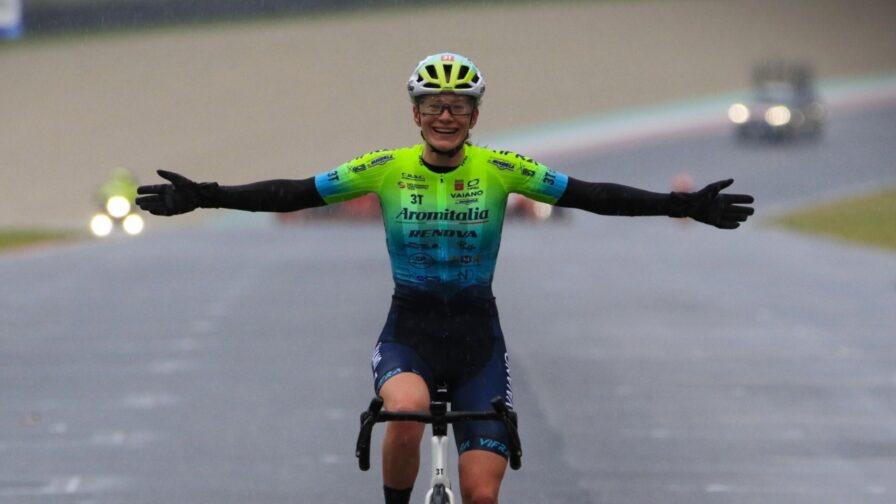
“It was really nice to get that win,” Lorang says. “And to feel that passion when you do something new.”
A new world, on new terms
What excites Lorang most is not the result itself, but the process unfolding behind it.
“It’s a completely new world for her,” he says. “And it’s really interesting to see where this will lead.”
The transition has also allowed Lorang to bring his own cycling background to the table — guiding Kingma through a peloton dynamic he knows intimately.
“It’s nice to give some input from my cycling knowledge,” he says.
For Kingma, the experience is not about abandoning triathlon, but about broadening what a high-performance career can look like.
“She can now look into both worlds,” Lorang says.
More than a crossover story
Kingma’s journey highlights a truth often overlooked: success in endurance sport is not just about physiology. It’s about environment, economics, identity and adaptability.
The peloton is not simply a harder version of triathlon cycling. It is a different ecosystem altogether — one that rewards teamwork, situational awareness and resilience as much as raw power.
For an athlete willing to step into that complexity, the challenge is immense.
So too is the opportunity.



![Jonas Schomburg wins in Kalmar 2026. [Photo credit: IRONMAN]](https://www.tri247.com/wp-content/uploads/2026/08/1H5A7725_Gfhj69jc_20260815012118.jpg)