

Few things can ruin a long ride faster than developing knee pain halfway through. Whether it’s a dull ache around the kneecap or discomfort on the inside or outside of the knee, persistent pain can make training difficult and affect both your cycling and running in a triathlon. The good news is that most cycling-related knee pain isn’t caused by the knee itself. Instead, it’s often the result of poor bike fit, excessive training load, muscle weakness or inefficient pedaling mechanics. Addressing these underlying issues usually leads to long-term improvements rather than simply masking the symptoms. For triathletes, preventing knee pain is particularly important because healthy knees must tolerate thousands of pedal revolutions before handling the impact of the run.
Why Knee Pain Happens During Cycling?
Cycling is generally considered a low-impact sport, but every ride involves thousands of repeated knee movements. Small problems repeated thousands of times can eventually lead to irritation.
Common causes include:
- Poor bike fit.
- Low cadence.
- Muscle imbalances.
- Sudden increases in training volume.
- Weak glutes.
- Tight hips.
- Fatigue.
Understanding the underlying cause is the first step towards preventing recurring discomfort.
Check Your Bike Fit First
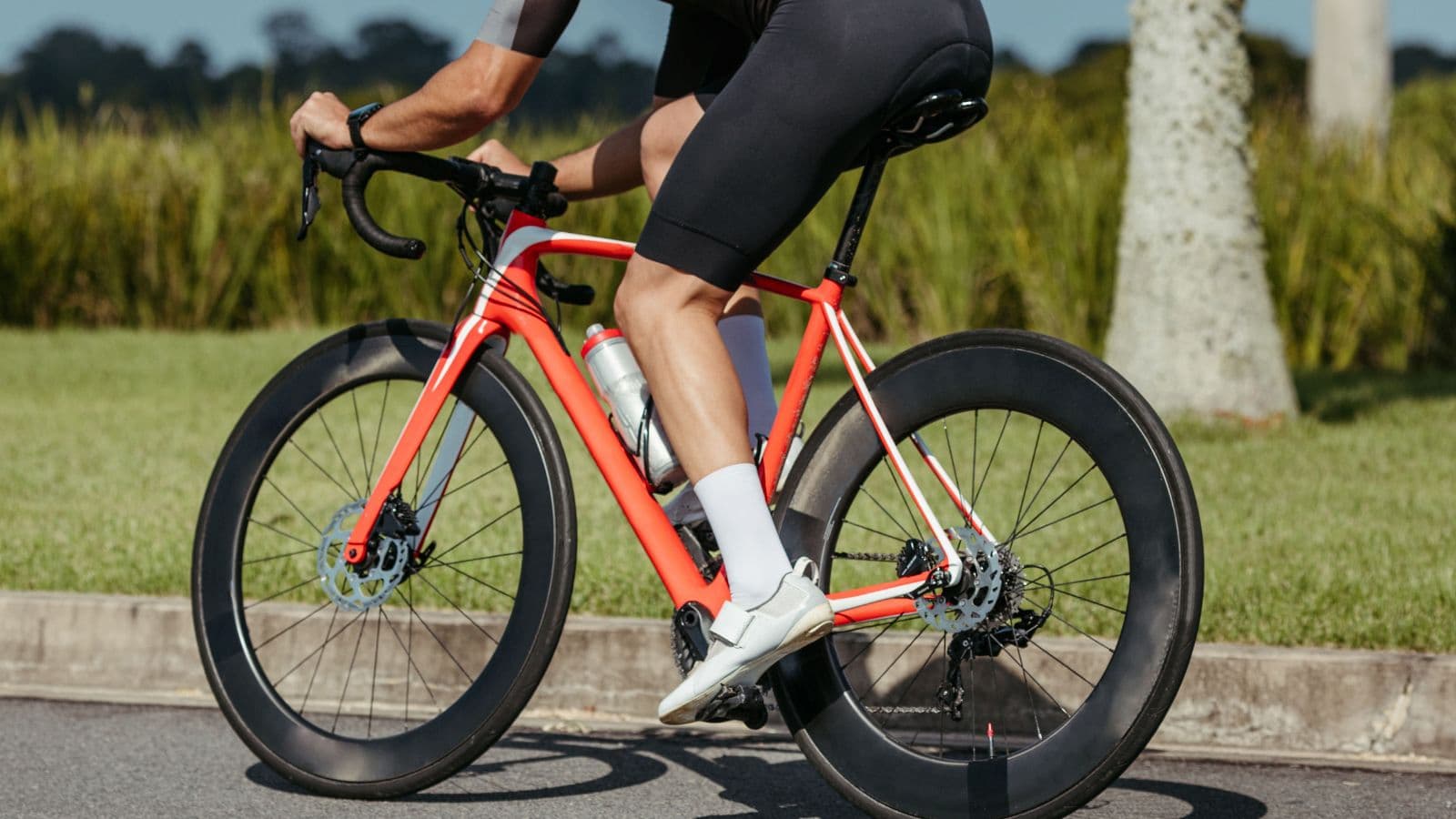
One of the most common causes of knee pain is an incorrect bike setup.
Pay particular attention to:
- Saddle height.
- Saddle fore-aft position.
- Cleat position.
- Handlebar reach.
- Crank length.
A saddle that’s too low often increases pressure on the front of the knee, while one that’s too high may place excessive strain on the back of the knee.
Professional bike fitting is often one of the best investments a triathlete can make.
Maintain an Appropriate Cadence
Grinding a heavy gear at low cadence increases the force applied through your knees. Most triathletes are more comfortable riding within a moderate cadence range that reduces peak joint loading.
Higher cadences generally:
- Reduce knee stress.
- Improve pedalling smoothness.
- Delay muscular fatigue.
- Support endurance riding.
For a deeper look at pedalling rhythm, what is the ideal cadence for long distance cycling explains how cadence influences both efficiency and comfort.
Avoid Increasing Training Too Quickly
Many overuse injuries occur when training volume or intensity rises faster than your body can adapt.
Examples include:
- Suddenly adding long rides.
- Increasing weekly mileage dramatically.
- Introducing multiple interval sessions.
- Riding challenging hills without preparation.
Gradual progression gives your muscles, tendons and joints time to become stronger.
Strengthen the Muscles Around the Knee
Strong muscles absorb force and improve joint stability.
Cyclists should focus on strengthening:
- Glutes.
- Hamstrings.
- Quadriceps.
- Calves.
- Core.
Balanced strength reduces unnecessary stress on the knees while improving pedalling efficiency. For a cycling-specific programme, what strength training should cyclists do to ride faster in a triathlon explains which exercises provide the greatest benefit.
Don’t Ignore Your Glutes
Weak glute muscles often force the knees to compensate during each pedal stroke.
Strong glutes help:
- Stabilise the hips.
- Improve force production.
- Reduce knee movement.
- Support efficient pedalling.
Exercises such as hip thrusts, split squats and single-leg deadlifts are excellent additions to a cyclist’s strength routine.
Improve Your Pedalling Technique
Smooth pedalling reduces unnecessary stress on your joints.
Aim to:
- Pedal smoothly.
- Avoid excessive side-to-side movement.
- Stay relaxed.
- Maintain steady cadence.
- Apply consistent force throughout the pedal stroke.
Improving efficiency often reduces discomfort without requiring major fitness gains. For additional guidance, how to become a more efficient cyclist explores the techniques that help cyclists ride more smoothly and economically.
Climbing Can Increase Knee Stress
Long climbs naturally require greater force production. If you remain in a gear that’s too difficult, knee loading increases substantially.
Instead:
- Shift earlier.
- Maintain cadence.
- Pace climbs evenly.
- Avoid standing excessively if discomfort develops.
Knowing when should you climb seated vs standing on a bike helps reduce unnecessary strain while climbing efficiently.
Recovery Is Part of Injury Prevention
Your body adapts between training sessions, not during them. Without adequate recovery, tissues become increasingly vulnerable to overuse injuries.
Support recovery by:
- Sleeping seven to nine hours each night.
- Eating enough to support training.
- Staying hydrated.
- Scheduling recovery rides.
- Taking recovery weeks when needed.
If fatigue accumulates faster than fitness, knee discomfort often follows. Learning how to recover faster after a triathlon can help you stay consistent while reducing the likelihood of overuse injuries.
Listen to Early Warning Signs
Mild discomfort during a ride shouldn’t automatically be ignored.
Pay attention if you notice:
- Pain that worsens as the ride continues.
- Swelling around the knee.
- Sharp or stabbing sensations.
- Pain that changes your pedalling technique.
- Discomfort that continues after cycling.
Continuing to train through persistent pain can turn a minor issue into a long-term injury. If symptoms last for several rides or interfere with everyday activities, seek advice from a qualified healthcare professional or sports physiotherapist.
Fuel Properly During Long Rides
Fatigued muscles provide less support for your joints. This is important in understanding how to get faster at cycling in a triathlon.
As energy levels fall:
- Pedalling technique often deteriorates.
- Cadence may decrease.
- Force through the knees increases.
- Coordination becomes less efficient.
Maintaining energy intake during long rides helps preserve good technique throughout the session. If you’re planning longer endurance rides, how to fuel for ironman triathlon explains how proper nutrition helps maintain performance and reduce fatigue.
Balance Intensity Throughout the Week
Knees don’t just respond to one ride, they respond to your overall training load.
A balanced week should include:
- Endurance rides.
- Recovery rides.
- Structured intervals.
- Strength training.
- Rest days.
Avoid stacking multiple demanding sessions together without allowing adequate recovery. If you’re building sustainable cycling fitness, how to increase cycling power without burning out explains how managing training load helps prevent overuse injuries.
Flexibility and Mobility Can Help
Mobility won’t solve every case of knee pain, but maintaining good movement around the hips and ankles supports more efficient cycling mechanics.
Areas worth addressing include:
- Hip flexors.
- Hamstrings.
- Glutes.
- Calves.
- Ankle mobility.
Simple mobility exercises performed consistently often help reduce unnecessary stress on the knees during long rides.
Don’t Chase Big Gears
Many cyclists believe pushing harder gears automatically builds strength.
In reality, repeatedly riding at very low cadence can increase stress on the knees without delivering better performance.
Instead, focus on:
- Smooth pedalling.
- Appropriate gearing.
- Consistent cadence.
- Sustainable effort.
Improving your overall power output through structured training is a far more effective strategy. For example, how does sweet spot training improve cycling explains how targeted training sessions increase sustainable power while managing fatigue.
Build Endurance Gradually
The longer your rides become, the more important muscular endurance becomes.
Develop endurance progressively by:
- Extending long rides gradually.
- Maintaining comfortable pacing.
- Practising race nutrition.
- Monitoring fatigue.
- Scheduling recovery weeks.
Building endurance patiently reduces excessive stress on your knees while improving overall cycling performance. Understanding what is zone 2 cycling in a triathlon can help you complete longer rides at an intensity that supports aerobic development without unnecessary joint stress.
Common Mistakes
- Ignoring bike fit.
- Riding in gears that are too heavy.
- Increasing training volume too quickly.
- Skipping strength training.
- Neglecting recovery.
- Continuing to ride through persistent pain.
- Poor hydration and nutrition on long rides.
- Using excessively low cadence for extended periods.
Practical Tips
- Get a professional bike fit if discomfort persists.
- Ride at a comfortable cadence.
- Strengthen your glutes and core.
- Increase training volume gradually.
- Shift into easier gears before steep climbs.
- Fuel and hydrate during long rides.
- Include regular mobility work.
- Take pain seriously if it becomes persistent.
Actionable Takeaways
Most knee pain during long cycling rides develops because of preventable factors such as poor bike fit, excessive training load, low cadence or muscular weakness. Addressing these root causes is far more effective than simply treating the symptoms after they appear.
A combination of proper bike setup, structured strength training, sensible progression and consistent recovery will help keep your knees healthy throughout the triathlon season. By taking small preventative steps now, you’ll be able to train more consistently, ride more comfortably and arrive at the run with stronger, fresher legs.