

What improving your triathlon swim means and why it matters?
Improving your triathlon swim means developing efficiency, control, and confidence in open water so you can complete the first discipline with minimal fatigue. It matters because the swim sets up your entire race. Poor execution increases heart rate, drains energy, and negatively impacts both your bike and run.
Focus on efficiency, not speed
Most beginners try to swim faster. The priority should be swimming better.
Key focus areas:
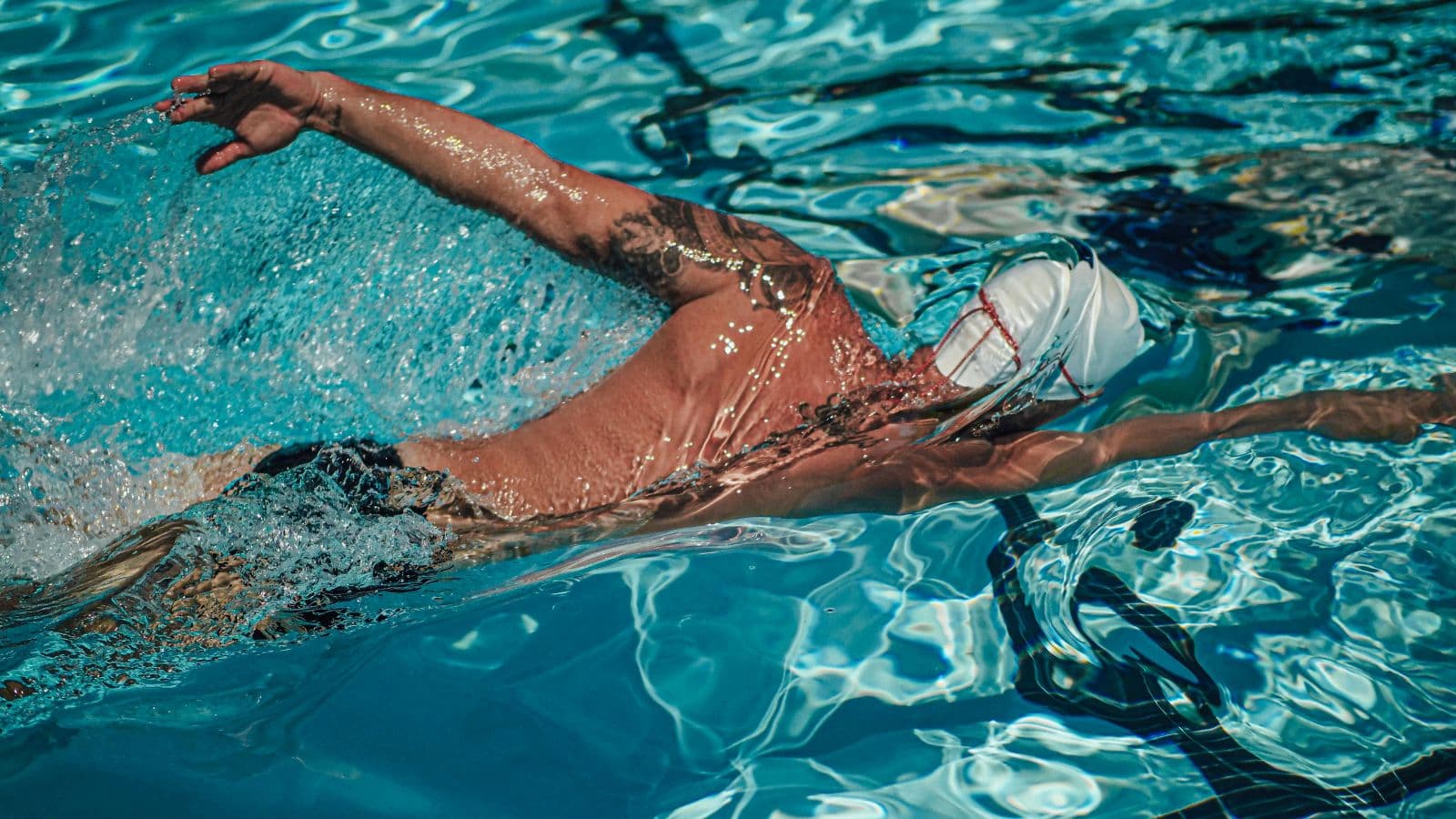
- Body position (horizontal, streamlined)
- Smooth, controlled breathing
- Consistent stroke rhythm
Efficiency reduces energy cost, which is critical in triathlon.
Master your breathing
Breathing is the most common limiter in triathlon swimming.
What to do:
- Exhale fully underwater
- Keep breathing relaxed and controlled
- Practice bilateral breathing (every 3 strokes)
Poor breathing leads to panic and early fatigue.
Improve body position
A poor body position creates drag and slows you down.
Key points:
- Keep hips and legs high
- Engage your core
- Look slightly forward, not straight ahead
- Better position = less resistance = easier swimming
Develop a consistent stroke
A smooth, repeatable stroke matters more than power.
Focus on:
- Long, controlled strokes
- High elbow catch
- Steady rhythm
Avoid:
- Overkicking
- Rushing your stroke
- Consistency improves endurance
Train in open water
Pool fitness doesn’t fully transfer to race conditions.
Include:
- Open water sessions when possible
- Sighting practice
- Swimming without walls
- This builds confidence and reduces race-day anxiety
Learn to sight properly
Navigation is a key triathlon skill. Sighting is the act of lifting your eyes forward during your stroke to stay on course. To do it effectively, sight every 6 to 10 strokes, lift your eyes just above the water rather than your whole head, and combine it with your normal breathing pattern. Swimming straight saves both time and energy over the course of the race.
Get comfortable with contact
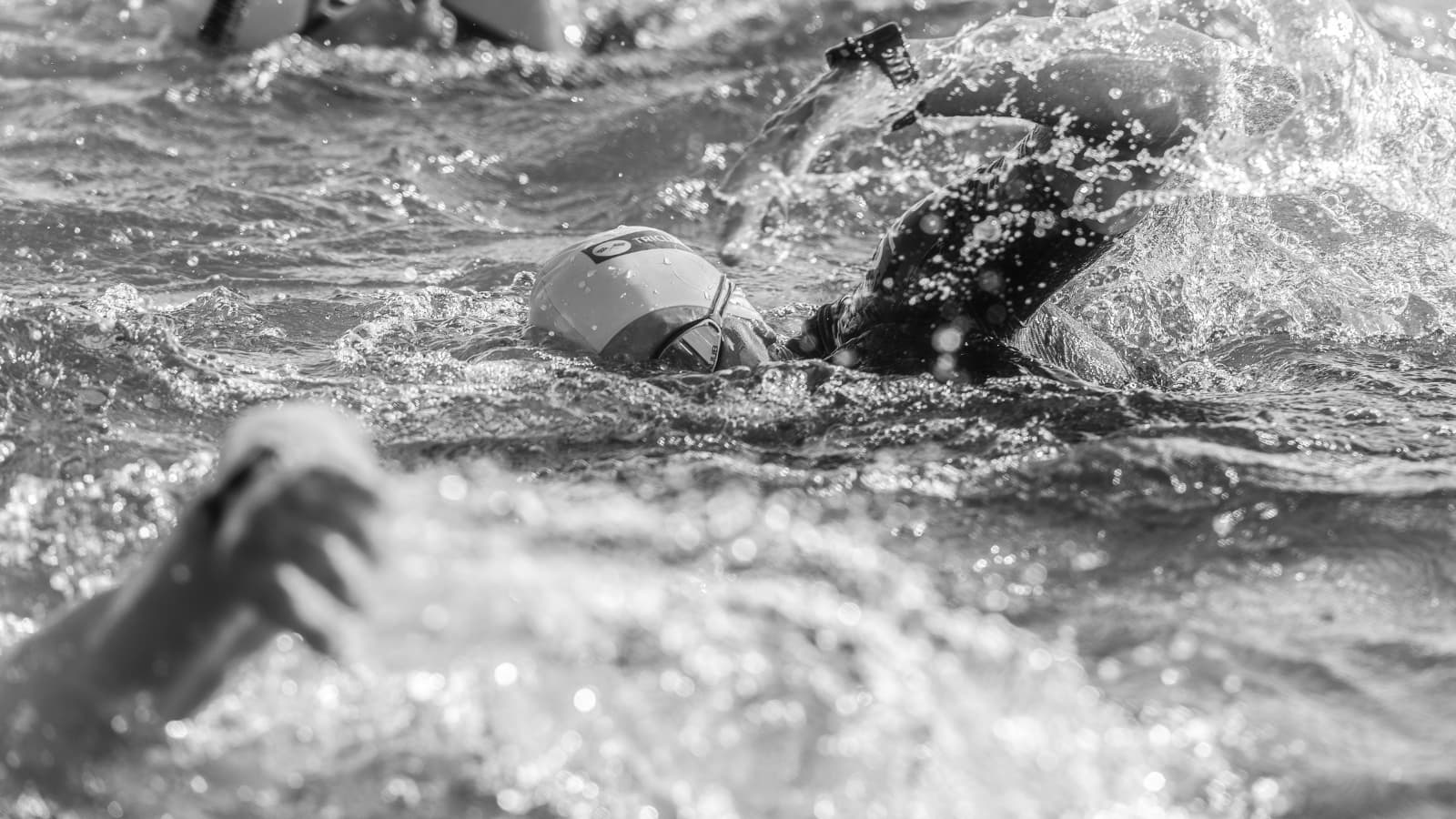
Triathlon swims are crowded.
Expect:
- Physical contact
- Close proximity to other swimmers
Practice swimming in groups to stay calm and maintain rhythm.
Build endurance gradually
You need to swim continuously without stopping.
Progression:
- Start with shorter intervals
- Build to continuous swims (400 to 1500m)
- Focus on maintaining form under fatigue
Consistency is more important than distance early on.
Use the right equipment
Wetsuit
- Improves buoyancy
- Helps body position
- Reduces fatigue
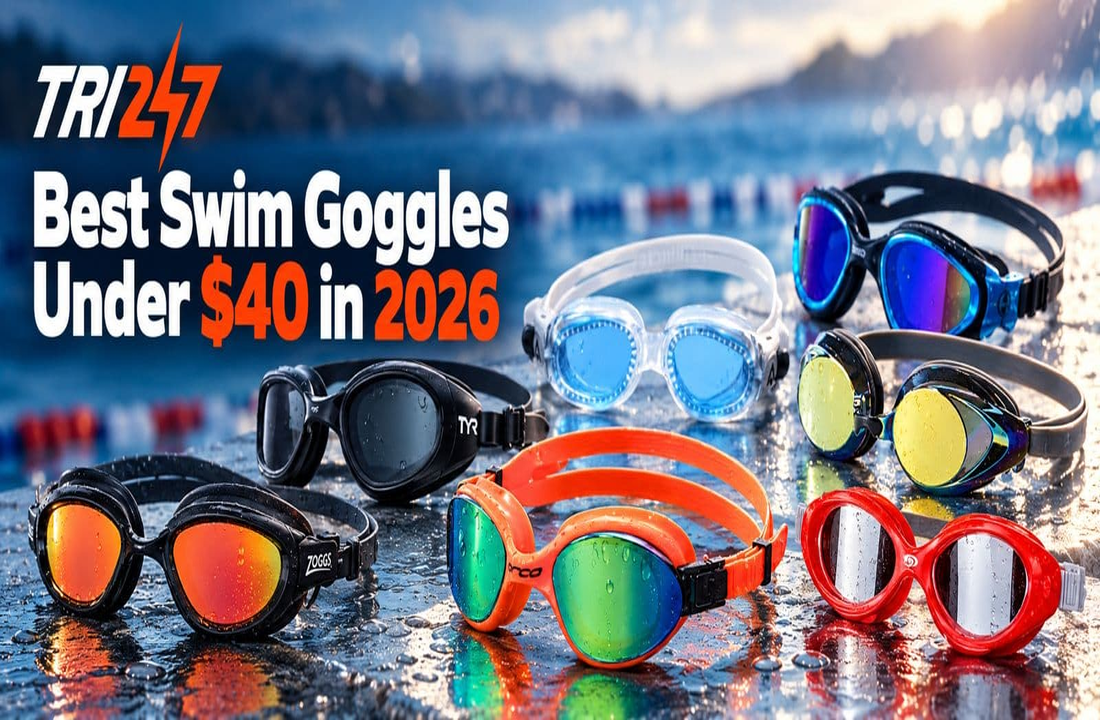
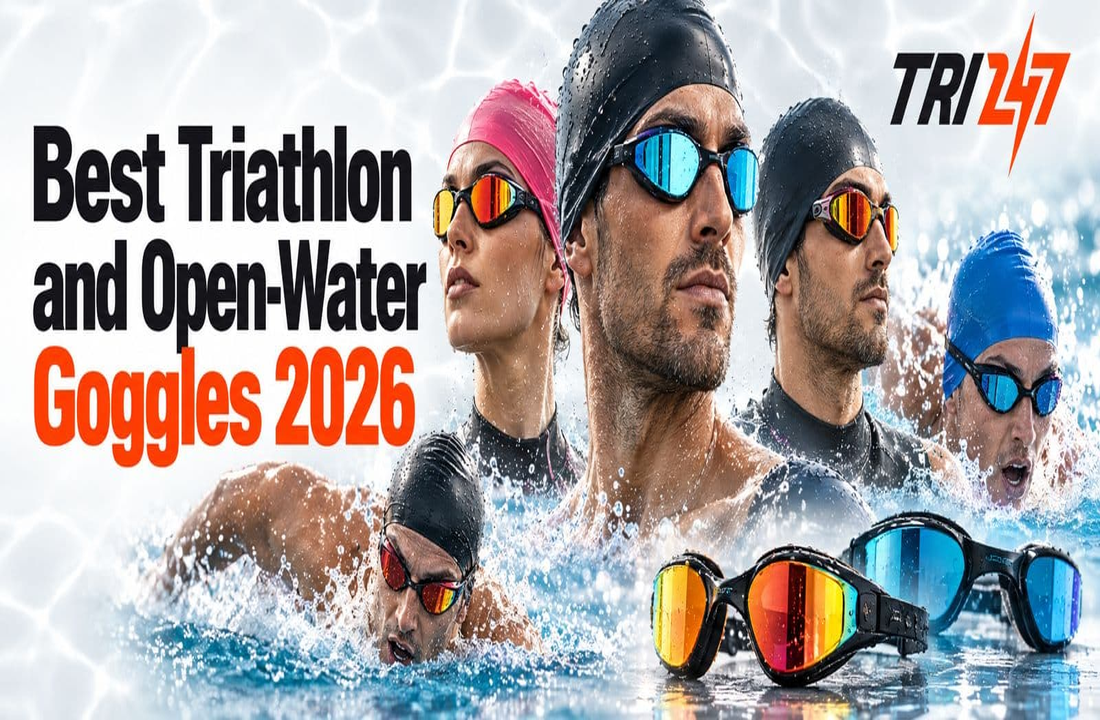
Goggles
- Ensure clear vision
- Prevent leaks
Test everything in training.
Control your effort early
Most swimmers start too hard.
What to do:
- Start at controlled effort (70 to 80%)
- Focus on rhythm first
- Build pace gradually
- This prevents early fatigue
Combine swim with overall triathlon training
Your swim doesn’t exist in isolation.
A controlled swim sets up the rest of your race, especially when combined with structured training across all disciplines. This is part of a complete approach outlined in how to train for your first triathlon.
Common swim mistakes
Swimming too hard
Leads to early fatigue and poor pacing.
Lifting the head too high
Creates drag and disrupts body position.
Holding breath
Increases stress and reduces control.
Skipping open water practice
Leaves you unprepared for race conditions.
Practical swim session example
Beginner session:
- Warm-up: 200m easy
- Main set: 6 × 50m controlled effort
- Drill: breathing or technique focus
- Cool down: 100m easy
Focus on technique over speed.
What actually improves your swim
Performance comes from:
- Better technique
- Controlled breathing
- Efficient movement
- Consistent practice
Not raw effort.
Quick checklist
Before race day, you should:
- Swim continuously for race distance
- Breathe comfortably
- Sight without stopping
- Stay calm in open water
- Maintain consistent stroke
Final Takeaway
Improving your triathlon swim is about control, efficiency, and confidence, not speed. Focus on technique, manage your effort, and build consistency. A strong swim sets up your entire race.