

What open water swimming is & why it matters?
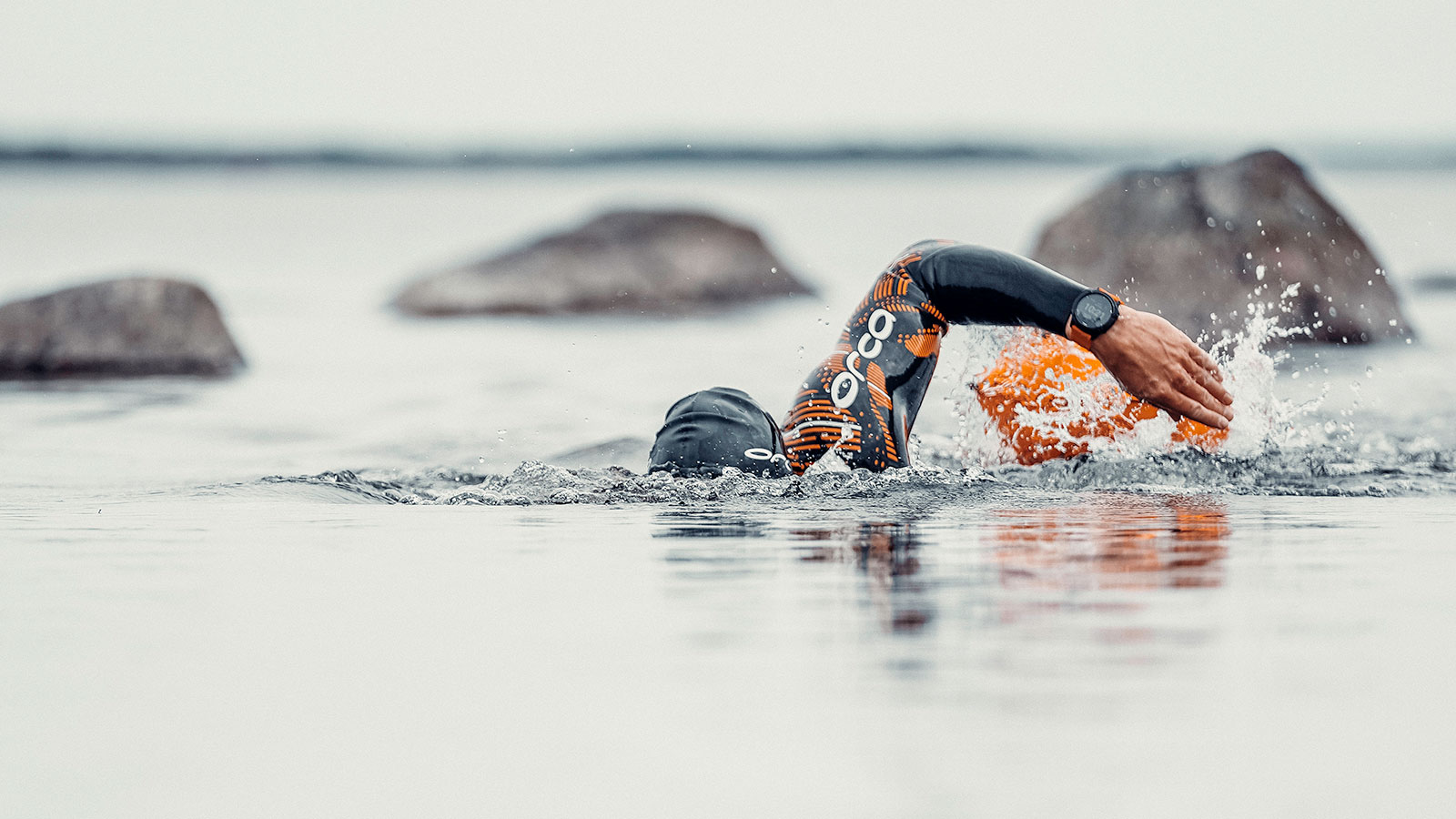
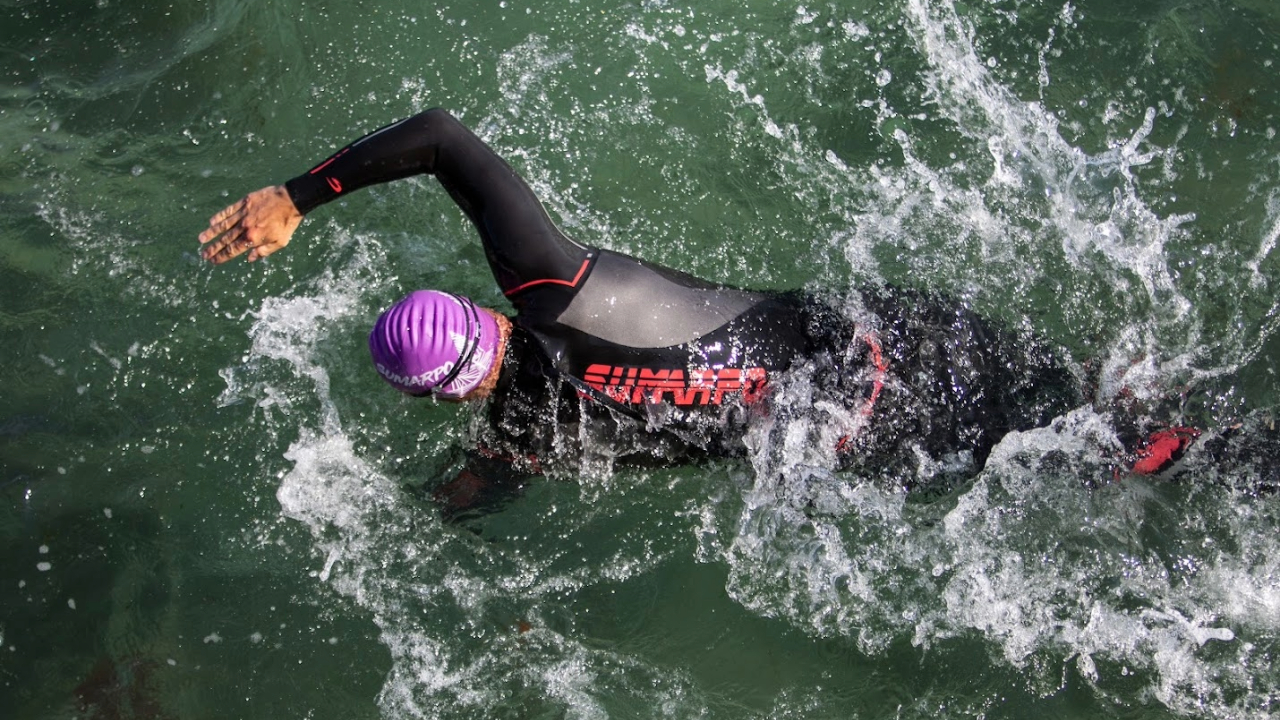
Open water swimming is any swim outside a pool: lakes, oceans, rivers, or reservoirs. In triathlon, it’s the first discipline and the one that causes the most anxiety for beginners.
It matters because poor swim execution affects everything that follows. If you exit the water stressed or exhausted, your bike and run performance drops immediately.
How open water swimming is different from the pool?
Pool swimming is controlled. Open water swimming is not.
Key differences include:
- No walls or rest points
- Limited visibility (no lane lines)
- Variable conditions (waves, currents, temperature)
- Physical contact with other swimmers
- Open water swim anxiety is the stress response triggered by low visibility, crowding, and loss of control. It’s common and manageable with preparation.
Beginner’s Guide
Start with controlled exposure
Your first goal is comfort, not speed.
What to do:
- Begin in calm water (lake or sheltered bay)
- Swim short distances (100 to 200m repeats)
- Stay close to shore
- Swim with a partner or group
What to avoid:
- Deep, open areas early on
- Large race simulations too soon
- Cold water without preparation
- Build confidence before adding distance
Master breathing under pressure
Breathing is the first thing that breaks down in open water.
Common problems encountered by the athletes:
- Short, panicked breaths
- Holding breath unintentionally
- Heart rate spikes
What to do:
- Exhale fully underwater
- Use bilateral breathing (every 3 strokes) to stay relaxed
- If stressed, switch to single-side breathing temporarily
If needed, stop, tread water, and reset. That’s normal even in races.
Learn to sight efficiently
Sighting is how you navigate without lane lines. Sighting is lifting your eyes forward during the stroke to check direction.
How to do it:
- Lift eyes just above water (not full head)
- Combine with your normal breath
- Sight every 6 to 10 strokes in calm water
- Increase frequency in choppy conditions
Poor sighting leads to swimming extra distance that is often 5 to 10% more.
Get comfortable with contact
Triathlon swims involve other athletes. Expect it.
What happens:
- Arms and legs collide
- Swimmers cross your line
- Crowded starts
What to do:
- Practice swimming close to others
- Stay relaxed if bumped
- Keep your stroke consistent
Avoid reacting aggressively. It wastes energy and disrupts rhythm.
Choose the right position at the start
Start position determines your early race experience.
Options:
- Front: fastest swimmers, highest intensity
- Middle: balanced position
- Back/side: least contact, slower pace
Beginner strategy:
Start wide or towards the back to avoid congestion. You’ll swim more cleanly and stay calmer.
Use a wetsuit properly
Most beginner races are wetsuit-legal.
Benefits:
- Increased buoyancy
- Better body position
- Reduced drag
- Thermal protection
Key points:
- Ensure a proper fit (tight but not restrictive)
- Practice swimming in it before race day
- Expect restricted shoulder movement initially
A wetsuit can significantly reduce fatigue for beginners. For a detailed breakdown of fit, materials, and top options, see our wetsuit buying guide.
Control your pacing from the start
Most beginners go too hard in the first 100 to 200m.
What happens:
- Heart rate spikes
- Breathing becomes erratic
- Panic increases
What to do:
- Start at 70 to 80% effort
- Build rhythm first, then increase pace
- Focus on long, controlled strokes
The goal is to settle quickly, not sprint.
Train for real conditions
Pool fitness doesn’t automatically transfer.
Include:
- Open water sessions when possible
- Swimming without pushing off walls
- Continuous swims (no breaks)
- Practice sighting and turns
Optional:
- Swim in light chop or waves
- Practice entry and exit (running into water, dolphin dives)
Race conditions should feel familiar, not new.
Manage anxiety during the swim
Open water anxiety is common, even for experienced athletes.
Signs:
- Rapid breathing
- Tight chest
- Urge to stop
Immediate actions:
- Roll onto your back and float
- Switch to breaststroke temporarily
- Focus on long exhalations
You don’t have to push through panic. You reset, then continue.
Navigation: swim straight, not hard
Swimming off-course wastes time and energy.
Key points:
- Pick large landmarks (buoys, buildings, trees)
- Avoid following random swimmers blindly
- Adjust for sun glare or waves
Even strong swimmers lose minutes by poor navigation.
Practical tips for race day
Before the start:
- Warm up in the water if allowed
- Get your face wet early
- Practice a few sighting strokes
During the swim:
- Stay relaxed in the first 200m
- Focus on rhythm, not speed
- Keep your stroke long and controlled
After the swim:
- Stand up gradually
- Expect temporary dizziness
- Move steadily into transition
Common beginner mistakes
- Starting too fast
- Lifting the head too high when sighting
- Holding breath under stress
- Swimming too far off-course
- Skipping open water practice
- Choosing aggressive start positions
Each of these increases fatigue and reduces control.
Quick checklist
Before your first race, you should be able to:
- Swim 400 to 750m continuously
- Breathe comfortably under light stress
- Sight without stopping
- Swim in a wetsuit (if using one)
- Stay calm after minor contact
If you can do these, you’re ready.
What actually improves your swim
For beginners, performance improves by staying relaxed, swimming straight, breathing efficiently, and controlling effort early in the swim. Speed is secondary, control is what determines your outcome.

Bottom line
Open water swimming is not about perfect technique, it’s about control in an unpredictable environment.
Focus on:
- Calm breathing
- Efficient navigation
- Smart pacing
Get those right, and the swim becomes manageable and sets up the rest of your race.