

A strong triathlon run starts long before you put on your running shoes. How you pace, fuel and manage your effort during the bike leg can determine whether you leave T2 ready to run well or spend the opening kilometres trying to recover from an overly aggressive ride. This is why the fastest possible bike split isn’t always the smartest goal. Riding slightly harder might save a few minutes on the bike, but those gains can disappear quickly if excessive cycling fatigue causes a major slowdown during the run. Biking smarter means using your fitness efficiently. By controlling intensity, avoiding unnecessary power spikes, fueling consistently and preparing specifically for running after cycling, you can improve your chances of producing a stronger overall race rather than simply a faster bike leg.
In Short
- Pace the bike according to the entire race.
- Avoid unnecessary surges in power.
- Keep early cycling effort controlled.
- Use a comfortable and sustainable cadence.
- Fuel and hydrate consistently on the bike.
- Practise running after cycling in training.
Why Does the Bike Affect Your Triathlon Run?
Cycling creates fatigue before the run even begins.
During the bike leg, you’re using energy while placing repeated demands on the:
- Quadriceps.
- Glutes.
- Hamstrings.
- Calves.
- Cardiovascular system.
The harder you ride, the greater those demands generally become. A well-trained cyclist may tolerate substantial bike intensity and still run effectively. Another athlete may need a more conservative approach. The key is finding the highest sustainable cycling effort that still allows you to execute the run.
Stop Treating the Bike as a Standalone Race
A triathlon isn’t three separate races. An impressive bike split means little if it causes a major collapse on the run. Think of your cycling effort as preparation for the next discipline. You want to reach T2 having ridden strongly but without feeling as though you’ve just completed a standalone time trial.
This becomes increasingly important as race distance increases.
Build Enough Cycling Fitness
Smarter pacing only works when supported by adequate cycling fitness. If your race effort represents an extremely high percentage of your cycling capacity, even sensible pacing may leave you fatigued. Developing your aerobic foundation through what is zone 2 cycling in a triathlon can help make sustainable race power less demanding relative to your overall fitness.
Better bike fitness can therefore improve running indirectly.
Control the Opening Part of the Bike
The beginning of the bike can feel deceptively easy. You’re excited, competitors are passing and your legs may feel fresh after leaving the swim. This encourages some athletes to immediately push harder than planned.
Instead, use the opening section to:
- Settle your breathing.
- Begin fuelling.
- Establish cadence.
- Find sustainable power.
- Let race excitement decrease.
You have plenty of time to use your fitness later.
Avoid Large Power Spikes
Repeated surges can create unnecessary fatigue.
They commonly happen when:
- Climbing.
- Overtaking.
- Accelerating from corners.
- Riding into headwinds.
- Responding to other athletes.
Sometimes increased power is unavoidable, but constantly attacking every change in terrain can make your average effort more costly than necessary. Smooth power delivery is particularly valuable during long-course racing.
Don’t Attack Every Hill
Cyclists often dramatically increase effort when the road rises. Your speed falls, so instinct tells you to push harder. But maintaining flat-road speed isn’t the objective. Shift appropriately, allow speed to decrease and keep your effort under control. Understanding when should you climb seated vs standing on a bike can also help you manage muscular effort rather than standing and attacking every climb automatically.
Use the Downhill to Recover Strategically
Descending provides opportunities to reduce effort when additional pedalling produces relatively little extra speed. This doesn’t mean completely stopping every time the road points downward.
Instead, consider:
- Gradient.
- Speed.
- Course conditions.
- Upcoming terrain.
- Safety.
On faster descents, aerodynamic position and confident handling may sometimes provide more benefit than forcing extremely high power.
Don’t Chase Other Riders
Someone passing you isn’t evidence that you’re cycling too slowly.
They may:
- Be a much stronger cyclist.
- Have different race goals.
- Be racing a shorter distance.
- Be pacing poorly.
Trying to follow every faster athlete can destroy your planned intensity.
Race according to your own sustainable effort.
Use Power Intelligently
A power meter can provide useful information because it measures cycling output directly.
It can help prevent you from:
- Starting too hard.
- Overriding climbs.
- Chasing competitors.
- Riding according to speed alone.
However, power shouldn’t completely override perceived effort. Fatigue, heat and illness can make your normal power unusually difficult to sustain.
Understanding what is ftp in triathlon cycling can help you interpret cycling intensity and use power targets more meaningfully.
Heart Rate Provides Additional Context
Heart rate can help show how your body is responding to the workload.
It is influenced by:
- Heat.
- Hydration.
- Fatigue.
- Caffeine.
- Stress.
Therefore, don’t use heart rate as the only pacing tool. Combining power, heart rate and perceived exertion provides a more complete picture of how hard you’re working.
Choose a Sustainable Cadence
There is no single perfect cadence for every triathlete. Some athletes naturally pedal faster, while others prefer slightly slower cadences. However, excessively grinding a large gear can create substantial muscular demand, particularly through the legs you’ll soon need for running.
Using what is cycling cadence in a triathlon can help you understand how cadence, gearing and power interact without forcing an arbitrary rpm target.
Practise Smooth Pedalling
Efficient cycling doesn’t mean trying to consciously produce equal force through every degree of the pedal stroke.
Instead, focus on:
- Appropriate gearing.
- Stable posture.
- Comfortable cadence.
- Smooth transitions in effort.
Avoid repeatedly stomping large gears and then coasting unless the terrain requires it. A controlled rhythm can make long periods of race cycling easier to manage.
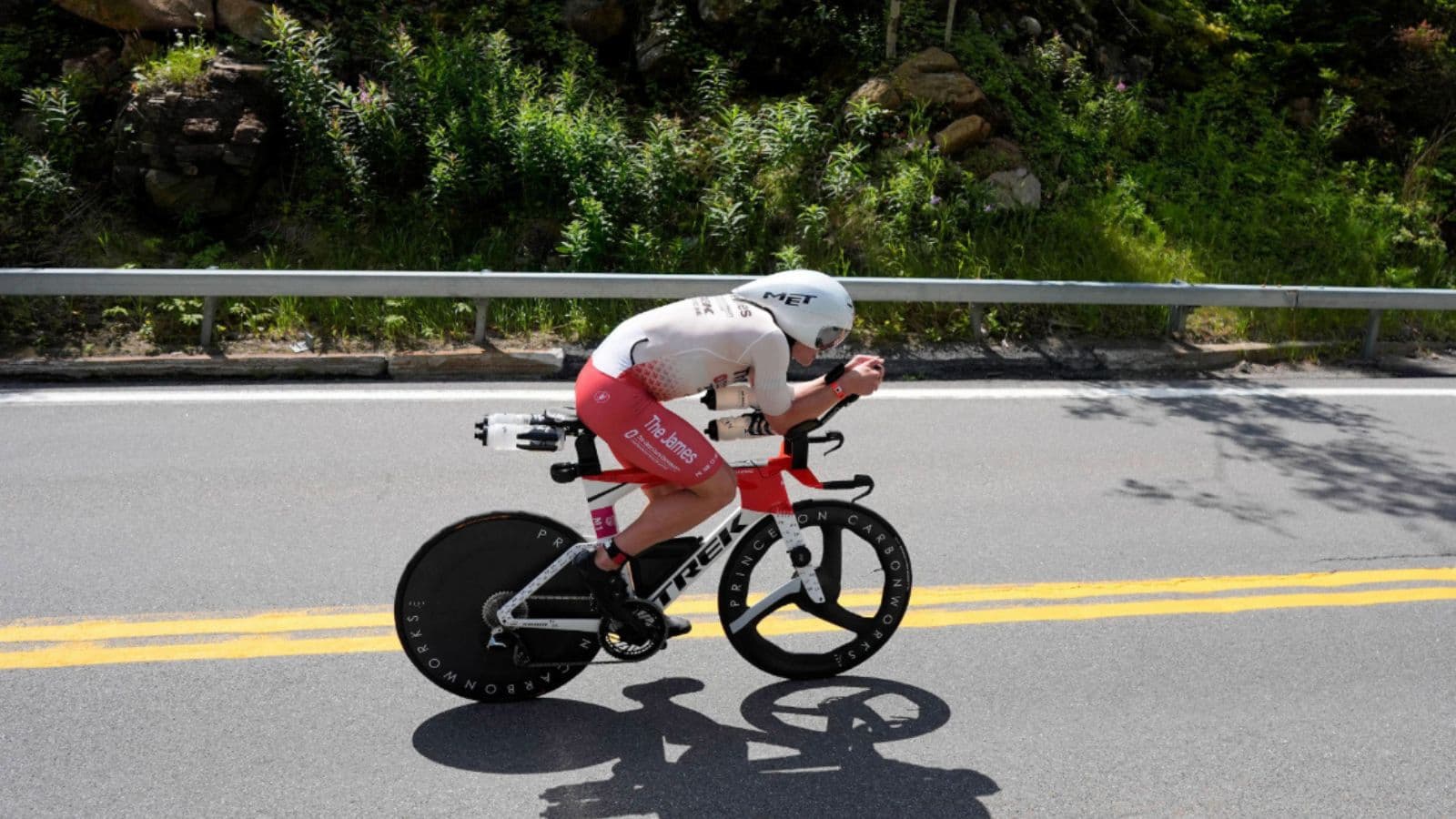
Improve Your Aerodynamics Without Sacrificing Sustainability
Aerodynamics can help you ride faster without increasing power. However, an aggressive position is only useful if you can maintain it.
If your position causes excessive:
- Hip discomfort.
- Back fatigue.
- Neck tension.
- Saddle discomfort.
you may spend increasing amounts of time sitting upright.
A sustainable aerodynamic position can be more useful than an extreme one you cannot hold.
Consider How Bike Position Affects Running
Your cycling position influences which muscles experience fatigue. Triathlon specific positioning can help some athletes balance aerodynamics, comfort and the ability to run afterward, but individual setup matters. Don’t make dramatic bike-fit changes immediately before a race.
Test adjustments during training and assess not only cycling comfort but also how your legs feel during subsequent running.
Fuel Early on the Bike
The bike is usually the easiest part of a triathlon in which to consume meaningful amounts of carbohydrate and fluid. Don’t wait until you’re hungry. Depending on race duration, your strategy should begin early enough to support the later stages of the event.
Your appropriate intake depends on:
- Race duration.
- Body size.
- Intensity.
- Gut tolerance.
- Previous nutrition.
Practise your strategy during training.
Don’t Arrive at T2 Under Fueled
Poor cycling nutrition often appears as a running problem. An athlete may assume their running endurance failed when they actually began the run with insufficient carbohydrate availability. Long course triathletes in particular should use the bike as an opportunity to establish consistent energy intake.
The principles in how to fuel for a 2 hour cycling ride in a triathlon can provide a starting point for practicing bike nutrition before applying a race-specific strategy.
Hydrate According to Conditions
Hydration needs vary substantially between athletes. Hot weather generally increases sweat losses, but drinking as much as possible isn’t the solution.
Your strategy should consider:
- Temperature.
- Humidity.
- Sweat rate.
- Race duration.
- Fluid availability.
If you’re preparing for hot races, how much should you drink per hour when cycling in hot weather can help you think about hydration individually rather than copying another athlete’s intake.
Practise Race Nutrition During Bike Training
Race day shouldn’t be the first time you combine:
- Race-intensity cycling.
- Carbohydrate intake.
- Fluids.
- Your chosen nutrition products.
Practise during longer rides and race-specific sessions.
This gives you opportunities to identify:
- Gastrointestinal problems.
- Difficult packaging.
- Flavour fatigue.
- Timing issues.
- Insufficient intake.
A nutrition plan is useful only if you can actually tolerate and execute it.
Develop Bike Fitness Without Excessive Fatigue
Hard cycling workouts have an important role, but every ride doesn’t need to become threshold training.
A combination of:
- Aerobic endurance.
- Threshold work.
- Intervals.
- Recovery riding.
allows you to develop multiple aspects of cycling fitness. The guide how does sweet spot training improve cycling can help explain how sustained sub-threshold work can develop cycling fitness without always requiring maximal efforts.
Save Your Hardest Bike Efforts for the Right Sessions
Hard bike workouts can compromise running quality if they’re placed poorly within your week. For example, completing demanding bike intervals before an important run session may prevent you from reaching the intended running intensity. Plan your week as a triathlete rather than as three separate athletes. Sometimes protecting the quality of an important run means making the previous cycling session easier.
Practise Brick Running
Brick sessions teach you to transition from cycling to running.
They can help you become familiar with:
- Heavy legs.
- Altered stride perception.
- Rapid changes in posture.
- Early run pacing.
Not every brick needs to be long or hard. A short 10–20 minute easy run after cycling can provide valuable transition practice with relatively little additional training stress.
Use Race-Specific Brick Sessions Selectively
As your race approaches, some brick sessions can become more specific.
For example, you might complete:
- Controlled race-intensity cycling.
- A quick transition.
- A short run at intended race effort.
These workouts allow you to assess whether your bike pacing actually supports your planned running intensity.
If you consistently cannot run appropriately after race-power cycling, your bike target may need reassessment.
Don’t Sprint Out of T2
The first kilometre of a triathlon run often feels strange. After travelling quickly on the bike, normal running speed may feel slow. That can lead to an overly aggressive opening pace. Start under control and allow your body to establish its running rhythm.
Understanding what is a negative split in triathlon running can reinforce why preserving some energy early may produce a stronger finish.
Your Running Form May Feel Different After Cycling
Cycling fatigue can temporarily affect:
- Stride length.
- Cadence.
- Posture.
- Hip movement.
Don’t immediately force your stride to feel exactly like fresh running.
Settle into the run and focus on simple cues:
- Relax your shoulders.
- Run tall.
- Keep your rhythm controlled.
- Avoid overstriding.
As your legs adapt, movement often begins to feel more natural.
Improve Running Durability Too
Smart cycling cannot compensate for inadequate running preparation. You still need enough running-specific endurance to maintain form and pace after T2. Building durability through how to build an aerobic base for running a triathlon helps prepare your legs for sustained running even after the bike has created fatigue. Bike smarter, but also prepare specifically for the demands of the run.
Train Your Ability to Run on Tired Legs Carefully
Running on tired legs is race-specific, but doing it constantly can create excessive training stress. Use selected brick workouts rather than intentionally exhausting yourself before every run.
Some important running sessions should still be completed relatively fresh so you can develop:
- Speed.
- Threshold.
- Technique.
- Running economy.
Specificity matters, but so does workout quality.
Race Distance Changes Bike Strategy
A sprint triathlon allows a different cycling intensity from an Ironman. As race duration increases, conserving energy becomes increasingly important.
Your bike strategy should reflect:
- Race distance.
- Fitness.
- Course.
- Weather.
- Running ability.
- Nutrition plan.
Don’t simply copy the power target of another athlete.
Strong Cyclists Still Need Restraint
Being an excellent cyclist can create a unique pacing problem. You may be capable of producing much higher power than you should use during a triathlon. The objective isn’t demonstrating your maximum cycling ability. It’s using enough of that fitness to ride quickly while preserving your ability to run. Sometimes the best cyclists produce their strongest overall races by riding more conservatively than their ego would prefer.
Common Mistakes
- Treating the bike as a standalone race.
- Starting the bike too hard.
- Attacking every climb.
- Chasing faster cyclists.
- Using an unnecessarily low cadence.
- Waiting too long to fuel.
- Ignoring hydration.
- Performing every brick session hard.
Practical Tips
- Establish your bike intensity before race day.
- Keep early power controlled.
- Avoid unnecessary surges.
- Shift gears before cadence becomes uncomfortable.
- Fuel consistently throughout the bike.
- Practise race nutrition in training.
- Include short brick runs regularly.
- Judge bike pacing by how well you can run afterward.
Actionable Takeaways
Biking smarter can improve your triathlon run because the run begins with whatever energy and muscular capacity you have left after cycling. A slightly faster bike split isn’t necessarily valuable if it causes a substantially slower run.
Develop enough cycling fitness that race power feels sustainable, then practise controlling that power across hills, wind and changing terrain. Use an appropriate cadence, minimise unnecessary surges and make the bike your main opportunity to establish consistent fuelling and hydration.
Finally, test your strategy with brick sessions. The best bike pacing strategy isn’t simply the one that produces your fastest cycling time, it’s the one that helps produce your fastest sustainable overall triathlon.