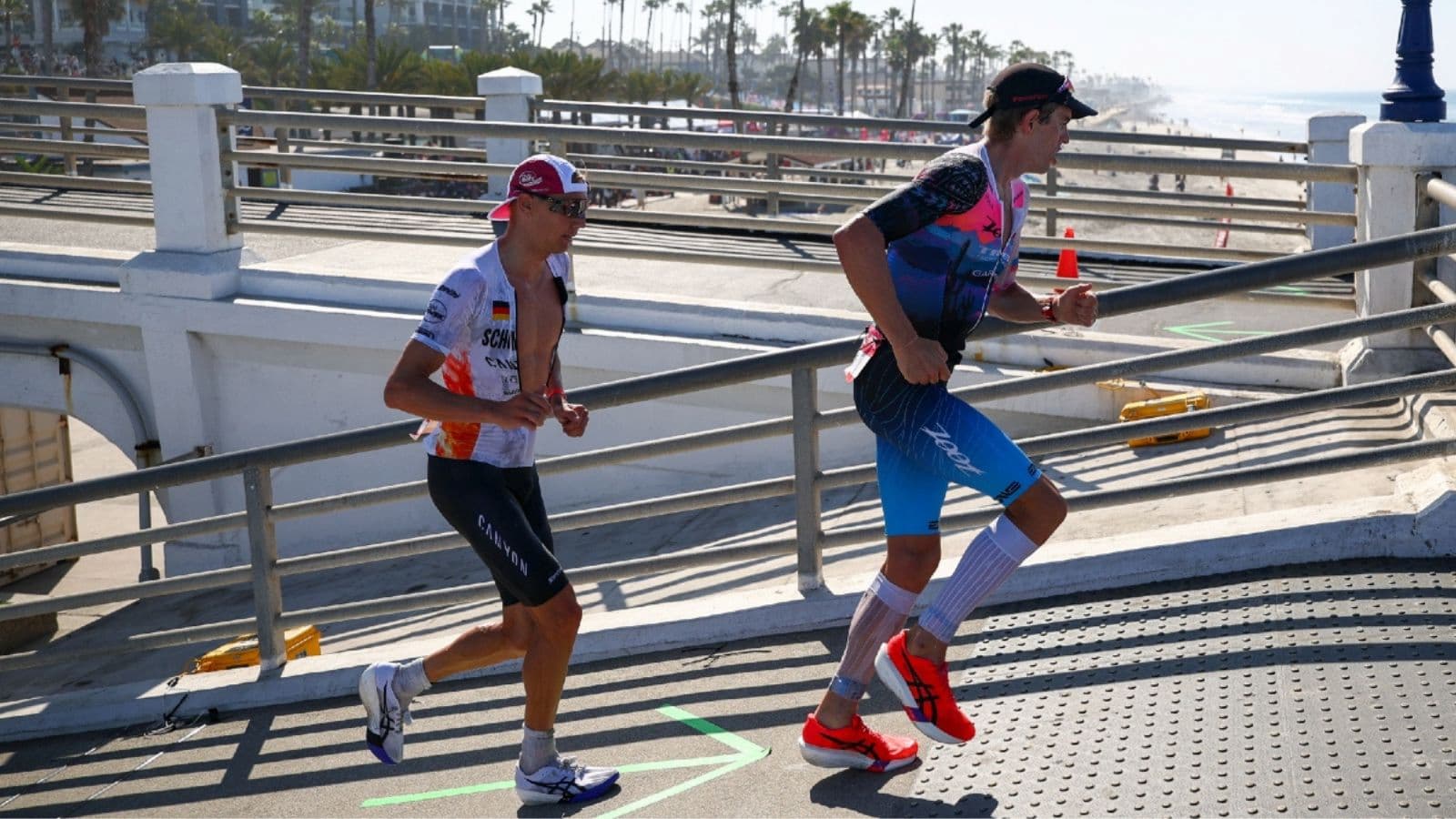


The run is often where the accumulated demands of a triathlon become most obvious. You begin it after swimming and cycling, so even excellent standalone runners can struggle if they arrive at T2 carrying too much fatigue. Reducing run fatigue therefore starts before the run itself. Your aerobic fitness, bike pacing, nutrition, hydration and training structure all influence how much energy remains for the final discipline. Once you start running, sensible pacing and efficient movement become equally important. You cannot eliminate fatigue from a triathlon. The aim is to delay the point at which it significantly affects your pace and form. Training your body to tolerate prolonged exercise, while learning how to distribute effort across the whole race, gives you a much better chance of running strongly to the finish.
In Short
- Build enough aerobic endurance for the entire race.
- Avoid spending too much energy on the bike.
- Fuel and hydrate before you reach T2.
- Start the run at a sustainable effort.
- Improve running economy and strength.
- Practise running after cycling.
Why Does the Triathlon Run Feel So Difficult?
The triathlon run is not simply a normal run that happens to come last. By T2, you have already accumulated fatigue from two disciplines. Your carbohydrate stores have been reduced, fluid losses may have accumulated and your legs have spent a significant amount of time producing force on the bike. The change from cycling to running also alters how your muscles are working. Even athletes with strong running backgrounds can find the first kilometres awkward. Your ability to manage everything before and during the run determines how quickly that fatigue becomes limiting.
Build Aerobic Endurance Across Your Training
Aerobic fitness supports almost every stage of a triathlon. A stronger aerobic system helps you maintain sustainable exercise for longer and recover more effectively from changes in effort. It also allows a given race pace to represent a smaller proportion of your maximum capacity. Running plays an obvious role, but cycling and swimming contribute to your overall endurance development as well.
For the run specifically, how to build an aerobic base for running a triathlon provides the foundation needed before adding large amounts of demanding pace work.
Keep Easy Running Easy
Not every run should leave you exhausted. Easy running allows you to accumulate useful training without creating the recovery demands of repeated hard sessions. It also gives you opportunities to develop relaxed movement and gradually increase endurance. If easy runs regularly become races against your watch, you may carry unnecessary fatigue into important workouts.
Understanding what is zone 2 running in a triathlon can help you control aerobic sessions by effort rather than constantly chasing pace.
Build Running Volume Gradually
The ability to run well late in a triathlon depends partly on durability. Your muscles, tendons and connective tissues need repeated exposure to running. However, adding too much volume too quickly can create soreness, excessive fatigue or injury. Increase running gradually while considering your total training load. A triathlete adding more running must still recover from swimming, cycling and strength work, so how to increase triathlon running volume without getting injured is particularly relevant when building greater durability.
Develop a Long Run You Can Recover From
Long runs help prepare you for sustained running, but they do not need to destroy you. A productive long run should generally leave you capable of returning to normal training after appropriate recovery.
The required duration depends on:
- Race distance.
- Training experience.
- Weekly running volume.
- Injury history.
- Overall triathlon workload.
Longer is not automatically better.
The purpose is to progressively improve endurance, not to prove that you can survive the largest possible training session.
Improve Your Running Economy
Running economy influences how much energy you need to maintain a given pace. You do not need perfect running form, but unnecessary movement can become increasingly costly as fatigue develops.
Useful principles include:
- Relaxed shoulders.
- Stable posture.
- Natural arm movement.
- Comfortable cadence.
- Avoiding excessive overstriding.
Working on how to become an efficient triathlon runner can help you maintain better movement without trying to consciously control every part of your stride.
Strengthen the Muscles That Support Running
Cardiovascular fitness is only part of endurance. Your legs must repeatedly absorb and produce force throughout the run. As muscular fatigue increases, pace often falls and running form can deteriorate.
Useful strength exercises can include:
- Split squats.
- Step ups.
- Calf raises.
- Romanian deadlifts.
- Lunges.
- Basic trunk stability exercises.
Strength training should support your endurance programme rather than compete with it.
Bike Pacing Has a Major Effect on Run Fatigue
One of the most effective ways to improve your triathlon run may be to change how you ride. An aggressive bike leg can produce an impressive split while leaving your legs unable to maintain the intended run pace.
Common bike pacing mistakes include:
- Starting too hard.
- Attacking every climb.
- Repeatedly surging.
- Chasing other competitors.
- Riding according to speed rather than sustainable effort.
Think about the fastest overall race rather than the fastest possible bike split.
Avoid Grinding an Unnecessarily Heavy Gear
Cadence affects how cycling load is distributed between muscular and cardiovascular demands. There is no universal cadence that every triathlete should use, but constantly pushing a large gear at a very low cadence may increase local muscular fatigue for some athletes. The principles in what is cycling cadence in a triathlon can help you find a sustainable rhythm instead of forcing a specific number.
Use gearing intelligently, particularly on climbs and into headwinds.
Smooth Out Your Bike Effort
A steady bike leg is often easier to run from than one containing repeated hard surges.
You will naturally need to change effort because of:
- Hills.
- Corners.
- Wind.
- Traffic.
- Course conditions.
The goal is not perfectly constant power. Instead, avoid unnecessary spikes that provide little race benefit while increasing fatigue. A smoother ride can preserve more of your capacity for the run.
Practise Running After Cycling
Brick sessions help bridge the gap between standalone running and triathlon running.
They teach you how to:
- Find your running rhythm after cycling.
- Judge early pace.
- Adjust posture.
- Recognise bike related fatigue.
- Test race nutrition.
Not every brick needs to be long. A short easy run after a normal ride can provide useful practice without creating a major recovery burden. Closer to racing, selected sessions can become more specific.
Do Not Make Every Brick Hard
Running on tired legs is useful when it serves a clear purpose. Deliberately exhausting yourself on the bike before every run is not necessary.
You still need some running sessions where you are fresh enough to develop:
- Speed.
- Threshold fitness.
- Technique.
- Running economy.
Use fatigue strategically rather than treating exhaustion as proof of effective training.
Fuel Before the Run Begins
If you wait until T2 to think about energy intake, you may already be behind. The bike leg is usually the easiest opportunity to consume meaningful amounts of carbohydrate during a triathlon. Your exact requirements depend on race duration, intensity and individual tolerance, but the principle remains consistent: establish a nutrition strategy before race day and practice it during training. For longer rides, how to fuel for a 2 hour cycling ride in a triathlon can help establish the habit of taking in energy consistently rather than waiting for hunger or fatigue.
Practise Your Nutrition Strategy
Knowing that you need carbohydrate is different from successfully consuming it during competition.
Training should help you determine:
- Which products you tolerate.
- How frequently you prefer to eat.
- How much fluid works for you.
- Whether certain foods cause stomach problems.
- How your intake changes in hot conditions.
Race nutrition should be familiar.
Avoid introducing an entirely new strategy because something is available at an aid station.
Hydration Matters Before and During the Run
Dehydration can increase cardiovascular strain and make a sustainable pace feel progressively harder. However, simply drinking as much as possible is not a good strategy either.
Fluid needs vary according to:
- Temperature.
- Humidity.
- Sweat rate.
- Race duration.
- Body size.
- Individual physiology.
Plan hydration across the whole event rather than trying to correct everything once you begin running.
Adjust for Heat
Heat can substantially change sustainable running pace. In hot conditions, your body must direct more blood toward the skin for cooling while also supporting exercising muscles.
As a result, the same pace may produce:
- Higher heart rate.
- Greater perceived effort.
- More sweating.
- Earlier fatigue.
Slow down when conditions require it.
Trying to force your cool weather pace in extreme heat can turn manageable fatigue into a major slowdown.
Start the Run Conservatively
The first kilometre after T2 is deceptive. Your perception of speed has been influenced by cycling, and adrenaline may still be high. A pace that feels controlled initially can become unsustainable several kilometres later.
Give yourself time to establish:
- Breathing.
- Cadence.
- Posture.
- Perceived effort.
A controlled beginning can produce a much stronger second half. The concept behind what is a negative split in triathlon running is useful here: restraint early can leave you with more options later.
Run by Effort When Conditions Change
Your target pace was probably developed under particular conditions.
Race day may bring:
- Heat.
- Wind.
- Hills.
- Humidity.
- Poor road surfaces.
Holding exactly the same pace regardless of conditions can require dramatically different effort. Use pace as information rather than an absolute command. The sustainable effort matters more than forcing one number onto every section of the course.
Shorten Your Stride on Hills
Trying to maintain flat road pace uphill quickly increases effort.
When climbing:
- Reduce pace.
- Shorten your stride naturally.
- Keep your upper body controlled.
- Maintain a sustainable rhythm.
On very steep sections, walking may sometimes be more economical than forcing an inefficient run. Whether this makes sense depends on the athlete, race distance and terrain.
Use Aid Stations Intelligently
Aid stations can provide useful opportunities to:
- Drink.
- Take carbohydrate.
- Cool yourself.
- Reset mentally.
Some athletes benefit from briefly slowing or walking while taking fluids, particularly in longer races. Losing a few seconds while drinking properly can be preferable to spilling most of a cup while trying to maintain full pace.
Keep Your Upper Body Relaxed
Fatigue often creates tension.
You may begin:
- Clenching your fists.
- Raising your shoulders.
- Tightening your jaw.
- Moving your arms inefficiently.
Periodically check your posture. Simple cues such as “relax shoulders” or “loose hands” can help without making you overthink your technique.
Expect Your Pace to Feel Different After Cycling
Do not judge your first kilometre by how your legs feel during a normal standalone run. The transition can temporarily make running feel awkward. Give your body time to adapt before deciding that the run is going badly. Regular brick practice makes these sensations more familiar, which can reduce the temptation to panic or immediately change pace.
Train Your Lactate Threshold
Aerobic endurance provides the foundation, but threshold training can improve the pace you can sustain before fatigue rises rapidly. Appropriate sessions might include longer controlled repetitions or continuous tempo efforts. The exact workout should match your experience and race goals.
Understanding what is lactate threshold in triathlon running helps explain why controlled sustained work can improve race pace without requiring every quality session to become an all out effort.
Use Faster Running Carefully
Intervals can improve speed and aerobic capacity, but more intensity is not always the answer to late race fatigue. If your main problem is poor bike pacing or inadequate fueling, additional running intervals may not solve it. First identify what is limiting you.
Then use faster training where it addresses a genuine need.
Consistency Matters More Than Occasional Huge Sessions
Triathlon endurance develops over months and years. One enormous training weekend cannot replace regular manageable training.
Consistent training allows you to gradually develop:
- Aerobic fitness.
- Muscular durability.
- Running economy.
- Nutrition habits.
- Pacing awareness.
This is why consistency is more important than intensity for triathlon running success is particularly relevant for athletes trying to become stronger late in races.
Recovery Is Part of Fatigue Resistance
You cannot continually add training without allowing adaptation. Poor recovery can make normal race preparation feel unusually difficult.
Pay attention to:
- Sleep.
- Nutrition.
- Rest days.
- Easy sessions.
- Life stress.
- Overall training load.
If your legs are permanently tired before key workouts, adding more volume may make the problem worse.
Do Not Race Every Training Session
Training partners, power numbers and pace targets can make easy sessions unnecessarily competitive. Some workouts should challenge you. Others should prepare you to absorb those challenges. A successful endurance program contains enough controlled training that you can complete important sessions with good quality.
Being exhausted after every workout is not evidence that the programme is working.
Prepare for the Specific Race Distance
Fatigue management changes with race duration. In shorter triathlons, athletes can generally tolerate a higher relative intensity. Longer events place greater emphasis on aerobic durability, fuelling and pacing discipline.
Your preparation should therefore reflect:
- Expected race duration.
- Course profile.
- Climate.
- Aid station availability.
- Your strengths and weaknesses.
Training specifically for those demands makes race day more predictable.
Learn From Previous Races
After each race, look beyond your finishing time.
Ask:
- Did I start the bike too hard?
- Was my power steady?
- Did I eat enough?
- Did I drink appropriately?
- Was my opening run pace sustainable?
- When did my form begin deteriorating?
- Did heat affect my pace?
These observations can reveal more than simply looking at average speed.
Common Mistakes
- Riding too hard before the run.
- Starting the run too quickly.
- Increasing running volume too rapidly.
- Under fuelling on the bike.
- Ignoring hydration until T2.
- Forcing pace in hot conditions.
- Making every brick session hard.
- Training through persistent fatigue.
Practical Tips
- Build aerobic endurance consistently.
- Keep easy runs controlled.
- Practise smooth bike pacing.
- Fuel before fatigue develops.
- Start the run conservatively.
- Adjust effort for heat and hills.
- Include appropriate brick sessions.
- Prioritise recovery between demanding workouts.
Actionable Takeaways
Reducing fatigue during the triathlon run starts well before T2. Your swim effort, bike pacing, nutrition and hydration determine how much physical capacity remains when you begin running.
Develop running endurance gradually and improve your ability to move efficiently when tired. At the same time, train yourself to ride at an effort that supports rather than compromises the run. Practise this relationship through carefully planned brick sessions instead of treating cycling and running as completely separate disciplines.
On race day, start the run with patience. Control your effort, respond to weather and terrain, continue fuelling and allow the race to develop. You cannot prevent fatigue entirely, but good preparation can delay its effects and help you maintain useful pace when other athletes begin slowing.