
Sighting in open water swimming is the skill of looking forward to stay on course without disrupting your stroke. In triathlon, it is essential because there are no lane lines or visual guides. Poor sighting leads to drifting off line, covering extra distance, and wasting energy. Efficient sighting keeps you moving in a straight, controlled direction while maintaining rhythm.
What Sighting Actually Means?
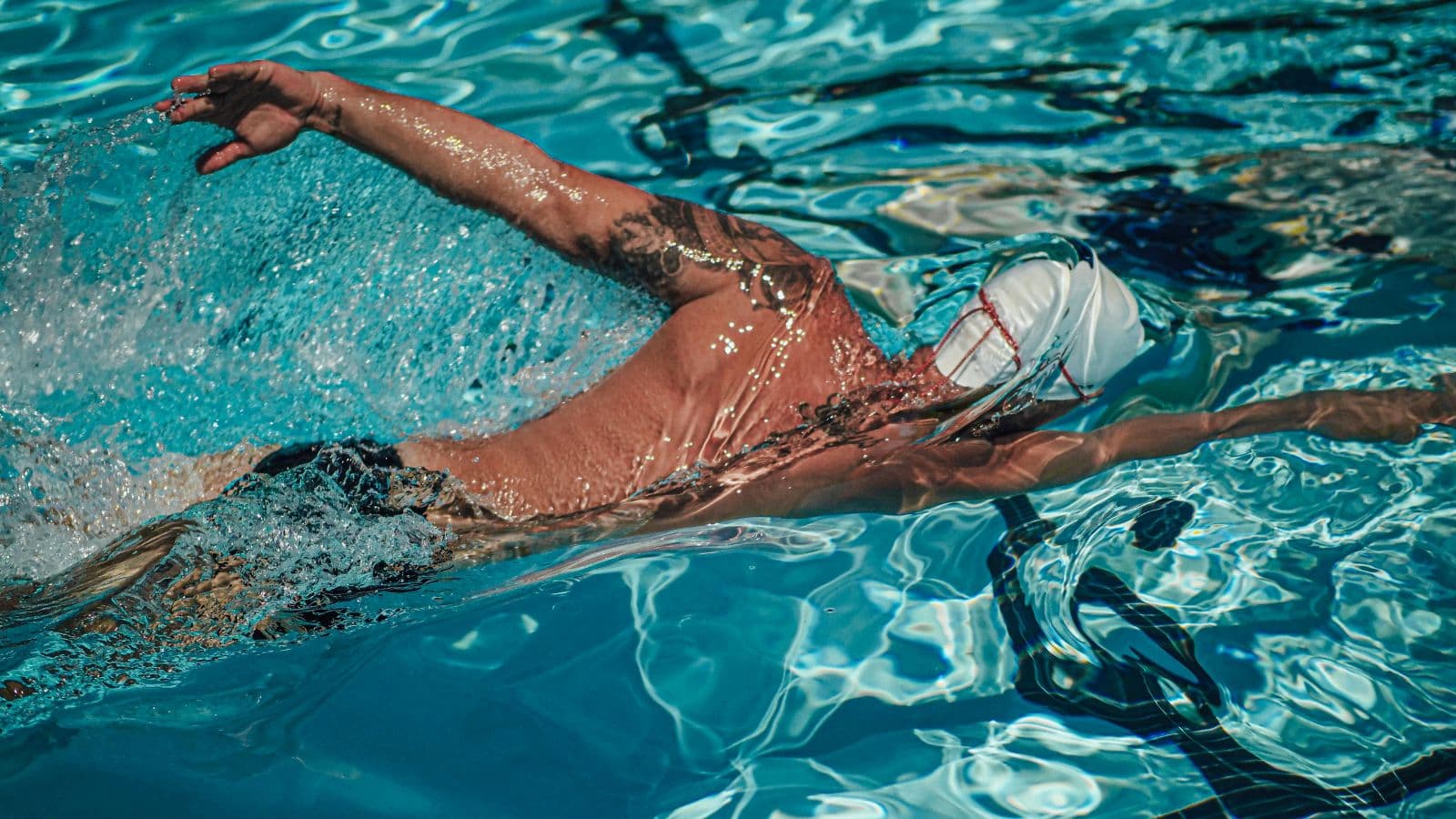
Sighting is the act of briefly lifting your eyes forward during a swim to locate a target such as a buoy or landmark. It should be quick, controlled, and integrated into your stroke. The goal is to gather direction without interrupting momentum.
Done correctly, it allows you to stay on course without slowing down.
Why Sighting Matters in Triathlon?
- Open water swims are rarely straight.
- Without sighting, swimmers drift due to imbalance, currents, or poor navigation.
- This increases total distance and energy expenditure.
- Efficient sighting keeps your swim direct and controlled, setting up the rest of the race effectively.
This becomes critical when transitioning into longer efforts, especially when aligned with how to train for ironman triathlon, where energy conservation over distance is key.
When to Sight During a Swim?
- Sighting should be done regularly, but not excessively.
- Too frequent sighting disrupts rhythm, while too little leads to drifting.
- The frequency depends on conditions, calm water requires less sighting, while rough conditions require more.
- Consistency in timing helps maintain both direction and efficiency.
The Correct Sighting Technique
- Proper sighting technique starts with a small lift of the eyes, not the entire head.
- Your eyes should come just above the water to locate your target.
- Immediately after, turn your head to breathe to the side.
- This keeps the movement fluid and reduces disruption.
- Combining sighting with breathing is the most efficient method.
Keeping Your Body Position Stable
- One of the biggest mistakes in sighting is lifting the head too high.
- This causes the hips and legs to drop, increasing drag.
- Maintaining a horizontal body position is essential for efficiency.
- The movement should be subtle and controlled to avoid slowing down.
Choosing the Right Target
- Sighting is only effective if you are aiming at the right point.
- Large, visible objects such as buoys or landmarks should be your primary focus.
- In some cases, sighting beyond the buoy at a fixed object can improve accuracy.
- Clear targets help maintain a straight line throughout the swim.
Adjusting for Conditions
- Open water conditions affect how you sight.
- In calm water, sighting can be less frequent and more relaxed.
- In choppy water, timing becomes important to avoid waves blocking your view.
- Adapting your sighting technique to conditions improves efficiency and confidence.
Sighting in a Group
- Swimming in a group adds complexity to sighting.
- Other swimmers can block your view or push you off line.
- However, drafting behind another swimmer can reduce the need for constant sighting.
- Balancing awareness and positioning helps maintain direction without excess effort.
Practicing Sighting in Training
- Sighting should be practiced regularly, not just on race day.
- Pool sessions can include sighting drills to build habit and coordination.
- Open water sessions allow you to apply the skill in real conditions.
- Practice improves timing, confidence, and efficiency.
This complements overall open water preparation when aligned with how to transition from pool to open water swimming, where adapting skills is essential.
Managing Rhythm While Sighting
- Maintaining rhythm is critical during sighting.
- Disrupting stroke timing reduces efficiency and increases fatigue.
- The goal is to integrate sighting seamlessly into your stroke cycle.
- Smooth execution allows you to stay on course without losing speed.
Common Mistakes
- Lifting the head too high increases drag and slows you down.
- Sighting too often disrupts rhythm and wastes energy.
- Not sighting enough leads to drifting and extra distance.
- Choosing poor visual targets reduces accuracy.
- Panicking in open water leads to inconsistent technique.
Practical Checklist
- Keep sighting movements small and controlled
- Combine sighting with breathing
- Choose clear, visible targets
- Adjust frequency based on conditions
- Practice regularly in training
What You Should Do?
- Start by practicing sighting in the pool to build coordination.
- Progress to open water sessions where you can apply the skill under real conditions.
- Focus on maintaining body position and rhythm while sighting.
- Keep movements controlled and repeatable.
- Over time, sighting becomes automatic, allowing you to swim efficiently without thinking about direction.