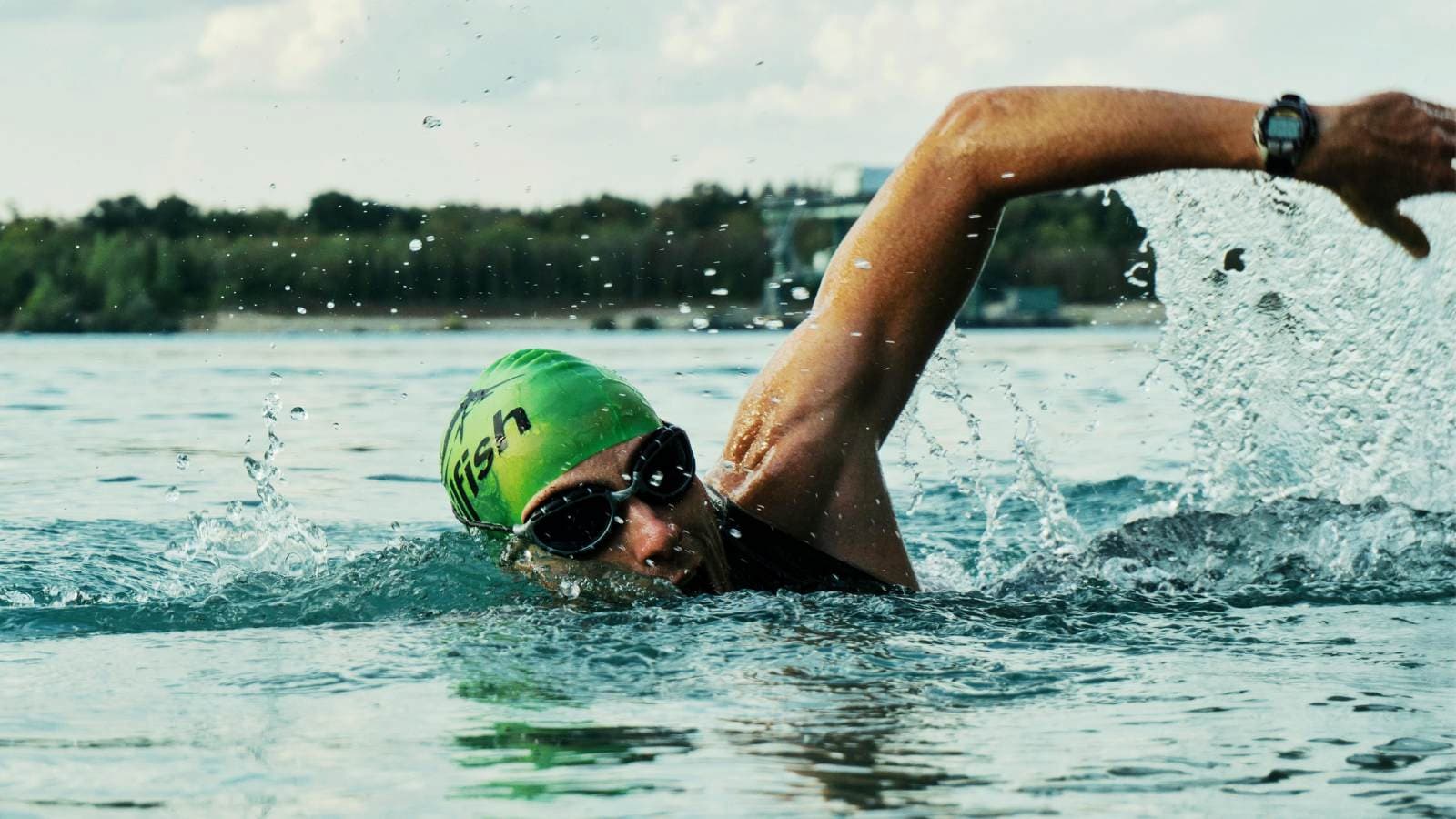


Transitioning from pool swimming to open water is a critical step for triathletes. Pool swimming builds technique and fitness, but open water introduces variables like waves, sighting, and group dynamics. Without preparation, even strong swimmers can struggle. Adapting to open water improves confidence, efficiency, and overall race performance.
What Changes in Open Water Swimming?
Open water swimming removes the controlled environment of the pool. There are no walls, lane lines, or clear visual markers. Instead, swimmers must navigate direction, manage changing conditions, and adapt to other athletes around them. Breathing patterns, rhythm, and pacing all feel different compared to pool swimming.
Understanding these differences is the first step to improving performance.
Why the Transition Matters for Triathlon?
The swim sets the tone for the entire race. Poor execution leads to elevated heart rate, wasted energy, and reduced performance on the bike and run. Open water skills allow you to swim efficiently while staying calm and controlled. This ensures you start the bike leg in a strong position rather than recovering from early fatigue.
Adapting Your Technique
- Pool technique must be adjusted for open water.
- A slightly higher head position helps with navigation but should not disrupt body alignment.
- Stroke rate may increase slightly to maintain momentum in changing conditions.
- Kick should remain controlled to conserve energy for later stages of the race.
- Efficiency remains the priority, even in unpredictable environments.
Learning to Sight Properly
- Sighting is the ability to look forward and stay on course.
- Without it, swimmers drift off line and cover more distance than necessary.
- Sighting should be quick and controlled, integrated into your stroke without disrupting rhythm.
- Practicing this regularly improves navigation and reduces wasted effort.
Managing Breathing and Anxiety
- Open water can feel overwhelming, especially for beginners.
- Limited visibility, deep water, and close proximity to other swimmers increase stress levels.
- Controlled breathing is essential. Exhaling fully and maintaining a steady rhythm helps reduce anxiety.
- Confidence builds through repeated exposure and practice.
Swimming in Groups
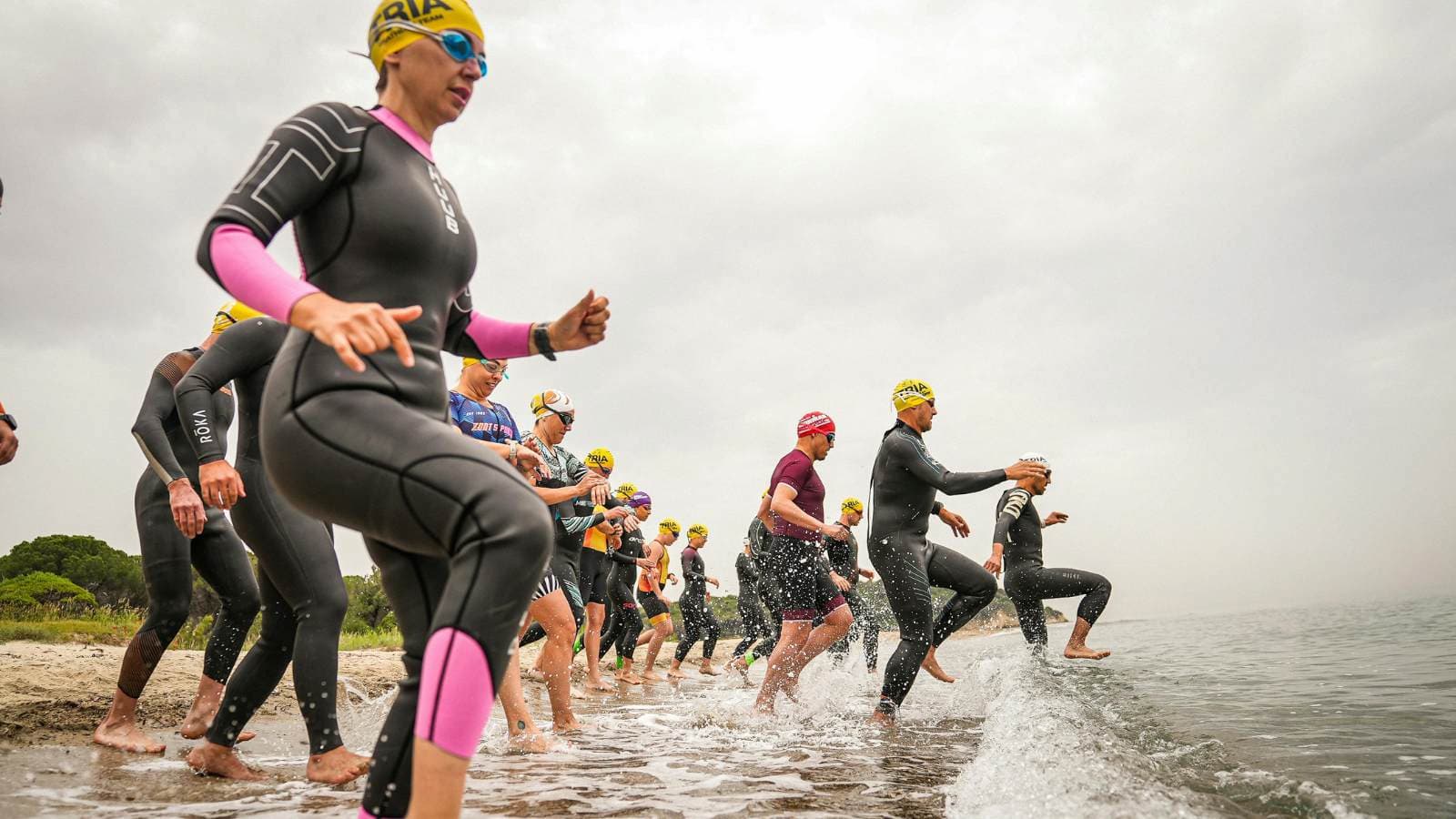
- Triathlon swims involve multiple athletes starting together.
- This creates physical contact and movement disruption.
- Learning to swim in a group helps you stay relaxed and maintain rhythm.
- Drafting behind or beside other swimmers can also improve efficiency by reducing resistance.
- Positioning yourself correctly at the start reduces stress and improves performance.
Dealing With Conditions
- Open water conditions vary. Waves, currents, and temperature all affect performance.
- Adapting to these factors requires practice.
- Swimming in different conditions improves confidence and control.
- Cold water can affect breathing and muscle function, so gradual exposure is important.
- Being prepared for variability reduces race-day uncertainty.
Building Open Water Endurance
- Endurance in open water feels different from the pool.
- Without turns and rest points, effort is continuous.
- Training should include longer, uninterrupted swims to simulate race conditions.
- This improves pacing and energy management over distance.
Understanding how effort is sustained over time becomes more effective when aligned with what is VO2 max in triathlon, where aerobic capacity supports continuous performance.
Equipment and Preparation
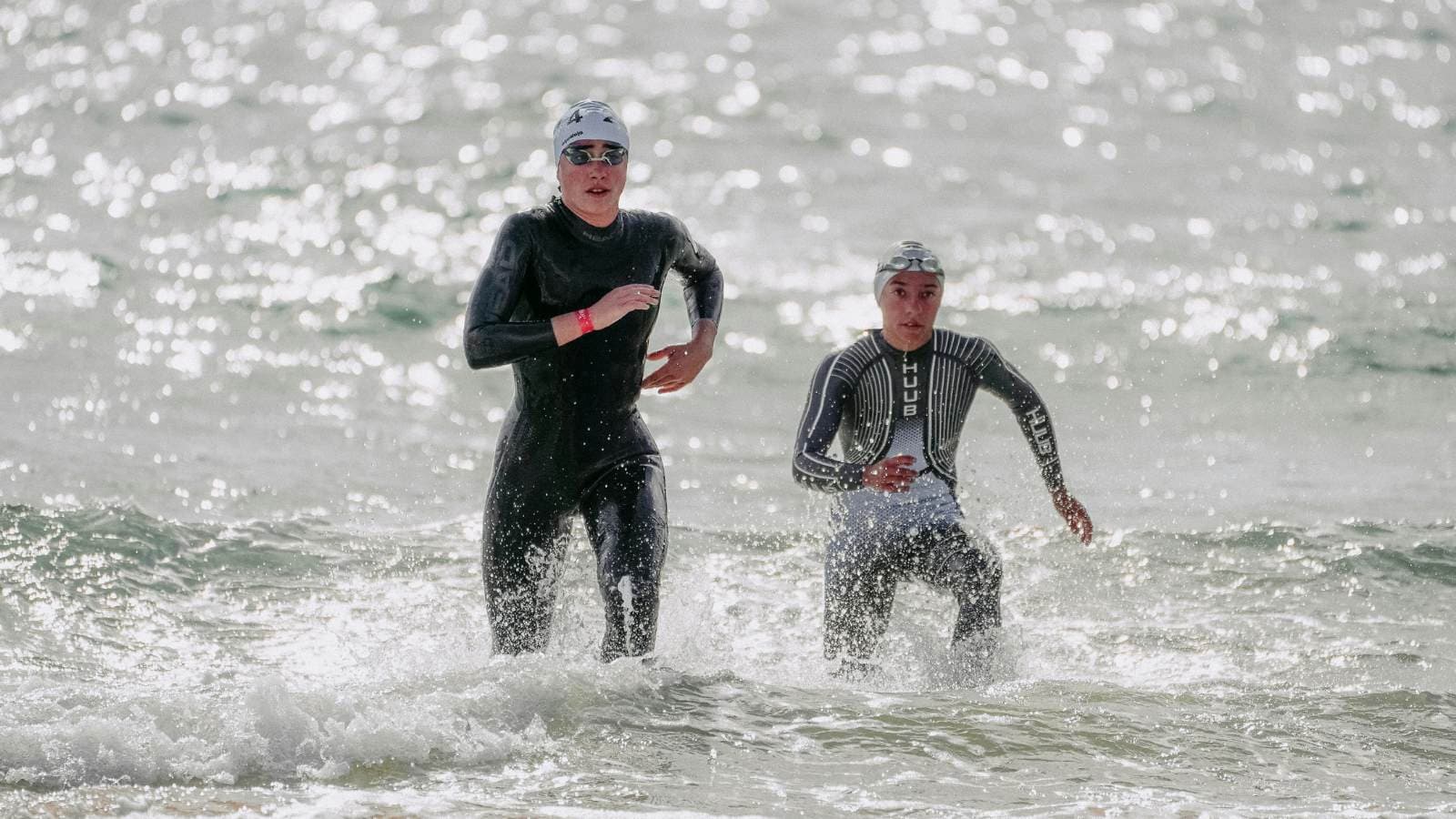
- Wetsuits are commonly used in open water triathlon. They provide buoyancy and improve body position.
- However, they also change how you move in the water, so training in a wetsuit is essential.
- Goggles should provide clear vision in varying light conditions.
- Proper equipment reduces distractions and improves focus during the swim.
Practicing Race Simulation
- Training should replicate race conditions as closely as possible.
- This includes open water sessions with sighting, group swimming, and continuous effort.
- Practicing starts, turns around buoys, and exits improves confidence and efficiency.
- The more familiar the environment, the better your execution on race day.
Pacing in Open Water
- Pacing in open water should be controlled from the start.
- Starting too fast increases heart rate and leads to early fatigue.
- A steady, sustainable effort allows you to maintain rhythm and conserve energy.
- This becomes even more important in longer races where energy management is critical, especially when combined with principles from open water swimming tips for beginners, to support sustained performance.
Common Mistakes
- Relying only on pool training without open water practice limits adaptation.
- Overlifting the head during sighting disrupts body position.
- Starting too fast increases anxiety and fatigue.
- Ignoring group dynamics leads to inefficient swimming.
- Not practicing in a wetsuit creates discomfort on race day.
Practical Checklist
- Practice sighting regularly
- Swim in open water consistently
- Train with a wetsuit
- Learn to swim in groups
- Build continuous swim endurance
- Manage breathing and stay relaxed
What You Should Do
- Start by introducing open water sessions gradually.
- Focus on comfort before performance.
- Practice key skills like sighting, breathing control, and pacing.
- Train in conditions similar to your race whenever possible.
- Build confidence through repetition rather than intensity.
- Open water swimming is a skill.
- The more you practice it, the more efficient and controlled you become on race day.