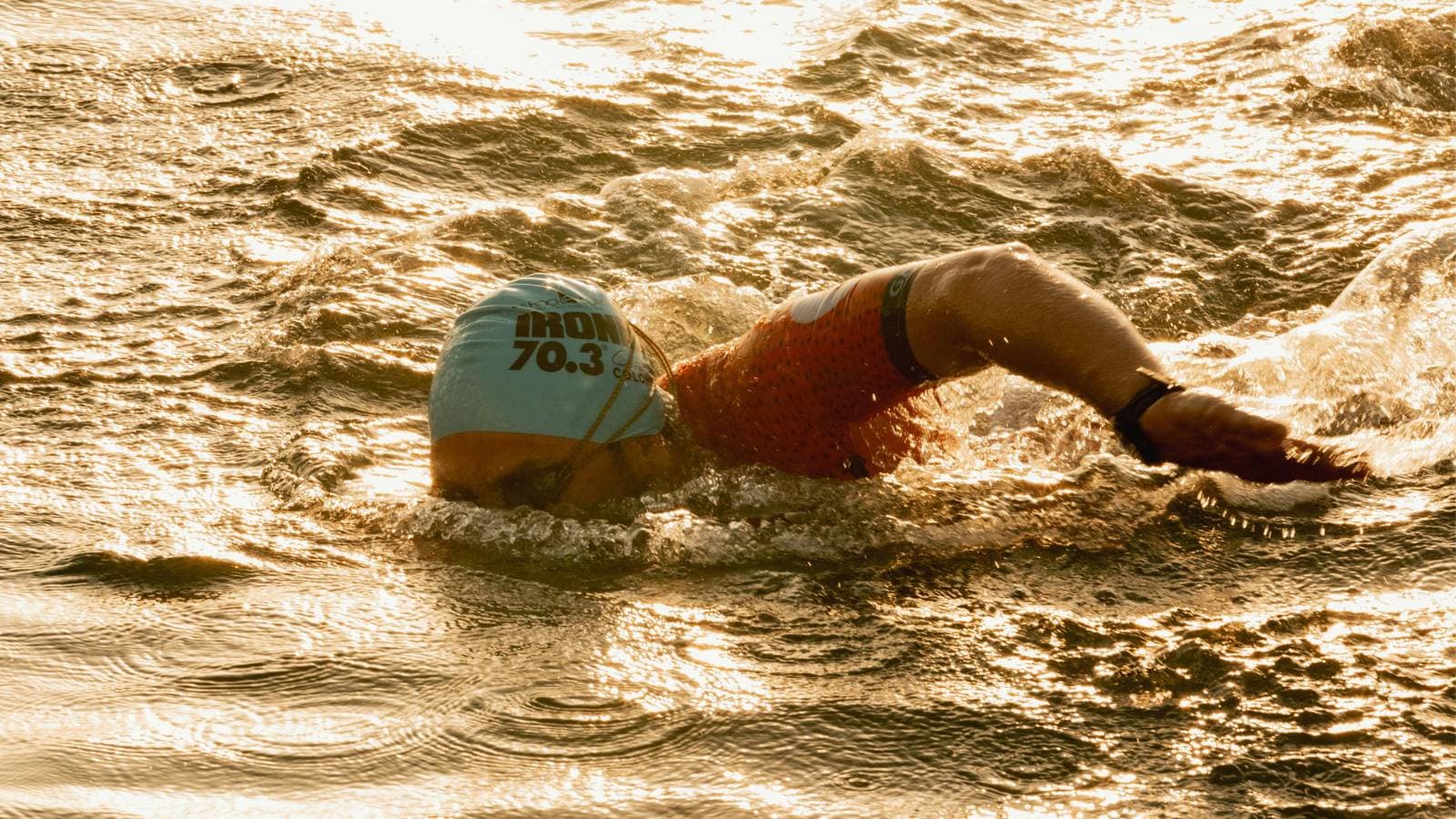


Swimming is often the most challenging part of triathlon for beginners. Unlike running or cycling, it requires technique, breathing control, and confidence in the water. The goal is not to swim fast, it is to swim efficiently, stay relaxed, and conserve energy for the rest of the race.
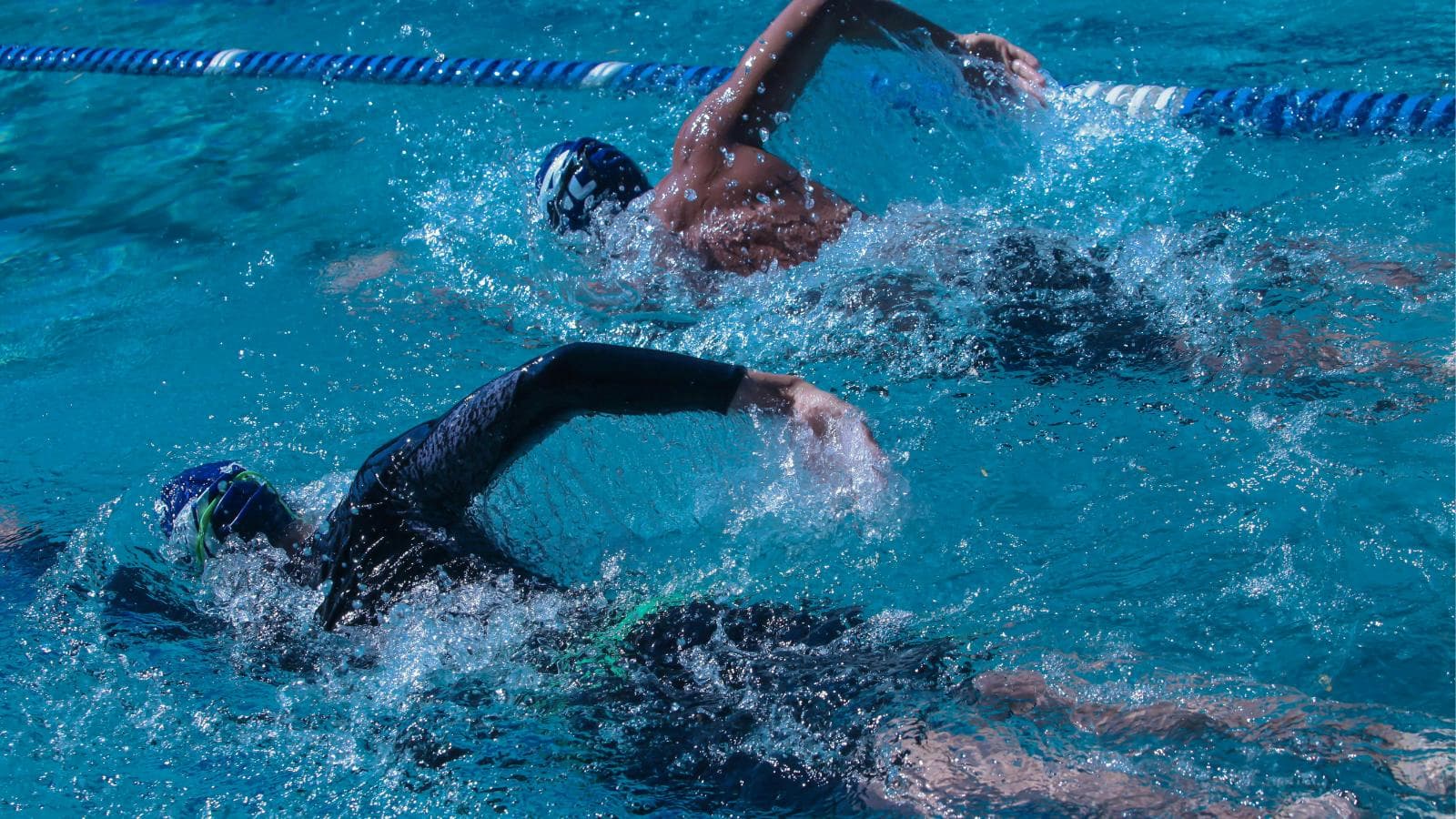
What Beginner Triathlon Swimming Actually Requires?
Triathlon swimming is about efficiency and control rather than speed. You need to move through the water with minimal resistance while maintaining a steady rhythm. Breathing, body position, and stroke technique all play a role in performance.
Building comfort in the water is the first priority.
Why Swimming Feels Difficult at First?
Swimming feels hard because it is technique-driven. Poor body position increases drag and makes movement inefficient. Breathing can feel uncomfortable without proper timing. Unlike land sports, small mistakes have a larger impact on performance.
Improving technique quickly reduces effort and builds confidence.
Start With Basic Technique
- The foundation of swimming is body position.
- Your body should remain as horizontal as possible to reduce drag.
- Keep your head in a neutral position and avoid lifting it too high.
- A smooth, controlled stroke is more effective than a powerful one.
- Focusing on technique early makes progress faster.
Learn to Breathe Efficiently
- Breathing is one of the biggest challenges for beginners.
- The key is to exhale underwater and inhale quickly when turning your head.
- Holding your breath creates tension and disrupts rhythm.
- Consistent breathing improves relaxation and efficiency.
- Over time, breathing becomes natural and controlled.
Build Comfort in the Water
- Confidence is essential for swimming progress.
- Spending time in the water helps reduce anxiety and improve control.
- Start with shorter sessions and gradually increase duration.
- The goal is to feel relaxed rather than rushed.
- Comfort allows you to focus on technique instead of stress.
Develop a Consistent Stroke
- A consistent stroke improves efficiency and reduces fatigue.
- Focus on smooth, controlled movements rather than force.
- Your arms should move in a steady rhythm, supported by a relaxed kick.
- Efficiency allows you to swim longer distances with less effort.
Use Drills to Improve Technique
- Drills help isolate and improve specific aspects of swimming.
- They allow you to focus on body position, breathing, and stroke mechanics.
- Short, controlled drills are more effective than continuous swimming.
- Regular practice leads to noticeable improvement.
Build Endurance Gradually
- Endurance in swimming develops over time.
- Start with shorter distances and gradually increase as confidence improves.
- Avoid pushing too hard early, as this leads to fatigue and poor technique.
- Consistency is more important than intensity.
- Progress should feel steady and manageable.
Transitioning to Open Water
- Pool swimming is controlled, while open water introduces new challenges.
- Learning to adapt to conditions is essential for triathlon.
- This includes sighting, managing breathing, and handling group swimming.
These skills become easier when aligned with how to improve your triathlon swim, where navigation improves efficiency and confidence.
Integrating Swimming Into Triathlon Training
- Swimming should be part of a balanced training plan.
- Combining it with cycling and running prepares you for race conditions.
- Consistency across all disciplines is key to performance.
This approach becomes clearer when aligned with how to combine swim, bike and run training effectively, where structured progression builds endurance across all three sports.
Common Mistakes
- Focusing on speed instead of technique limits progress.
- Holding your breath creates tension and fatigue.
- Skipping drills reduces improvement in efficiency.
- Training too hard too early leads to poor form.
- Avoiding open water practice limits race readiness.
Practical Checklist
- Focus on body position and technique
- Practice breathing consistently
- Use drills to improve efficiency
- Build endurance gradually
- Spend time in open water
What You Should Do?
- Start with short, technique-focused sessions in the pool.
- Work on breathing, body position, and stroke consistency.
- Gradually increase distance as confidence improves.
- Introduce open water swimming once you are comfortable.
- Keep your approach simple and consistent.
- Swimming improves quickly when you focus on efficiency rather than effort.