
Which ZONE3 Wetsuit Is Right for You? Agile vs Vision vs Vanquish-X
Buying a triathlon wetsuit is one of those decisions that’s easy to overthink and easy to get wrong. The temptation is to assume that the most expensive suit on the rail is automatically the right one — but that’s rarely true. The right triathlon wetsuit depends less on price and more on your swim ability, your body position in the water, how much buoyancy you actually need, and what you’re using the suit for: building confidence in open water, chipping away at a half-Ironman split, or lining up for a competitive age-group finish.
ZONE3 is one of the more established names in triathlon and open water swimming, with a wetsuit range that spans everything from first-time open-water swimmers to athletes racing at the sharp end of their age group. That range width is useful, but it also means the “best ZONE3 wetsuit” question doesn’t have one answer — it has an answer for you.
This guide focuses on three wetsuits that sit at distinct points in the ZONE3 range: the Agile (entry-level/foundation), the Vision (mid-level/performance), and the Vanquish-X (elite/race-day). ZONE3 has also commissioned independent testing at Loughborough Sport across this exact trio, giving us a useful, if brand-commissioned, data point on how buoyancy, flexibility and construction translate into measurable speed and efficiency gains as you move up the range. We’ll walk through how to think about the decision, compare the three suits side by side, break each one down individually, look at what that testing actually showed, and point you toward the model that fits your swim profile — not just your budget.
→ View the latest ZONE3 wetsuit range
- Which ZONE3 Wetsuit Is Right for You? Agile vs Vision vs Vanquish-X
- How to Choose the Right ZONE3 Wetsuit
- ZONE3 Wetsuit Comparison — Quick Reference Table
- Individual Wetsuit Breakdowns
- ZONE3 Vision Wetsuit
- Key features (in plain English):
- ZONE3 Vanquish-X Wetsuit
- Key features (in plain English):
- Best ZONE3 Wetsuit by Athlete Type
- Final Buying Advice
- Frequently Asked Questions
How to Choose the Right ZONE3 Wetsuit
Before comparing individual models, it’s worth understanding the handful of factors that actually separate one triathlon wetsuit from another. Marketing copy tends to bundle everything into “performance,” but for an athlete trying to make a real decision, these are the variables that matter.
Buoyancy. Neoprene panels lift your hips and legs, which helps counteract the natural tendency to swim with your legs low in the water. Weaker or less experienced swimmers generally benefit from more buoyancy support, since it does some of the work that a stronger kick and body position would otherwise provide. Stronger swimmers sometimes prefer a more neutral, lower-buoyancy feel that doesn’t fight their existing technique.
Flexibility around the shoulders. This is where the price difference between wetsuits is often most noticeable. Thinner, more flexible neoprene panels around the shoulders and arms allow a longer, more natural stroke and less fatigue over distance — but thinner neoprene generally means less durability and a higher price tag.
Body position in the water. A wetsuit’s buoyancy mapping is designed to help hold you in a more horizontal, hydrodynamic position, which reduces drag. How much this matters to you depends on your current body position — swimmers who already sit high in the water need less help than those who tend to swim with their hips and legs dragging low.
Warmth and comfort. Neoprene thickness affects both warmth and how the suit feels early in a cold open-water swim. This is especially relevant for UK and Northern European racing and training conditions, where water temperature can be a genuine factor in wetsuit choice.
Speed and hydrodynamics. Coatings, panel construction, and surface treatments are aimed at reducing drag through the water. These features tend to concentrate in the higher tiers of a wetsuit range, which is part of why race-focused suits cost more.
Durability. There’s a trade-off between flexibility and toughness. Suits built for maximum shoulder mobility use thinner, more delicate neoprene that needs more careful handling; suits built for durability and everyday training use tend to be thicker and more forgiving of imperfect technique in getting in and out.
Budget. It’s genuinely possible to overspend on a wetsuit that outperforms your current swim ability, just as it’s possible to underspend and hold yourself back. Matching spend to where you actually are as a swimmer is the more useful frame than “buy the best one you can afford.”
Beginner vs experienced swimmer needs. New open-water swimmers often benefit most from confidence and buoyancy support rather than marginal drag reduction — the fastest wetsuit in the world doesn’t help if you’re not relaxed enough to swim your normal stroke in it.
Pool swimmer transitioning to open water. If your stroke is built in a pool with no wetsuit, expect an adjustment period. A more flexible, forgiving suit can make that transition smoother than a race-focused suit with very tight buoyancy and rotation mapping.
Race-day performance vs training use. Some athletes buy one wetsuit and expect it to do everything; others keep a durable training suit for regular open-water sessions and a race-specific suit for competition day. Neither approach is wrong — it depends on how often you’re in open water and what your goals are.
→ View the latest ZONE3 wetsuit range
ZONE3 Wetsuit Comparison — Quick Reference Table
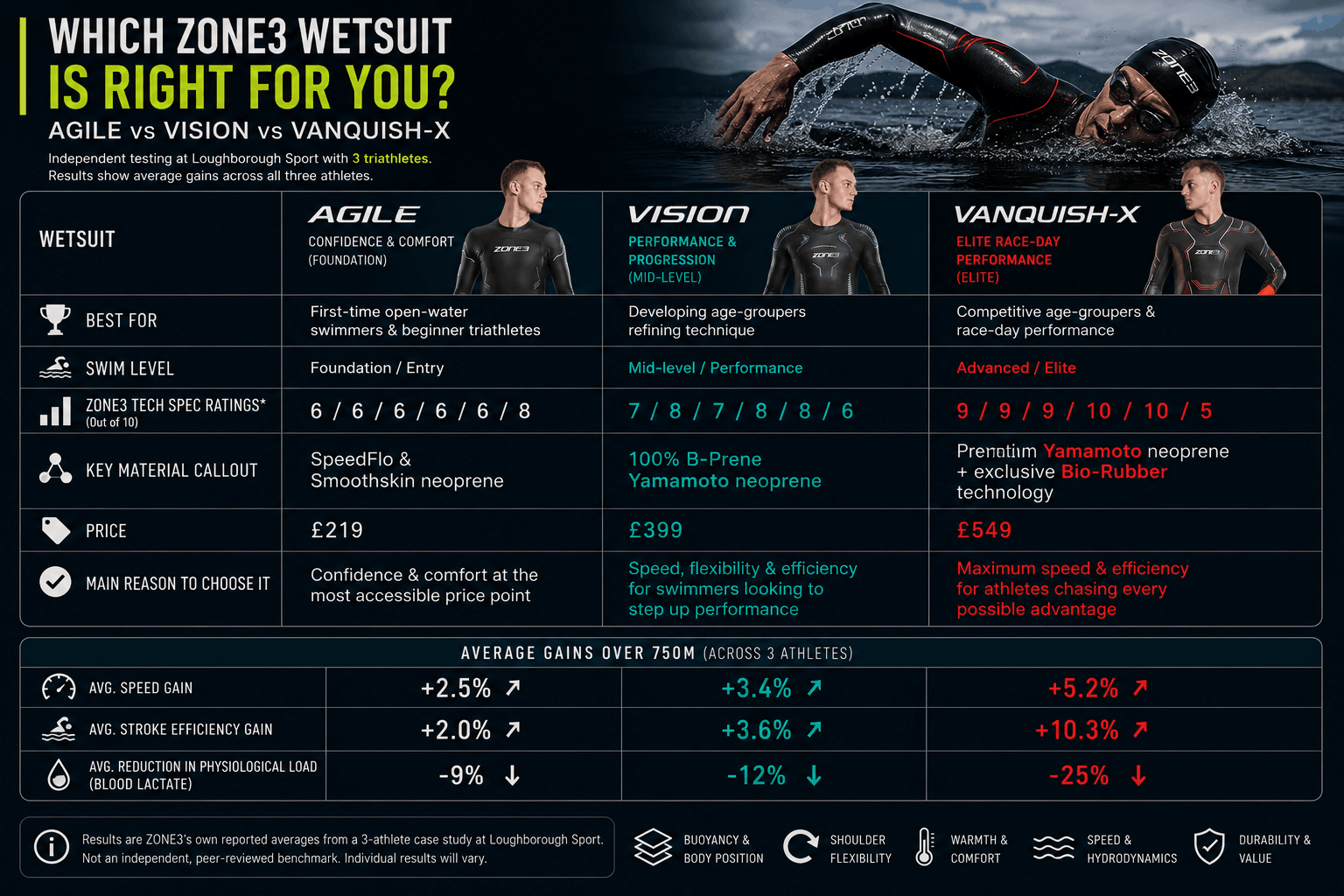
Here’s how the Agile, Vision, and Vanquish-X stack up against each other. Ratings (scored out of 10) and specs are drawn from ZONE3’s own published product data and should be read as the brand’s positioning on where each suit sits relative to the rest of its line-up, not as independently verified lab data.
What ZONE3’s Testing Shows: Speed and Efficiency by Level
Part of what makes this comparison useful is that ZONE3 has actually put numbers against it. The brand commissioned independent testing at Loughborough Sport, in which three triathletes of different ability — a beginner, an intermediate and an advanced swimmer — completed matched 750m swim trials with and without a wetsuit, across the range including the Agile, Vision and Vanquish-X. The results below are ZONE3’s own reported averages across that three-athlete panel for each suit:
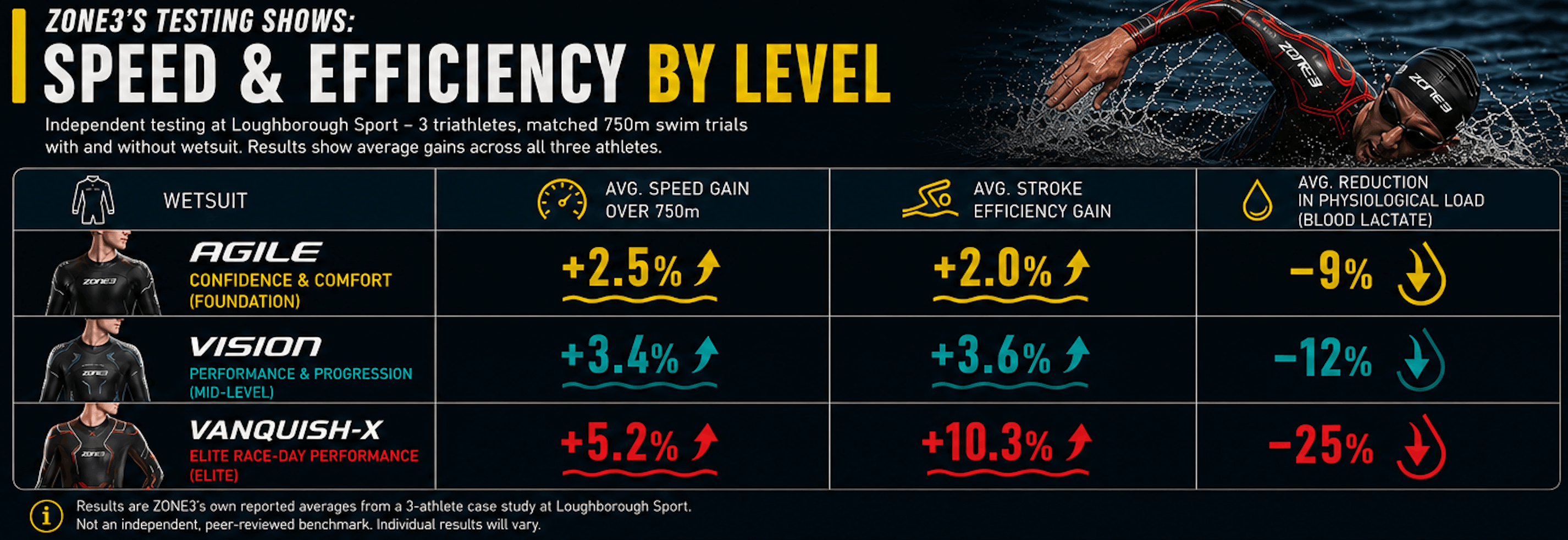
ZONE3’s own interpretation of the wider case study is that beginners saw their biggest overall gains in comfort, confidence, and energy conservation regardless of which suit they swam in; the intermediate athlete’s results varied more, which ZONE3 attributes to differences in wetsuit familiarity and fit; and the advanced swimmer’s most notable gains in pace and efficiency came specifically from the Vanquish-X. It’s worth treating this as ZONE3’s own account of a small, brand-commissioned case study rather than an independent, peer-reviewed benchmark — a sample of three athletes doesn’t establish what every swimmer will experience. That caveat aside, the general pattern — that higher-spec suits tend to reward athletes with the technique to exploit them, while even entry-level buoyancy support delivers a real, if smaller, benefit — lines up with what you’d expect from the way these suits are engineered.
Individual Wetsuit Breakdowns
ZONE3 Agile Wetsuit
Best for: Athletes who are new to triathlon or open-water swimming and want a dependable, comfortable first wetsuit.
What it is: The Agile sits at the foundation of the ZONE3 range. ZONE3 positions it as “the companion you need to keep your body warm, comfortable and supported through the beginnings of your open water journey.” In ZONE3’s own tech spec ratings it scores 6/10 for buoyancy, speed, flexibility, endurance, and warmth, with a notably higher 8/10 for durability — a profile that reflects a suit built to be forgiving and long-lasting rather than razor-focused on performance. It’s ZONE3’s best-reviewed suit in this comparison by volume, with 141 customer reviews at time of writing.
Key features (in plain English):
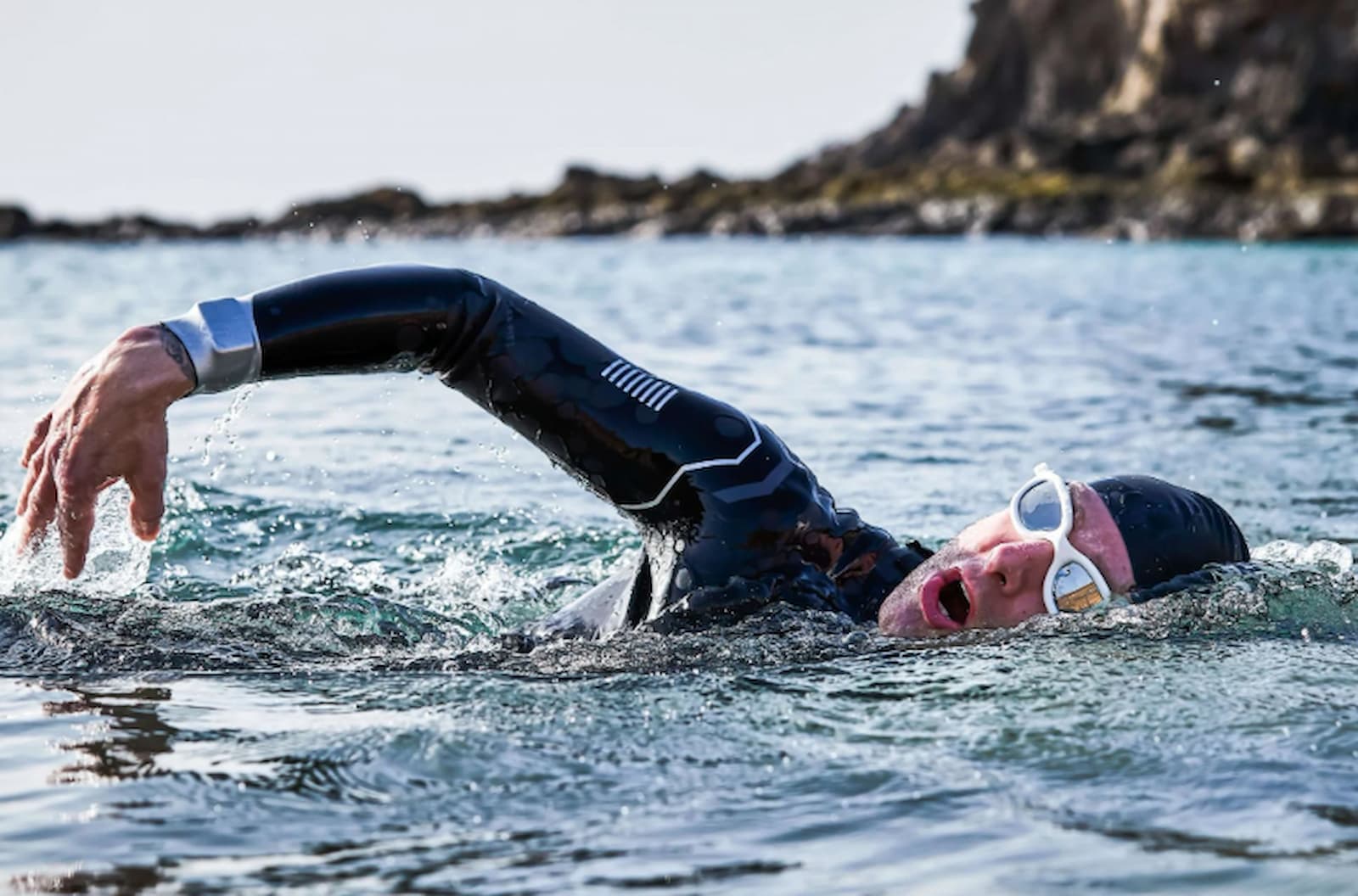
The Agile uses a mix of 2mm, 3mm, and 4mm neoprene panels — thicker through the core for buoyancy, thinner at the shoulders for a “Flex-Fit” range of motion. ZONE3 says the seams are fully glued and blind-stitched rather than flatlock-stitched, which it positions as reducing water ingress and internal chafing compared with cheaper entry-level suits. The suit is built from Speedflo and Smoothskin coatings rather than nylon-lined panels, which ZONE3 says helps stop the suit absorbing water and getting heavier over a swim. A “Talon Resistant” coating on the front leg is aimed at reducing the accidental fingernail tears that can happen pulling a wetsuit on or off, and Slimline Pro Speed Cuffs and a corded YKK zip are aimed at a faster, easier change. ZONE3 also notes the neoprene is derived from limestone and recycled rubber, which it says cuts CO2 emissions by around 200g per suit compared with standard neoprene production.
How it should feel in the water: Expect solid, straightforward buoyancy support that helps lift your hips and legs into a more level position — useful if you’re still developing your body position and kick. Shoulder mobility will feel more moderate than the Vision or Vanquish-X, since the Agile isn’t built around the same flexible panelling. For a beginner, that’s rarely a downside: a slightly firmer suit can actually feel more secure and less disorientating on an early open-water swim. One ZONE3 customer review from an Agile owner summed up a common reaction: “It is very comfortable to swim in and as easy as a wetsuit will ever be to get on.”
Who should buy it: First-time triathletes, nervous or inexperienced open-water swimmers, and anyone doing their first few lake or sea swims who wants a wetsuit that won’t fight them or intimidate them with tight, race-focused fit. It’s also a sensible choice for club swimmers who train occasionally in open water rather than several times a week.
Who may want a different option: Swimmers who already have a few open-water seasons behind them and are starting to feel their technique held back by lower flexibility. If you’re chasing a specific race time, or you’re comfortable enough in open water that buoyancy support matters less than stroke efficiency, the Vision is likely to feel like a meaningful step up.
Editorial verdict: The Agile does exactly what an entry-level wetsuit should do — it removes the two biggest barriers for new open-water swimmers, cold and anxiety, without asking you to pay for flexibility or speed features you’re not yet in a position to use. In ZONE3’s own Loughborough testing it still delivered a measurable, if modest, average gain (+2.5% speed, +2.0% efficiency) across the athlete panel — a sound, low-risk starting point.
ZONE3 Vision Wetsuit
Best for: Developing age-groupers who’ve moved past their first open-water season and want a genuine performance step-up without paying elite pricing.
What it is: The Vision occupies the mid-to-performance tier of the ZONE3 range and is, by ZONE3’s own account, its most decorated suit in this comparison: it was named Best Triathlon Wetsuit of 2024 by Triathlete.com, a third-party outlet, and carries 225 customer reviews. ZONE3 describes it as designed for “beginners, experienced athletes, and those upgrading to a more flexible, high-performance wetsuit.” In ZONE3’s tech spec ratings, the Vision scores an even 8/10 across all six categories — buoyancy, speed, flexibility, endurance, warmth, and durability — arguably the most well-rounded profile in the range.
→ Check current price and availability
Key features (in plain English):
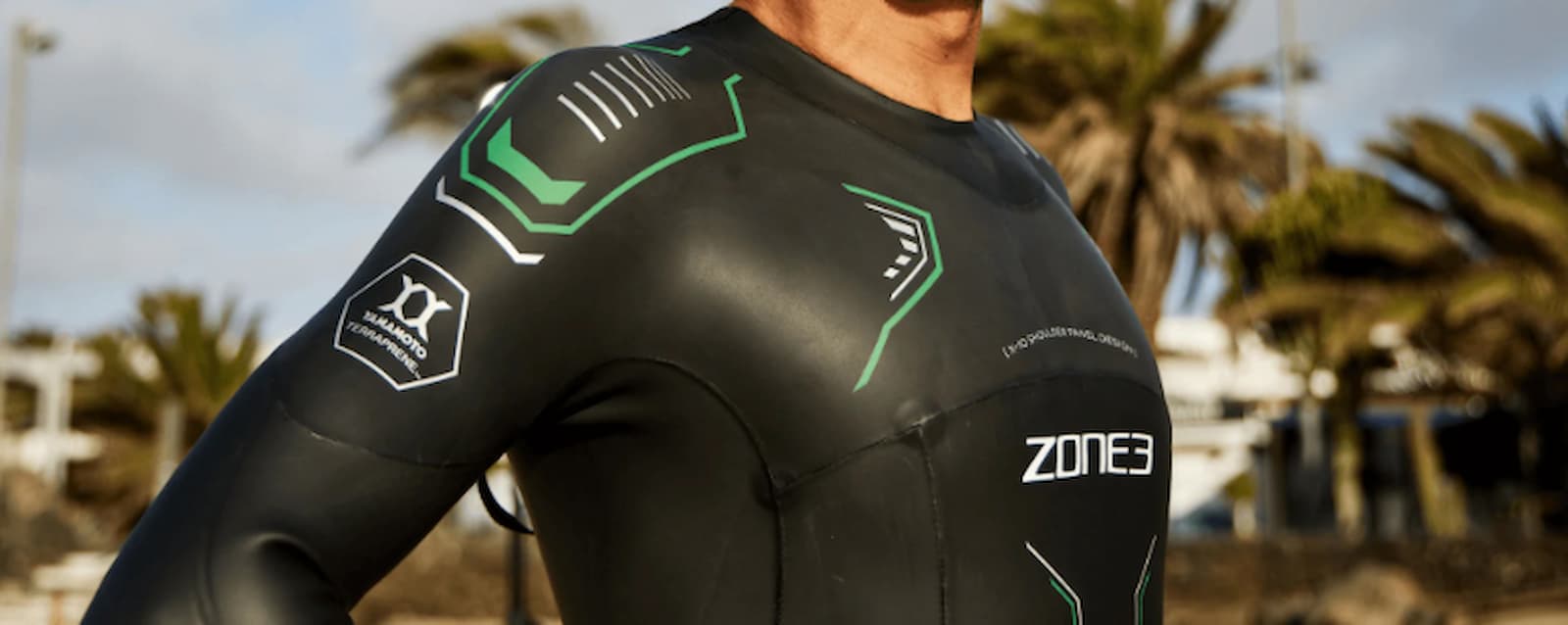
The Vision is built from 100% B-Prene Yamamoto neoprene — a premium-grade rubber that ZONE3 says offers the flexibility and buoyancy of standard Yamamoto neoprene with a lower environmental footprint, biodegrading by around 30% within 522 days once disposed of. It uses ZONE3’s X-10 one-piece shoulder panel for 360° stretch across the chest and shoulders, and a B.R.E (Body Rotation Enhancement) chest panel — technology ZONE3 says trickles down from its top-tier Aspire suit — designed to encourage a more efficient body roll and greater distance per stroke. Buoyancy comes from 5mm panels through the torso and front legs plus Aerodome hip panels, which ZONE3 says increase buoyancy by around 30% to help lift the lower body into a more streamlined position. The outer surface uses ZONE3’s Super Composite Skin (SCS) nano-coating, which the brand states reduces drag to a coefficient of 0.021 and helps stop the suit absorbing water. Pro Speed Cuffs are included for a quicker exit in transition.
How it should feel in the water: The step up in shoulder flexibility from an entry-level suit should be noticeable almost immediately — a longer, less restricted reach on the catch and a more natural rotation through each stroke, aided by the B.R.E chest panel. Buoyancy is strong enough to still support body position without feeling like the exaggerated “high-riding legs” feel of some entry-level suits. For a developing swimmer, this is often the suit that starts to feel less like wearing a wetsuit and more like an extension of your stroke.
Who should buy it: Age-group triathletes with at least a season or two of open-water experience, swimmers who’ve started to notice their shoulders working harder than they should in a more basic suit, and anyone training and racing regularly enough to justify the mid-range investment. It suits athletes targeting sprint through to middle-distance racing who want genuine performance features without elite-tier pricing.
Who may want a different option: Complete beginners are unlikely to feel the full benefit of the Vision’s flexibility and rotation features yet, and may be better served — and better value served — by the Agile. At the other end, athletes chasing every possible marginal gain for competitive racing may still find the Vanquish-X’s higher buoyancy, speed, and endurance ratings worth the extra outlay.
Editorial verdict: The Vision is the suit that makes the most sense for the largest number of serious-but-not-elite triathletes. It’s the point in the range where the flexibility and rotation gains become genuinely tangible — reflected in ZONE3’s Loughborough testing, where it posted a solid average +3.4% speed and +3.6% efficiency gain across the athlete panel — without asking you to pay elite-tier prices for features you may not yet be fit or fast enough to exploit.
→ Check current price and availability
ZONE3 Vanquish-X Wetsuit
Best for: Competitive age-groupers and experienced racers prioritising race-day efficiency and stroke performance.
What it is: The Vanquish-X sits at the top of the ZONE3 wetsuit range. ZONE3 describes it as engineered “to deliver measurable gains in efficiency, speed, and race-day freshness,” and notes it is worn and raced in by IRONMAN World Champion Casper Stornes — worth flagging as a sponsored-athlete endorsement rather than independent proof of performance, though it does signal the suit is used at the sharpest end of the sport. It’s the only model in this comparison to score the maximum 10/10 across buoyancy, speed, flexibility, and endurance in ZONE3’s own tech specs, with warmth at 8/10. Durability sits at 6/10 — lower than the Agile or Vision — reflecting a familiar trade-off in performance wetsuits: the thinner, more flexible neoprene that enables that extra range of motion is inherently less robust than the thicker panels used in entry-level suits.
Key features (in plain English):
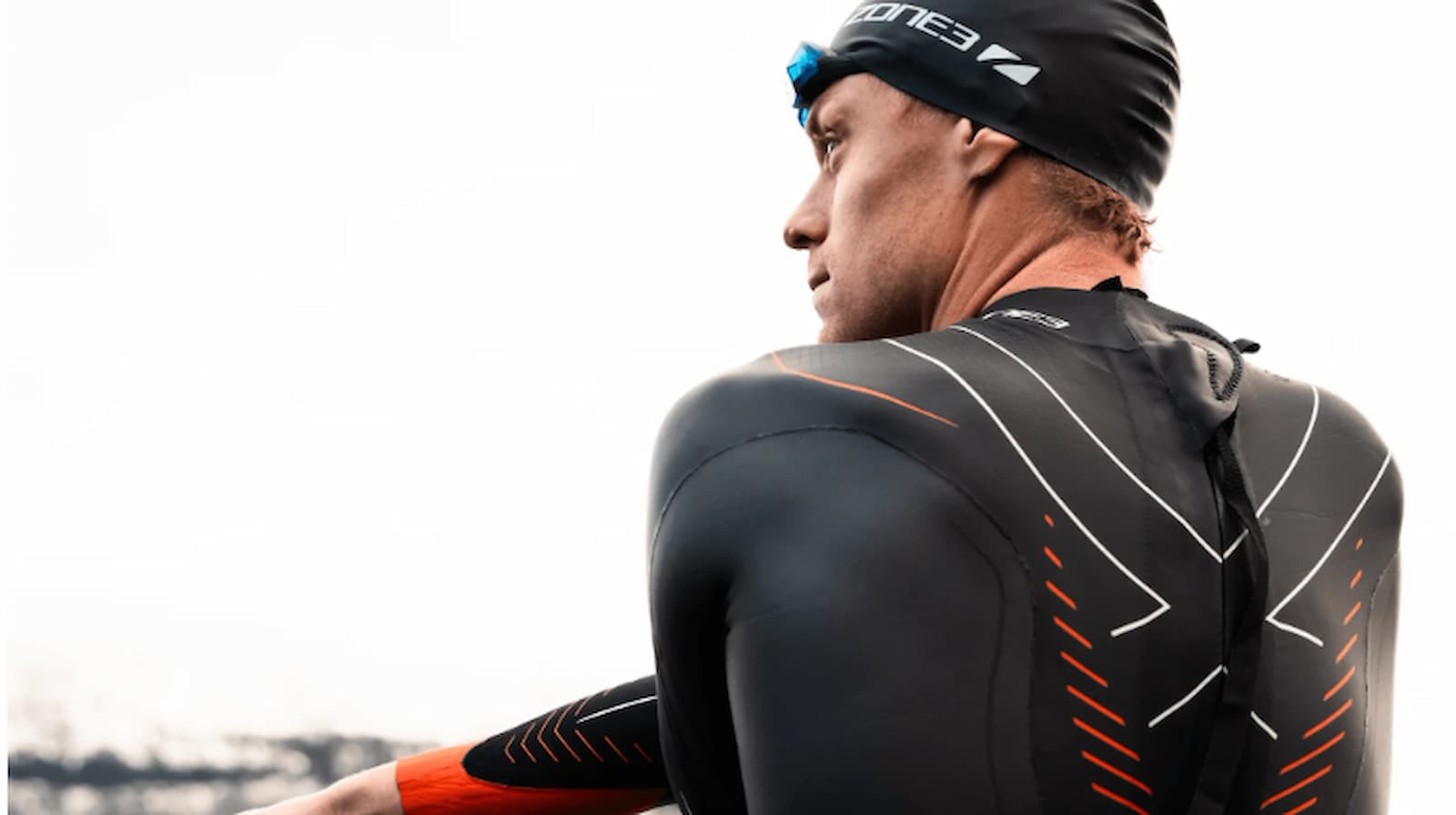
The Vanquish-X carries the most extensive feature list in the range. ZONE3’s exclusive Yamamoto Bio-Rubber panelling on the thighs is described as infrared-emitting technology intended to increase blood flow and reduce lactic acid build-up in the legs, aimed at leaving more power in reserve for the bike leg. An Alpha Titanium upper-body lining — a five-layer construction ZONE3 says improves warmth and circulation — sits inside a Silk-X lining designed for a smoother feel against the skin and a cleaner exit in transition. The X-10 Extreme shoulder panel uses ZONE3’s thinnest shoulder construction, a #40 SCS 1mm SCS Nano neoprene, for maximum range of motion, paired with BRS Mark 0.3mm SCS sleeves — among the thinnest panelling ZONE3 offers. Buoyancy comes from Aerodome and NBR panels tuned for a race-ready position, and Cool-Spot forearm panels are designed to enhance catch feel through the stroke, alongside the B.R.E chest panel shared with the Vision.
How it should feel in the water: Expect the most unrestricted shoulder rotation and catch feel of the three suits, with buoyancy mapping tuned for a fast, race-ready position rather than beginner-friendly stability. Strong swimmers typically describe this tier of wetsuit as feeling almost weightless through the stroke — but that same thin, race-tuned construction means it rewards good technique rather than compensating for weaker technique the way the Agile does.
Independent testing context: In ZONE3’s Loughborough Sport case study, the Vanquish-X was, by the brand’s own account, “the highest-performing suit” of the three tested here, delivering an average +5.2% speed gain over 750m, +10.3% improvement in stroke efficiency, and a 25% reduction in physiological load (blood lactate) across the three-athlete panel — figures well ahead of both the Vision and the Agile in the same study. As with the other suits, this should be read as ZONE3’s own reporting from a small, brand-commissioned case study rather than independent peer-reviewed research, but it’s a reasonably large gap between suits for a three-person sample and is broadly consistent with what you’d expect from the jump in shoulder flexibility and buoyancy specification.
Who should buy it: Experienced age-groupers and competitive triathletes who are comfortable in open water, confident in their stroke technique, and looking to minimise every source of drag and fatigue on race day — particularly over middle and long-distance events where efficiency compounds over time.
Who may want a different option: Beginners and developing swimmers are unlikely to feel the full benefit of the Vanquish-X’s top-tier features, and the lower durability rating relative to the Agile and Vision makes it a less forgiving choice for swimmers still building confidence getting in and out of a wetsuit. At £699, it’s also a significant investment that’s harder to justify without regular racing to back it up.
Editorial verdict: The Vanquish-X is ZONE3’s clearest statement suit — built for athletes who already know what they’re chasing on race day, and backed by the brand’s largest reported testing gains of the three suits here. It’s not the wetsuit to buy in the hope that it will make you faster; it’s the wetsuit to buy once your technique is ready to make use of what it offers.
→ Check current price and availability
Best ZONE3 Wetsuit by Athlete Type
Best ZONE3 wetsuit for beginners: The Agile. Its balanced buoyancy and forgiving construction are built specifically around building comfort and confidence for first-time open-water swimmers.
Best ZONE3 wetsuit for nervous open-water swimmers: The Agile again — a firmer, more supportive fit tends to feel more secure than a highly flexible race suit when you’re still getting used to open water.
Best ZONE3 wetsuit for strong swimmers: The Vanquish-X, given its maximum flexibility and buoyancy ratings, is the suit most likely to let an already-strong stroke show through.
Best ZONE3 wetsuit for race-day performance: The Vanquish-X, which ZONE3 positions specifically around race-day efficiency and freshness, and which posted the largest average gains in the brand’s own Loughborough Sport testing.
Best ZONE3 wetsuit for long-distance triathlon: The Vision is a strong middle ground here — enough flexibility and rotation support to help over a long swim leg, without the lower durability rating and price tag of the Vanquish-X. Athletes racing long-course and chasing every marginal gain may still prefer the Vanquish-X if budget allows.
Best value ZONE3 wetsuit: The Agile, at £219, delivers durable, confidence-building performance at the most accessible price point in this comparison.
Best premium ZONE3 wetsuit: The Vanquish-X, at £699, representing the top of ZONE3’s current wetsuit range and its most fully-specified suit.
Final Buying Advice
It’s worth repeating the core point of this guide: the best ZONE3 wetsuit is the one that matches your current swim profile, not necessarily the most expensive or most fully-specified model in the range. A Vanquish-X won’t make a nervous first-time open-water swimmer faster or more comfortable — an Agile will do that job better, at less than a third of the price. Equally, a strong, technically sound swimmer who buys an Agile to save money may find themselves working harder than they need to, fighting a suit that isn’t built to get out of their way.
ZONE3’s own testing hints at this too: the biggest gains in its Loughborough Sport case study came from the top-tier suit, but only in the hands of the most advanced swimmer in the panel — the entry-level and mid-range suits still delivered real, measurable benefits for the athletes they were built around. Before you buy, be honest with yourself about three things: how confident you currently are in open water, where you most need support — buoyancy, flexibility, or both — and what kind of swimming you’ll actually be doing, whether that’s building comfort in a local lake, training toward your first triathlon, or racing competitively against the clock. Matching the wetsuit to that reality, rather than to the biggest number on the price tag, is what actually makes the difference on race day.
→ Compare ZONE3 wetsuit options