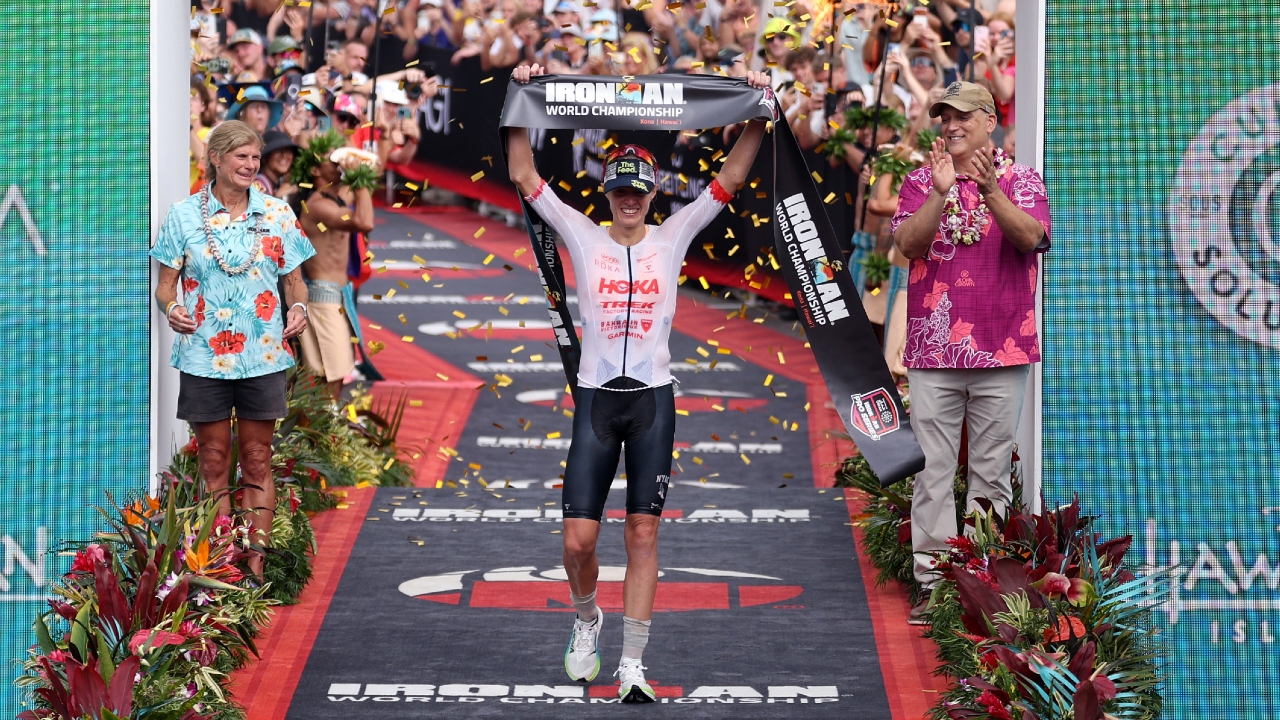




Setbacks are inevitable in elite sport. Panic is not.
For Lucy Charles-Barclay, the past 12 months have offered a clear reminder of that truth – and, according to her coach Dan Lorang, also a case study in how high-performance programmes should respond when plans unravel.
At the top end of triathlon, success is often framed in terms of momentum: build form, stack races, peak at the right moment. But Lorang believes what matters more is how athletes and coaches behave when that momentum suddenly disappears.
“First of all, the priority is always health,” he told TRI247 in a recent in-depth interview. “Everything else comes after.”
That principle has taken on added relevance in recent months. Following surgery to remove her plantaris tendon, Charles-Barclay has been unable to run – forcing a reset not just in training load, but in how her season is structured.
Rather than rushing a return, the response has been measured. Controlled. And, in many ways, opportunistic.
When a perfect day disappears
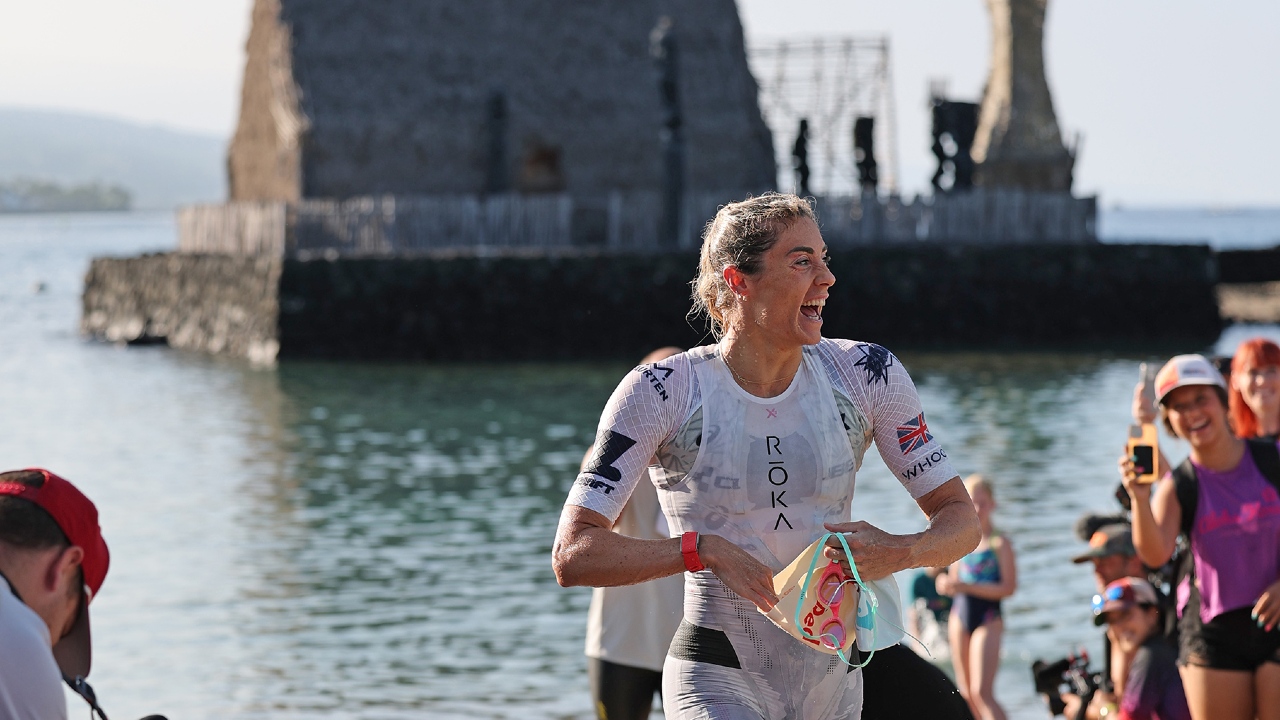
Lorang recalls being on the ground at the IRONMAN World Championship in Kona last October on a day that initially looked set to deliver another landmark performance as two of his athletes – Charles-Barclay and Taylor Knibb – were dominating from the front well into the run.
“It looked like, okay, this could be a really great day,” he says. “And then everything turned out to be different.”
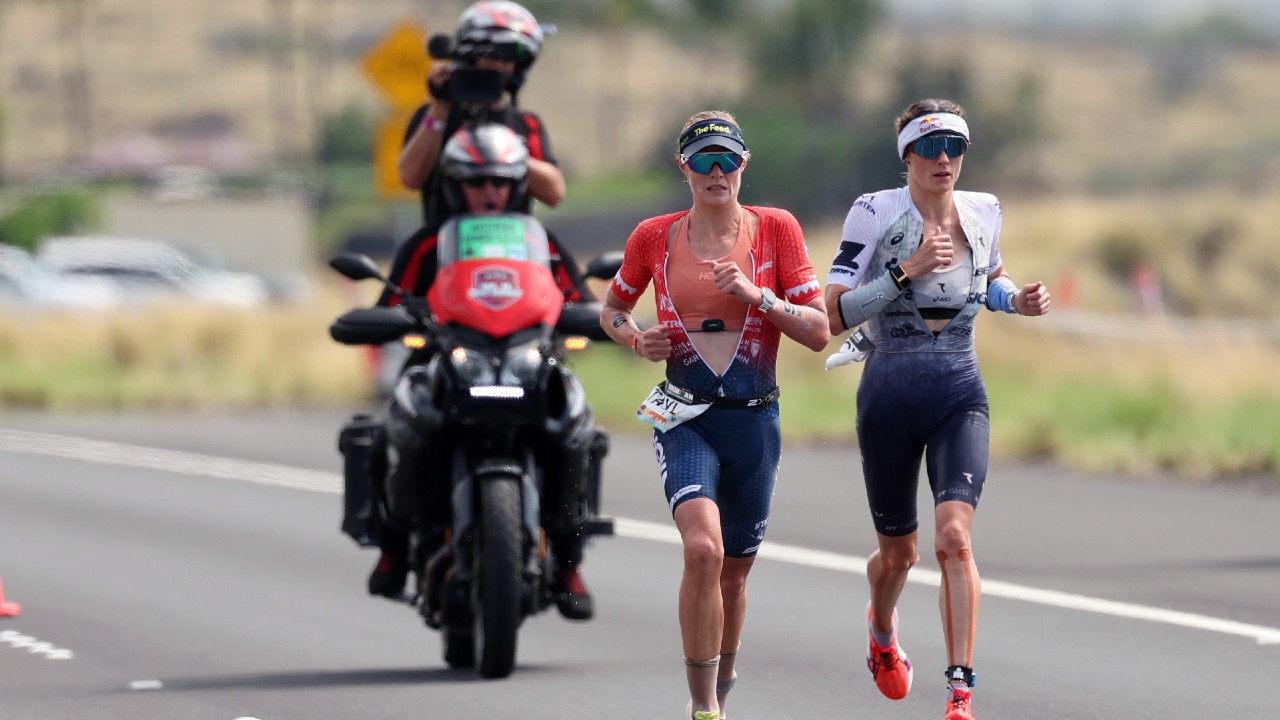
What followed was not just physically difficult for the athletes involved, but emotionally demanding for those responsible for their preparation.
“It was really hard,” Lorang admits. “Especially for the athletes, but also for me as a coach. Probably one of the hardest coaching days.”
“The main thing was just to see them back healthy,” he says. “That was everything.”
Clarity before conclusions
Flying out the same evening, Lorang’s concern did not ease until confirmation arrived that both athletes were recovering well.
“When I got the picture the day after that they were healthy and okay, I was really, really happy,” he tells us.
Equally important was understanding why things had gone wrong – and just as crucially, why they hadn’t.
“We found out what really happened,” Lorang explains. “So it wasn’t like wrong preparation or missing heat training or something like that.”
That distinction matters. In elite sport, overcorrecting can be as damaging as ignoring a problem entirely.
“You have to learn from it,” Lorang says. “But you can’t let it define everything you do next.”
Learning without fear
The period that followed offered a further test: when, and whether, to return to racing as the 70.3 Worlds just four weeks later.
“It was a hard decision,” Lorang admits. “Because imagine if it went wrong again. Everybody would come back to us – and probably to me as a coach.”
The response was not bravado, but process.
“We did a lot of testing, medical checks, training,” he explains. “Everything we could do to be as sure as possible.”
There were no guarantees – there never are – but the approach was rooted in evidence rather than emotion.
When the athletes returned to competition and finished first and second in Marbella in what was the second-biggest race of the season, the relief was immediate.
“To see them finish healthy, with a good performance, that was the most important thing,” Lorang says. “For them to get confidence back, and for us to know: okay, it happened – we can’t ignore it – but we can learn from it.”
Turning constraint into opportunity
That same mindset is now shaping Charles-Barclay’s current phase.
With running temporarily removed from the equation following January’s surgery, there has been both the necessity – and the freedom – to shift emphasis elsewhere. For an athlete long regarded as the strongest swimmer in triathlon, that has meant a decisive return to the pool.
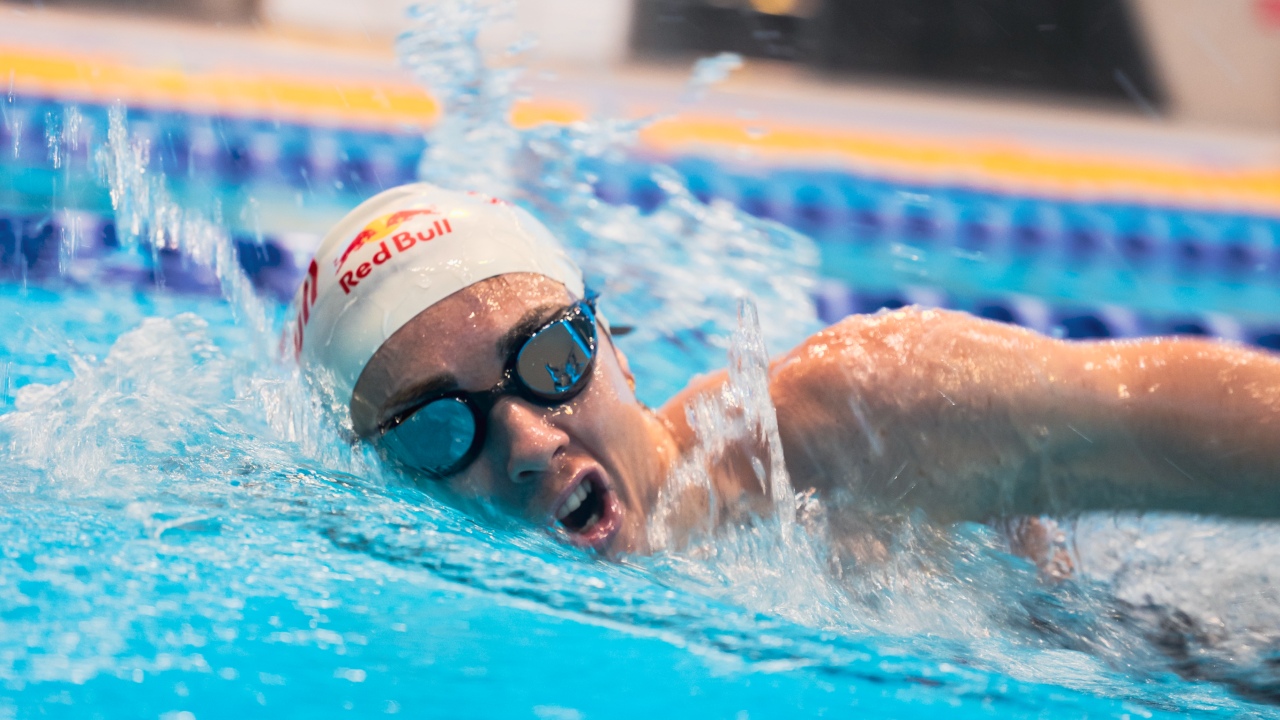
And the progress has been immediate.
Just four weeks after surgery, Charles-Barclay clocked 17:29.40 to win the 1500m freestyle at the Essex County Championships at the London Aquatics Centre. Less than three weeks later, she took a further 21 seconds off that mark, recording 17:08 at Ponds Forge.
That time places her inside the top 10 British performers this year and has secured qualification for the Commonwealth Games trials later this month.
“I’m really pleased with how the last few weeks have gone,” she said. “To take 21 seconds off my time in just 19 days has given me a lot of confidence in the work we’re doing.
“Swimming has always been a huge part of my sporting journey, so it’s exciting to step back into the pool environment and see what’s possible.”
It is a striking trajectory – not least given that the surgery typically requires around six weeks in a protective boot – and underlines how effectively that enforced shift in focus has been managed.
More broadly, it also opens up an intriguing possibility.
With triathlon absent from the Glasgow programme, the Commonwealth Games offers Charles-Barclay a rare opportunity to compete purely as a swimmer, stepping back into the discipline where her endurance engine was first built.
“I’ll be heading into the Commonwealth Games trials as a multisport athlete competing in an individual sport,” she added. “It’s a challenge I’m really enjoying exploring alongside my triathlon career.”
The bar is high as LCB will need to take another big chunk off her 2026 times – the Team England qualifying mark is 16:26:99 – but the gains are obvious.
Crucially, though, this is not a pivot away from triathlon.
Kona and long-distance success remain central. The difference is in how the path back is being managed – using constraint not as a limitation, but as a chance to build even greater strength in one of her defining weapons.
Strength through shared experience
Interestingly, Lorang believes the earlier setback ultimately strengthened the relationship between Lucy and Taylor – something that continues to underpin decisions now.
“They already had a lot of respect for each other,” he says. “But I think it brought them even closer.”
That sense of shared experience – of navigating difficulty together rather than retreating into isolation – is something Lorang sees as fundamental to long-term success.
“These are not things you wish on anybody,” he says. “But if you take something positive from it, it can strengthen the trust between athletes and coaches.”
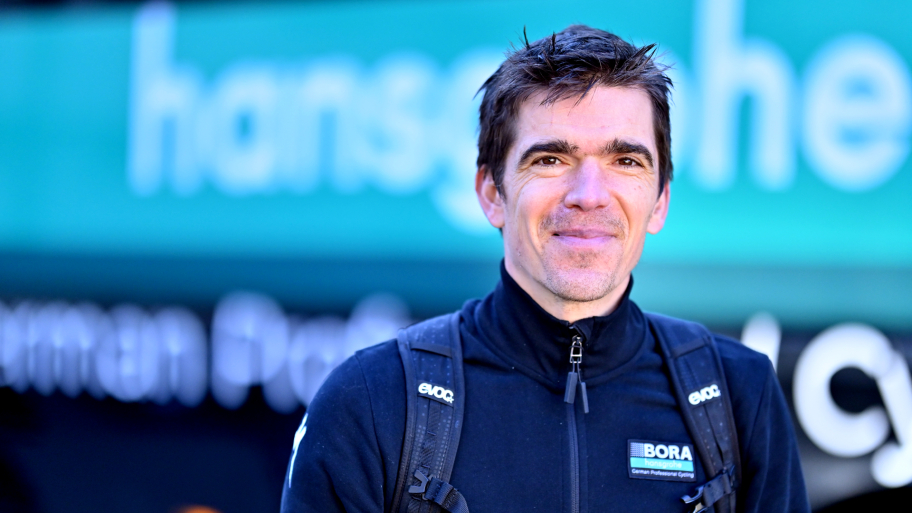
Why restraint is a performance skill
For Lorang, the bigger lesson extends well beyond one race or one season.
Elite careers are not defined by uninterrupted progress, he believes, but by the ability to respond proportionately when things go wrong – without panic, denial or unnecessary reinvention.
“Sometimes the hardest thing is not pushing,” he says. “It’s being patient.”
In Charles-Barclay’s case, that patience is now visible not just in what she is doing – but in what she is not.
There is no rush back to running. No attempt to force a return to full triathlon load before the body is ready.
Instead, there is a clear, structured approach: protect health, build strength where possible, and allow performance to follow.
In a sport that often rewards aggression and risk-taking, restraint can look passive from the outside. In reality, it is one of the most active decisions a high-performance team can make.
Lucy Charles-Barclay’s career has already shown what she can achieve at the very highest level – and after big setbacks. The way she and her coach have responded to the current adversity – and reframed it as opportunity – may again prove just as defining.