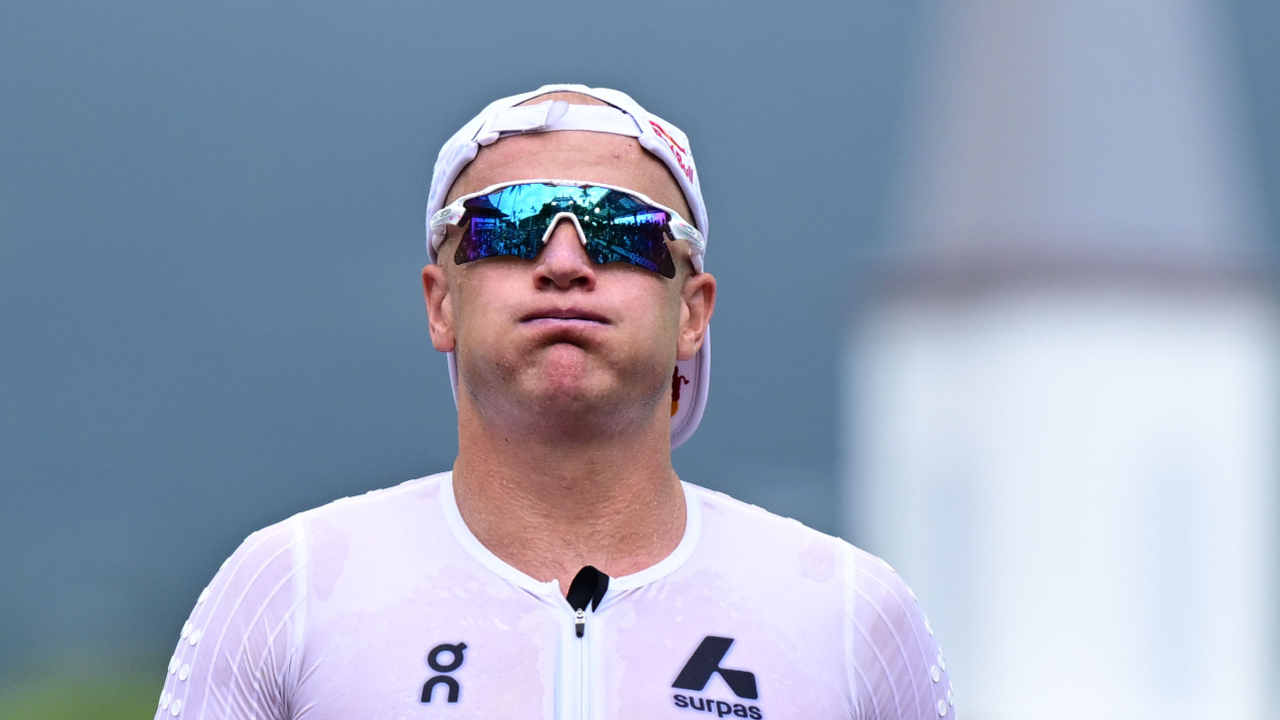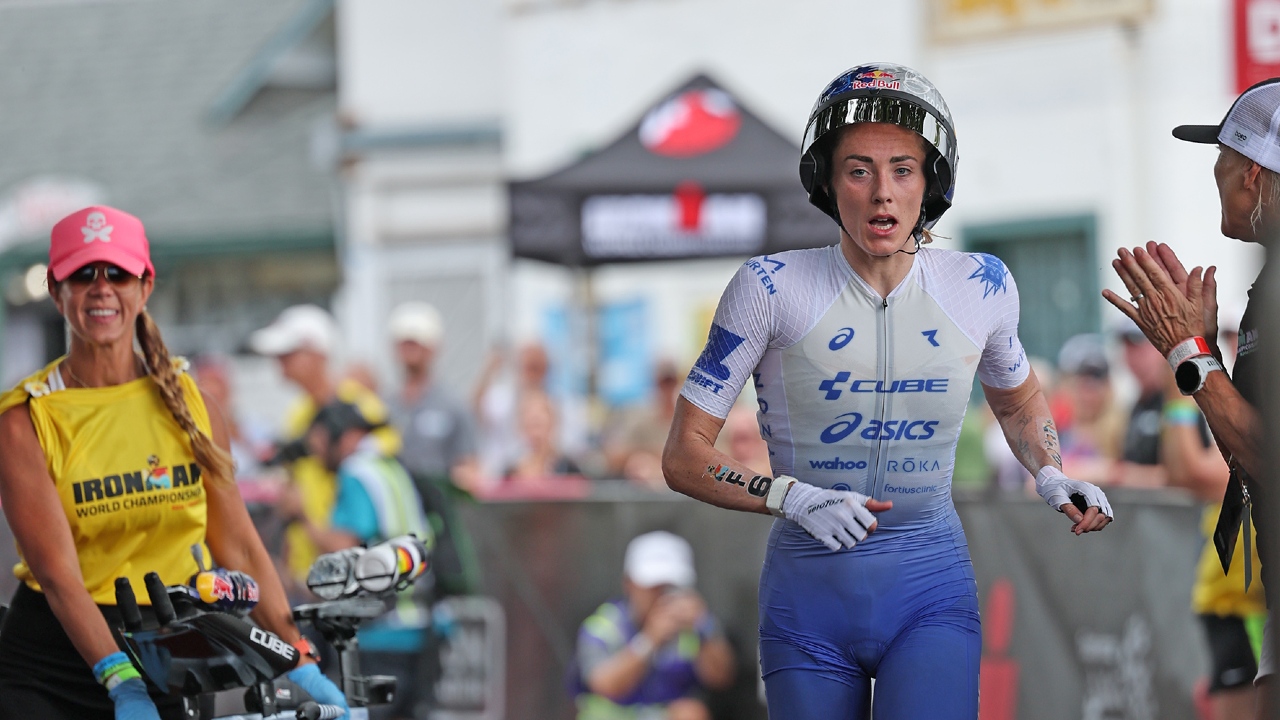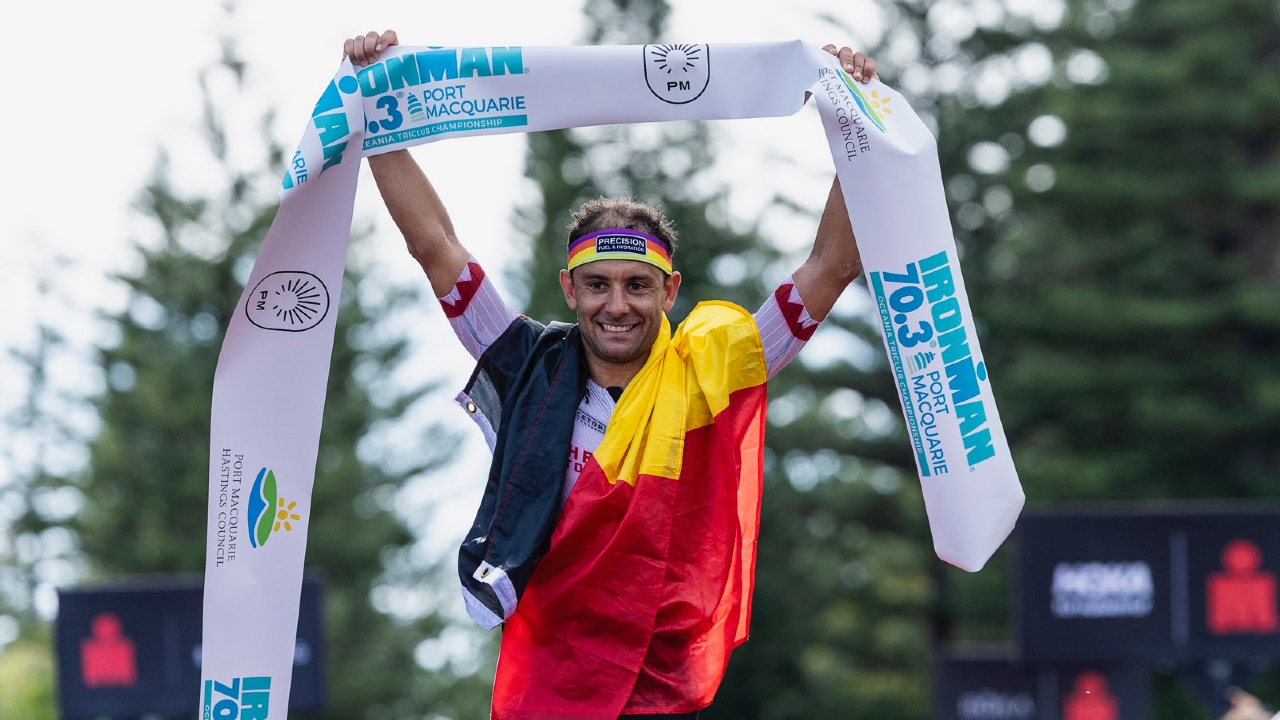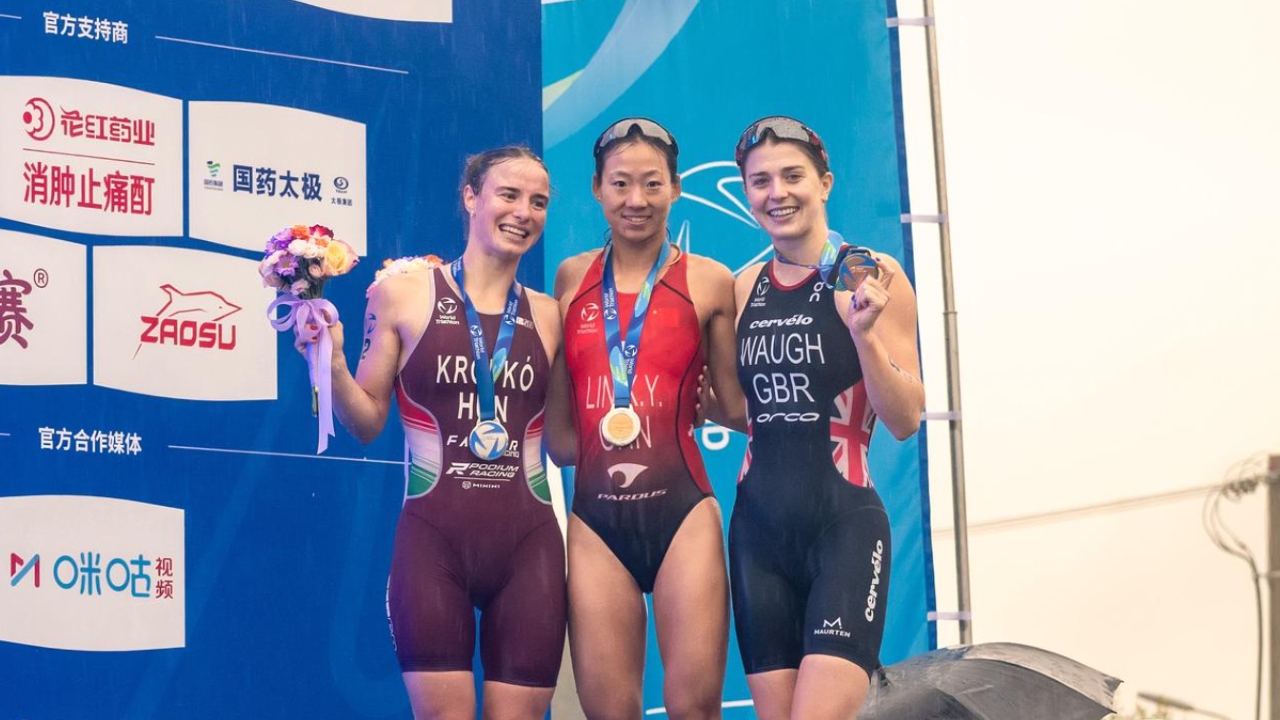




British triathlete Max Stapley believes the men’s World Triathlon Championship Series has entered a new era, with increasingly aggressive swim and bike racing creating a front pack that is becoming harder than ever to catch.
Ahead of WTCS Hamburg, the 27-year-old sat down with TRI247 to talk about how the sport’s tactical landscape has changed – and why there is now “no room for errors”.
If you’ve watched the men’s World Triathlon Championship Series this season, you’ll probably have noticed something different.
The swim is faster. The bike is harder. And increasingly, the athletes who make the front group are staying there.
And Max Stapley believes that is no coincidence.
The two-time Hamburg top-10 finisher says the men’s race has undergone a fundamental tactical shift, with the strongest swimmers and cyclists no longer content to wait for the run to decide the outcome.
“We’ve kind of realised now – and when I say ‘we’, I mean the group of us that are always attacking the race – it’s just physiology,” Stapley told us.
“They have to ride harder than us to get back to the front.
“Essentially we just stand on the pontoon, 10 or 15 of us, and go, ‘Right, let’s do this,’ and it seems to be working out.”
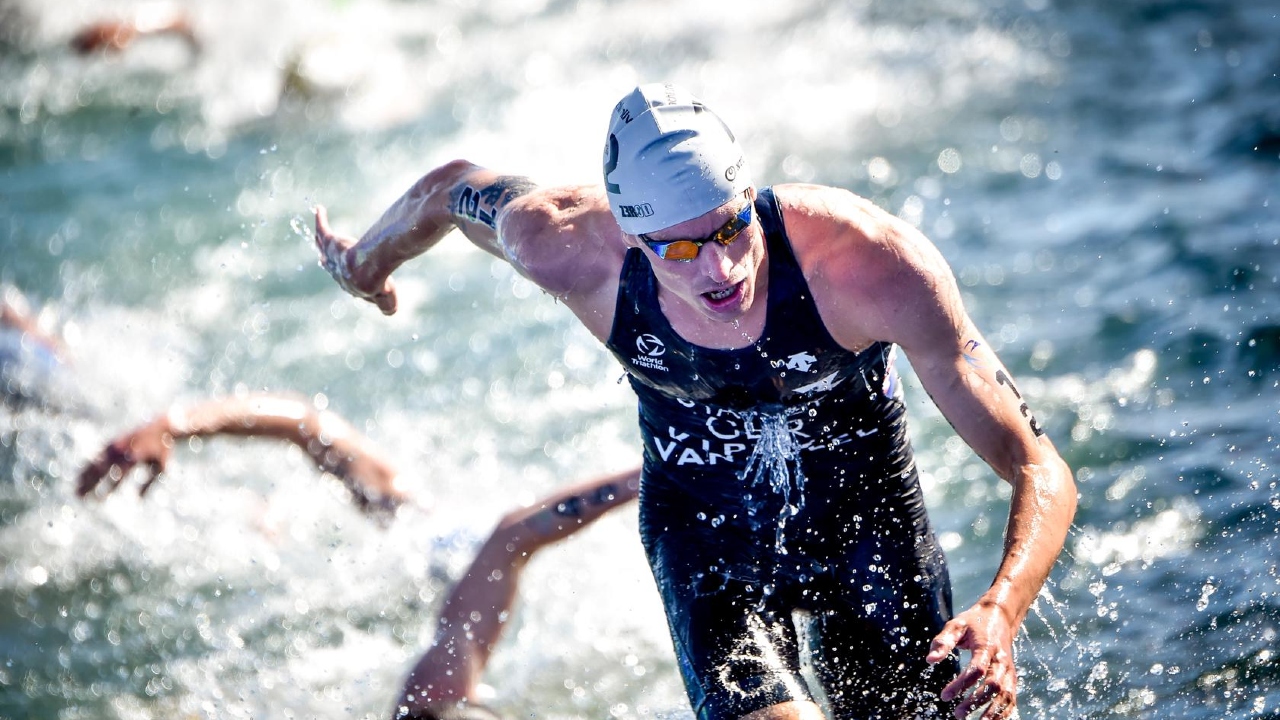
A mental victory
For Stapley, the biggest change is no longer purely physical.
Instead, he believes the sport has reached a point where athletes caught behind the lead group are beginning to lose the race before they have even reached T2.
“I feel there’s a mental victory being won,” he explained.
“Every race has split and I think the guys who are used to getting towed back – the guys who are used to saying, ‘Well, if I’m within 30 seconds, or 40 seconds off the lead, I’ll be at the front at T2’ – I don’t think that’s happening anymore.
“I don’t think it’s going to happen.”
The reason, he says, is simple.
The strongest bike riders are increasingly the ones dictating the race from the front.
“If we come off the bike with 12 of us, your odds are a lot higher of a very good result than if you come off with 30 or 40 guys,” Stapley said.
“The best riders are at the front.”
No room for mistakes
The knock-on effect has been to make every discipline more important than ever.
Athletes who once relied on a devastating run split now face rivals capable of matching them stride for stride after arriving at T2 with a significant advantage.
“What’s even more difficult for those guys now is you have guys from the front who are running as fast as them,” Stapley said.
He points to athletes such as Miguel Hidalgo, Matt Hauser and Vasco Vilaça as examples of competitors who combine front-pack swim-bike ability with world-class run speed.
“The landscape is just changing.
“There’s no room for errors.
“When I look at the start list this weekend… any of these guys can top 10. You wouldn’t be surprised.”
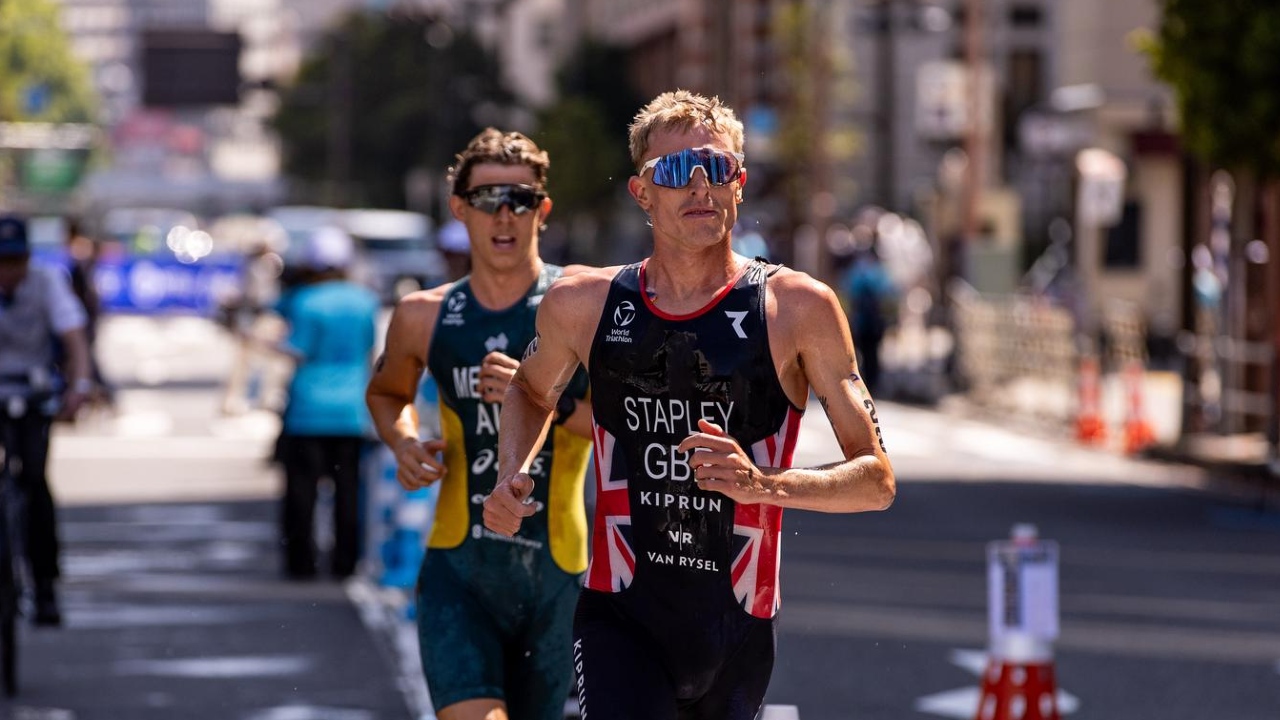
Hamburg confidence
Stapley heads to Hamburg encouraged by what he describes as one of the strongest periods of his career.
After admitting he perhaps placed too much pressure on himself following an excellent winter, the Brit believes his performance at WTCS Quiberon showed he is moving back towards his best, even if 16th place didn’t fully reflect the performance.
“Physically the values are there,” he said.
“This weekend’s just about basically doing what I did in Quiberon, but probably 20 to 30 per cent easier on the bike.”
Hamburg has also become one of his favourite stops on the WTCS calendar.
Having finished ninth and seventh in his last two appearances, another top-10 would significantly boost both his confidence and his overall championship ambitions.
“I absolutely love racing in Hamburg,” Stapley said.
“I’ve gone ninth and seventh in the last two years and those are obviously excellent results.
“It’d be nice to go in the top 10 again and bump my ranking up, while also giving myself a shot at an overall top 15 come Pontevedra [the WTCS Grand Final].
“I think we’ve got the means to do it this weekend.”
Whether Stapley can once again emerge from the front pack in contention will become clear on Saturday.
But if his assessment is correct, one thing is already becoming obvious in the men’s World Triathlon Championship Series: the days of sitting 30 seconds behind and expecting the race to come back together are rapidly disappearing.
He’ll also likely be a key person on leg two in the Mixed Relay for Britain on Sunday and looks to be shrewdly working hard on all options early in the Olympic qualifying cycle. We’ll hear more about that in the second part of this interview as we build up to WTCS London.