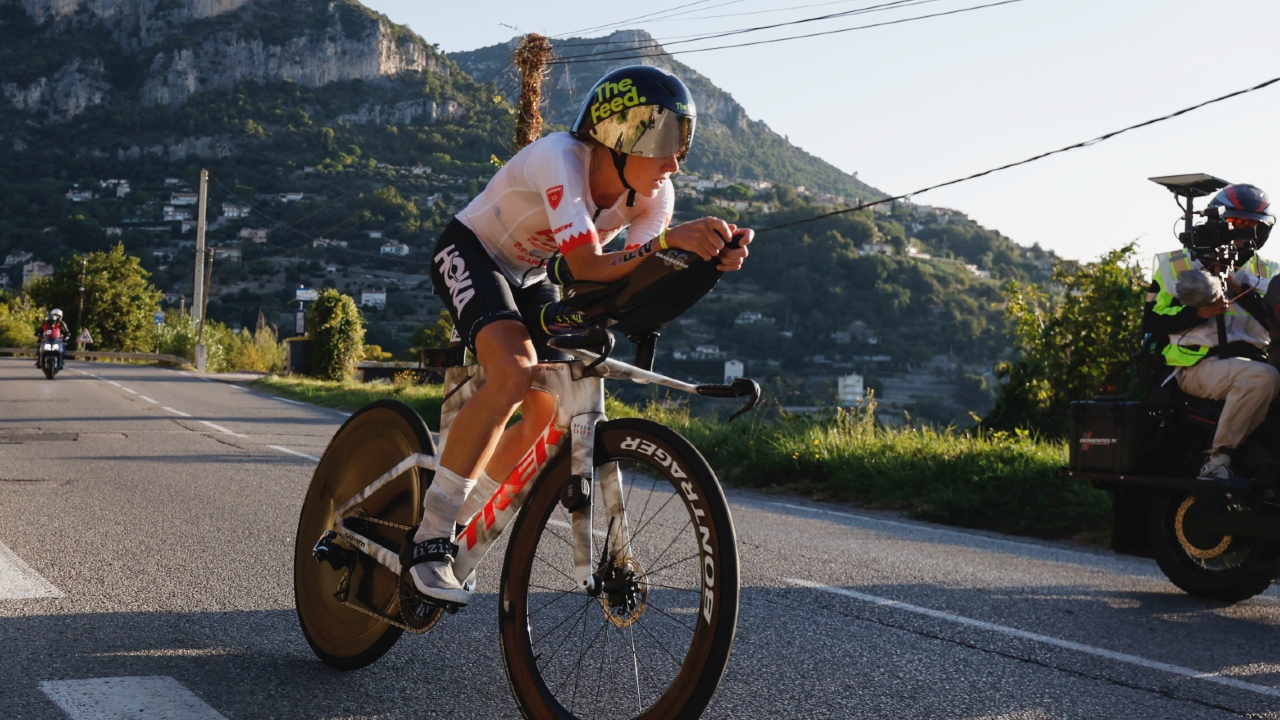


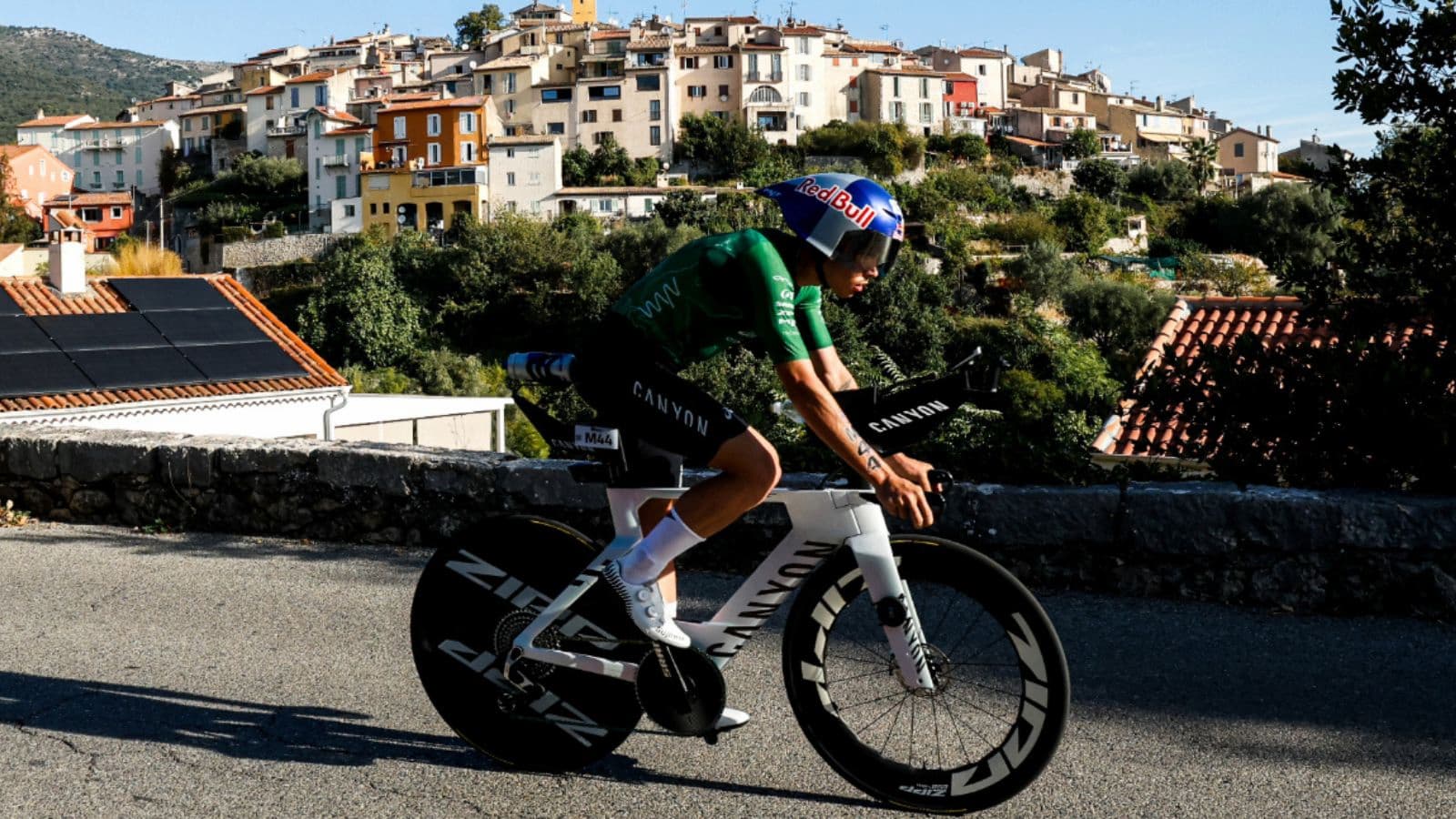
The main difference between riding a triathlon bike and a road bike is body position. A triathlon bike uses aero bars and triathlon specific geometry to place the rider in a narrower, more aerodynamic position for sustained solo riding. A road bike uses drop handlebars and a more versatile position that makes braking, cornering, climbing, and changing hand positions easier. That difference changes how the bike feels and how it should be ridden. Triathlon bikes are designed primarily for aerodynamic efficiency during non drafting racing. Road bikes are designed for a wider range of riding, including climbing, descending, group riding, technical courses, and everyday training. Its advantage depends on whether you can maintain the aero position comfortably, produce sustainable power, control the bike confidently, and still run effectively afterward.
In Short
| Triathlon bike | Road bike |
|---|---|
| Prioritizes aerodynamics | Prioritizes versatility |
| Uses aero bars | Uses drop handlebars |
| More forward riding position | More conventional road position |
| Best suited to sustained solo riding | Suited to varied riding |
| Requires practice in the aero position | Generally easier for beginners to handle |
| Less immediate brake access in aero | Easy brake access from the hoods |
| Can be less intuitive on technical courses | Usually easier through frequent corners |
| Designed around triathlon racing | Suitable for racing, training, climbing, and groups |
Riding Position Is the Biggest Difference
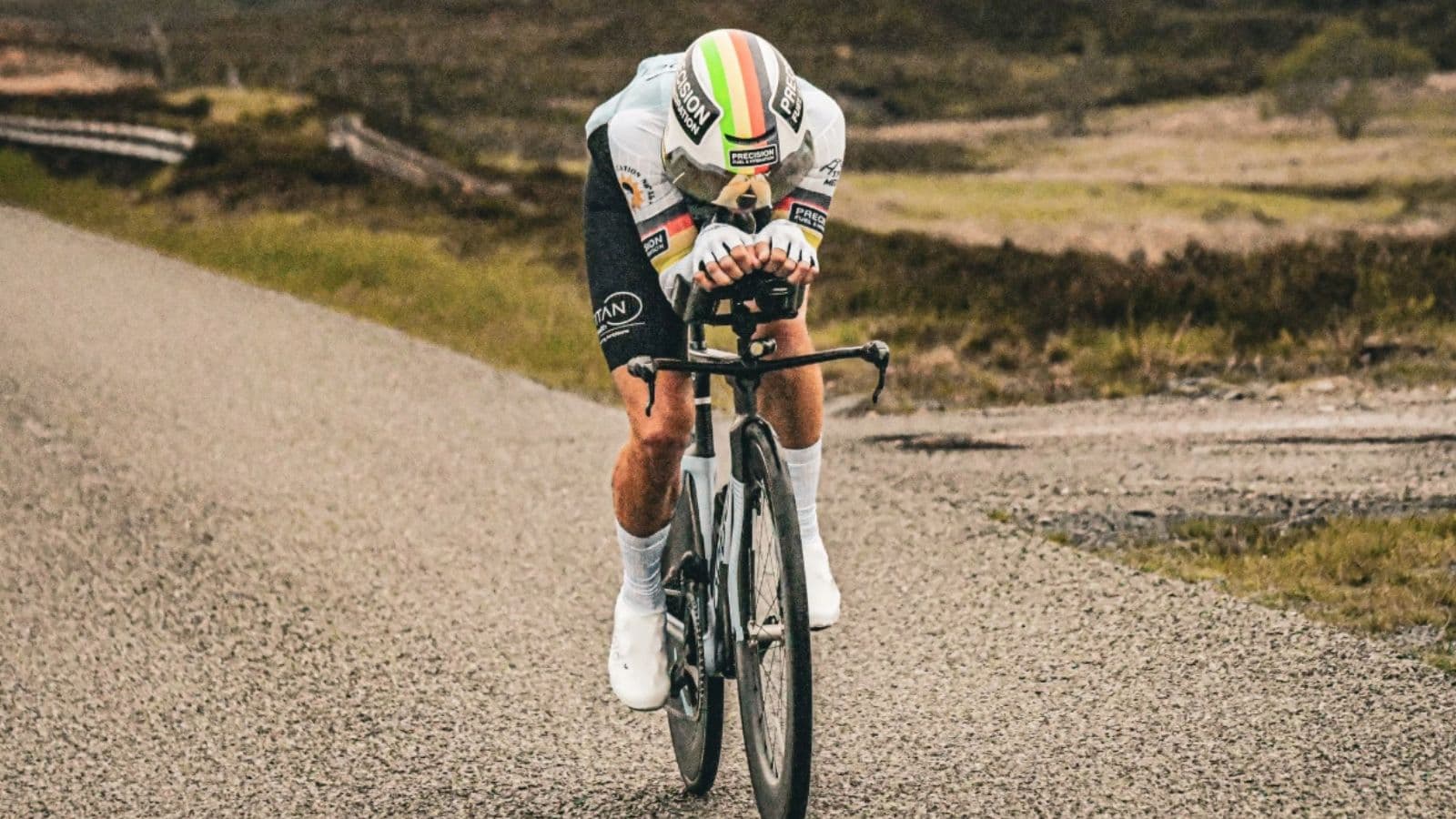
A road bike normally gives you three main hand positions: the hoods, drops, and tops. You can move between them depending on speed, terrain, comfort, and control. A triathlon bike adds aero extensions and forearm pads. When you ride in the aero position, your elbows move inward, your torso becomes lower, and your hands extend forward. The objective is to reduce aerodynamic drag while maintaining sustainable power. Bike geometry helps make this position possible. Understanding why has your cycling progress stopped improving explains why a triathlon bike is not simply a road bike with aero bars attached.
Triathlon Bikes Prioritize Aerodynamics
At higher cycling speeds, overcoming aerodynamic drag requires a substantial amount of your effort. Reducing the area exposed to the airflow can therefore help you travel faster for a given power output. A position that looks aerodynamic but forces you to sit upright every few minutes may be less useful than a slightly less aggressive setup you can maintain for most of the bike leg. This makes how do you adjust your bike for a better fit particularly important when setting up a triathlon bike. Fit needs to balance:
- Aerodynamics
- Power production
- Comfort
- Visibility
- Control
Handling Feels Different on Aero Bars
Riding in aero changes how you steer. Your arms are closer together and your upper body is supported by your forearms. Small movements can influence the direction of the bike, and beginners may initially find it harder to hold a straight line. Practice should start on quiet, smooth, predictable roads.
Learn to:
- Enter the aero position smoothly.
- Hold a straight line.
- Look well ahead.
- Make small steering corrections.
- Return to the base bars without sudden movements.
- Maintain control while changing gears.
Do not learn aero handling in heavy traffic, strong winds, or on a technical descent.
Brake Access Is Different
One of the most important practical differences is access to the brakes. On a road bike, your hands can remain on the brake hoods during normal riding. You can brake quickly without making a major change in position. On many triathlon bikes, your hands are away from the brake levers while you are on the aero extensions.
Come out of aero early when approaching:
- Sharp corners.
- Junctions.
- Traffic.
- Pedestrians.
- Technical descents.
- Poor road surfaces.
- Congested sections.
- Any unpredictable situation.
Aerodynamics should never take priority over bike control.
Cornering Requires a More Deliberate Approach
A road bike generally feels more natural through repeated or tight corners because of its hand position, brake access, and versatile handling. On a triathlon bike, move to the base bars before a technical corner. Brake before the turn, look through the corner, choose a controlled line, and accelerate smoothly once the bike is stable. Do not attempt to remain in aero simply to save a few seconds. Good descending technique matters on either bike, and how can you improve downhill cycling becomes especially relevant when a triathlon course contains fast or technical sections. Confidence should develop gradually rather than through taking unnecessary risks.
Climbing Can Reduce the Aero Advantage
Aerodynamics become less important as speed decreases. On a steep climb, maintaining a comfortable and powerful position can matter more than staying low. Triathletes commonly move from the aero bars to the base bars when climbing. Whether you remain seated or stand depends on the:
- Gradient
- Duration of the climb
- Gearing
- Fatigue
- Personal preference
When should you climb seated vs standing on a bike helps explain why both techniques have a place rather than one being universally more efficient.
On rolling courses, you may move between aero and climbing positions frequently.
Cadence and Gearing Still Need Attention
A triathlon bike can encourage riders to push large gears because sustained speed on flat roads feels natural. That does not mean grinding a heavy gear is always efficient. Your cadence should allow you to produce sustainable power without creating unnecessary muscular fatigue. The principles behind what is cycling cadence in a triathlon apply regardless of which bike you use. Shift before a steep climb causes cadence to collapse. On flatter terrain, choose gearing that lets you maintain controlled pressure rather than constantly alternating between excessive spinning and heavy grinding.
Smooth power delivery becomes particularly useful during longer races.
Wind Can Feel More Noticeable
Aero bikes and deep section wheels can behave differently in crosswinds, especially when exposed sections of a course produce sudden gusts. The correct response is not always to remain in aero. If conditions make the bike difficult to control, move to a position that provides greater stability and steering control. Reduce speed when necessary. The techniques in how to ride in headwinds and crosswinds on a bike are valuable because wind management involves both aerodynamics and safety. A stable rider in a slightly less aerodynamic position can be more effective than an unstable rider trying to force an aggressive aero position.
Comfort Matters More on Longer Races
A position you can tolerate for 20 minutes may become uncomfortable after several hours. Triathlon bikes can place significant pressure on the saddle, forearms, shoulders, and neck if the setup is unsuitable or the rider has not adapted to it.
A sustainable position should let you:
- See the road without excessive neck strain.
- Support your upper body comfortably.
- Pedal without excessive hip restriction.
- Remain stable on the saddle.
- Produce consistent power.
- Stay aerodynamic for useful periods.
Persistent numbness or pain should not simply be accepted as part of triathlon cycling.
Adjust the position and equipment where necessary.
Your Run Changes How the Bike Should Be Ridden
This is one of the biggest differences between triathlon cycling and normal road riding. A road cyclist can finish a hard ride at the end of the bike session. A triathlete still has to run. That changes the definition of a successful bike leg. The goal is not necessarily to produce your highest possible cycling power. It is to ride fast enough to achieve a strong bike split without creating excessive fatigue for the run. This is why how can you bike smarter to improve your triathlon run matters.
- Bike pacing
- Cadence
- Fueling
- Aerodynamics
- Position
all influence what happens after T2. A slightly faster bike split has little value if it produces a major run slowdown.
Race Distance Changes How You Use the Bike
The demands of a short triathlon and a long course race are different. A shorter race generally allows higher cycling intensity, while long course racing requires greater emphasis on:
- Sustainable power
- Fueling
- Comfort
- Maintaining
the aero position for extended periods. The principles in how should cycling workouts change for different race distances help determine how much endurance, intensity, aero position practice, and race specific work you need.
Road Bikes Are More Versatile
A road bike is usually the more versatile option.
It works well for:
- Group rides.
- Technical courses.
- Steep climbing.
- Urban training.
- General road cycling.
- Frequent cornering.
- Riders still developing handling skills.
Beginners do not need to buy a dedicated triathlon bike before their first event. Many of the what cycling equipment worries are most common among beginners come from assuming specialized equipment is required before basic fitness, fit, handling, and confidence have been developed.
When Does a Triathlon Bike Make Sense?
A triathlon bike becomes more useful when sustained aerodynamic performance matters enough to justify specialized equipment and position.
It is particularly suited to athletes who:
- Race regularly.
- Want to improve bike splits.
- Compete on courses where aero riding is practical.
- Can maintain a stable aero position.
- Have developed reliable bike handling.
- Are willing to train regularly on the bike they race.
Course characteristics still matter. A flat or rolling course with long uninterrupted sections allows more time in aero than a highly technical route with constant braking and cornering.
You Need to Train in the Aero Position
Owning a triathlon bike does not automatically make the position sustainable.
Practice the exact skills you will need in competition:
- Drinking.
- Fueling.
- Shifting.
- Looking behind safely when necessary.
- Entering and leaving aero.
- Handling wind.
- Riding rolling terrain.
- Maintaining race effort.
Do not make race day your first long ride in the aero position.
Common Mistakes
- Choosing an aero position that is too aggressive.
- Staying in aero when quick braking may be required.
- Looking down instead of ahead.
- Entering technical corners on the aero bars.
- Copying another athlete’s bike fit.
- Ignoring persistent discomfort or numbness.
- Pushing unnecessarily large gears.
- Riding the bike leg without considering the run.
- Failing to practice race-day aero riding.
Practical Tips
- Get the bike fitted for your body and racing needs.
- Build aero-position time gradually.
- Practice on quiet roads before using aero in harder conditions.
- Move to the base bars before technical sections.
- Keep your eyes looking ahead.
- Practice braking before you need it in a race.
- Use appropriate gears on climbs.
- Train regularly on the bike you plan to race.
- Prioritize control whenever conditions become unpredictable.
Actionable Takeaways
A triathlon bike differs from a road bike mainly in its riding position and intended purpose. Triathlon bikes use aero bars and specialized geometry to help riders reduce aerodynamic drag during sustained solo efforts. Road bikes provide more versatile handling, easier brake access, and more options for climbing, cornering, group riding, and general training. The aerodynamic advantage of a triathlon bike only matters if you can use it effectively.
Beginners can race successfully on a road bike and should not treat a triathlon bike as mandatory equipment. As experience and performance goals increase, a properly fitted triathlon bike can provide a meaningful advantage on suitable courses. The key is learning to ride the bike as part of a complete triathlon rather than treating the cycling leg as an isolated time trial.