

Downhill cycling can be an opportunity to maintain speed with relatively little pedaling, but only when you are comfortable controlling the bike. For many triathletes, especially those who train mainly indoors or on flat roads, descending can feel more intimidating than climbing. Improvement comes from developing skills rather than forcing yourself to descend faster. Learn to brake before corners, look where you want to travel, choose predictable lines, and keep your body relaxed enough to let the bike move naturally beneath you. The goal in a triathlon is not to descend as aggressively as possible. It is to move efficiently and safely while preserving energy for the rest of the bike leg and the run.
In Short
- Build speed gradually rather than taking unnecessary risks.
- Complete most heavy braking before entering a corner.
- Look through the turn instead of focusing directly in front of the wheel.
- Keep your body relaxed and maintain stable contact with the bike.
- Practice descending regularly in safe, familiar conditions.
Why Downhill Cycling Technique Matters in Triathlon
Descending is different from simply riding quickly on a flat road. Gravity increases speed while corners, changing gradients, road surfaces, wind, and other riders require constant judgment.
Better descending can help you:
- Maintain momentum.
- Reduce unnecessary braking.
- Corner more smoothly.
- Stay calmer at higher speeds.
However, the fastest rider downhill is not necessarily the strongest triathlete overall. Risk management matters, particularly when the bike leg is followed by a run.
Build Confidence Before Building Speed
Confidence should come from repeated successful practice, not from forcing yourself beyond your current ability.
Start on a familiar descent with:
- Good visibility.
- Predictable corners.
- A suitable road surface.
- Low traffic.
- Manageable gradients.
Ride at a speed where you feel in control and focus on technique. As your braking, cornering, and line choice become more automatic, speed may naturally increase.
Look Where You Want the Bike to Go
Vision strongly influences bike handling. When approaching a corner, look ahead toward the route through the turn rather than staring at the front wheel or the road directly underneath you. As you enter the corner, move your focus toward the exit.
This helps you:
- Identify hazards earlier.
- Choose a smoother line.
- Prepare for changing corners.
- Avoid sudden steering corrections.
One common mistake is becoming fixated on a pothole, curb, barrier, or road edge. Identify the hazard, but then direct your attention toward the safe path around it.
Brake Before the Corner
Good descending involves controlling speed before you need to turn sharply. Complete most significant braking while the bike is relatively upright. Enter the corner at a speed you can manage, then focus on steering smoothly through it.
A useful sequence is:
- Look ahead → control speed → choose your line → turn smoothly → accelerate when safe
Avoid entering too quickly and then relying on sudden heavy braking in the middle of the corner.
Use Both Brakes Smoothly
Both brakes contribute to controlling the bike, although the front brake can provide substantial stopping force. Apply braking progressively rather than grabbing the levers suddenly.
Your braking distance can change with:
- Speed.
- Gradient.
- Tire grip.
- Wet roads.
- Loose surfaces.
- Equipment.
- Corner sharpness.
Practice controlled braking at moderate speeds before attempting steeper descents.
Choose a Smooth and Safe Line
A good line reduces unnecessary steering and allows you to maintain control through the corner. On a closed course, riders may have more freedom to use available road width. On open roads, always remain within the safe and legal part of your lane and never cross into opposing traffic to create a faster line. Look through the corner early and avoid sudden movements.
The skills involved also complement how to improve your confidence on technical bike courses, particularly when a triathlon contains repeated corners and changing terrain.
Position Your Body for Stability
You do not need exaggerated body movements to descend effectively.
Focus on:
- Relaxed shoulders.
- Bent elbows.
- Stable hands.
- Balanced body position.
- Looking ahead.
- Keeping unnecessary tension out of your upper body.
A rigid grip can make the bike harder to control because every small movement becomes exaggerated. Stay connected to the bike without trying to overpower it.
Use the Outside Pedal Through Corners
When you are not pedaling through a corner, placing the outside pedal down can help provide a stable position and keep the inside pedal away from the road. For a left hand turn, the right pedal will generally be lower. For a right hand turn, the left pedal will generally be lower. Apply stable pressure through the outside foot while keeping your upper body relaxed.
Do not force excessive bike lean simply to imitate experienced racers. Cornering speed should remain appropriate for your skill and the conditions.
Know When to Stop Pedaling
At high downhill speeds, pedaling harder does not always produce a useful increase in speed.
There may be times when it is better to:
- Stop pedaling.
- Adopt a stable position.
- Prepare for the next corner.
- Focus on the road ahead.
On shallower descents, continued pedaling may still be worthwhile. Understanding what is cycling cadence in a triathlon can help you recognize how cadence and gearing change as speed and gradient increase.
Select Gears Before You Need Them
Gear choice matters when a descent transitions into flat road or another climb. Avoid reaching the bottom in a gear that makes it difficult to resume effective pedaling. Look ahead and anticipate what comes next. If the road begins climbing immediately after the descent, shift progressively before your cadence collapses. Smooth gear selection helps maintain momentum without sudden spikes in effort.
Stay Aerodynamic Without Sacrificing Control
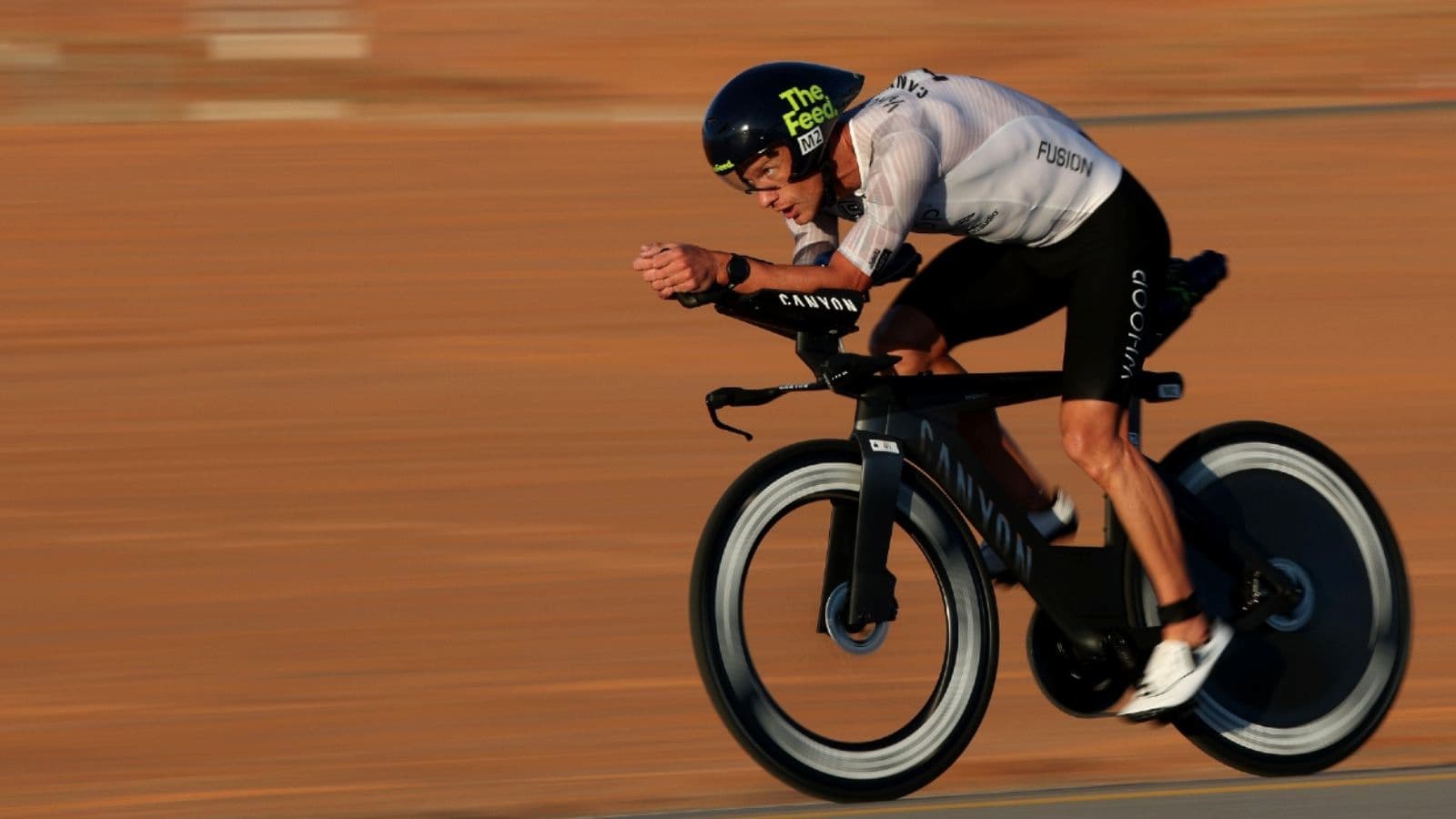
Aerodynamics matters at higher cycling speeds, but control comes first. On straight, predictable sections, a lower position may reduce drag. However, technical descents may require easier access to the brakes and greater control.
Do not remain in an aggressive aerodynamic position when:
- Corners are approaching.
- Visibility is poor.
- The surface is unpredictable.
- Traffic is present.
- You need immediate braking access.
Your position should change according to the demands of the road.
Bike Fit Can Influence Descending Confidence
A bike that feels difficult to control may not always indicate poor descending skill.
Your position can influence:
- Weight distribution.
- Steering feel.
- Brake access.
- Stability.
- Comfort.
A very aggressive position that makes you uncomfortable controlling the bike can undermine confidence. Understanding how fit affects your position, including principles covered in what is bike-packing and how can it benefit triathletes, can also reinforce the importance of comfort and control during long periods of varied terrain.
Practice Cornering Separately
You do not need a mountain descent to improve cornering.
A quiet, safe area can be used to practice:
- Looking through turns.
- Smooth braking.
- Wide and tighter corners.
- Body position.
- Entering at controlled speeds.
Begin slowly. Technique practiced at moderate speed is easier to understand and repeat. Once the movement becomes consistent, gradually apply it to more demanding terrain.
Learn to Handle Crosswinds
Wind can make descending more difficult, especially when gusts appear unexpectedly between buildings, trees, or exposed sections of road. Keep your grip controlled and avoid sudden steering corrections. Reduce speed when conditions become unpredictable. The principles in how to ride in headwinds and crosswinds on a bike are particularly useful on exposed triathlon courses where wind direction can change during a descent.
Descend More Carefully in the Rain
Wet roads reduce available grip and can change braking performance.
When descending in rain:
- Reduce speed earlier.
- Increase braking distance.
- Brake progressively.
- Avoid sudden steering.
- Be cautious around painted road markings and other slippery surfaces.
- Give other riders additional space.
Race day is not the time to discover how your bike behaves on wet roads. If rain is common where you train, controlled practice using the guidance in how to cycle safely in the rain can improve your confidence.
Check Your Bike Before Technical Descents
Good technique depends on equipment working correctly.
Regularly check:
- Tire condition and pressure.
- Brake operation.
- Wheel security.
- Handlebar and stem security.
- Gears.
- Cleats and pedals.
A mechanical problem becomes much more serious at high speed. Using what you should check on your bike before every ride can help make these inspections part of your normal training routine rather than something you remember only before races.
Practice Outdoors Even if You Train Indoors
Indoor cycling is excellent for structured fitness training, but it cannot fully develop outdoor bike handling.
A trainer cannot reproduce:
- Real braking.
- Cornering.
- Crosswinds.
- Road surfaces.
- Descending.
- Other riders.
Study the Race Course
If possible, learn about important descents before race day.
Look for information about:
- Steep sections.
- Sharp corners.
- Technical turns.
- Road quality.
- Narrow sections.
- Junctions.
- Exposed areas.
If you can safely ride the course beforehand, experience is valuable. Otherwise, official course maps and race information can help you understand where extra caution may be needed.
Follow Race Rules Around Other Riders
Triathlon descents may contain riders with very different levels of experience. Maintain predictable movement and follow event passing and drafting rules.
Avoid:
- Sudden changes of line.
- Cutting across another rider.
- Passing where visibility is poor.
- Following another cyclist too closely.
- Taking unnecessary risks to gain a few seconds.
Give other athletes enough room to react.
Manage Fear Without Ignoring It
Some nervousness on fast descents is useful because it encourages caution. The goal is not to eliminate fear completely. It is to prevent anxiety from causing poor decisions such as excessive braking, staring at hazards, or becoming rigid on the bike. Build confidence progressively through familiar descents.
If one section feels beyond your current ability, slow down. You can continue developing the skill in future training rather than using race day as an experiment.
Descending Should Fit Your Overall Pacing Strategy
A fast descent does not compensate for poor pacing elsewhere on the bike. Avoid attacking every climb and then trying to recover downhill. Smooth pacing usually produces a more sustainable overall ride. The principles in how can triathletes increase the average cycling speed are useful because average speed depends on the complete ride rather than one spectacular descent. Saving unnecessary effort on the bike can also help protect the run. How to develop a smoother pedal stroke in triathlon cycling explains why cycling decisions should always be considered in the context of the complete race.
Common Mistakes
- Entering corners too quickly.
- Braking suddenly in the middle of turns.
- Looking directly in front of the wheel.
- Holding the handlebars too tightly.
- Following faster riders beyond your ability.
- Staying aerodynamic when greater control is needed.
- Ignoring wind or wet road conditions.
Practical Tips
- Practice on familiar descents first.
- Look through corners toward the exit.
- Control speed before turning.
- Increase speed only as confidence improves.
- Inspect tires and brakes regularly.
- Slow down whenever visibility, grip, or conditions are uncertain.
Actionable Takeaways
Better downhill cycling comes from technique and confidence rather than simply becoming willing to take more risks. Learn to look ahead, brake before corners, choose predictable lines, maintain a stable body position, and remain relaxed on the bike.
Practice these skills gradually on safe, familiar roads. As the movements become automatic, you can increase speed without sacrificing control. Make sure your outdoor training includes real cornering and descending if your target triathlon has technical terrain.
The best triathlon descent is not necessarily the fastest possible descent. It is one that gets you to the bottom safely, efficiently, and with enough physical and mental energy to continue riding well and run strongly afterward.