

Pacing a triathlon is a tricky business: how do you calibrate back-to-back efforts in three different sports and account for race-day adrenaline, the surges of fellow competitors and your own mounting fatigue?
While some seasoned triathletes will say triathlon pacing is an art, learnt through trial and error, it’s also been the topic of numerous academic studies. Coaches have drawn on this scientific evidence to suggest the relative intensities and speeds you should ride at over different triathlon distances. Below we share recommendations from endurance sport coach and author Joe Friel and Ingmar Jungnickel, former aerodynamics lead for Specialized Bicycles.
We also explain how evenly you should pace each leg and whether a hard start or fast finish is better.
How to pace a triathlon bike leg
Friel, the author of The Triathlete’s Training Bible, says: “Of the three sports the most critical and the one most done incorrectly is the bike.
“Any of the three may be paced incorrectly, but the one that will have the greatest impact on performance is the bike. And the longer the race, the more important it is to performance.”
Ride just below threshold
Friel says there are two power meter metrics you must focus on to pace a triathlon bike leg correctly.
The first is Intensity Factor (IF) – the percentage of your Functional Threshold Power you ride at. An IF of 1.0 represents an effort at FTP, an IF of 0.75 is 75% FTP and so on.
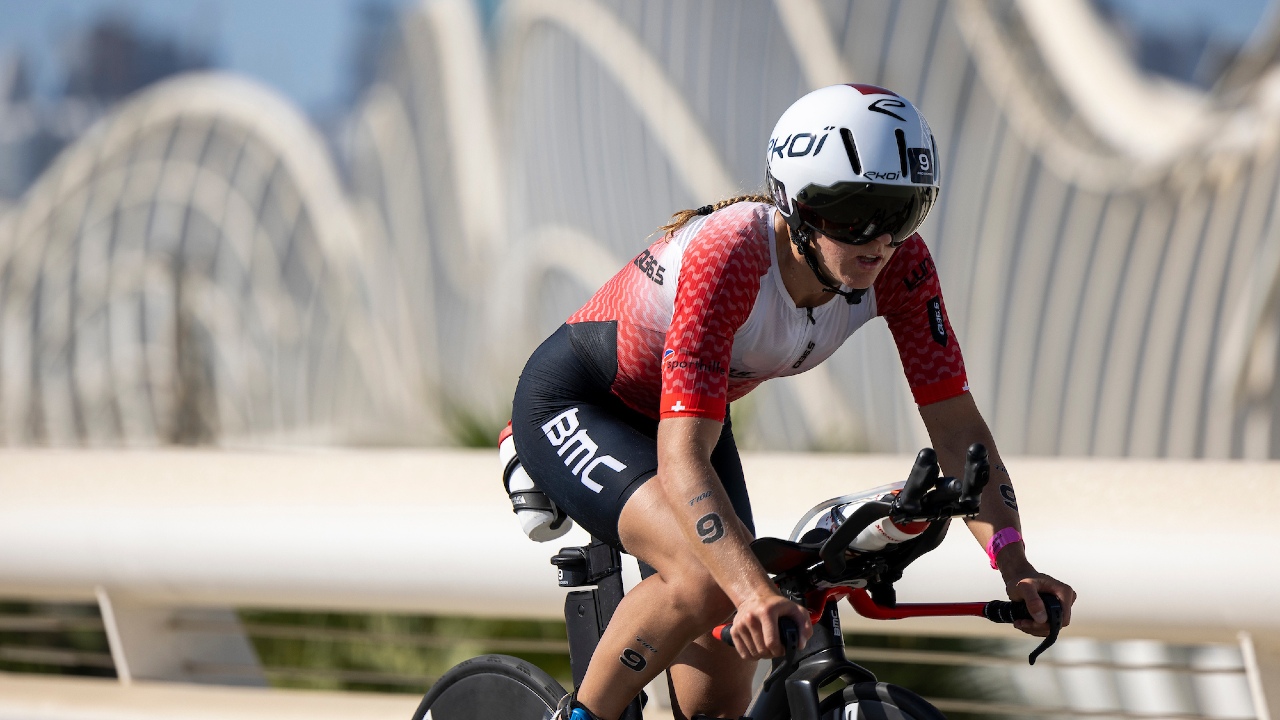
“For the pros the IF is typically around above 100% for sprint distance, 100% for Olympic, 90% for 70.3, and 80% for IRONMAN,” says Friel.
“For age groupers it should be 10-20% less: 90-100% for sprint, 80-90% Olympic, 70-80% 70.3, and 60-70% IRONMAN.
“Age groupers who contest for the podium, especially for the younger age groups, will likely exceed the upper ends of these suggested ranges.
“The older the age group the more likely they are to be in the lower end of their range. The same goes for novices.”
Stay smooth
The second important power metric is Variability Index (VI). A marker of how steadily you rode, VI is calculated by dividing Normalized Power (NP) by average power (AP). AP is the mean number of watts you produced during a ride. NP is another kind of ‘average power’ that is said to better represent the physiological cost of a ride. Its formula, developed by Training Peaks, takes into account spikes and dips in your power output to estimate the power you could have held had your wattage remained consistent.
For example, a NP of 280 and AP of 260 equals a VI of 1.08 or an eight-percent divergence between NP and AP. Friel says the difference must be “lower than 10% on average for the ride. And the lower the better. That means a very steady ride.”
Friel’s advice is backed up by a 2007 study into the effect of constant versus variable cycling on running performance. Researchers made participants perform two 20km bike time-trials each ollowed by a 5km run – in one TT power was consistent; in another it fluctuated. After steady cycling, the athletes ran faster than after they varied the intensity on the bike.
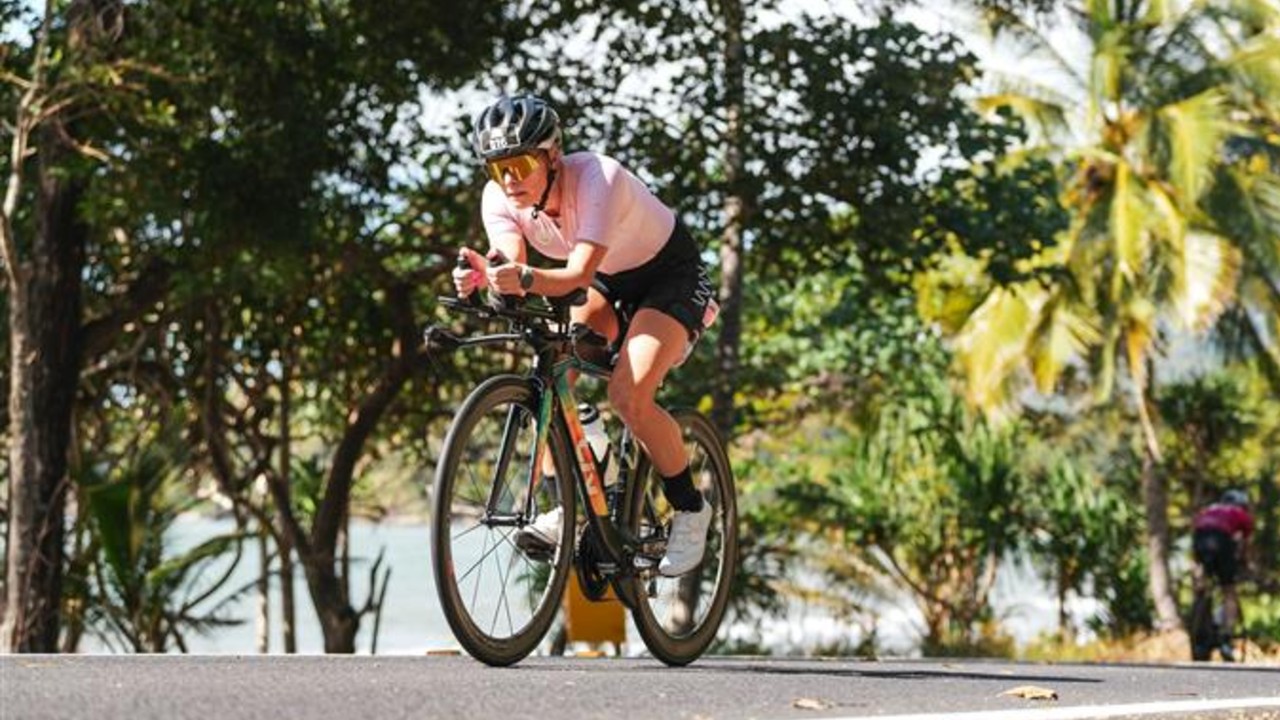
Riding steadier is better because surges into higher power zones oxidise higher proportions of carbohydrates and lead to more muscular fatigue. Ahead of the run, this is precisely what you’re trying to avoid.
Ride with the run in mind
Although having a very high VI may lead to a very fast bike split, Friel says: “The athlete will then walk the run leg. So it has to do with energy expended and fatigue.
“What often happens in a race is early in the bike leg the athlete starts racing other athletes by surging to get ahead or prevent being passed.
“This results in a high VI and high IF but only early in the ride. The rider then struggles to T2. And has a poor run.”
Therefore, in training you must learn to ride steadily at the correct intensity. Translating this to the race isn’t easy though.
“It takes weeks and weeks of rehearsing this to get it right on race day,” adds Friel.
“Even then the athlete is still likely to mess it up in the excitement of the race, especially early in the bike leg.”
How to pace a triathlon swim leg
Friel says it’s best to pace a triathlon swim leg using your Rate of Perceived Exertion (RPE). This is a subjective measure of your effort from 1-10, with 1 being very easy and 10 being maximal.
Your RPE for a short-course swim should be 7-8, which equates to slightly above perceived threshold for sprint and slightly below for Olympic distance.
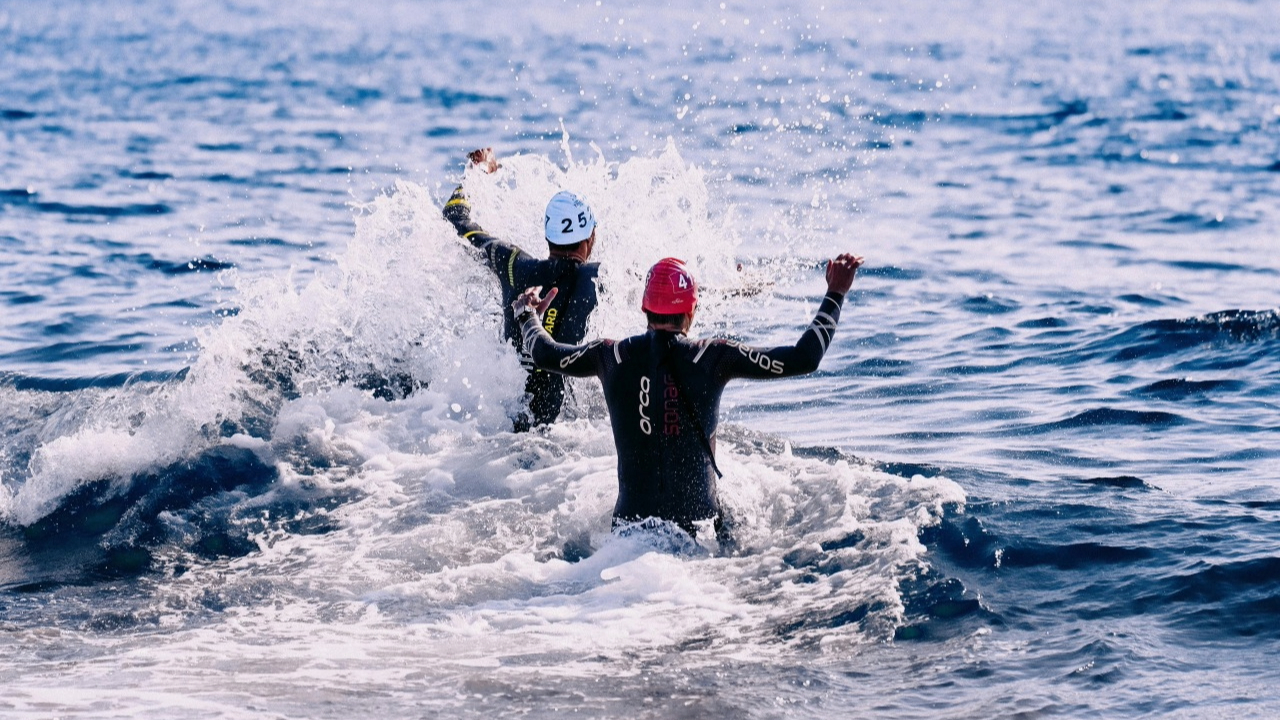
If you’re new to triathlon and your RPE isn’t dialed in yet, keep the swim easy or moderate, says Friel.
The risk of not doing so is that you “go out too fast and suffer just trying to finish.”
Practise your appropriate race intensity ideally in open water, or in a pool.
In terms of strategy, in shorter triathlons, the swim makes up a larger proportion of total race time. It’s probably for this reason that academic studies have found the first leg matters more in sprint and Olympic triathlons than in half and full IRONMAN. In these last two distances, the swim constitutes about 20% and 10% respectively of final finishing time.
Therefore, it follows that you should swim harder in a sprint or Olympic triathlon not only because the distance is shorter but also because you stand to save more time.
Accordingly, Friel says your RPE should drop for a long-course swim.
“The swim should be done at a ‘comfortable effort (4-5 on RPE scale) for most age groupers,” he adds. “The exception is podium contenders who will be more like 6-7. But they will be in the water for a shorter time so can go a bit harder.”
How to pace a triathlon run leg
In short-course triathlon, eg sprint and Olympic, it may be best not to have a set pacing plan.
“The run depends on what’s left in the tank following swim and bike,” says Friel. “It will hopefully be done just below threshold pace. It all comes down to how well the athlete paced the bike.”

Long-course triathlon run pacing is similarly dependent on how tired you are from your earlier efforts, according to Friel.
“The run again will depend on what’s left in the tank,” he adds. “This will, more than likely, be the pace the athlete typically uses on a long, easy training run.”
“But you really can’t use heart rate here as fatigue has affected leg muscles more than heart capabilities. The legs are ‘dead’ regardless of heart rate.”
Friel says it’s crucial to simulate this situation in your 70.3 or IRONMAN training plan with two brick workouts: one early and one late in the build period. For example, week 2 or 3 and week 7 or 8 in a 12-week build phase.
You should practise pacing by running after riding and covering 50-60% of your race distance. This is a very hard session, so schedule a rest and recovery week afterwards.
The science of pacing
As we’ve seen from scientific research and Joe Friel’s pacing guidelines, it’s best to maintain a steady effort or speed during the swim and bike.
But evidence suggests that the pacing of elite triathletes’ run leg in Olympic-distance races follows a J-curve, with accelerations towards the start and end.
Researchers attribute part of this trend to elite Olympic triathlon being draft-legal. The presence of a bunch after T2 could make the run racing tactical and explain the need to surge at different stages.
However, the laws of physics support a fast finish in the run even in non-draft-legal triathlons
Ingmar Jungnickel, an aerodynamics expert and former National Sports Science Coach of the Year, says: “When going as fast as possible, try to set an even pace on the swim and bike and leave something extra in the tank for the run.”
This is because you require fewer resources to go faster when running than swimming or cycling, according to the founder of Inspire Gold, a sports research and development laboratory.
“In swimming, to go 10% faster you need 33% more oxygen and calories. In cycling you need 29% more oxygen or calories. When running you need around 12% more,” adds Jungnickel.
“The reason for this is that in swimming all your resistance is hydrodynamic drag that scales cubed with speed.
“In cycling your resistance is about 80% aero drag that works the same way. Running is much more linear with speed.”
So it’s worth saving something for the run since energy expended here will gain you more time than elsewhere.