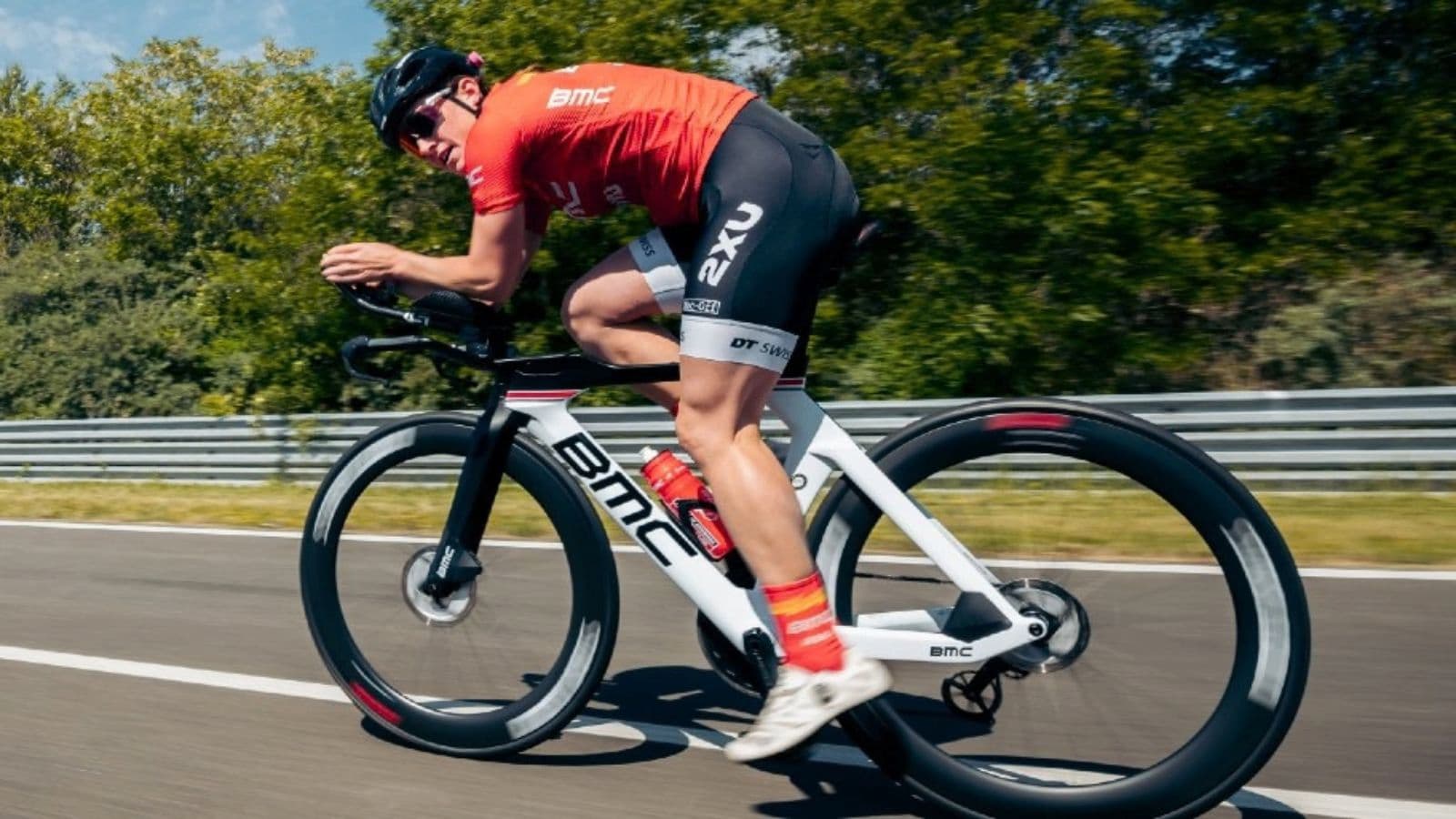


The correct foot and ankle position when cycling is a comfortable, stable position that allows the ankle to move naturally through the pedal stroke. You do not need to keep your foot perfectly flat or deliberately point your toes throughout every revolution. Some cyclists naturally pedal with the heel slightly raised, while others use a flatter foot position. Small differences are normal. The priority is controlled movement without excessive ankle motion, heel dropping, toe pointing, or rocking that develops because of poor bike fit. For triathletes, efficient foot and ankle movement should support comfortable power production while limiting unnecessary muscular effort. Rather than forcing a specific ankle angle, focus on good bike setup and smooth pedaling.
In Short
- There is no single perfect ankle angle for every cyclist.
- The ankle should move naturally through the pedal stroke.
- Avoid deliberately locking the ankle.
- Excessive toe pointing is usually unnecessary.
- Excessive heel dropping can indicate a fit or technique issue.
- The foot should remain stable on the pedal.
- Cleat position influences foot and ankle mechanics.
Your Ankle Should Not Stay Completely Fixed
The ankle naturally changes position as the crank moves through each revolution. Trying to lock it at one exact angle can make pedaling feel unnatural and create unnecessary muscular tension. A small amount of plantar flexion, where the toes move slightly downward relative to the heel, is common during parts of the pedal stroke. The ankle can then move differently as the crank continues around. The exact pattern varies between cyclists.
Rather than concentrating on holding your ankle still, focus on keeping the foot controlled while producing smooth power.
A Slight Heel Rise Can Be Normal
Many cyclists pedal with the heel slightly higher than the front of the foot during parts of the pedal stroke. This does not automatically mean their technique is incorrect. Ankle position is affected by:
- Anatomy
- Flexibility
- Saddle height
- Cycling intensity
- Cadence
- Shoe setup
- Individual movement patterns
Problems are more likely when the movement becomes exaggerated or uncomfortable. The aim is not to copy the ankle angle of a professional cyclist. Efficient technique is individual, just as the optimal approach described in what cycling drills help improve triathlon bike technique should develop control rather than force every athlete into exactly the same movement pattern.
Avoid Excessive Toe Pointing
Some cyclists pedal with their toes strongly pointed downward throughout much of the pedal stroke. A small heel rise can be normal, but exaggerated toe pointing may indicate that the cyclist is reaching for the pedals or deliberately trying to create a particular technique. If you notice significant toe pointing alongside:
- Hip rocking
- Discomfort
- Difficulty maintaining stable contact with the saddle
- Bike fit deserves attention
The principles in how do you adjust your bike for a better fit can help identify whether position rather than pedaling technique is creating the problem.
Excessive Heel Dropping Is Not Necessary
Some riders deliberately push the heel downward because they believe this automatically produces more power. There is no need to force an exaggerated heel drop. Your heel may naturally lower during certain phases of the pedal stroke, particularly depending on cadence and workload, but the movement should remain comfortable. Forcing the heel down can create unnecessary tension and alter how the ankle, calf, and lower leg work.
Think about applying controlled pressure to the pedals rather than trying to manufacture a specific ankle angle.
Keep the Foot Stable on the Pedal
Your foot should feel secure rather than moving around excessively inside the shoe or across the pedal. With clipless pedals, the cleat provides a consistent connection between the shoe and pedal. With flat pedals, footwear and pedal grip become particularly important. A stable foot provides a reliable platform for transferring force. Your ankle still needs to move naturally, and clipless systems often allow some rotational movement, known as float.
The objective is enough security to pedal confidently without forcing the foot into an uncomfortable position.
Cleat Position Affects Foot Mechanics
Cleat setup influences where the foot sits over the pedal and how the leg tracks during cycling. A common starting point places the pedal axle around or slightly behind the ball of the foot, although individual setup varies. Moving the cleat changes the relationship between the:
- Foot
- Ankle
- Knee
- Pedal
Avoid making large cleat changes simply because another cyclist uses a particular position. Foot angle matters as well. If your feet naturally point slightly inward or outward, forcing them perfectly straight may create discomfort elsewhere in the leg.
Do Not Force Your Feet Perfectly Straight
Not every cyclist’s feet point directly forward. Individual:
- Hip
- Knee
- Lower leg
- Foot anatomy
can produce slightly different natural positions. Clipless pedal systems should generally allow the rider to pedal without feeling that the feet or knees are being twisted into position. The causes discussed in how to prevent your knees from hurting during long cycling are important because knee discomfort can involve saddle position, cleat setup, training load, strength, and other factors rather than foot angle alone.
Saddle Height Changes Ankle Movement
Saddle height has a major influence on lower body mechanics.
- A saddle that is too high can encourage toe pointing, hip rocking, or reaching at the bottom of the pedal stroke.
- A saddle that is too low may produce a more compressed leg position and change how force is applied.
This is why ankle position should not be assessed in isolation. If your ankle movement looks unusual, check the complete riding position before trying to consciously change your foot. Overall setup matters, and how does bike geometry affect triathlon cycling performance helps explain why your relationship with the pedals depends on the entire bike position.
Cadence Changes Foot and Ankle Movement
Your ankle may not move exactly the same way at every cadence. At a higher cadence, the pedal stroke happens quickly and there is less time for exaggerated conscious movements. At lower cadence and higher resistance, the way you apply force can change. Neither automatically indicates poor technique. Developing a comfortable cadence range is more useful than trying to maintain one ankle position regardless of workload.
Understanding what is cycling cadence in a triathlon can help triathletes choose an appropriate rhythm while allowing the lower leg to move naturally.
Shoes Should Hold the Foot Securely
Cycling shoes should fit securely without crushing the foot. If the shoe is too loose, the foot may move inside it. If it is excessively tight, pressure and numbness can develop. The heel should generally remain secure while pedaling. Hot conditions and long rides can cause the feet to swell, so tightening shoes aggressively at the start of a ride can become uncomfortable later.
Issues such as :
- Numbness
- Pressure
- Burning should prompt a check of shoe fit
- Cleat position
- Overall bike setup rather than simply changing ankle position
Ankle Movement Can Change Under Fatigue
A foot position that looks controlled early in a ride may change as the cyclist becomes tired.
- Calf fatigue
- Declining coordination
- Reduced core stability
- Changes in cadence
can all influence lower leg movement. This is particularly relevant during long course triathlon. A strong aerobic foundation developed through how do you build an aerobic base for triathlon cycling can help athletes maintain consistent technique for longer because a given race effort becomes more sustainable. Strength and muscular endurance also matter.
Strength Supports Stable Pedaling
Your ankle is only one part of the movement.
- Hips
- Glutes
- Quadriceps
- Hamstrings
- Calves
- Trunk
all contribute to producing and controlling force. A structured program based on what strength training should cyclists do to ride faster in a triathlon can support more stable cycling mechanics without trying to strengthen the ankle in isolation. Calf raises and other lower leg exercises can be useful, but they should form part of broader cycling strength work.
Your Foot Position Should Work at Race Effort
A comfortable foot and ankle position during an easy spin should remain controlled when power increases. However, some movement changes with intensity are normal. This is why technique should occasionally be observed during race specific training rather than only during very easy riding. Triathletes developing how can interval training improve triathlon cycling speed can use harder sessions to notice whether excessive toe pointing, heel movement, or hip rocking appears as fatigue increases. Do not deliberately alter technique in the middle of a hard interval unless something is uncomfortable. Use what you notice to guide later fit or technique adjustments.
When Foot Position May Signal a Bike Fit Problem
An unusual looking ankle position alone does not necessarily mean something is wrong.
Pay more attention when it occurs alongside:
- Knee pain.
- Achilles discomfort.
- Calf pain.
- Foot numbness.
- Hot spots under the foot.
- Hip rocking.
- Repeated loss of pedal control.
- Pain on only one side.
- Difficulty maintaining the position during longer rides.
If symptoms persist, a qualified bike fitter or appropriate healthcare professional can help determine whether the problem involves bike setup, technique, mobility, injury, or another factor.
Common Mistakes
- Trying to keep the ankle completely rigid.
- Forcing the heel downward throughout the pedal stroke.
- Pointing the toes excessively.
- Copying another cyclist’s ankle position.
- Forcing both feet perfectly straight.
- Making large cleat changes without testing them.
- Ignoring saddle height when ankle movement looks unusual.
- Tightening cycling shoes excessively.
- Trying to create a perfect circular pedal stroke.
Practical Tips
- Let the ankle move naturally.
- Keep the foot stable on the pedal.
- Check saddle height if you are reaching with your toes.
- Make cleat changes gradually.
- Allow natural foot angle where appropriate.
- Use comfortable, correctly fitting cycling shoes.
- Observe your technique at different cadences.
- Pay attention to changes that appear with fatigue.
- Investigate persistent pain rather than forcing a new ankle position.
Actionable Takeaways
There is no single correct foot and ankle angle that every triathlete should maintain while cycling. Your ankle should move naturally as the crank rotates while your foot remains stable and comfortable on the pedal. A slight heel rise or change in ankle angle during the pedal stroke is normal. Problems are more likely when movement becomes exaggerated, painful, or appears alongside hip rocking, knee discomfort, numbness, or difficulty reaching the pedals.
Do not force your toes downward, aggressively drop your heels, or lock the ankle. Instead, check the complete system: saddle height, cleat position, shoe fit, cadence, pedaling technique, and overall bike fit. The best foot position is one that allows you to produce power comfortably and repeatedly without unnecessary movement or pain.