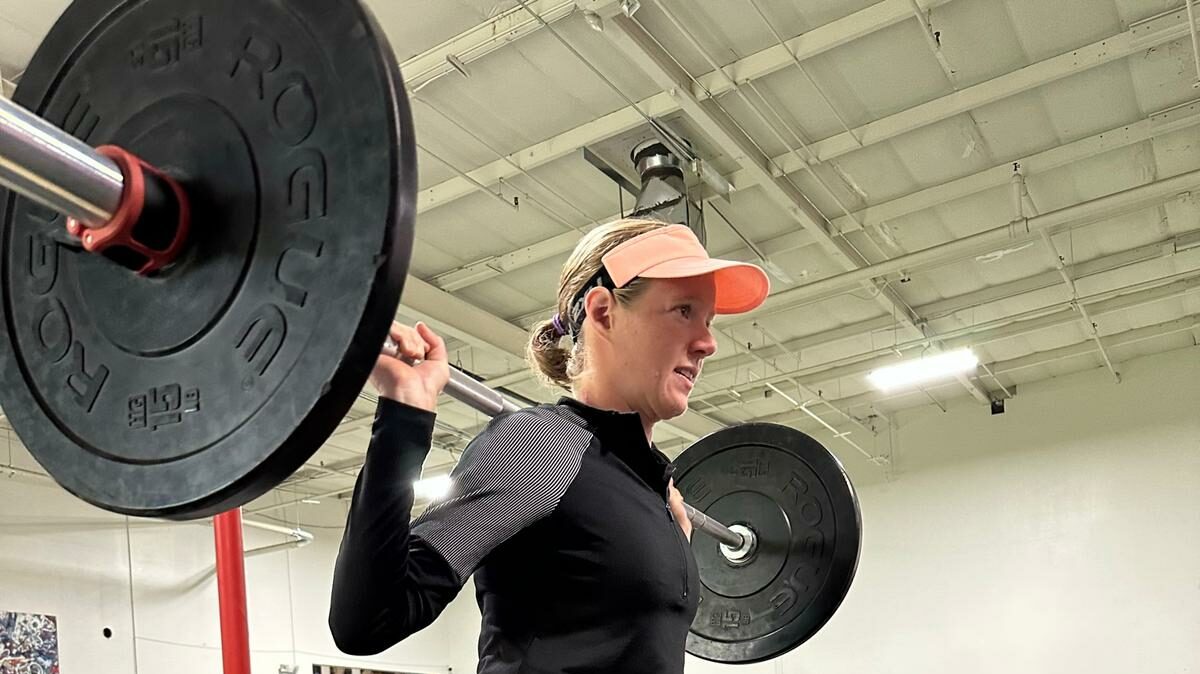


Many triathletes assume that riding more is the only way to become a faster cyclist. While spending time on the bike remains essential, strength training can significantly improve your ability to produce power, maintain efficient pedaling and resist fatigue during long rides. The goal isn’t to build large muscles. Instead, cycling-specific strength training develops the force, stability and muscular endurance needed to ride more efficiently while preserving energy for the run. Whether you’re preparing for your first sprint triathlon or a full Ironman, adding structured strength work to your program can improve both cycling performance and long-term durability.
Why Strength Training Helps Cyclists?
Cycling is a repetitive movement that relies on your ability to generate force through thousands of pedal revolutions.
Strength training helps you:
- Produce more power.
- Delay muscular fatigue.
- Improve pedalling efficiency.
- Maintain better posture.
- Reduce injury risk.
These improvements allow you to sustain higher speeds without dramatically increasing effort. However, strength work should complement, not replace, quality cycling sessions.
Stronger Legs Produce More Power
Every pedal stroke requires force.
Improving lower-body strength increases your ability to apply force to the pedals, particularly during:
- Climbs.
- Accelerations.
- Headwinds.
- Threshold efforts.
- Sprint finishes.
The result isn’t necessarily explosive speed but the ability to maintain stronger efforts for longer. If increasing sustainable power is your goal, how to increase your cycling FTP explains how functional threshold power develops through structured training.
Improve Pedalling Efficiency
Cycling isn’t only about producing force, it’s also about applying it efficiently. Better strength improves coordination between major muscle groups, helping you maintain smoother pedal strokes as fatigue increases.
Benefits include:
- Better force transfer.
- Reduced wasted movement.
- Improved cadence control.
- Greater muscular endurance.
- More economical riding.
These gains become especially valuable during longer triathlon bike legs.
Strength Improves Climbing
Hills require greater force production than riding on flat terrain.
Strength training helps cyclists:
- Maintain momentum on climbs.
- Produce higher torque.
- Stay comfortable on steeper gradients.
- Resist muscular fatigue.
- Recover more quickly after climbs.
Combined with good pacing and gearing, stronger legs make climbing feel considerably more manageable. For climbing-specific techniques, how to get better at climbing on a bike in a triathlon explains how positioning affects efficiency.
Focus on Compound Exercises
Cyclists benefit most from exercises that train multiple muscle groups together.
Examples include:
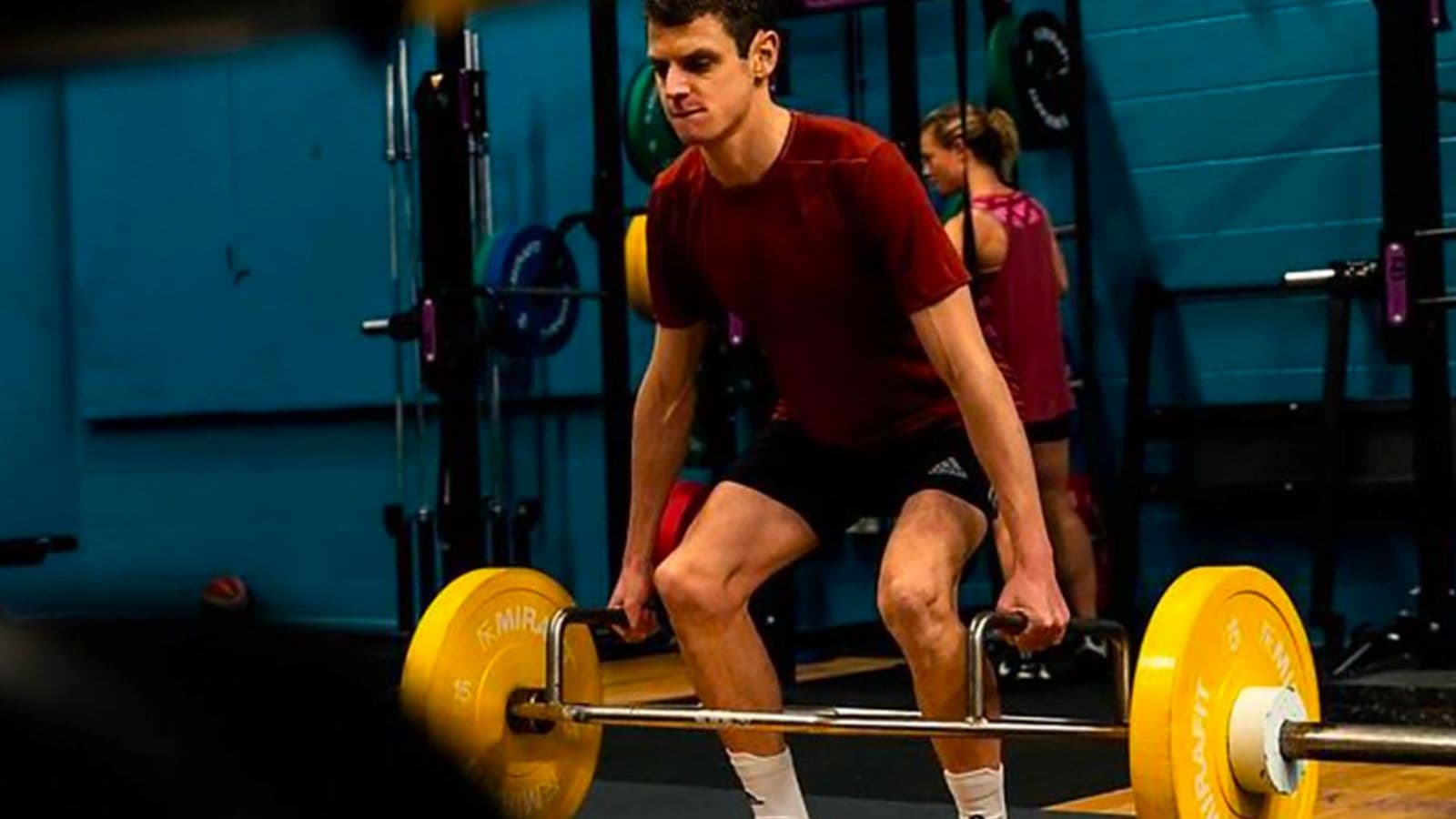
- Squats.
- Romanian deadlifts.
- Split squats.
- Lunges.
- Step-ups.
- Hip thrusts.
- Single-leg squats.
- Farmer’s carries.
These movements improve strength while closely matching the demands placed on your body during cycling. Single-leg exercises are particularly valuable because each pedal stroke is produced by one leg at a time.
Don’t Forget Your Core
A strong core provides the stable platform needed for efficient power transfer.
Core training improves:
- Pelvic stability.
- Bike handling.
- Aerodynamic positioning.
- Lower back comfort.
- Pedalling efficiency.
Useful exercises include:
- Planks.
- Side planks.
- Dead bugs.
- Pallof presses.
- Bird dogs.
Rather than chasing visible abdominal muscles, focus on developing stability and control.
Train the Posterior Chain
Many cyclists naturally develop strong quadriceps but neglect the muscles along the back of the body.
Your posterior chain includes:
- Glutes.
- Hamstrings.
- Lower back.
- Calves.
Strengthening these muscles improves balance and helps produce more effective pedal strokes while reducing the likelihood of muscular imbalances.
Strength Helps You Stay Aero Longer
Holding an aerodynamic position places sustained demands on your hips, lower back and core. For triathletes, it is necessary to understand how to avoid neck and back pain in aero position on bike to maintain the momentum.
Improved strength allows you to:
- Maintain your aero position comfortably.
- Reduce unnecessary movement.
- Improve bike control.
- Delay postural fatigue.
- Ride more efficiently over long distances.
Remaining aerodynamic for longer often produces greater time savings than simply increasing power output. For guidance on maintaining efficiency throughout your ride, how to become a more efficient cyclist explains how technique and positioning influence performance.
Train for Strength, Not Muscle Size
Many triathletes worry that lifting weights will add unnecessary body mass. In reality, well-structured strength training focuses on improving force production rather than maximizing muscle growth.
Most cycling programmes prioritise:
- Good technique.
- Progressive overload.
- Moderate training volume.
- Adequate recovery.
- Sport-specific movement.
This approach supports performance without significantly increasing body weight.
How Often Should Cyclists Strength Train?
Most triathletes don’t need to spend hours in the gym to see meaningful improvements.
For most athletes:
- Two strength sessions per week are sufficient during the competitive season.
- Two to three sessions may be appropriate during the off-season.
- Reduce gym volume during race weeks.
- Prioritise quality over quantity.
Spacing strength workouts away from your hardest bike sessions also helps maintain training quality. The objective is to support your cycling performance rather than create excessive fatigue. If you’re balancing all three disciplines, how to combine swimming, cycling and running training explains how to organize your weekly workload effectively.
Lift with Good Technique
Poor lifting technique increases injury risk and reduces the effectiveness of strength training.
Before increasing weight, focus on:
- Controlled movement.
- Full range of motion.
- Stable posture.
- Proper breathing.
- Consistent technique.
Working with lighter loads performed well is far more beneficial than lifting heavy weights with poor form.
Progress Gradually
Strength gains come from consistent progression rather than dramatic increases in weight.
Aim to gradually improve by:
- Increasing resistance slowly.
- Adding repetitions when appropriate.
- Improving movement quality.
- Maintaining good recovery.
- Tracking your workouts.
Small, sustainable improvements are more effective than chasing maximum lifts.
Don’t Neglect Recovery
Strength training creates fatigue just like hard cycling sessions.
Your body adapts during recovery, so prioritise:
- Seven to nine hours of sleep each night.
- Adequate protein intake.
- Carbohydrate replenishment after harder sessions.
- Hydration.
- Recovery weeks throughout your training plan.
Well-managed recovery allows you to continue improving both in the gym and on the bike. If recovery is limiting your training consistency, how to increase cycling power without burning out explains why managing fatigue is essential for long-term progress.
Strength Complements Structured Cycling Training
Strength training is most effective when combined with purposeful riding rather than replacing it.
A balanced cycling programme should still include:
- Zone 2 endurance rides.
- Threshold workouts.
- Interval sessions.
- Long rides.
- Recovery rides.
Each type of workout develops a different aspect of cycling performance, while strength training improves your ability to make the most of those sessions. For example, how does sweet spot training improve cycling explains how structured bike workouts complement the strength you build in the gym.
Common Mistakes
- Replacing cycling sessions with excessive gym work.
- Focusing only on the quadriceps.
- Neglecting core stability.
- Using poor lifting technique.
- Progressing weights too quickly.
- Skipping recovery.
- Training to muscle failure before key rides.
- Being inconsistent with strength training.
Practical Tips
- Strength train twice each week.
- Prioritise compound lower-body exercises.
- Include single-leg movements.
- Train your core for stability.
- Strengthen your glutes and hamstrings.
- Progress gradually.
- Schedule gym sessions around key bike workouts.
- Recover well between sessions.
Actionable Takeaways
Strength training helps triathletes ride faster by improving force production, pedalling efficiency and muscular endurance. Rather than building unnecessary muscle mass, a cycling-specific strength programme develops the stability and resilience needed to maintain higher power outputs throughout training and racing.
The greatest improvements come from combining consistent gym work with structured cycling sessions. By focusing on quality movement, progressive overload and sensible recovery, you’ll become a stronger cyclist while arriving at the run with fresher, more capable legs.