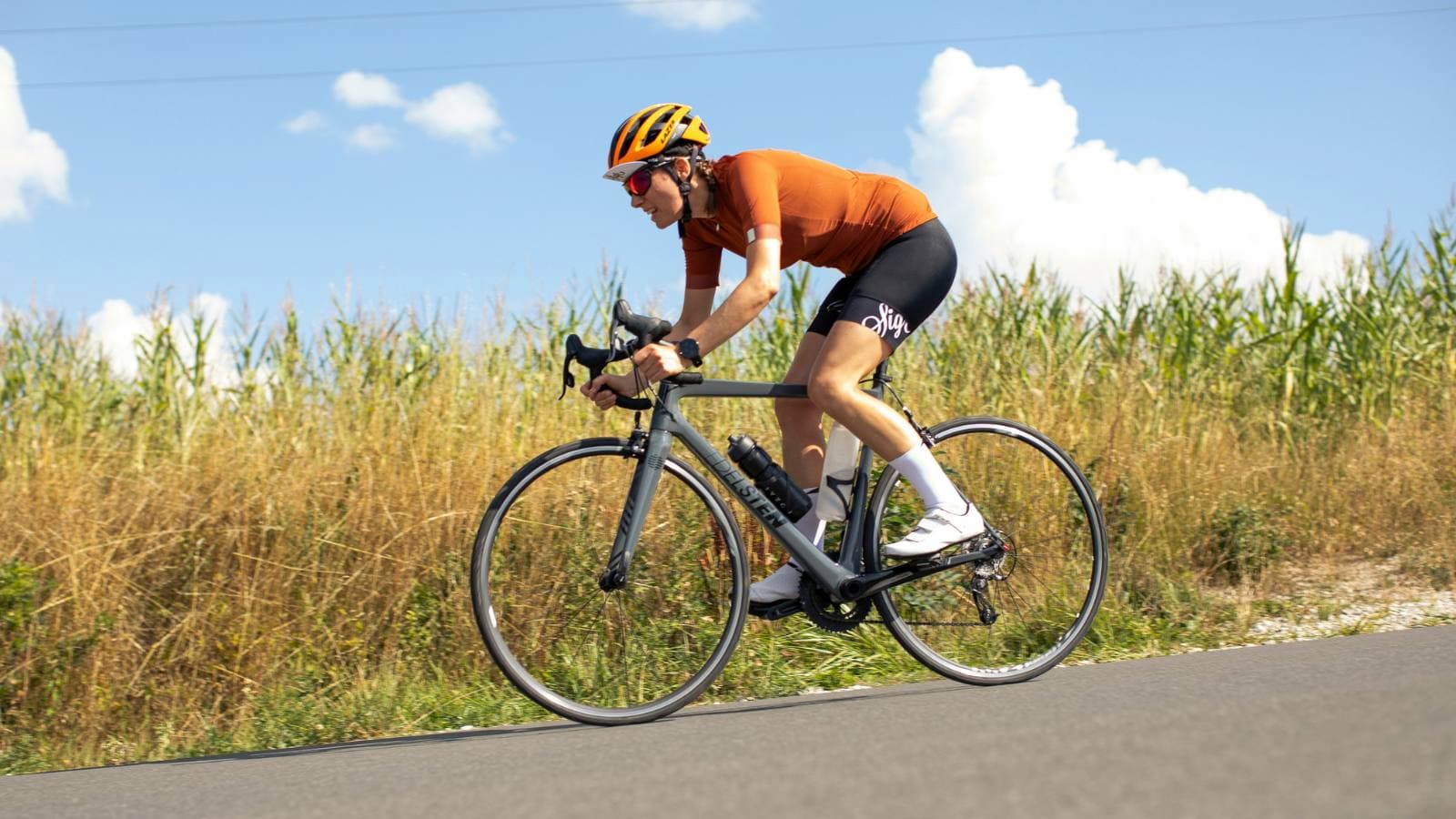


Riding in the aero position is one of the most effective ways to improve speed and efficiency in triathlon. However, it often comes with a downside, neck and back pain. Holding an aerodynamic position for long periods places stress on muscles that many athletes don’t train enough, leading to discomfort that can limit performance.
The good news is that this pain is not something you have to accept. With the right adjustments in position, strength, and training habits, you can ride comfortably and efficiently in aero for longer periods.

Why the Aero Position Causes Pain?
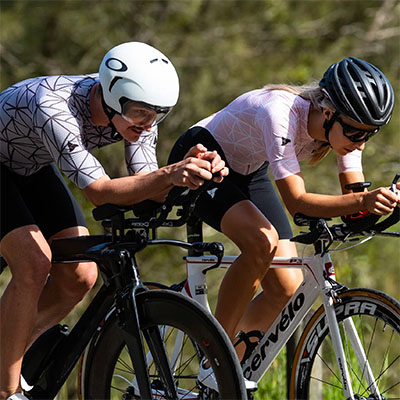
The aero position reduces wind resistance by lowering your upper body and bringing your torso forward. While this improves speed, it also places strain on the neck, lower back, and shoulders. Your neck has to extend to keep your eyes forward. Your lower back must stabilise your body in a fixed position. Your core works constantly to maintain posture.
Without proper preparation, these demands lead to fatigue and discomfort.
Check Your Bike Fit First
One of the most common causes of neck and back pain is poor bike fit. Even small misalignments can create unnecessary strain.
Handlebar and Aero Bar Position
- If your bars are too low, your neck must overextend to see ahead.
- If they are too far forward, your back and shoulders work harder than necessary.
Saddle Position
- A saddle that is too high or too far back can increase lower back strain.
- Proper positioning allows for better weight distribution and stability.
Dialing in your position is essential, just like optimizing efficiency in pacing and fueling the bike leg in a triathlon, where small adjustments make a big difference over long distances.
Build Core Strength for Stability
Your core plays a central role in maintaining the aero position.
A weak core forces your back and shoulders to compensate, leading to fatigue.
Why Core Strength Matters?
- A strong core stabilises your pelvis and spine.
- This reduces unnecessary movement and strain.
Key Exercises
- Planks
- Dead bugs
- Bird dogs
- Side planks
Developing strength here improves comfort and control, similar to structured preparation in the most important bike workouts for a 70.3 triathlon, where targeted training supports performance.
Improve Mobility in Key Areas
Limited mobility can make the aero position feel restrictive and uncomfortable.
Focus on These Areas
- Hip flexors
- Hamstrings
- Thoracic spine
Tight hips pull on your lower back, while limited upper back mobility affects posture. Improving mobility allows your body to adapt more naturally to the aero position.
Gradually Adapt to the Aero Position
- Many athletes spend too little time in aero during training.
- Then on race day, they try to hold the position for hours.
Build Time Progressively
- Start with short intervals in aero position.
- Gradually increase duration as your body adapts.
Stay Relaxed
- Avoid tensing your shoulders or gripping the bars too tightly.
- Relaxation reduces fatigue and improves comfort.
This gradual adaptation is similar to building endurance in training for a 70.3 and half ironman triathlon, where consistency leads to long-term improvement.
Adjust Your Head and Neck Position
Neck pain is one of the most common complaints in aero.
Avoid Overextending Your Neck
- Looking too far up strains the neck muscles.
- Instead, keep your head in a neutral position and look slightly forward.
Use Your Eyes, Not Just Your Neck
- Shift your gaze rather than lifting your entire head.
- This reduces strain while maintaining visibility.
Strengthen Supporting Muscles
In addition to the core, other muscle groups help maintain the aero position.
Upper Back and Shoulders
These muscles support your posture and reduce strain on the neck.
Glutes and Hamstrings
- Strong posterior muscles help stabilise your lower body and reduce back strain.
- Strengthening these areas improves overall comfort and efficiency.
Take Micro-Breaks During Long Rides
Holding one position for too long increases fatigue.
Sit Up Occasionally
Briefly coming out of aero helps relieve tension.
Reset Your Posture
- Use these moments to stretch your back and shoulders.
- These small adjustments can prevent discomfort from building over time.
Avoid Overtraining in the Aero Position
- More is not always better.
- Spending too much time in aero without proper conditioning can lead to overuse issues.
Balance your training with different riding positions and recovery strategies, similar to approaches in off-season training for triathletes, where variation supports long-term development.
Common Mistakes That Cause Pain
- Riding with poor bike fit
- Ignoring core strength
- Forcing the aero position too early
- Holding tension in shoulders and neck
- Skipping mobility work
- Avoiding these mistakes significantly reduces discomfort.
Practical Checklist
- Get a proper bike fit
- Strengthen your core regularly
- Improve mobility in hips and back
- Gradually increase time in aero
- Keep your upper body relaxed
- Take short breaks during long rides
What You Should Do?
- Start by checking your bike fit and making small adjustments to your position.
- Focus on building core strength and improving mobility to support your posture.
- Gradually increase your time in the aero position during training.
- Stay relaxed and avoid forcing unnatural positions.
Following structured preparation, like in beginners training for a sprint triathlon, helps build a strong foundation before adding intensity. Long-term comfort also depends on balancing effort and recovery, as seen in fueling for an ironman triathlon, where consistency plays a key role.
With the right approach, the aero position becomes more comfortable and sustainable, allowing you to ride faster without unnecessary pain.