Leybourne Lakes Midw...
Wed 23rd May 2012
South Glos Evening T...
Wed 23rd May 2012
Salford Quays Aquatl...
Thu 24th May 2012
Salford Quays Aquath...
Thu 24th May 2012
Speedo Big Workplace...
Fri 25th May 2012
Bradford on Avon Spr...
Sun 20th May 2012
Bradford on Avon Sta...
Sun 20th May 2012
BRAT Birmingham Tria...
Sun 20th May 2012
BRAT Super Sprint Tr...
Sun 20th May 2012
Eton SuperSprint Sunday
Sun 20th May 2012
|
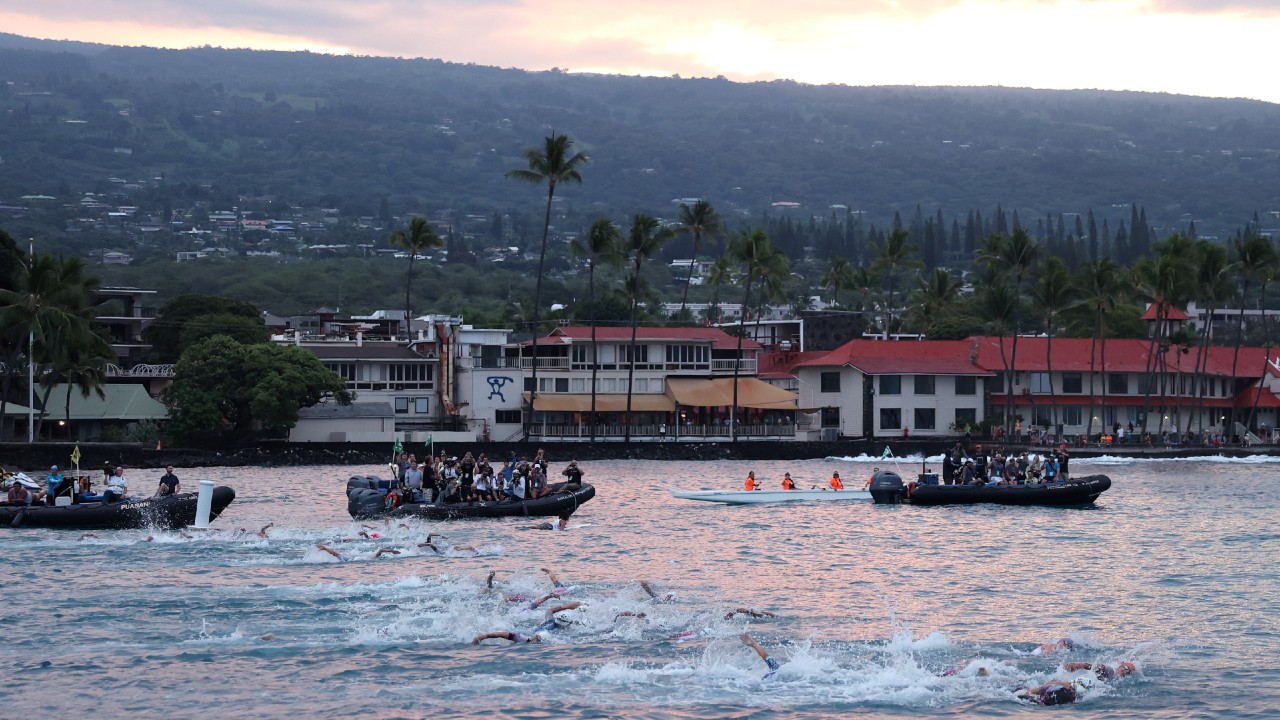
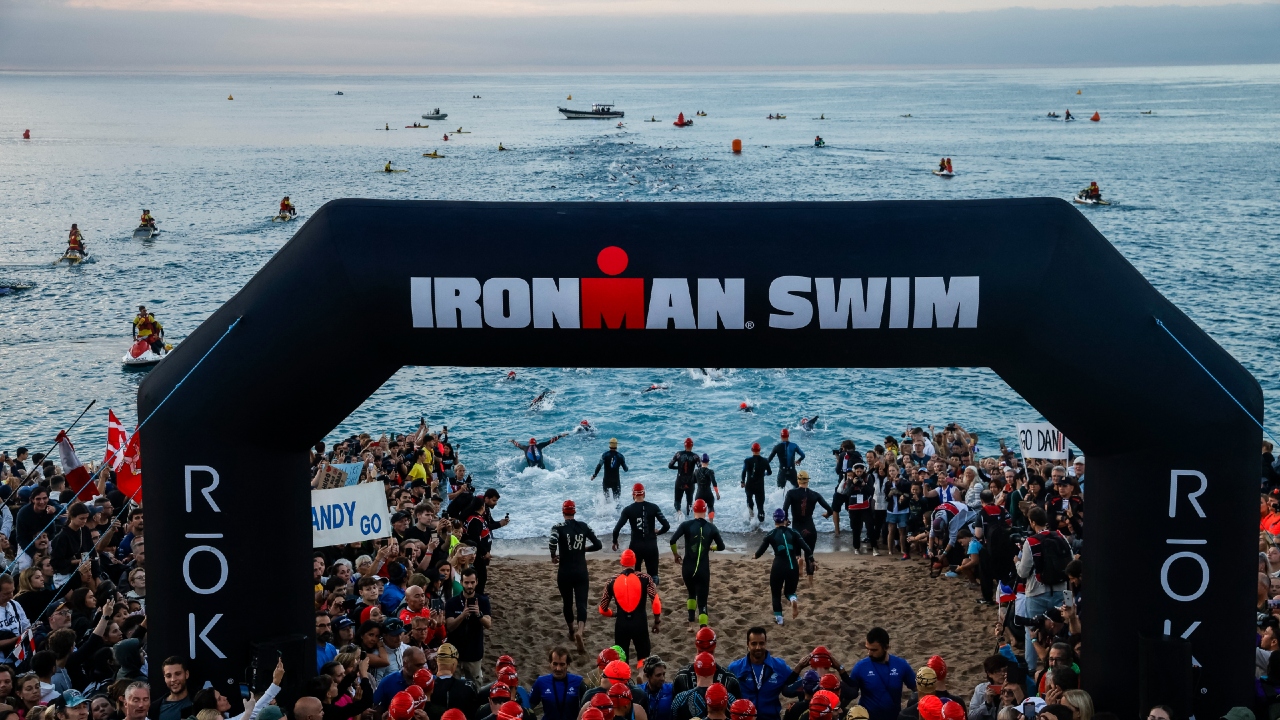
![]() Master open water swimming Posted on: Wednesday 13th June 2007 Bookmark This | Print This Page | Send To A Friend | Post A Comment Probably one of the few areas in triathlon that strikes fear (and it’s actually a fear of the unknown) into newcomers and novices is open water swimming. I even know of elite triathletes who are scared at racing in open water. As a coach whose home town is Liverpool, Bill Black thinks that the well known Scouser phrase is the key – “Hey, hey, calm down, calm down!” But, how do you “calm down”? As stated, open water triathlon swimming is daunting when taken as a whole – but if you break it down into its various elements, and then take the time to understand and practice these elements, it is possible to overcome any previous issues you had about it. Obviously, swimming in a pool with clear water, lines on the floor and swim lane ropes certainly helps keep you swimming in a straight line. And there’s a finite distance, 25 to 50 metres, before you come up to the end wall. And you are in your swim suit or trunks. Whereas, in swimming in open water generally means not having clear water, or lines on the floor, no lane ropes, and it’s over a much longer distance than 25 metres. There are no walls to push off, you are encased in a rubber suit and surrounded by a large number of other competitors. All this does change things somewhat! This is why it is better to practice open water skill drills first in an indoor pool where conditions are much easier and safer. You can even practice swimming in your wetsuit if the pool allows it. Once you have mastered, or at least tried, the skills you will know what to practice in the real situation, and you should start to have gained in experience and confidence. The next stage is to transfer these skills into an open water situation, either with a club or an organised session with professional coaches, etc at the many new centres that are springing up around the country. The final stage is to transfer all the skills that you have learned into a real triathlon race, even if it is only a super sprint or sprint. Early season open water races usually offer these shorter distances and they are very useful for the newcomer or novice to test their newly acquired skills. Remember, however, to keep practicing the various skills at least once a week or, better still, include a short period within each training session whether you are back in the pool or in open water. Where do open swims take place?In the UK there are four main types of water which are used for open water events: Lakes: These are the most common venues and are usually calm and have little or no water flow. The water temperature will vary depending on the depth, time of year, warmth and hours of sunshine but expect it to be anywhere from 12 to 18 °C. Venues such as Blenheim, Shropshire and Rutland Water are typical. Docklands and man-made venues: Similar to lakes in that they have little or no flow and are often shallower or at least of a consistent depth. Examples would include London Docklands, the Dorney Rowing Centre at Eton and Holme Pierrpoint. Rivers: These feature moving water with varying directional flow and strength. Classic examples would be Windsor and Ironbridge. Sea: Probably the most alien environment in that it is moving water with waves, currents and tides to think about - plus it's salty! Bournemouth, Newquay, Pembroke and Weymouth are classic examples. Being aware of the open water environment and its potential hazards and problems will go a long way to eliminating your fears - at least on a rational level. Obviously, any race organiser will have already taken account all the safety issues and water dangers in their race preparations, from measuring correct distances for the race, checking entry and exit points and making sure the bottom is clear at these points, positioning and checking the visibility of turn buoys, establishing that the water temperature and water quality and up to standards plus arranging on- and off-water safety cover and procedures. The ten most common fears about open water swimmingWhile everyone has their own issues, most people who articulate them come up with something from this list. So, to help you come to terms with them we've provided each with an answer.
Open water techniques for racingPre race routine You should build your own pre-race routine. This should include a land-based warm up of light callisthenics and stretches. Then, if possible and conditions are favourable, a water warm up of long easy strokes to get you into your own rhythm plus a few bursts at race pace. Plus you can practice sighting the first buoy from surface level. Starts There are three types of starts used in triathlon:
Sighting and breathing
For a season of racing you should posses three different types of goggles to deal with the different lighting conditions you'll encounter. You'll need a pair with orange lenses for dark conditions (ironman races start very early!), a pair with clear lenses for normal lighting and a pair with blue or dark lenses for bright sunlight. That said, to be really smart you should have a second spare pair of each to cover all eventualities! Sighting and breathing is one of the main skills to successful open water swimming. Looking where you are going – sighting and navigation - is crucial to make sure you swim the least distance on the course. Most triathlon swim courses are designed very simply. From the start the race organiser will allow a long lead out distance, ideally not less than 400m on a standard 1.5k swim, to the first turn buoy. This allows the field to spread out in a line before the first turn, so that the turn does not become too crowded. Other buoys will mark the course at set intervals, while the water safety crew will always be on hand will be in boats, canoes, etc to keep the swimmers on course and be available should anyone get into difficulties or need rescuing. If you can learn to swim and breath bilaterally, ie alternating to each side, say every three strokes, this will give you the confidence that if forced to breathe on one side due to weather conditions, waves or strong sunlight you will be less disadvantaged than if you can only breathe on one side. To sight you need to raise your head just a little above the water line so that only your goggles and nose are clear of the water - think ‘crocodile eyes’. If you raise your head too high out of the water then your feet and legs will drop down and ruin your streamlined swimming position. Once you have looked and checked your line drop the head back in and continue to swim as normal. There are two times you can sight:
Everyone is different, so you need to try both timings and then choose the one which is the most comfortable and least disruptive to your swimming stroke and rhythm. How often should you sight? Normally every six to nine strokes (the odd number assumes bi-lateral breathing) but you can drop it to three to six strokes or increase it to 9 to 12 strokes - it really depends on your ability and the situation. What are you sighting on? Apart from the marker buoys, it could be following other swimmers who are slightly ahead of you, so that you can draft off them and save energy. However, never rely on the person in front knowing where they are going so do keep checking and don't be afraid to swim your own line if they are going off course. The advantage gained from the draft can be easily lost if you're going the wrong way! Following feetYou are allowed to draft in the swim section of triathlon, and this can save around 15% of your energy if you follow behind a swimmer of your own class/ speed. The skill is either to line up directly behind them – so that your hands are about a foot (30cm) off their feet, or to be close to their side with your hands entering the water alongside their waist line or hips.
TurnsSwim courses usually have a number of turn buoys, so you need to be able to turn at an angle, usually between 45 and 180 degrees to both the left and to the right. Obviously, it can be very congested as the main group swims around the buoy. If you are a good swimmer you can risk getting close to the buoy, but a novice should keep well clear to avoid getting kicked, punched or swum over. Much better to swim a little extra distance around a buoy and keep in your comfort zone. Exit
Be careful not to stand up too soon or too fast. Your body has been in a horizontal position with the blood being pumped horizontally to your head so there is not much pressure in the system. Once you stand up there will be a slight delay as the heart realises that blood has now to be pumped vertically and against gravity. This is why some triathletes look as if they have just left the pub after an all night session as they swaying their way to T1. Once on land start peeling off the top half of your wetsuit to your waist and remove your swim cap and goggles ready to arrive at your racking position and move into the biking section of the race. Don't be tempted to drop or discard goggles along the way, all your gear has to end up in transition and you can be penalised. And finally...This article is not the definitive one on open water swimming, such a thing probably doesn't exist, but was written to help you be more efficient, confident and aware of the components which lead to a good open water swim – no matter what your ability is. Open water swimming can be fun, and it is a sport in its own right. You need to master the basic techniques, skills and drills so, train smart and race hard. If you are looking for other open water swim resources, here's a few:
![]()
![]() 2 comments | Post a comment Re: Master open water swimming Posted by nonironmanPosted at 10:59:52 21st May 2012 Reply to this Only swim sprint events... wee I thought it was funny... I use speedo goggles with anti fog coating and never had a problem even in cold water lake swims. A tiny smear of detergent (shampoo) worked for older goggles that didnt have the anti fog - but VERY lttle - u dont want streaming eyes. |
Posted at 10:59:52 21st May 2012
Reply to this