Leybourne Lakes Midw...
Wed 23rd May 2012
South Glos Evening T...
Wed 23rd May 2012
Salford Quays Aquatl...
Thu 24th May 2012
Salford Quays Aquath...
Thu 24th May 2012
Speedo Big Workplace...
Fri 25th May 2012
Bradford on Avon Spr...
Sun 20th May 2012
Bradford on Avon Sta...
Sun 20th May 2012
BRAT Birmingham Tria...
Sun 20th May 2012
BRAT Super Sprint Tr...
Sun 20th May 2012
Eton SuperSprint Sunday
Sun 20th May 2012
|
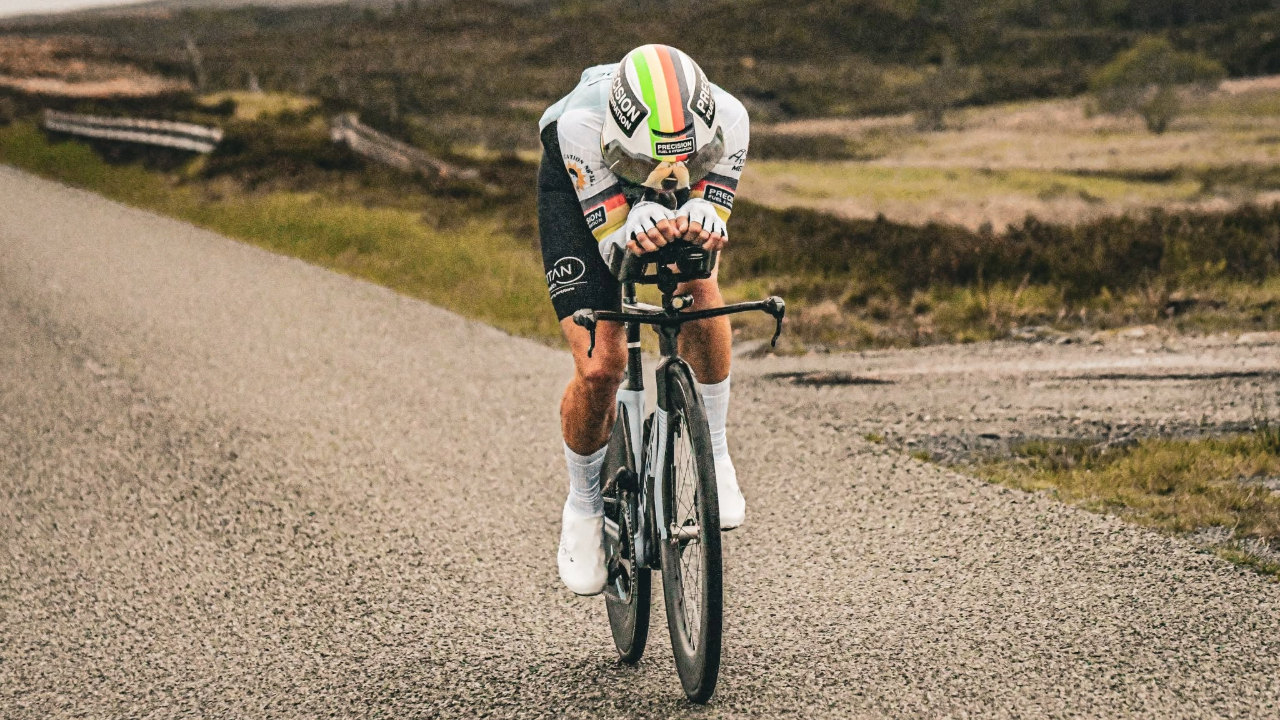
![]() The art of cycling: climbing Posted on: Sunday 31st October 2010 Bookmark This | Print This Page | Send To A Friend | Post A Comment Over the last few months you will have read different bike training articles on how best to improve your bike fitness during the winter months, now though, it's time to think about not just getting in the miles, but how you can save energy climbing hills, how to corner well and how to sit comfortably in a bike pack. These are just some of the things that we may take for granted when riding, but if learned well, can mean the difference between staying on your bike or not and riding faster but more efficiently, therefore conserving precious energy. Over the next few weeks, biking expert and regular contributor to Tri247, Mark McKay, will be helping you polish up your bike handling skills and technique with a series of articles on climbing, cornering and group riding. Great performance demands great techniqueAlthough we need to train hard to perform well, poor technique can mean we often under-perform. This is a fairly obvious fact that applies to all sporting performance, but which can prove a big hurdle to overcome for those in the sport of triathlon where time both attaining physical peak and perfecting technique must be spread between the three disciplines – and there are only a certain number of hours in a week in which to attempt to achieve this. Therefore regular technique practice is a must. Make it count: easy ride/hard ride? Think techniqueHaving worked as Cycling Performance Consultant to the British Triathlon Federation, I have learned that, in view of time constraints surrounding practicing three disciplines, it is important for members of the elite squad to try and learn, or at the very least develop technique, from each and every training ride they do. I am also sure that for those of us who are not full-time athletes training 30 hours a week, our time for training is even more constrained and it’s probably even more important that we aim to develop technique at every opportunity. Elites who devote on average around 12 hours a week to the bike are often heard to say that they don’t have time for junk miles (meaning riding too easy) like bikies doing 30 hours of riding a week. I totally agree with this sentiment, but do not accept the argument that easy miles are junk miles if the focus is improving technique in some way. In other words - performance is not just about strength; finesse has a part to play too. Let us look then at trying to master the first of three cycling techniques: Climbing: we can all do it!Don’t let the thought of climbing hills fill you with dread, especially if you struggle every time the road goes up. With a little refinement of your technique you’ll soon be able to take any length of climb in your stride. Remember, as with any problem that needs overcoming, practice is what counts and the simplest way of improving your hill climbing is to incorporate hills in all or most of your rides. Avoiding hills will not improve your ability to climb them, especially as you will encounter hills in many of your races. When racing, climbing in a group involves a different technique to climbing as an individual effort. Often with group climbing, the pace goes up and down and quite often you are being forced into a pace that you are not comfortable with – using up some or all of your anaerobic bullets. The individual climbing effort, as with basic time trialling is all about being smooth, constant and controlled. Because of the general nature of triathlon, I will concentrate on the individual effort here. The first thing to bear in mind is to never forget that climbing a hill means that, at that point, you will be going slower than when riding on the flat – it’s a fact that you have to accept. Once accepted, you can relax and get on with going up as fast as you can. Learning to relax about climbing is, in my opinion, the best advice you can take about the subject. It is different to racing on the flat because if you want to get anywhere you are forced (because of gravity) to put in some sort of constant effort. At least on the flat you can freewheel every now and then to ease the pain without too much loss of speed. Relaxing whilst climbing is as much about body position as anything else. When seated, keep the upper body as still as possible, loosen the shoulders and only ‘rest’ your hands on the bars or brake hoods rather than grip tight. This last point about grip applies to all cycling really as a tight grip only promotes tension throughout the body which will not help in the effort to go fast. Keep your chest open to breathe more easily, sit back in the saddle and drop your heels to get greater leverage on the pedals. So there it is; relax into the knowledge that climbing is going to hurt but that you are maximising your efficiency. The technique: In theory the best thing to do is to drop the gear to one that allows you to continue at the same cadence as that used on the flat and which keeps you at the same heart rate. In practice, however, because of the additional fight against gravity keeping the same cadence will mean that your breathing rate increases and heart rate goes up. Therefore don’t be surprised if your body regulates this decrease in efficiency and you naturally spin a little slower to regain control of your breathing rate. The cadence drop might be 20rpm but this is preferable to getting into too much oxygen debt. Different length climbs and different gradients mean that you can, and should, adopt different techniques for getting up and over them efficiently. For example a short but steep bump of, say, 100m at 10% might mean that it is more appropriate to sprint up it hard getting out of the saddle all the way. Alternatively, with a 1km drag at only 4%, you might be well advised to settle into a good rhythm and still keep on the aero bars all the way. Then there will be climbs of varying gradient on which you will have to be in and out of the saddle and changing gear constantly. In training, and on anything but the short and steep inclines, you should certainly concentrate on seated climbing technique at as high a cadence as possible. Although you develop more power whilst standing out of the saddle you also use a lot more energy and are less efficient the longer the climb. Practice the technique with progression; eg, by riding uphill intervals seated, spinning at >80rpm for 30 seconds. Concentrate on maintaining the revs during the effort. Repeat this several times in a session before moving up to doing the same drill for perhaps 45 seconds in the next session and 60 seconds for the next and so on... You should eventually be able to maintain seated pedaling uphill for several minutes at a decent rpm. Practice, practice, practice. If you hit an increased gradient on a longer climb, it’s OK to stand up for a while to power up the steep bit. Try to maintain a steady pace and cadence here by changing up a gear just before standing, coming out of the saddle on the down stroke to minimize the lost of momentum and change back down a gear again when you return to sitting. Standing is also good practice for injecting a little more momentum when you feel like you are getting ‘bogged down’ on a longer climb. When you stand, get into the habit of practicing correct technique; let the bike rock from side to side underneath you (maybe up to six inches either side of the vertical) opposite to your feet hitting the bottom of each down stroke and don’t be afraid to put all of your upper body weight onto the handlebars. This also gives you the opportunity to ease and stretch your back muscles a little, you’ll see cyclist doing this a lot in bike races such as the Tour de France where there are long mountain passes. Mark Mckay is a British Cycling Coach and was also a Cycling Coach to the British Triathlon Performance Programme. He is a former professional/elite racing cyclist and represented GB for eight years to World Championship level. Winner of the 1992 Star Trophy (Premier Calendar) and over 100 bike races he is also a former elite duathlete with several wins including the 2004 National Championship and a Bronze medal at the 2005 World Long Course Duathlon Championship. ![]()
![]() 1 comment | Post a comment |
Posted at 12:44:20 22nd May 2012
Reply to this