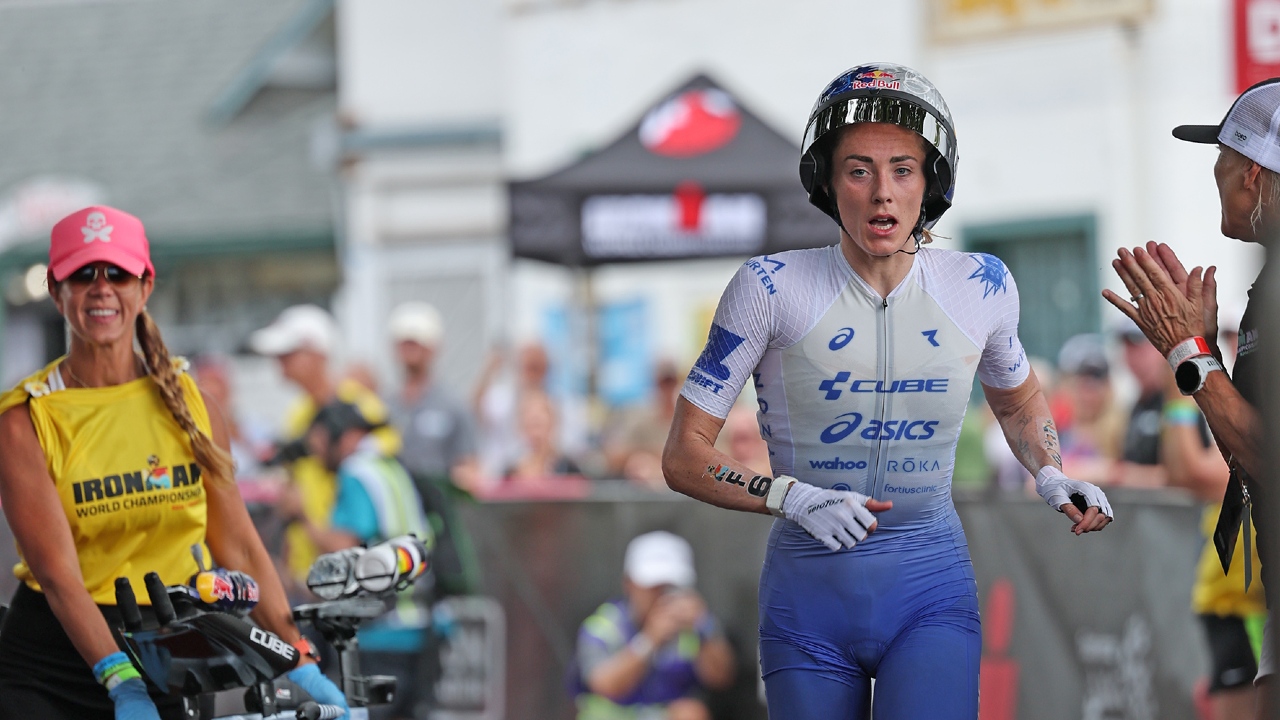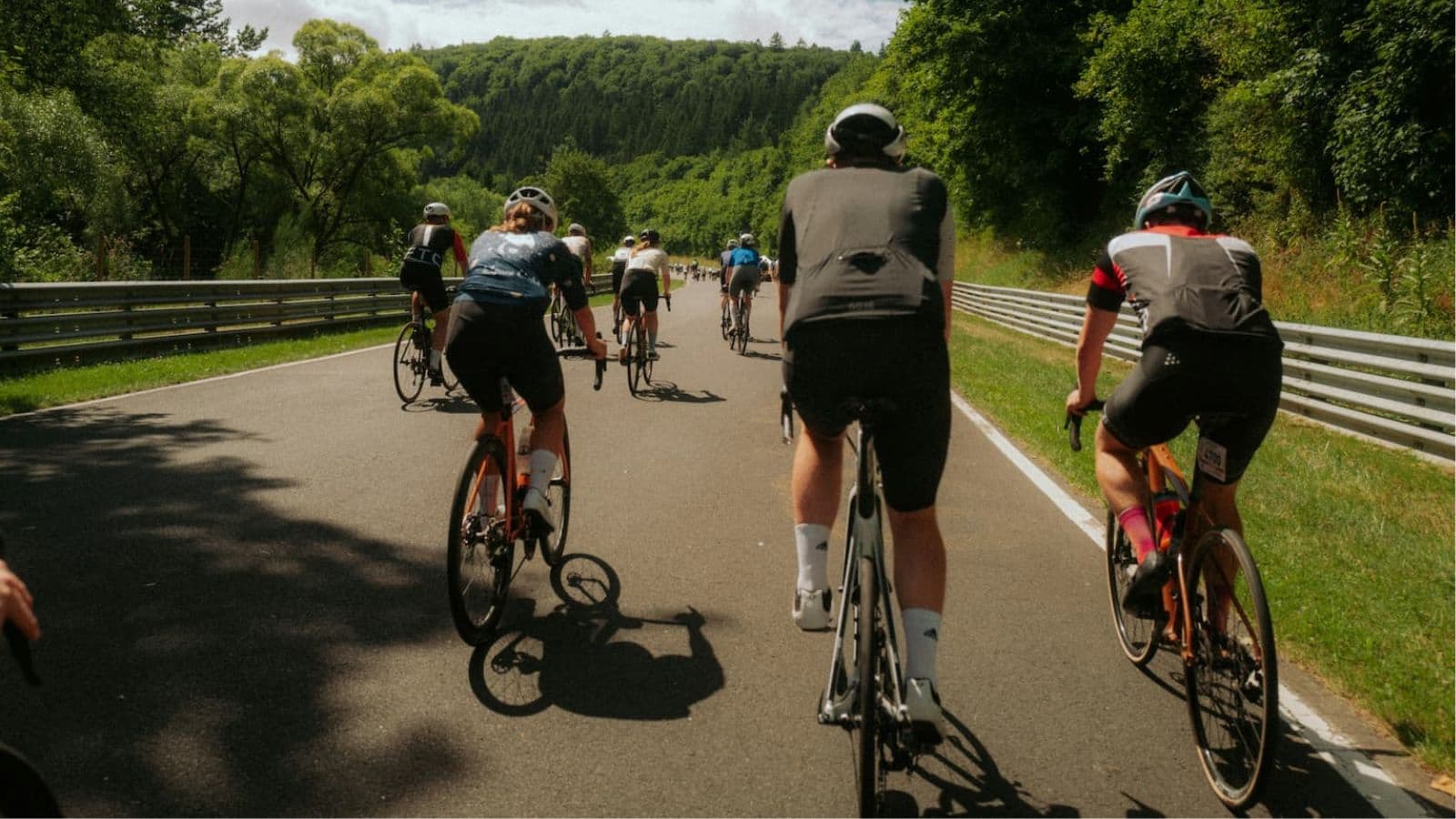


Confidence on a technical triathlon bike course comes mainly from developing skills you can repeat under pressure. Tight corners, steep descents, changing road surfaces, wind, rain, and other riders become much easier to manage when braking, steering, gear changes, and body position already feel familiar. Beginners should not try to become confident simply by riding faster. Start on quiet, predictable roads and practice individual skills at manageable speeds before combining them on more demanding terrain. Gradual exposure gives you time to understand how the bike responds without unnecessary risk. Good bike handling can also save energy. Smooth braking, sensible gearing, and controlled cornering reduce unnecessary accelerations and help you arrive at the run with more energy.
In Short
- Build confidence through practice rather than forcing speed.
- Learn braking and cornering on simple roads first.
- Reduce speed before a corner rather than braking heavily while turning.
- Practice descending progressively.
- Choose equipment you can control comfortably.
- Learn how your bike behaves in wind and rain.
- Prioritize control and safety over matching another rider’s speed.
Start With Basic Bike Handling
Technical riding becomes much easier when fundamental movements happen naturally.
Before seeking difficult roads, become comfortable with:
- Braking smoothly.
- Changing gears without looking down.
- Riding in a straight line.
- Looking behind while maintaining direction.
- Drinking while riding.
- Moving between normal and aero positions.
- Controlling the bike at slower speeds.
Practice in a quiet, safe location with minimal traffic. Routine preparation also matters. What you should check on your bike before every ride can help ensure tires, brakes, wheels, and other important components are working properly before you practice handling skills.
Build Confidence Gradually
Confidence develops from repeated successful experiences. If steep descents make you nervous, repeatedly forcing yourself down the steepest road available may reinforce that fear rather than solve it. Begin with a gentle descent where you can comfortably control speed and gradually progress as your braking and positioning improve. The same principle applies to corners and technical courses.
Progress from:
- Wide, predictable corners.
- Moderate bends.
- Multiple linked corners.
- Faster or steeper sections.
- More complex race-like terrain.
There is no benefit in progressing faster than your skills.
Learn to Brake Smoothly
Good braking is one of the most important skills for technical riding. Both brakes contribute to controlling the bike, although the front brake can provide substantial stopping power. Apply braking progressively rather than grabbing the levers suddenly. Whenever possible, reduce most of your speed before entering a corner. Entering at a manageable speed allows you to concentrate on steering through the turn rather than trying to make a large speed correction halfway around it. Practice braking from different controlled speeds so you understand how much distance you need.
Wet roads can reduce available grip and change stopping distances, so how to cycle safely in the rain is useful when preparing for races where conditions may be unpredictable.
Look Where You Want to Go
Beginners often stare at the obstacle they are trying to avoid. Instead, keep your vision farther ahead and look toward the path you want the bike to follow.
Before a corner:
- Look ahead for hazards.
- Identify where the road turns.
- Choose an appropriate entry speed.
- Look through the corner.
- Keep scanning toward the exit.
Looking farther ahead gives you more time to react and encourages smoother steering. Avoid staring continuously at your front wheel. Technical riding becomes much harder when every obstacle arrives as a surprise.
Practice Cornering Before Race Day
Cornering confidence comes from repetition. Approach a safe corner at a manageable speed, complete most necessary braking before turning, look through the bend, and steer smoothly. How to improve bike handling and cornering is important for you to understand that your outside pedal can generally be kept down through a conventional corner, helping keep the inside pedal away from the ground. Maintain a stable body position and allow the bike to follow a smooth line. Do not deliberately copy the cornering speed of experienced cyclists. Their skill, equipment, familiarity with the road, and acceptable level of risk may be very different from yours.
Become Comfortable With Descending
Descending can be intimidating because speed increases without additional pedaling. Begin by developing control rather than chasing maximum speed.
On descents:
- Look well ahead.
- Keep your hands ready to brake.
- Reduce speed before difficult corners.
- Stay relaxed rather than locking your arms.
- Leave additional space around other riders.
- Choose a speed that gives you time to react.
Avoid dragging the brakes unnecessarily for an entire long descent when conditions allow more controlled braking, but never release them simply because another cyclist is going faster. The techniques in how can you improve downhill cycling can help you develop descending progressively rather than treating speed as the main objective.
Learn to Use Your Gears Earlier
Poor gear selection can create unnecessary difficulty on technical courses. Shift before your cadence becomes extremely low on a climb. Likewise, select an appropriate gear before accelerating out of a corner rather than discovering that you are in a gear that is far too difficult. Understanding what is cycling cadence in a triathlon can help you recognize how cadence and gearing work together.
Smooth gear changes also help you maintain rhythm and reduce unnecessary surges.
Practice Moving In and Out of the Aero Position
Aero bars can improve aerodynamics, but they are not appropriate for every part of a technical course. Beginners should become comfortable moving between the aero position and the base bars without sudden steering movements.
Come out of the aero position when you need greater control or easier access to the brakes, such as during:
- Technical corners.
- Busy sections.
- Rough surfaces.
- Steep descents.
- Strong crosswinds.
- Poor visibility.
Use the aero position where conditions allow you to maintain safe, predictable control.
Understand How Bike Fit Affects Control
A bike should allow you to reach the controls comfortably and maintain a stable position. If the position is excessively aggressive or uncomfortable, you may struggle to steer confidently, brake effectively, or remain relaxed during longer technical sections. Saddle position, cockpit reach, aero bar setup, and cleat position can all influence comfort and control. How do you adjust your bike for a better fit can help you understand the basics, but avoid making several major adjustments immediately before a race.
If you cannot comfortably operate the bike from your normal riding positions, consider professional bike fit support.
Practice on Terrain Similar to Your Race
If your race includes rolling roads, practice repeated climbs and descents. If it contains many corners, find a safe route where you can practice changing speed and direction. You do not need an exact copy of the course.
Instead, identify the main demands:
- Long descents.
- Sharp corners.
- Rough surfaces.
- Frequent climbs.
- Exposed windy roads.
- Repeated changes in speed.
Practice those demands individually before combining them.
Learn to Ride in Wind
Crosswinds can make a technical course more difficult because gusts can affect your direction and stability. Keep a secure but relaxed grip and expect wind strength to change as you move between sheltered and exposed sections. Give yourself additional space around other riders. Do not fight every small movement of the bike with a sudden steering correction. Smooth adjustments usually provide better control. How to ride in headwinds and crosswinds on a bike explains how pacing, positioning, and handling should change when wind becomes a significant part of the course.
Prepare for Wet Conditions
You cannot assume race day will be dry. Practice some wet-weather riding when conditions are safe so that rain does not introduce completely unfamiliar handling demands.
In wet conditions:
- Reduce corner entry speed.
- Brake earlier.
- Avoid abrupt steering.
- Leave more space.
- Watch for potentially slippery surfaces.
- Prioritize visibility.
Do not deliberately train in dangerous storms simply to gain experience. The objective is familiarity, not unnecessary exposure to risk.
Know the Course Before Racing
Course knowledge can remove a large amount of uncertainty. Study the course map and elevation profile before race day. If permitted and practical, ride or safely inspect important sections in advance.
Identify:
- Major climbs.
- Technical descents.
- Sharp turns.
- Narrow sections.
- Rough surfaces.
- Exposed areas.
- Places where speed changes quickly.
Knowing that a sharp corner follows a fast descent allows you to prepare before reaching it. Race organizers may also provide course briefings or specific warnings. Pay attention to them.
Do Not Chase Speed Through Technical Sections
A technical course is rarely the place for beginners to gain time through unnecessary risk. If another athlete descends or corners faster, let them go when passing rules and conditions allow. Trying to copy their speed can move you beyond your current skill level. Instead, use stronger and simpler sections of the course efficiently. Training such as how can interval training improve triathlon cycling speed can improve the fitness needed to ride strongly without depending on risky cornering or descending.
Technical confidence should make you smoother, not reckless.
Stay Relaxed on the Bike
Fear often creates physical tension. A rider may grip the handlebars excessively, lock the elbows, hold the breath, and make abrupt steering corrections.
Try to maintain:
- A secure but relaxed grip.
- Soft elbows.
- Steady breathing.
- Eyes looking ahead.
- Smooth steering.
Relaxation does not mean becoming careless. It means avoiding unnecessary tension that makes the bike harder to control. Repeated practice is the best way to make this feel natural.
Protect Your Run Leg
Technical riding still needs to fit within the complete triathlon. Repeatedly accelerating hard after every corner or attacking every short climb can increase fatigue even if your bike split improves slightly. Use appropriate gears and rebuild speed smoothly after technical sections. The principles in how can you bike smarter to improve your triathlon run are particularly important on courses where frequent changes in speed can tempt you into repeated high effort surges.
Your bike leg should leave you capable of running effectively.
Common Mistakes
- Trying to build confidence by immediately riding faster.
- Looking at obstacles instead of through the intended line.
- Braking too late before corners.
- Copying experienced riders on descents.
- Remaining in aero when greater control is needed.
- Practicing technical skills only on race day.
- Making major bike setup changes immediately before racing.
- Tensing the arms and gripping the bars excessively.
- Chasing every second through difficult sections.
Practical Tips
- Practice one skill at a time.
- Begin on quiet, predictable roads.
- Look farther ahead.
- Brake before difficult corners.
- Progress gradually to steeper descents.
- Practice gear changes until they feel automatic.
- Ride in different safe conditions.
- Study technical parts of the race course.
- Choose control over unnecessary speed.
Actionable Takeaways
Confidence on technical triathlon bike courses develops through skill, familiarity, and gradual progression. Beginners should first become comfortable with braking, steering, shifting, looking ahead, and changing riding positions before adding speed or more difficult terrain. Practice corners, descents, wind, and wet roads in controlled conditions.
Technical skill should make your riding smoother and more predictable. You do not need to descend or corner as quickly as experienced competitors to race well. Control your speed where necessary, conserve energy, and use simpler parts of the course to ride efficiently. The best technical bike performance is one that gets you through the course safely and confidently while leaving enough energy for the run.