

Swimming continuously in a triathlon can feel very different from completing short repetitions in a pool. There are no walls to provide regular breaks in open water, and conditions such as waves, sighting, other swimmers and race day nerves can increase the amount of energy you use. Improving swim stamina therefore requires more than simply swimming farther. You need enough aerobic endurance to maintain your effort, efficient technique to avoid wasting energy and controlled breathing that remains comfortable as fatigue develops. The objective is also different from that of a standalone swimmer. A triathlete needs to leave the water with enough energy to cycle and run effectively. Building stamina means learning to swim continuously and efficiently without making the opening discipline unnecessarily exhausting.
In Short
- Swim consistently rather than relying on occasional long sessions.
- Increase swimming volume gradually.
- Build aerobic endurance with controlled swimming.
- Improve technique to reduce wasted energy.
- Practise continuous swimming as races approach.
- Develop comfortable bilateral or adaptable breathing.
What Does Swim Stamina Mean for a Triathlete?
Swim stamina is your ability to continue swimming efficiently for the required duration without experiencing a major deterioration in technique, breathing or pace.
A swimmer with good endurance should be able to maintain:
- Controlled breathing.
- Sustainable stroke rate.
- Stable body position.
- Effective propulsion.
- Consistent effort.
For triathletes, stamina also means leaving the water without excessive fatigue. Swimming five seconds faster per 100 metres may offer little benefit if the effort leaves you significantly more fatigued for the bike.
Why Do Some Triathletes Tire Quickly While Swimming?
Early fatigue can have several causes.
Common examples include:
- Starting too fast.
- Poor breathing control.
- Excessive kicking.
- Inefficient body position.
- Limited swimming fitness.
- Holding unnecessary muscular tension.
- Insufficient swim frequency.
- Anxiety in open water.
Beginners often assume the solution is simply becoming fitter. Sometimes improving technique can provide an equally important improvement because inefficient swimming wastes substantial energy.
Build Swim Endurance Consistently
Swimming once every week and attempting one enormous session is rarely the most effective way to develop stamina.
More regular exposure allows you to repeatedly practise:
- Breathing.
- Stroke timing.
- Body position.
- Pacing.
- Water feel.
The exact frequency depends on your experience and complete triathlon schedule, but consistency matters more than occasional heroic sessions. Shorter, purposeful swims performed regularly can be more useful than one exhausting session followed by several days away from the pool.
Increase Swim Volume Gradually
If you currently swim 1,000 metres comfortably, suddenly attempting 4,000 metres may cause your technique to deteriorate significantly.
Increase total distance progressively.
For example, your progression might involve:
- Adding another repetition.
- Extending selected intervals.
- Reducing recovery slightly.
- Adding a small amount of total distance.
Change one variable at a time rather than simultaneously increasing distance, intensity and frequency.
Build an Aerobic Swimming Foundation
Most triathlon swimming depends heavily on aerobic endurance. Controlled aerobic sets allow you to accumulate meaningful swimming volume without creating excessive fatigue.
Examples might include:
- 6 × 200m controlled.
- 4 × 300m aerobic.
- 3 × 400m steady.
- 2 × 600m controlled.
Recovery should be sufficient to maintain good technique without turning every repetition into a completely separate effort. As your endurance improves, you can gradually extend repetitions.
Don’t Make Every Swim Hard
Swimming harder isn’t always the quickest way to develop stamina. If every pool session becomes a race against the clock, technique may deteriorate and fatigue can interfere with your cycling and running.
A balanced programme can include:
- Easy technique swimming.
- Aerobic endurance sets.
- Threshold work.
- Short faster repetitions.
- Open-water practice.
Each session should have a purpose.
Technique Is Part of Endurance
Poor technique increases the energy required to travel through the water. Imagine two athletes swimming at the same speed. If one creates substantially more drag and uses unnecessary movements, that athlete may fatigue much sooner. Improving efficiency can therefore increase practical endurance even before cardiovascular fitness changes dramatically.
This is why how to increase triathlon swim speed isn’t only about producing more power. Better technique can help you swim both faster and more sustainably.
Improve Your Body Position
A streamlined position reduces unnecessary resistance.
Common problems include:
- Dropping legs.
- Lifting the head excessively.
- Excessive side-to-side movement.
- Poor alignment while breathing.
Try to maintain a balanced position with the head relatively neutral. You don’t need to force your body completely flat. The objective is to reduce unnecessary drag while maintaining comfortable breathing and propulsion.
Develop an Effective Catch
Your catch helps establish useful pressure against the water before the pulling phase. Rather than immediately pulling backward as hard as possible, focus on establishing a controlled connection with the water.
Good technique requires coordination through the:
- Hand.
- Forearm.
- Shoulder.
- Torso.
Avoid trying to create more propulsion simply by increasing muscular force if your stroke mechanics are inefficient.
Relax Your Recovery
The arm recovery occurs above the water and should generally remain relaxed. Excessive shoulder and arm tension wastes energy.
During longer swimming sets, periodically check whether you’re:
- Tensing your shoulders.
- Clenching your hands.
- Forcing your arm recovery.
- Swimming with unnecessary stiffness.
Relaxation becomes increasingly important as distance increases.
Learn to Control Your Breathing
Breathing problems are one of the most common reasons beginner triathletes feel exhausted in the water. A common mistake is holding your breath underwater and then attempting to exhale and inhale when the mouth reaches the surface. Instead, develop a comfortable breathing rhythm where you exhale while your face is in the water and take your breath when the head rotates.
The principles in how to coordinate breathing with your swim strokes in a triathlon can help make breathing part of your stroke rather than something that repeatedly interrupts it.
You Don’t Have to Breathe Every Three Strokes
Bilateral breathing is useful because it develops adaptability, but breathing every three strokes isn’t compulsory. During harder or longer swimming, some athletes prefer breathing every two strokes because it provides more frequent access to air.
The important goal is maintaining:
- Adequate oxygen.
- Comfortable rhythm.
- Balanced technique.
Practise breathing to both sides so you can adapt to waves, sunlight and other swimmers during open-water races.
Avoid Kicking Too Hard
A powerful kick can increase speed, but it also increases energy demand. Triathletes generally need to conserve their legs for cycling and running.
During steady swimming, aim for a controlled kick that supports:
- Body position.
- Balance.
- Rhythm.
You don’t need to completely stop kicking, but constantly kicking as hard as possible can make endurance swimming unnecessarily tiring.
Use Intervals to Build Stamina
You don’t need to swim the full race distance continuously every session. Intervals allow you to accumulate substantial distance while maintaining better technique.
For example, instead of swimming 1,500m continuously, you might perform:
- 3 × 500m.
- 5 × 300m.
- 10 × 150m.
Short recovery periods allow you to reset technique while still creating an endurance stimulus.
Gradually Extend Your Repetitions
As fitness improves, make some intervals longer.
A simple progression could look like:
| Stage | Example Main Set |
|---|---|
| Beginner | 8 × 100m |
| Developing | 6 × 200m |
| Building endurance | 4 × 300m |
| Longer endurance | 3 × 500m |
| Race preparation | 2 × 750m |
These aren’t mandatory distances. Your progression should reflect your current ability and target race distance.
Practise Continuous Swimming Too
Intervals are excellent for developing fitness, but open-water races don’t provide a wall every few minutes. As race day approaches, include some continuous swimming where appropriate.
This teaches you to:
- Maintain rhythm without breaks.
- Control pacing.
- Manage concentration.
- Notice gradual technique changes.
- Become comfortable with uninterrupted swimming.
You don’t need to complete your entire race distance continuously every week.
Start Longer Swims Conservatively
Beginning too aggressively can make the final part of the swim unnecessarily difficult.
The first few minutes should allow you to establish:
- Breathing rhythm.
- Stroke rhythm.
- Position.
- Sustainable effort.
Race starts can make this challenging because athletes around you may sprint. Avoid allowing someone else’s pace to determine your entire swim.
Threshold Swimming Still Has a Role
Aerobic swimming forms an important foundation, but some harder work can improve your ability to maintain faster sustainable swimming. Threshold-oriented sets might involve controlled repetitions where the effort is challenging but repeatable. The objective isn’t to sprint the first repetition and survive the rest.
Your pace should remain reasonably consistent across the set.
Short Fast Repetitions Can Improve Technique at Speed
Shorter faster repetitions can help develop:
- Stroke rate.
- Coordination.
- Speed.
- Ability to change pace.
They can be useful when mixed appropriately with aerobic swimming. However, they shouldn’t replace the endurance work needed for longer triathlon swims.
Open-Water Practice Builds Specific Stamina
Pool fitness doesn’t automatically prepare you for every open water challenge.
Open water swimming can involve:
- Waves.
- Current.
- Cold water.
- Limited visibility.
- Other swimmers.
- Sighting.
These factors can increase effort even when your actual swimming pace is slower. Practice in appropriate safe conditions before race day rather than making your first open-water experience the event itself.
Learn to Swim Straight
Swimming unnecessary distance wastes both time and energy. If you repeatedly drift away from the course line, a nominal 1,500m swim can become substantially longer. Sighting and balanced stroke mechanics can reduce this problem.
Understanding why swimming straight matters in open water triathlon can help you conserve energy simply by covering less unnecessary distance.
Practise Sighting Without Destroying Your Rhythm
Sighting requires briefly looking forward to identify a buoy or landmark.
Lifting your head too high can:
- Drop your hips.
- Increase drag.
- Interrupt breathing.
- Break stroke rhythm.
Practise lifting only enough to see the target before returning your head to its normal swimming position.
Combine sighting with your normal breathing rhythm when possible.
Avoid Zig Zag Swimming
Repeatedly drifting left and right increases the distance you need to cover.
It can result from:
- Poor sighting.
- Uneven stroke mechanics.
- Breathing predominantly to one side.
- Following other swimmers blindly.
Learning why swimming straight matters in open water races can help you understand why course awareness and directional control influence both speed and endurance.
Practise Race Starts
Triathlon swim starts can temporarily increase effort because of:
- Crowding.
- Adrenaline.
- Accelerations.
- Contact with other swimmers.
Practice controlled starts during training. You can perform a short faster section before settling into sustainable aerobic swimming. This teaches you to regain breathing control after an early surge.
Become Comfortable Starting in Open Water
The opening minute can be particularly stressful for inexperienced triathletes. Knowing where to position yourself and how aggressively to begin can prevent unnecessary energy expenditure. The guide how do you start an open water swim in a triathlon can help you practice positioning, pacing and establishing rhythm rather than reacting to everyone around you.
Don’t Follow Feet Blindly
Drafting behind another swimmer can reduce effort when done correctly, but only if that swimmer is moving in the correct direction. Occasionally sight for yourself. Following someone who is swimming off course may save a small amount of energy through drafting while costing much more through additional distance.
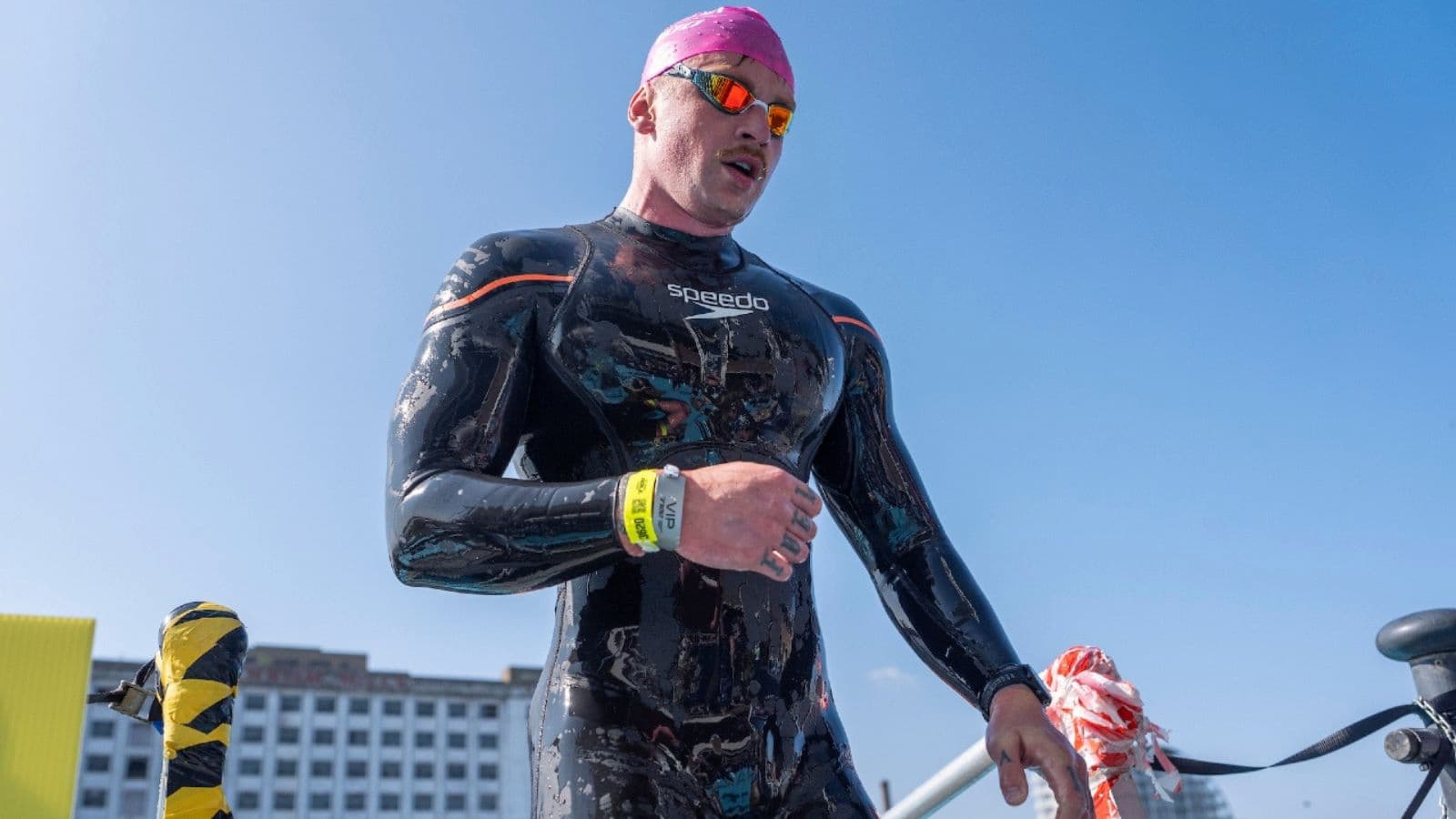
Wetsuit Swimming Can Feel Different
A wetsuit changes buoyancy and body position. Some swimmers find this makes swimming easier, while others initially feel restricted around the shoulders or chest.
Practise in your wetsuit before racing so you understand:
- How it affects stroke mechanics.
- Whether the fit is appropriate.
- How breathing feels.
- How to remove it efficiently.
Never make race morning the first time you properly test your wetsuit.
Stay Calm When Your Breathing Becomes Difficult
Open-water anxiety can make breathing feel harder even when your swimming fitness is adequate.
If you begin feeling overwhelmed:
- Reduce effort.
- Focus on exhaling.
- Re-establish your stroke rhythm.
- Orient yourself safely.
Don’t respond to panic by automatically swimming harder. Calmer swimming usually gives you a better opportunity to regain control.
Dizziness Can Affect the Transition
Some triathletes feel disoriented when standing after swimming. Possible contributors can include changes in body position, cold water and the transition from swimming horizontally to standing and moving quickly. If this happens to you, understanding why do you feel dizzy after swimming in a triathlon can help you prepare for the swim-to-bike transition rather than being surprised on race day.
Persistent, severe or unexplained dizziness deserves appropriate medical assessment.
Swim Stamina Should Match Your Race Distance
Your endurance requirements differ between sprint and long-course triathlon. A sprint athlete may prioritize relatively shorter, faster swimming, while an Ironman athlete needs considerably greater durability. However, both athletes need enough endurance to leave the water capable of completing the bike and run effectively. The goal isn’t simply surviving the swim distance.
Don’t Judge Swim Fitness Only by Pace
Pool pace is useful but doesn’t tell the entire story.
Look for improvements such as:
- Lower effort at the same pace.
- Better technique late in sets.
- Shorter recovery requirements.
- More controlled breathing.
- Longer continuous swimming.
- Improved open-water confidence.
These can indicate meaningful endurance improvements even before your fastest 100m time changes.
Fuel and Hydrate Around Swim Training
Swimming can hide sweat loss because you’re surrounded by water. Long or demanding sessions still require appropriate nutrition and hydration. Arrive at training adequately fuelled and hydrated, particularly when the swim is part of a larger training day involving cycling or running.
After demanding sessions, replace energy and fluids according to the overall workload.
Strength Training Can Support Swimming
Swimming strength isn’t simply about having larger shoulders.
Useful strength work can support:
- Shoulder stability.
- Back strength.
- Core control.
- Postural stability.
However, heavy strength work should complement swimming rather than leaving you too fatigued to maintain good technique in the pool.
Recovery Matters
More swimming isn’t always better. If technique continually deteriorates because you’re exhausted, additional volume may provide diminishing returns.
Recovery includes:
- Sleep.
- Nutrition.
- Easy training.
- Appropriate rest.
- Managing overall triathlon workload.
Remember that your swimming programme must coexist with cycling and running.
Common Mistakes
- Starting every swim too quickly.
- Swimming hard during every session.
- Increasing distance too rapidly.
- Holding your breath underwater.
- Kicking excessively during endurance swimming.
- Ignoring technique as fatigue increases.
- Training only in a pool before an open-water race.
- Following other swimmers without sighting independently.
Practical Tips
- Swim consistently each week.
- Build total distance gradually.
- Keep aerobic sessions controlled.
- Practise relaxed breathing.
- Use intervals to accumulate quality distance.
- Include some continuous swimming.
- Practise sighting in open water.
- Save enough energy for the bike and run.
Actionable Takeaways
Improving triathlon swim stamina requires a combination of aerobic fitness, efficient technique and race-specific practice. Simply swimming harder isn’t enough if poor pacing or inefficient movement causes you to waste energy.
Build endurance progressively with controlled aerobic sets, gradually longer repetitions and occasional continuous swimming. At the same time, improve breathing, body position and stroke efficiency so each length requires less unnecessary effort.
As race day approaches, transfer that fitness into open water. Practise sighting, starts, pacing and swimming in your race equipment so you can complete the swim confidently and arrive at T1 ready to cycle rather than exhausted from the first discipline.