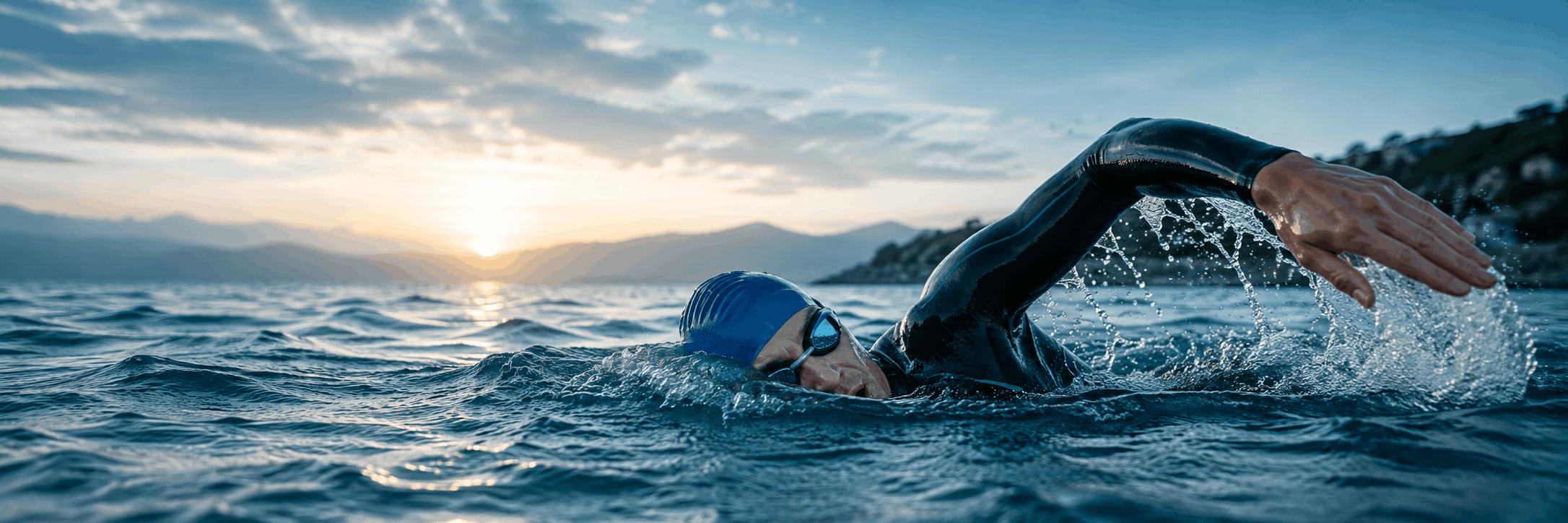


Open water swimming is often the most unpredictable part of a triathlon. Unlike the pool, there are no lane ropes, black lines or walls to keep you moving in the right direction. Instead, athletes must navigate between buoys while dealing with waves, currents, other competitors and limited visibility.
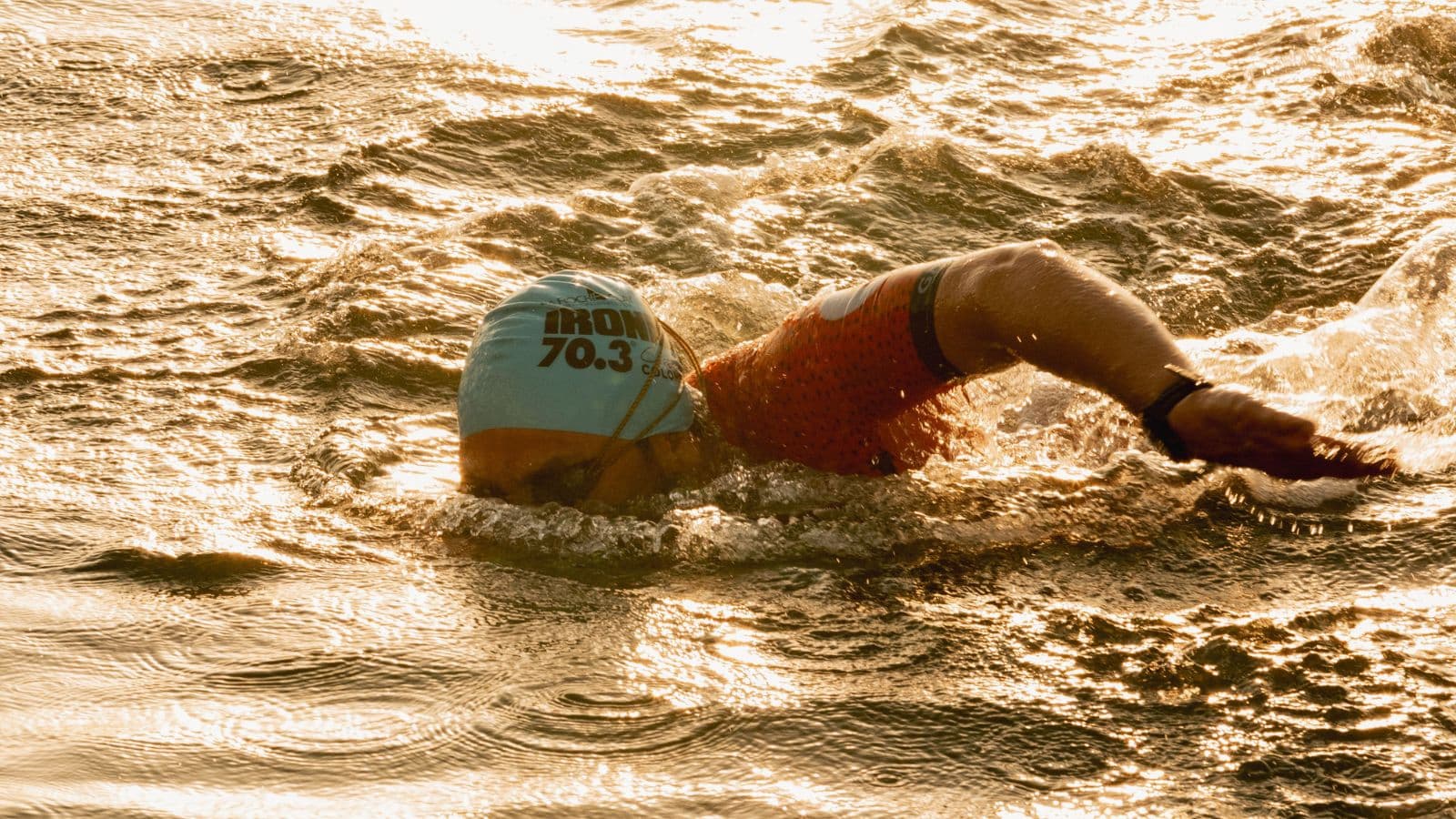
One of the biggest mistakes beginner triathletes make is swimming further than necessary. Even a slight deviation from the ideal racing line can add hundreds of extra metres over the course of a race, costing valuable time and wasting energy that could be better used on the bike and run. Learning to swim as straight as possible isn’t about perfection, it’s about minimizing unnecessary distance, conserving energy and setting yourself up for a stronger overall race.
In Short
- Swimming the shortest legal line saves both time and energy.
- Poor sighting is the biggest reason athletes zig-zag across the course.
- Every extra metre swum increases fatigue before the bike leg.
- Practising sighting regularly improves navigation.
- Swimming straight requires good body position and consistent stroke mechanics.
- Environmental conditions can push swimmers off course if they are not anticipated.
- Following the correct line is often more important than swimming slightly faster.
- Efficient navigation helps improve confidence in open water racing.
Why Swimming Straight Makes Such a Difference?
Many triathletes focus on swimming faster, but swimming smarter often delivers bigger gains. Imagine adding just 50 extra metres to a 1,500m Olympic-distance swim. That’s over three percent more distance than necessary. Some athletes unknowingly swim 100 to 200 extra metres simply because they drift off course.
Those additional metres mean:
- more energy expenditure
- higher heart rate
- slower swim split
- greater fatigue before cycling
- reduced overall race efficiency
Learning efficient navigation becomes just as valuable as improving fitness, especially for beginners following how to improve your triathlon swim.
Why Athletes Swim Off Course?
Swimming in a straight line sounds simple, yet it’s surprisingly difficult. Unlike cycling or running, swimmers cannot constantly see where they are going because their face spends most of the stroke underwater.
Several factors contribute to drifting.
Poor Sighting Technique
The most common cause is inconsistent sighting. Looking too rarely allows small directional errors to become large ones. Looking too often disrupts rhythm and increases drag. Developing an efficient sighting pattern is one of the easiest ways to reduce unnecessary distance. Practising the techniques covered in how to sight properly in open water swimming helps swimmers maintain direction without sacrificing speed.
Uneven Stroke Mechanics
Many swimmers naturally pull harder with one arm. Over hundreds of strokes this creates a gradual curve rather than a straight line. Improving stroke symmetry through drills reduces this tendency.
Breathing to One Side Only
Always breathing to the same side can gradually rotate the body and encourage drifting. Occasionally practicing bilateral breathing helps many swimmers stay centred while also improving awareness of changing conditions. This is particularly useful alongside how to fix breathing issues during open water swimming.
Currents and Wind
Even experienced swimmers are pushed sideways by wind or current. The key difference is that experienced athletes recognize the drift early and make small corrections before large errors develop.
Swimming Straight Saves More Than Time
Most athletes think swimming extra distance only affects their swim split. The impact is much bigger. Every unnecessary stroke consumes energy that could later be used on the bike or run.
A smoother swim allows athletes to:
- exit the water fresher
- maintain lower heart rate
- reduce muscular fatigue
- improve overall pacing
These small advantages accumulate across the entire race and complement effective pacing strategies discussed in how to pace a triathlon properly.
Better Navigation Improves Confidence
Confidence is often overlooked.
New triathletes frequently panic after realising they’ve drifted away from the racing line.
This leads to:
- stopping completely
- lifting the head excessively
- frequent course corrections
- wasted momentum
Athletes who trust their navigation remain calmer and swim more smoothly throughout the race. Building confidence gradually through how to transition from pool swimming to open water for triathlon helps remove much of the anxiety associated with race-day swimming.
How to Swim Straighter?
Swimming straight is a skill that improves with practice.
Choose Clear Landmarks
- Rather than constantly searching for distant buoys, identify larger objects behind them such as trees, buildings or hills.
- These are much easier to spot between strokes.
Sight Every Six to Twelve Strokes
- The ideal frequency depends on conditions.
- Calm water may require less frequent sighting.
- Wind, waves or currents often require more frequent checks.
- Avoid lifting your entire head.
- Instead, lift only the eyes above the water before turning naturally to breathe.
Maintain Good Body Position
- A streamlined body naturally tracks straighter.
- Poor balance causes extra drag and makes steering more difficult.
- Athletes developing their technique should continue refining fundamentals through how to start swimming for triathlon as a beginner.
Don’t Chase Other Swimmers
- Many beginners accidentally follow someone who is equally lost.
- Always use the race buoys as your primary reference.
- Following another athlete can be helpful, but only if they are swimming the correct line.
Drafting Helps Maintain Direction
- Drafting isn’t only about saving energy.
- Swimming behind another athlete often helps maintain a straighter line because someone else is effectively navigating.
- However, continue checking your own position regularly.
- Blindly following another swimmer can lead an entire group away from the optimal route.
Course Knowledge Matters
Whenever possible, study the swim course before racing.
Look for:
- buoy locations
- sun position
- likely currents
- entry and exit points
- potential landmarks
Understanding the course beforehand reduces decision-making during the race. This preparation fits naturally alongside triathlon race day checklist before every event.
Common Mistakes
- One of the biggest mistakes is lifting the head too high while sighting.
- This drops the hips, increases drag and slows forward progress.
- Another common error is waiting until you’ve drifted a long way before correcting direction.
- Small adjustments are far more efficient than dramatic turns.
- Many beginners also become fixated on nearby swimmers instead of following the course itself.
- If the athlete you’re following is off line, you’ll both swim farther than necessary.
- Neglecting open water practice means many athletes arrive at race day with excellent pool fitness but poor navigation skills.
- Regular sessions outside the pool remain essential, particularly when following open water swimming tips for beginners.
Practical Tips
- Practice sighting during every pool session rather than waiting until race season.
- Include open water sessions whenever possible to experience currents, waves and reduced visibility.
- Ask someone to film your stroke occasionally, as small technique imbalances often explain why you drift.
- Relax before the swim start. Tension usually leads to rushed strokes and poor navigation.
- Most importantly, focus on swimming efficiently rather than swimming aggressively.
Actionable Takeaways
Swimming straight is one of the easiest ways to improve overall triathlon performance without increasing fitness. By reducing unnecessary distance, maintaining good body position and developing effective sighting habits, athletes conserve energy for the remainder of the race. Consistent practice, good navigation skills and calm decision-making help you exit the water fresher, transition more smoothly onto the bike and build a stronger foundation for the rest of your triathlon.