Have you ever jumped on your trusty road bike in T2 and thought you’re already at a disadvantage compared to the people on high end TT bikes and ultra-aero road bikes?
You might think the only solution is to go full N+1 and get a new bike on order. But there’s actually plenty you can do to make your current road bike faster for triathlon racing. The aero gains you can get will, to an extent, depend on your budget. But fear not – you can get some seriously good improvements for a lower cost than you might think. We’ll talk you through the low/no cost options; what you can achieve if you’re willing to spend a little more. Plus – if you’re looking for an excuse to go bike shopping – the point at which you’d be better off investing in a new frame or a triathlon bike instead.
We’ve asked Dr B Xavier Disley, the director of AeroCoach, who manufactures aerodynamic cycling equipment and advises many of the world’s top triathletes and cyclists, for his expert tips on optimising your road bike to race triathlon.
Body position

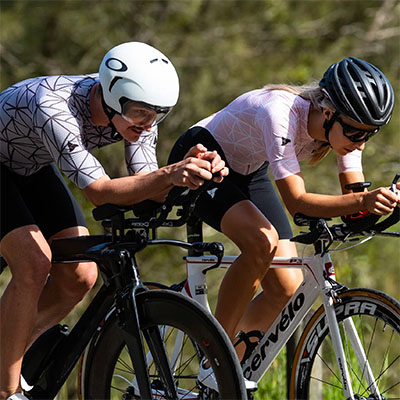
Since your body contributes to about 80% of the wind resistance that slows you down on a bike, getting yourself into a more aero position and lowering your CdA (coefficient of aerodynamic drag) is the surest way to ride faster.
“You can take well over 10% off your overall system drag by moving from a normal hoods position to a parallel forearm aero hoods position for example, which is something you’d really struggle to achieve with bike upgrades, assuming you’re not starting from a round tube entry level bike,” says Disley.
This does assume, however, that you can produce a similar amount of power in this more aerodynamics position. “A 1% improvement in CdA which hurts and costs you 50w of power won’t be worth it,” adds Disley.
He advises testing how your position impacts your comfort power, whether on your own, with a bike fitter or an aerodynamic specialist.
Handlebars
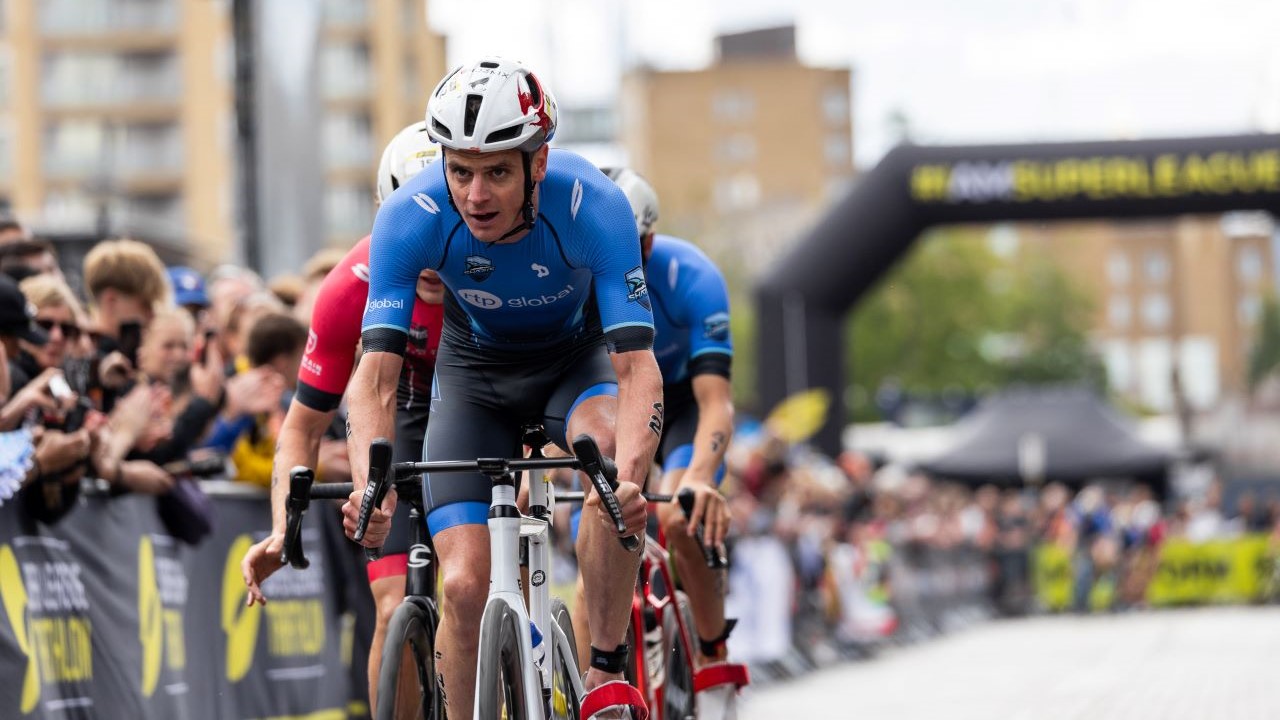
In light of the importance of body position, it follows that the fastest handlebars for you will be ones that enable you to hold the best position, not necessarily those carbon, ‘aero’ ones.
“As long as you can maintain an effective position, a narrower hand location and reach that allows you to lower your torso angle will be faster,” says Disley. “If you have a set of nice airfoil integrated handlebars that are faster in isolation than round handlebars, but they are very wide and don’t allow your body to achieve the best position your body position will far outweigh this.”
Aerobars on a road bike will help you go faster provided they are set-up correctly. A road bike’s geometry can make this harder than on a TT bike.
While Disley says fully integrated integrated handlebars on a TT bike will outpace anything you can achieve on a road bike, he adds: “You can certainly get close with a budget setup if you focus on your body position first and foremost, and worry about things like the aspect ratio of your base bar as secondary concerns.”
Drivetrain
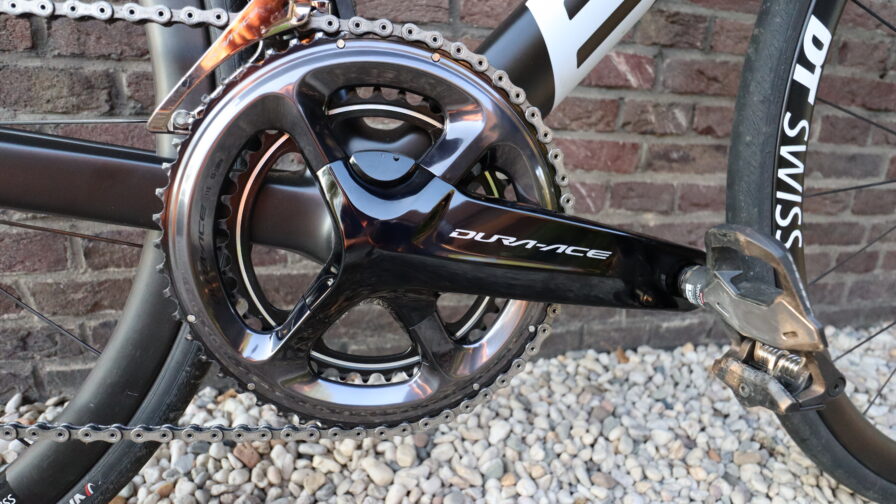
A dirty drivetrain costs you watts, not to mention money due to accelerated component wear, so make sure it is clean.
Then applying a light chain lube “will get you nearly all the way there”, says Disley. Waxing your chain adds an extra 0.3% of total efficiency to an already fast drivetrain, so it’s a marginal gain.
Disley also says that you should buy the best chain you can afford. For example, Shimano Dura-Ace chains are better and not much more expensive than 105-level ones.
He adds: “Upgrading to large pulley wheels is also a good one, but sometimes that can come at the expense of crisp shifting.”
While expensive ceramic bearings are claimed to reduce friction, Disley says AeroCoach prefers steel bottom bracket bearings for their longevity and similar efficiency.
Helmet
It can be hard to offer hard and fast guidelines on helmet choice for speed because what’s faster for one rider won’t necessarily work as well for another. “The exact right helmet for you will require testing,” says Disley.
Nonetheless he says an aero helmet will usually be faster than a traditional vented road helmet: “Something with lots of vents in the wrong places compared with an aero styled one will be slower.”
If you decide to go for a TT helmet, he recommends choosing a newer model with a visor, ear covers and fewer vents. Cycling’s governing body, the UCI, has clamped down on their use in road racing, but they should remain legal in triathlon.
Don’t forget though that comfort should come first followed by aerodynamic efficiency.
Clothing

Because it covers your body, the principal cause of drag, well optimised clothing can make you much faster. Therefore the best tri suits will fit closely.
Disley says: “We’ve had aero sessions where riders come with a variety of clothing options, usually skinsuits and if there’s anything with lots of creases, crinkles or loose fitting areas they never win the test, no matter how much they cost.”
Brands incorporate different types and texture of fabric into tri-suits to try to reduce friction drag, which relates to how air molecules pass over the surface of an object. This changes with speed and body position.
“[So] There is no single skin suit that is always the fastest for every single rider in every single body position at every single speed,” says Disley. “Some makes and models will perform well most of the time, but to truly optimise it means a trip to the wind tunnel or velodrome to validate it.”
Tyres, tubeless and tubes
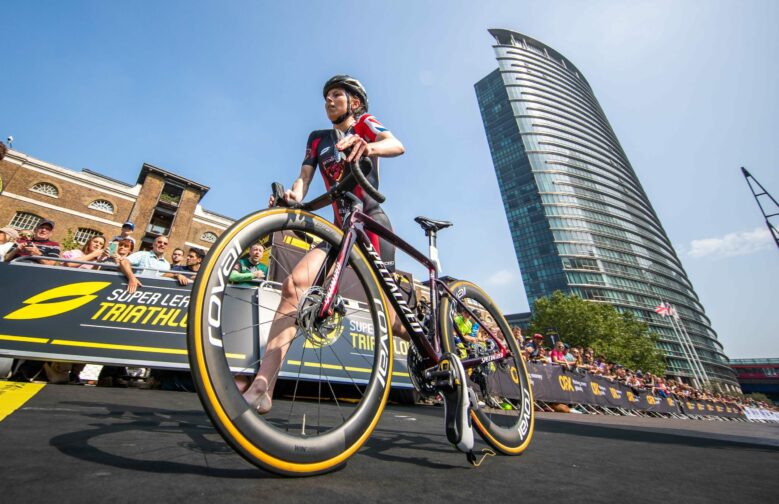
When your priority is speed, tyres are simple to optimise: choose the ones with the lowest rolling resistance that are compatible with your wheels.
Usually the latest tubeless-ready tyres are faster than clinchers, which always require an inner tube, but there are still very fast TT-style clinchers available, such as the Michelin Power Time Trial. Running a tubeless tyre with a latex tube will be nearly as fast as a full tubeless set-up.
A downside of latex inner tubes is that they require regular reinflation and Disley says TPU inner tubes, which hold air better, are catching up in terms of rolling resistance. Heavy, slow and more puncture prone standard butyl inner tubes are certainly to be avoided. For example, even a ‘fast’ butyl inner tube like the Continental Race Light requires 5.6W more power per pair of wheels to hold 45kph than the quickest latex inner tubes. On AeroCoach’s website, you can read the results of their comprehensive tyre and inner tube rolling resistance tests.
To match the tyre to your wheels, Disley recommends checking which tyre width, make and the wheel manufacturer designed them for. As for tyre aerodynamics, Disley says: “At normal riding speeds less than 35kph I wouldn’t worry too much about the aero impact within a range of 25-32mm and just choose your preferred low CRR [coefficient of rolling resistance} tyre.”
At faster speeds a good age-grouper would average in a shorter triathlon, they might want to consider tyre aerodynamics more, according to Disley.
Upgrade your bottles
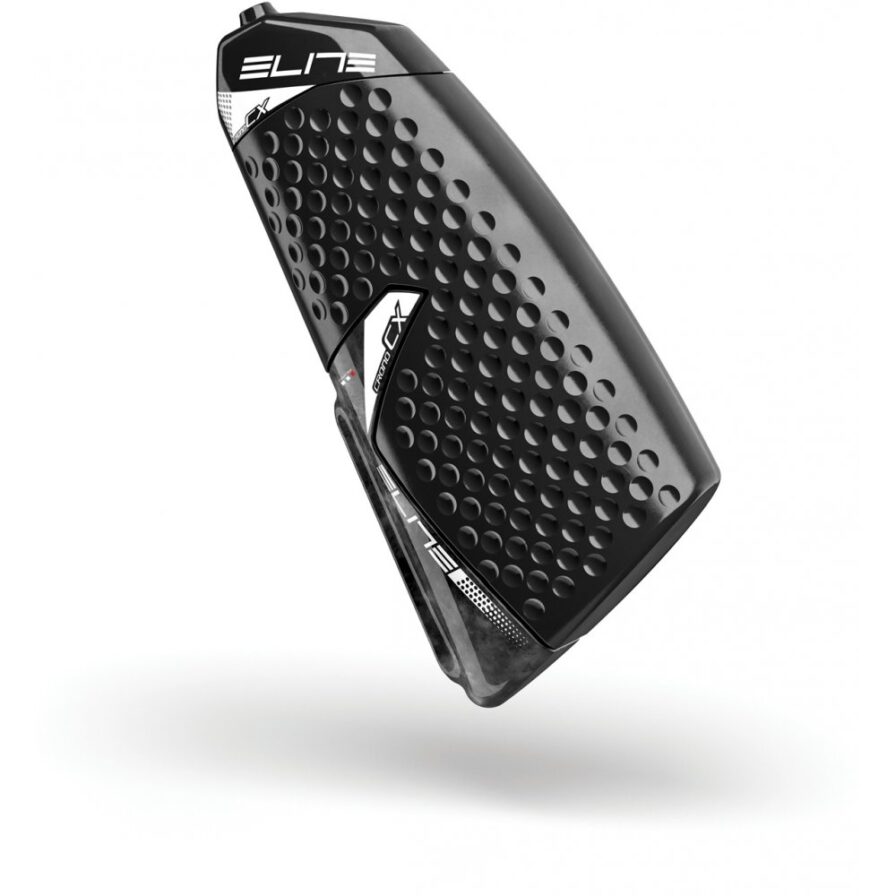
Switching from round to aero bottles is an easy speed gain, says Disley. “Aero bottles are always more aero than round bottles, and pretty much all of the time even if a frame is designed with a wider shaped down tube to accommodate a round bottle, putting one on will slow it down,” he adds.
If you’re just using one bottle, sometimes it’s faster to put it on the seat tube than down tube, but this depends on the frame. The key of course is that you can reach the bottle.
Although AeroCoach’s bottle testing suggests that the fastest solution is a 500ml on the saddle, it only beat a down tube-positioned aero bottle by 0.4W and 0.2W at 40kph and 30kph respectively. According to AeroCoach’s calculations of the time penalty for hydration options over an Ironman bike leg at 5 hour 30 minute-speed (32.7kph average speed), a 500ml saddle bottle (20 seconds), down tube 440ml aero bottle (30 seconds) and between arms bottle (30 seconds for 500ml, 45 seconds for 750ml) are the fastest.
Wheels
On to more expensive upgrades and wheels.
Disley says: “If you have a standard set of wheels and you want to upgrade, then a deeper or more aero set with nicer tyres in combination will make a big difference and can add more than 1kph to your riding speed instantly at standard speeds slower than 35kph.”
Once you’ve made this upgrade, the difference between the best aero wheels is slim. “It’s a smaller jump compared with changing from 25mm deep alu rims to something that’s well designed in the 50mm range,” adds Disley.
Saddle position
In triathlon racing when you’re not bound by the UCI’s 5cm minimum saddle setback rule, Disley recommends moving your saddle forwards as far as you like. This opens your hip angle, in theory making you more powerful and aerodynamic.
Frame – when is it worth biting the bullet and upgrading?
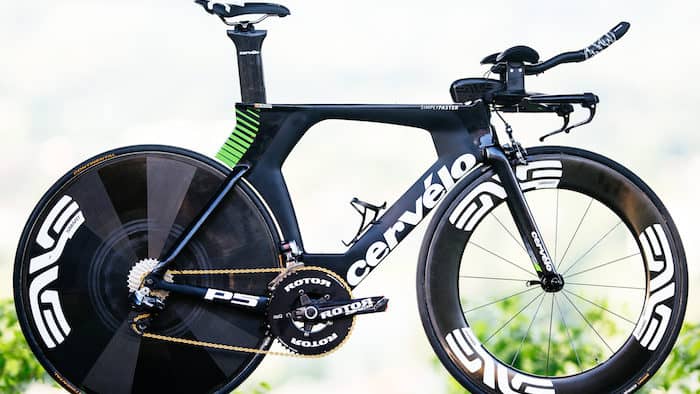
So when should you upgrade your road bike to a time-trial or triathlon bike?
Disley says: “Even if you’ve got a £10-12k road super bike, it’s still not going to be as fast, and will still have more compromises in terms of its geometry, than most of the top end tri and TT bikes on the market when fully optimised.”
Another restriction of modern aero road bikes is that integrated road handlebars can make attaching aero bars tricky.
If you decide to buy a tri bike for racing, Disley suggests sharing components, such as wheels and pedal power meters, across the bikes to save money and space.
“You don’t necessarily have to have a fully loaded TT bike as you can only ride one at a time,” he says.
You don’t need the latest frame, either. “Going second hand, and dare I say it rim brake, in the current market is a great idea,” says Disley. “You can pick up some absolute bargains and there’s nothing wrong with a rim brake bike at all for racing.”
So there you have it from an aerodynamic expert, there’s life in those rim brakes yet.