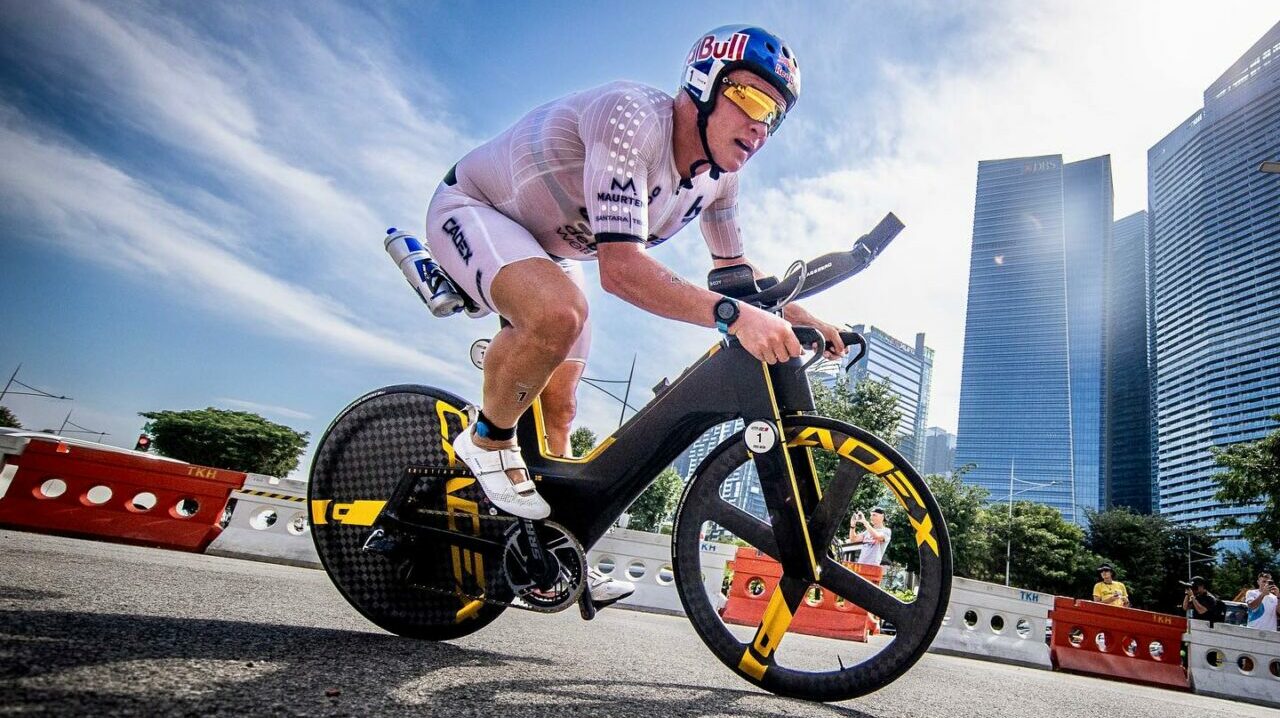


When you weigh up which triathlon race tyres to use, you’re making a consequential decision. Choose correctly and you could shave minutes off your triathlon PB with a fast tyre that’s also supple, comfortable and confidence-inspiring in corners.
But making the wrong choice could cost you minutes in increased rolling resistance or time fixing a puncture on the side of the road.
So what’s the best option? In this guide, we’ll first explain the differences between the types of road bike tyres and how to ensure they’re compatible with your wheels. Then we’ll set out what to look for in a triathlon tyre and suggest some specific options for varying race scenarios.
Tubular, clinchers or tubeless: which type of triathlon race tyre to ride on the bike leg
Before we dive into specific tyres to consider, let’s first take a look at the different types of tyres on offer – tubular, clinchers and tubeless – to better understand what the differences are, and the pros and cons.
What are tubular tyres?
Tubular tyres, which have a latex inner tube sewn into them and are glued to the wheel rim, used to be an ambitious triathlete’s go-to.
Although their speed, low weight, traction and ride quality remains hard to match, tubular tyres have fallen from favour.
A puncture cannot be fixed on the roadside, they require the use of a tubular-compatible rim and newer technology, like tubeless tyres, rivals their ride characteristics.
What are tubeless bike tyres?
Tubeless bicycle tyres work much like modern car tyres. When inflated the tyre forms an air-tight seal with the wheel rim and liquid sealant inside the tyre clogs up small punctures.
The rolling resistance of the fastest tubeless tyres is now as low as the rapid tubular tyres of yesteryear.
In addition, as wheel rims and tyres have got wider, and frame clearance has grown to accommodate them, you can run tubeless tyres at lower pressures without increasing puncture risk. Not having an inner tube to potentially pinch against the rim, the chances of puncturing are lower anyway versus a clincher set-up.
Besides being more comfortable and grippier, independent testing indicates that lower tyre pressures are faster than the three-figure PSI figures triathlete and road cyclists used to inflate their tyres to.
It’s vital to note that if you’re using hookless carbon rims (from brands including Zipp, Enve, Giant and Cadex), which dispense with the ‘hook’ that holds the tyre in place on traditional rims, their maximum tyre pressure is 73psi for safety reasons.
Hookless rims must only be used with hookless-compatible tubeless tyres, the list of which is ever expanding.
What are clincher road tyres?
The third main category of triathlon tyre is the clincher and inner tube. Despite the rise of tubeless, this combination remains popular for good reason. It’s simple to set them up, fix a road-side puncture and they can be pretty fast.
The downside of clinchers is that brands have put all their resources into developing high-end tubeless tyres, so aren’t releasing new premium clinchers.
You can also use an inner tube in a tubeless tyre on a hooked rim. A tubeless tyre inflated with a good latex or TPU inner tube will nearly be fast as one set-up with sealant. Maintenance is easier too.
What to look for in triathlon race tyres
When searching for free speed, what characteristics should you seek out in a triathlon race tyre? We asked Oscar Fronhoff, a product manager at Schwalbe, who identified rolling resistance, aerodynamics, puncture protection and weight.
Rolling resistance
“The lower the rolling resistance, the more time you save in the entire race,” adds Fronhoff.
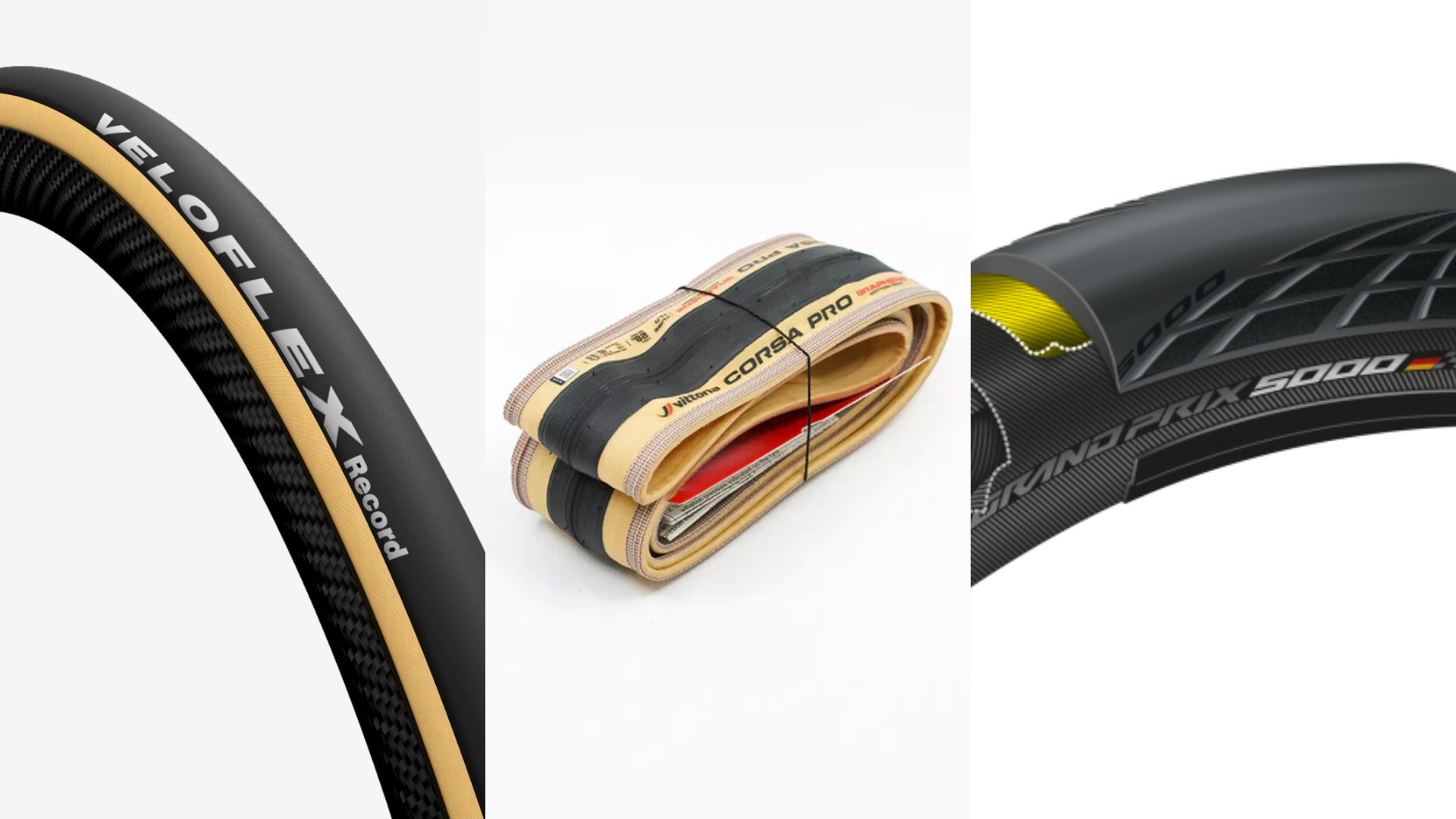
According to Bicycle Rolling Resistance, the Vittoria Corsa Pro Speed TLR is the fastest road tyre followed by the Veloflex Record TLR and Continental GP5000 TT TR.
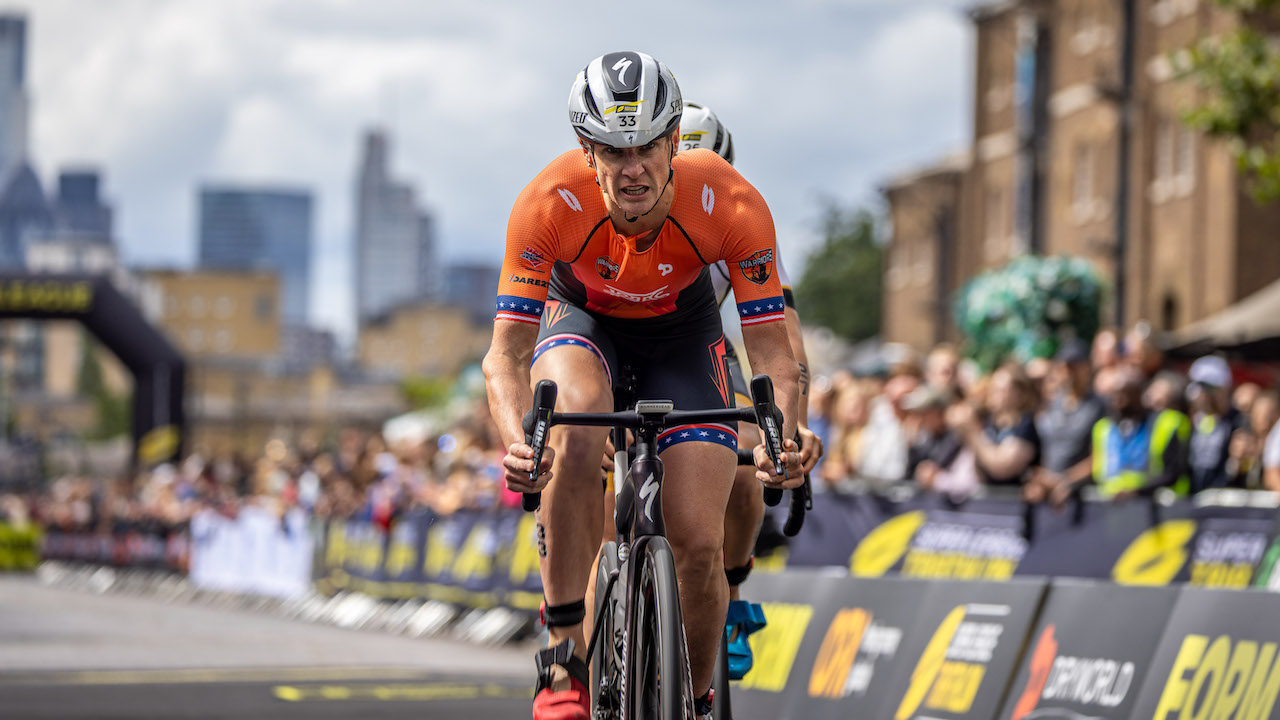
Between road racing and time-trial tyres, AeroCoach testing found a 28W difference in terms of rolling resistance at 45km/h between the fastest and slowest. At this pace, a 1W saving roughly equates to a one-second per kilometre saving.
Extrapolated over a 70.3 or IRONMAN bike leg, even allowing for slower age-grouper speeds, that reduction in rolling resistance could save you minutes.
Aerodynamics
“Aerodynamics are particularly important in triathlons due to the very high average speeds and the length of the course in the long distance races,” says Fronhoff.
However, AeroCoach’s tyre aerodynamics testing found negligible difference between a benchmark clincher tyre (Continental GP5000) and time-trial tyres at the same speed.
The gap in rolling resistance was larger, though, suggesting you can make bigger gains in this area.
Puncture protection
“Tyre damage could mean the end of your race and you’re not allowed help from others,” says Fronhoff.
“Nevertheless, you must consider this in relation to the fact that the surfaces are usually in very good condition in triathlons.”
There’s some truth in the saying that there’s nothing as slow as a puncture. However, unless you’re racing on poor-quality roads in the wet, you shouldn’t need a flat-proof tyre for triathlon. The puncture-protection belts they incorporate increase rolling resistance, potentially unnecessarily slowing you down. And running a tubeless setup can lower your puncture risk.
As a compromise, you could switch from a time-trial tyre, such as the Continental GP5000 TT TR, to a road racing tyre, like the German brand’s GP5000 S TR, trading a watt or two for better puncture resistance.
Weight
Puncture-resistant tyres are also heavier, as Fronhoff notes: “Puncture protection must not increase the weight unnecessarily because you should try to reduce rotating mass.”
Weight isn’t usually that important on flat or rolling triathlon bike legs, but bear it in mind on hillier courses.
Comfort
Comfort can’t be neglected in long-course triathlon. In general, a higher quality, more supple tyre will be more comfortable to ride than a cheaper and stiffer one, provided it’s inflated to the correct tyre pressure.
The optimal tyre pressure for speed and comfort is often lower than you’d think, even when running inner tubes. Use an online tyre pressure calculator – we recommend this one from Silca.
Which triathlon race tyre characteristics should you prioritise?
Fronhoff says that ideally your triathlon tyres will possess all these attributes. But sometimes you might have to tailor them to the course.
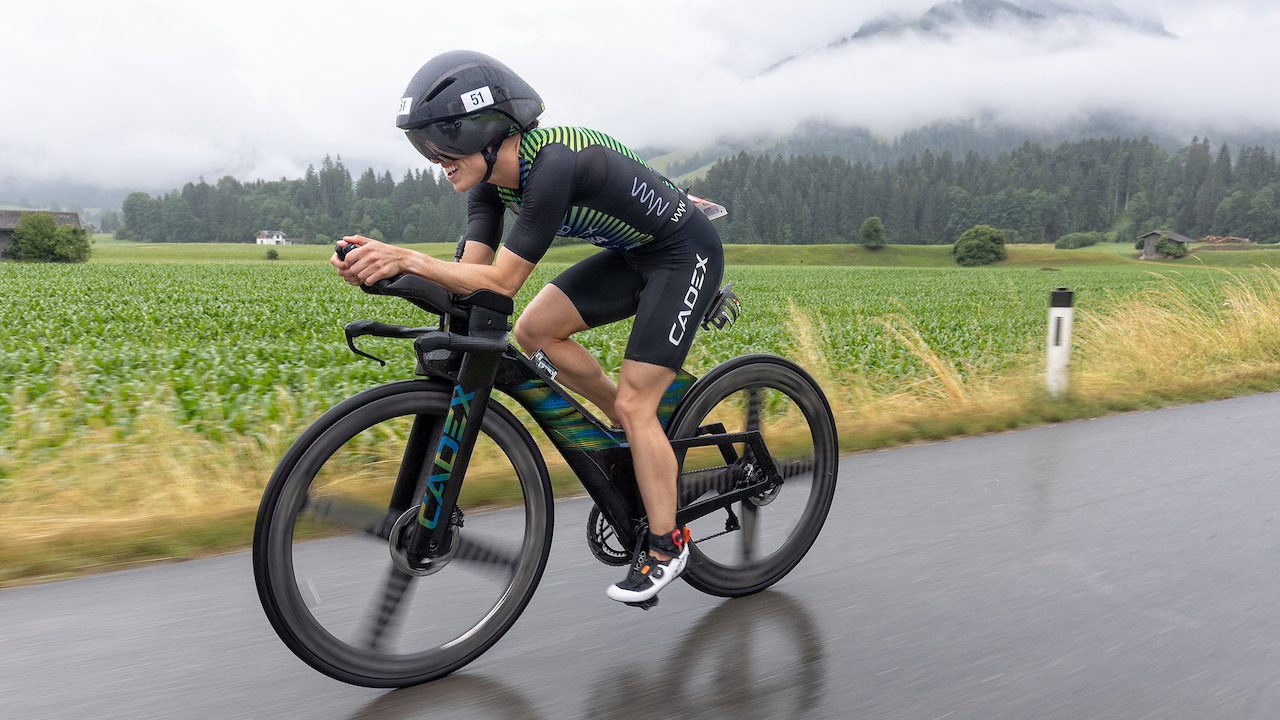
“There are races and lengths where the prioritisation is different,” adds Fronhoff. “This depends on the track layout, for example if it has many bends and accelerations.”
In this scenario of a twisty course, grip will be more important than on a largely straight route. However, fast tyres are usually grippy too thanks to their premium construction. Likewise, wet conditions call for a grippier and probably tougher tyre because puncture risk will increase.
Fast, light, cheap – pick two?
To misquote Keith Bontrager’s ‘strong, light, cheap – pick two’ maxim regarding bicycle wheels, tyres can be fast, light and cheap, but not all three simultaneously.
Quality triathlon racing tyres don’t come cheap, but in terms of money spent per second gained, they’re a profitable place to invest for performance.
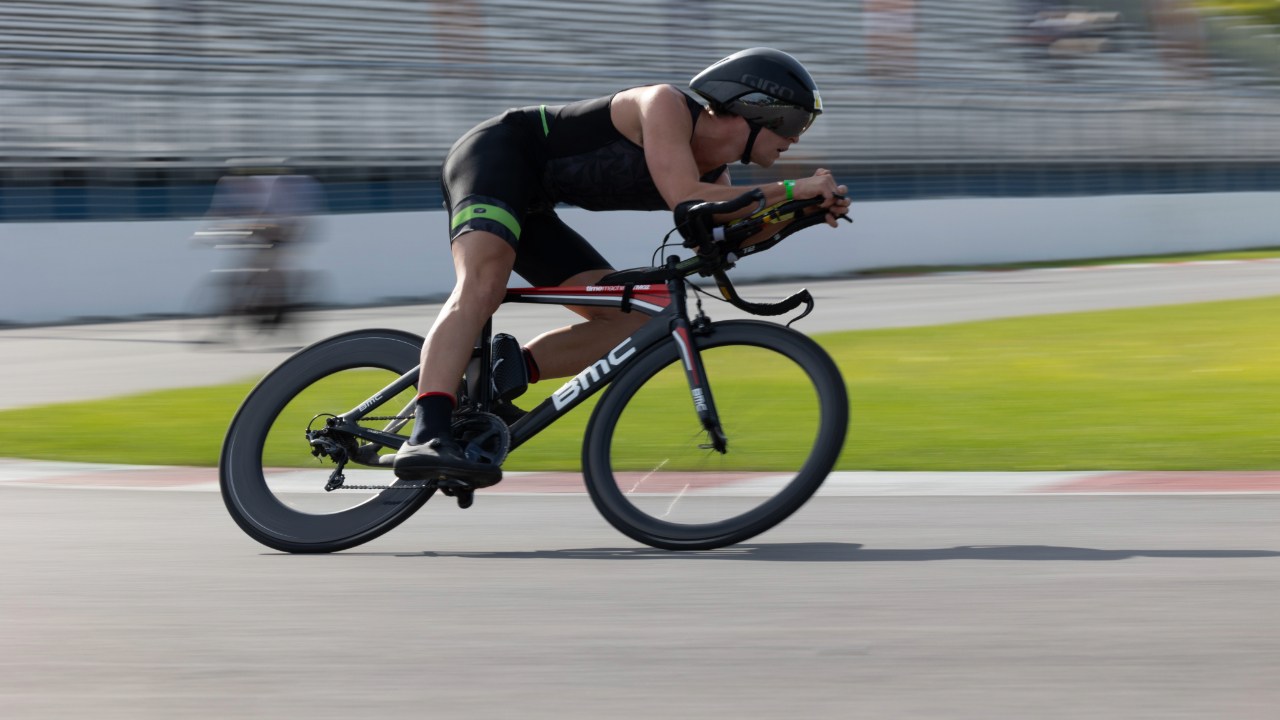
You can expect to save 20-30W by upgrading slow tyres and inner tubes to faster ones at a cost of about $180 / £150. Compared to saving a handful of watts by buying new carbon wheels for thousands more, this is great value.
Inevitably fast tyres will wear quickly. But by saving them for races, and training on hard-wearing tyres, they should last longer.