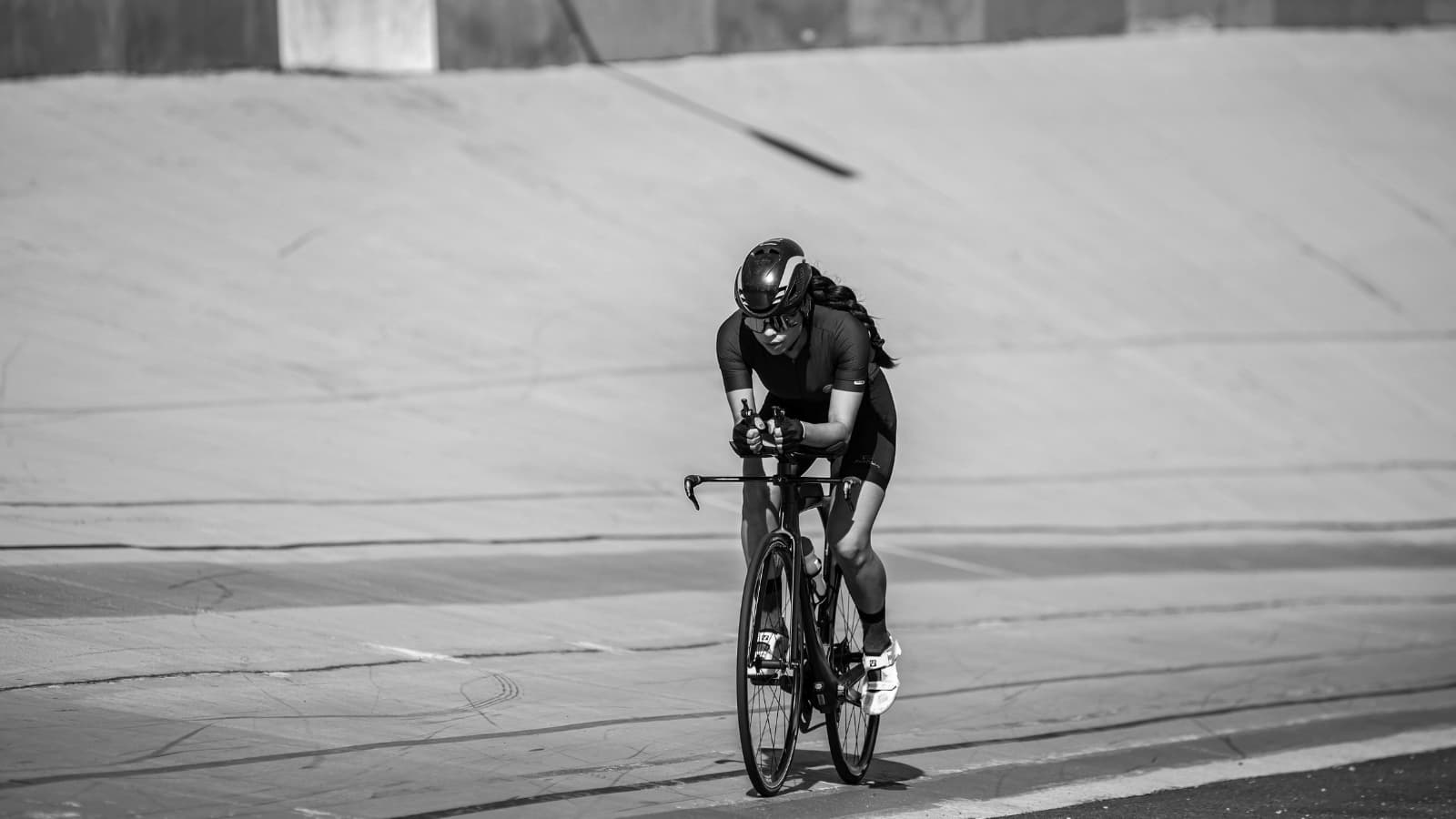


You can maintain steadier power during a triathlon bike leg by starting conservatively, using your gears before cadence changes dramatically, controlling effort on climbs, and avoiding unnecessary accelerations. The goal is not a perfectly flat power trace but a controlled ride without repeated large spikes. Steady power matters because every hard acceleration adds to the physiological and muscular cost of the bike leg. Repeatedly surging above your sustainable intensity can leave your legs more fatigued even when your eventual average power looks reasonable. Course profile, wind, corners, traffic rules, and other race conditions mean your power will naturally change. A climb requires a different approach from a descent, and a headwind may change your speed even when your power remains controlled.
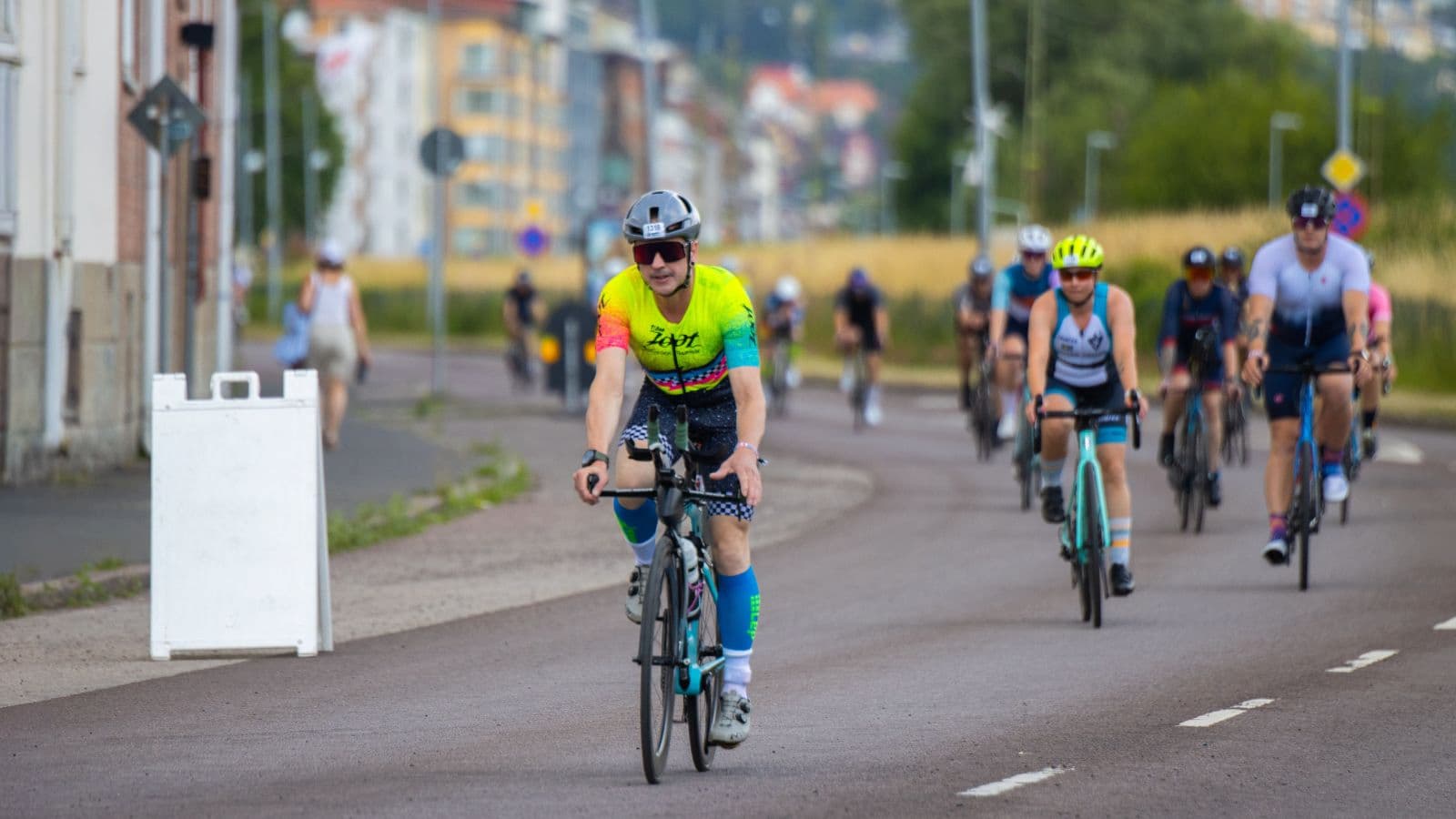
The most effective strategy is therefore to keep effort within a sensible range while accepting necessary variations. Your bike split matters, but the real goal in triathlon is reaching T2 with enough energy to run effectively.
In Short
- Start the bike leg conservatively.
- Know your sustainable race power.
- Avoid unnecessary power spikes.
- Shift before cadence becomes uncomfortable.
- Control effort on climbs.
- Do not chase speed into headwinds.
- Accelerate smoothly after corners.
- Keep cadence comfortable.
- Fuel before fatigue develops.
- Save enough energy for the run.
Know Your Sustainable Race Power
Steady pacing begins with knowing what power you can realistically maintain.
Your target depends on:
- Race distance.
- Cycling fitness.
- Training history.
- Course profile.
- Environmental conditions.
- Ability to run afterward.
Do not choose a target simply because you produced that number during a short training session. Understanding what is ftp in triathlon cycling gives you a useful reference for establishing training intensity, but race power still needs to be tested during longer race specific sessions.
Start More Conservatively Than You Feel You Need To
The opening part of a bike leg often feels unusually easy. You are rested from tapering and surrounded by athletes riding aggressively. That makes it easy to produce too much power immediately after transition.
During the opening section:
- Settle into position.
- Find your normal cadence.
- Begin fueling when appropriate.
- Let breathing stabilize.
- Avoid chasing other riders.
You have plenty of time to produce useful power later. Early restraint becomes particularly important when following how should you pace the bike to run better in a triathlon, because minutes gained through excessive bike effort can easily be lost during the run.
Use Your Gears Early
Good gear selection helps prevent sudden changes in power.
Shift before:
- A steep climb.
- A sharp corner.
- A significant gradient change.
- Cadence drops excessively.
Waiting until you are already struggling forces you to push harder against the pedals. Smooth shifting allows cadence and power to change more gradually. Understanding what is cycling cadence in a triathlon can help you find a sustainable pedaling rhythm rather than forcing one fixed cadence throughout every section of the course.
Control Power on Climbs
Climbs are one of the easiest places to create unnecessary power spikes. Speed falls, which can tempt you to push much harder.
Instead:
- Shift appropriately.
- Accept a slower speed.
- Allow a controlled increase in power.
- Keep breathing manageable.
- Avoid attacking the beginning of the climb.
Power does not have to remain identical to flat road power. The aim is to prevent a moderate climb from becoming a repeated high intensity interval. For longer climbs, when should you climb seated vs standing on a bike can help you choose a position that keeps effort controlled.
Do Not Chase Power Downhill
Descending creates the opposite problem. At high speed, aerodynamic drag becomes substantial, so producing additional power may deliver relatively little extra speed.
Depending on the course, it can be more effective to:
- Reduce power.
- Stay aerodynamic when safe.
- Pedal smoothly when useful.
- Focus on control.
- Prepare for the next section.
Do not try to maintain target watts simply because your power meter displays a lower number. Using how can you improve downhill cycling in a triathlon can help you gain speed through technique and confidence rather than unnecessary pedaling effort.
Manage Headwinds by Effort
A headwind can make your speed fall dramatically. Do not respond by trying to preserve your normal speed.
Instead:
- Maintain controlled power.
- Improve aerodynamic position.
- Shift when necessary.
- Accept slower progress.
Speed is an outcome of power plus conditions. The principles in how to ride in headwinds and crosswinds on a bike are especially useful because wind can make pace based cycling decisions misleading.
Accelerate Smoothly
Repeated hard accelerations increase the variability of your ride.
They often occur:
- After corners.
- Leaving aid stations.
- After slowing for other athletes.
- At the bottom of climbs.
- When passing.
You still need to accelerate, but you do not need to sprint back to race speed. Build power smoothly and return to your target effort.
One hard surge may have little effect on a long race. Hundreds of unnecessary surges can create significant fatigue.
Use Power as a Range
Trying to hold one exact wattage throughout a triathlon is unrealistic. Instead, work within a sensible range.
Your power will naturally move because of:
- Gradient.
- Wind.
- Corners.
- Descents.
- Road surface.
- Course congestion.
Avoid reacting every time the display moves by a few watts. Use an appropriate averaging field on your cycling computer if it helps reduce the temptation to chase momentary fluctuations.
Keep Cadence Comfortable
A large change in cadence can change how the effort feels even when power remains similar. Grinding a hard gear may create more muscular fatigue. Spinning excessively fast may also feel inefficient for some athletes. Use gearing to stay near a cadence you have practiced. Big gear training can improve muscular endurance, but race day is not automatically the time to reproduce low cadence training intervals. How can you increase the average cycling speed is better approached through sustainable power and efficient riding than simply selecting a harder gear.
Stay Aerodynamic
Steady power becomes more valuable when you convert it efficiently into forward speed. Aerodynamic position can allow you to ride faster without producing more watts.
Practice maintaining your race position during:
- Endurance rides.
- Tempo sessions.
- Race simulations.
- Indoor trainer workouts.
If discomfort repeatedly forces you upright, address the cause rather than accepting it.
Using how do you adjust your bike for a better fit can help improve comfort and your ability to maintain an effective position.
Fuel Before Power Starts Falling
Poor fueling can make steady power increasingly difficult later in the race.
As energy availability drops, you may notice:
- Power falling.
- Effort increasing.
- Concentration worsening.
- Cadence becoming harder to maintain.
- Greater fatigue.
Follow a fueling strategy you have practiced in training. Do not wait until your legs feel empty before beginning to eat. For shorter training sessions, how to fuel for a 2 hour cycling ride in a triathlon provides useful principles that can be developed into a longer race specific nutrition strategy.
Practice Steady Power in Training
Race day should not be the first time you attempt to hold controlled power for an extended period.
Include sessions where you practice:
- Race position.
- Target power.
- Cadence.
- Fueling.
- Sustained concentration.
Use terrain similar to your race when possible.
Indoor trainers can also be useful because they allow uninterrupted power control without junctions or traffic.
Review More Than Average Power
Average power alone can hide a highly inconsistent ride. Two athletes may produce the same average while one repeatedly surges and recovers.
When reviewing your ride, consider:
- Power spikes.
- Long periods above target.
- Power on climbs.
- Late ride power decline.
- How well you ran afterward.
The final point is especially important for triathletes.
Protect the Run
The best bike pacing strategy is not necessarily the one that creates your highest possible cycling power. It is the one that contributes to your fastest sustainable overall race. If you enter T2 with heavily fatigued legs, the bike leg may have been too aggressive. Following how can you bike smarter to improve your triathlon run can help keep power decisions focused on overall triathlon performance rather than the bike split alone.
Common Mistakes
- Starting above target power.
- Chasing other riders.
- Attacking every climb.
- Trying to hold race watts downhill.
- Fighting headwinds with excessive power.
- Shifting too late.
- Sprinting after every corner.
- Ignoring fueling.
- Focusing only on average power.
Practical Tips
- Establish race power in training.
- Start conservatively.
- Shift before steep gradients.
- Allow controlled power changes.
- Accelerate progressively.
- Keep cadence familiar.
- Stay aerodynamic when safe.
- Fuel consistently.
- Review how bike pacing affects your run.
Actionable Takeaways
- Aim for controlled power rather than perfectly constant watts.
- Limit unnecessary surges.
- Let terrain change speed before it changes your effort dramatically.
- Judge bike pacing by how well you can run afterward.



![Jonas Schomburg wins in Kalmar 2026. [Photo credit: IRONMAN]](https://www.tri247.com/wp-content/uploads/2026/08/1H5A7725_Gfhj69jc_20260815012118.jpg)