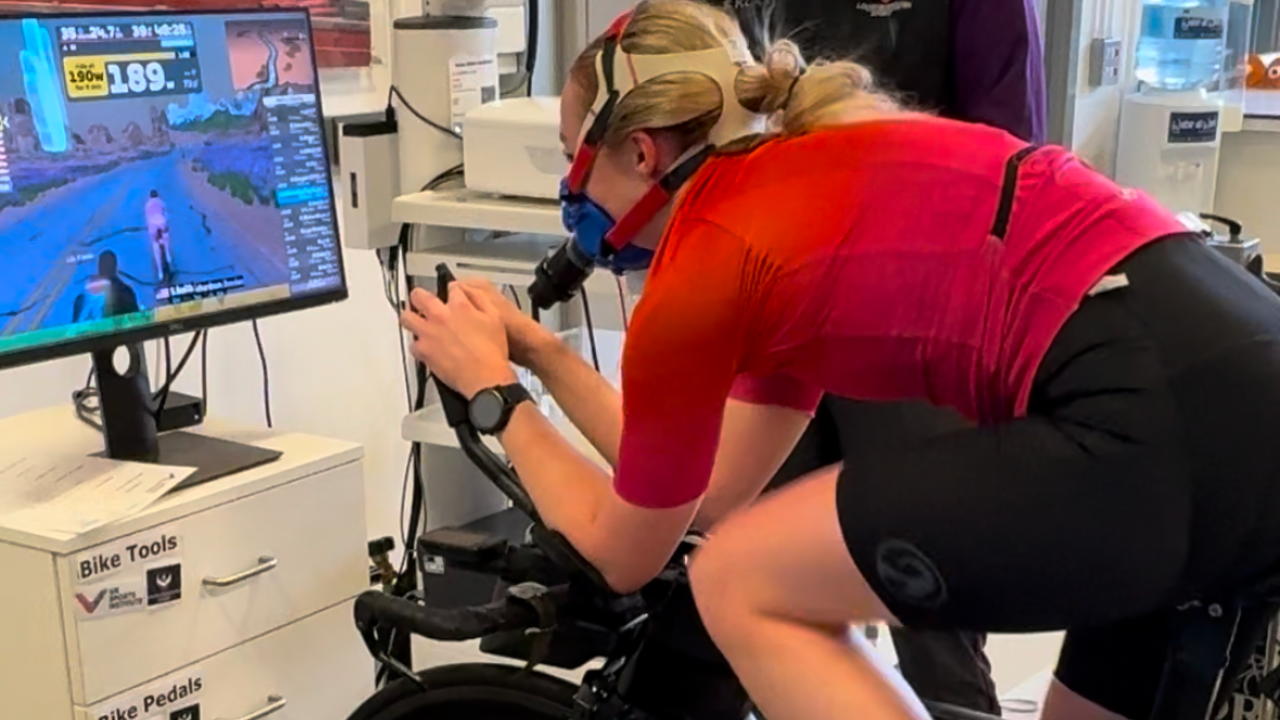


Triathlons last for hours and are often raced at a steady pace, sometimes giving the impression that to train for them you only need to swim, ride and run at low to moderate intensity.
Consequently, traditional triathlon training plans tended to exclude intervals aimed at developing top-end speed or VO2 max – the maximum volume of oxygen the body can use. A higher VO2 max enables you to work aerobically for longer at high intensity, forestalling the fatigue that quickly arises from switching to less efficient anaerobic energy production.
As Jen Newbery, a former elite triathlete for Great Britain and now a triathlon coach and bike fitter for UK Bike Fit, and Paulo Sousa, an elite triathlon coach, explain to us, developing VO2 max brings several additional advantages to all levels of triathlete.
They also recommend how to distribute VO2 max work between three sports, which kinds of intervals to try and how to establish your VO2 max.
Why is VO2 max important for triathletes?
“If you’re racing from sprint up to Ironman, I definitely think that VO2 max training is important,” says Newbery.
A reason triathletes neglect their top end is that they think, especially during long-course tri, they will only be working aerobically.The course could force you to work harder though.
“If you try to race IRONMAN Wales constantly in zone 2 I think you’d fall off your bike on some of the hills because they’re so steep,” adds Newbery. “Also, if you want to do a sprint finish or just push a little bit harder towards the end you’ll leave the aerobic zones. There might be parts especially for age grouper in draft-legal racing where you’re having to race at a much higher intensity and then having short periods of recovery.”
Long-distance PRO triathletes are wise to the importance of VO2 max training.
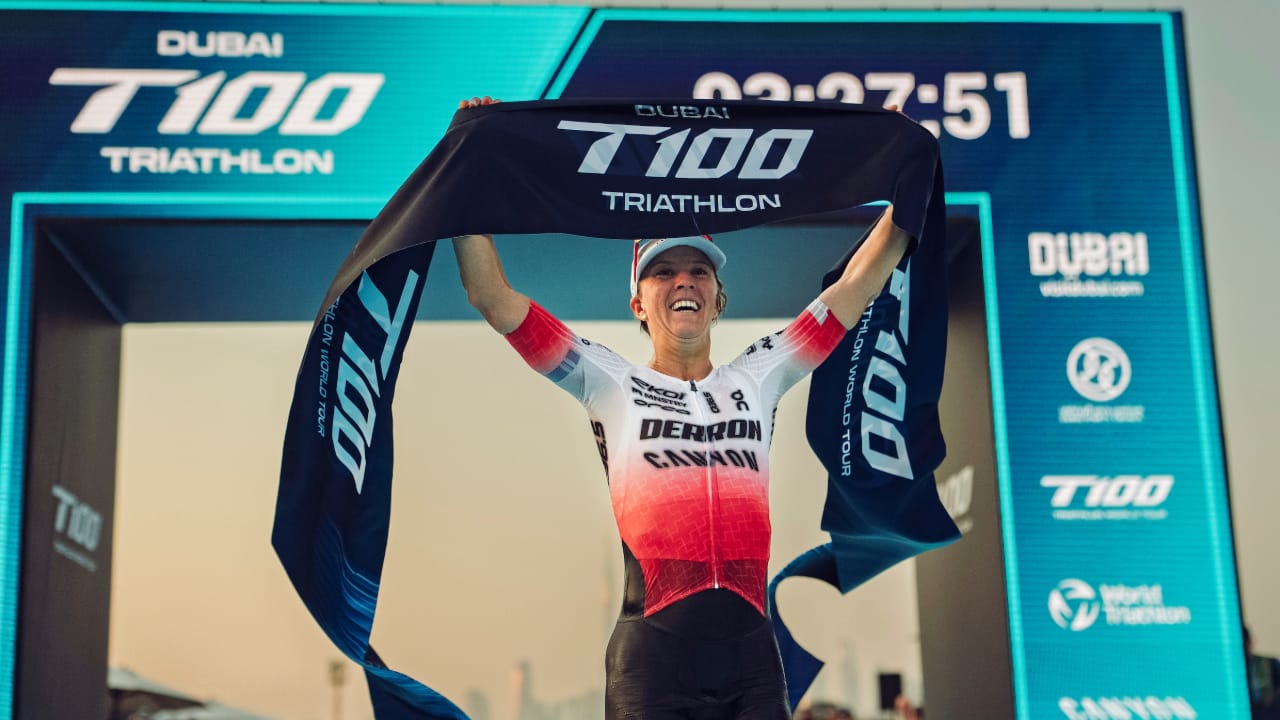
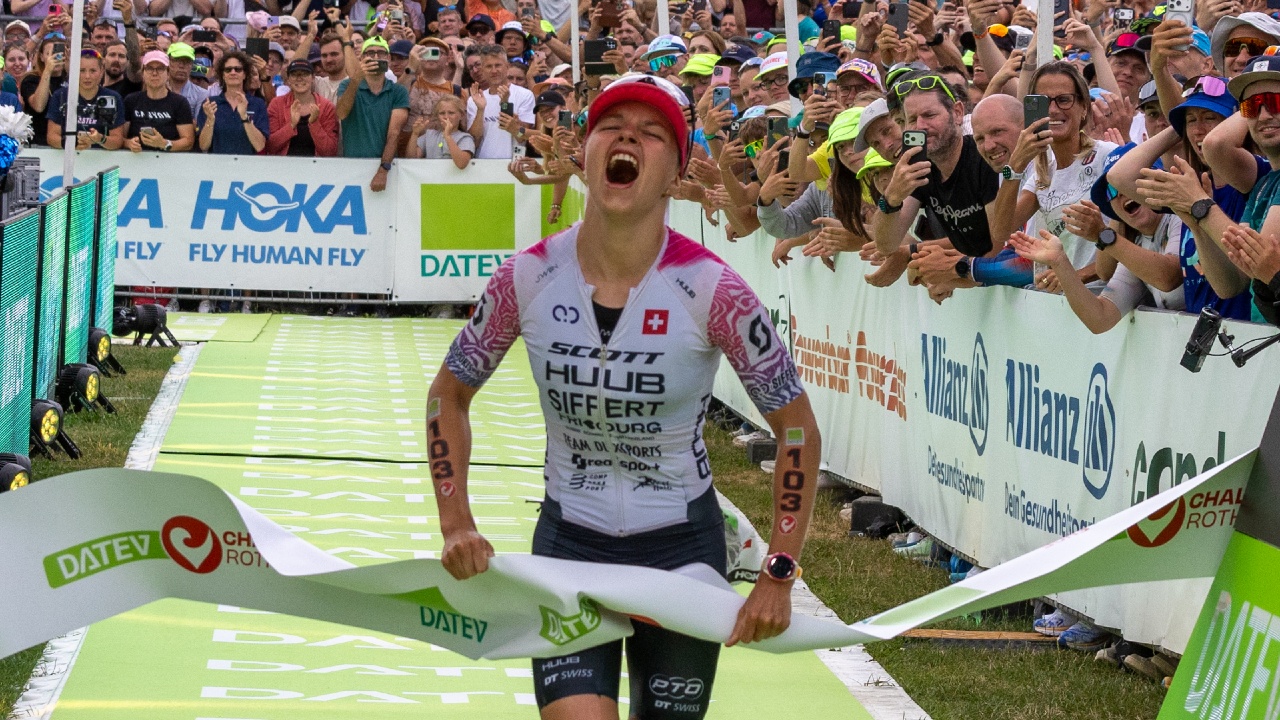
“Quite famously Lucy Charles-Barclay, who’s one of the best long-course athletes in the world, does loads of VO2 stuff,” says Newbery. “And Kate Waugh, before she won the T100 in Singapore, did a big VO2 and LT2 block. So even in those longer races, it’s definitely really important.”
Raise your ceiling
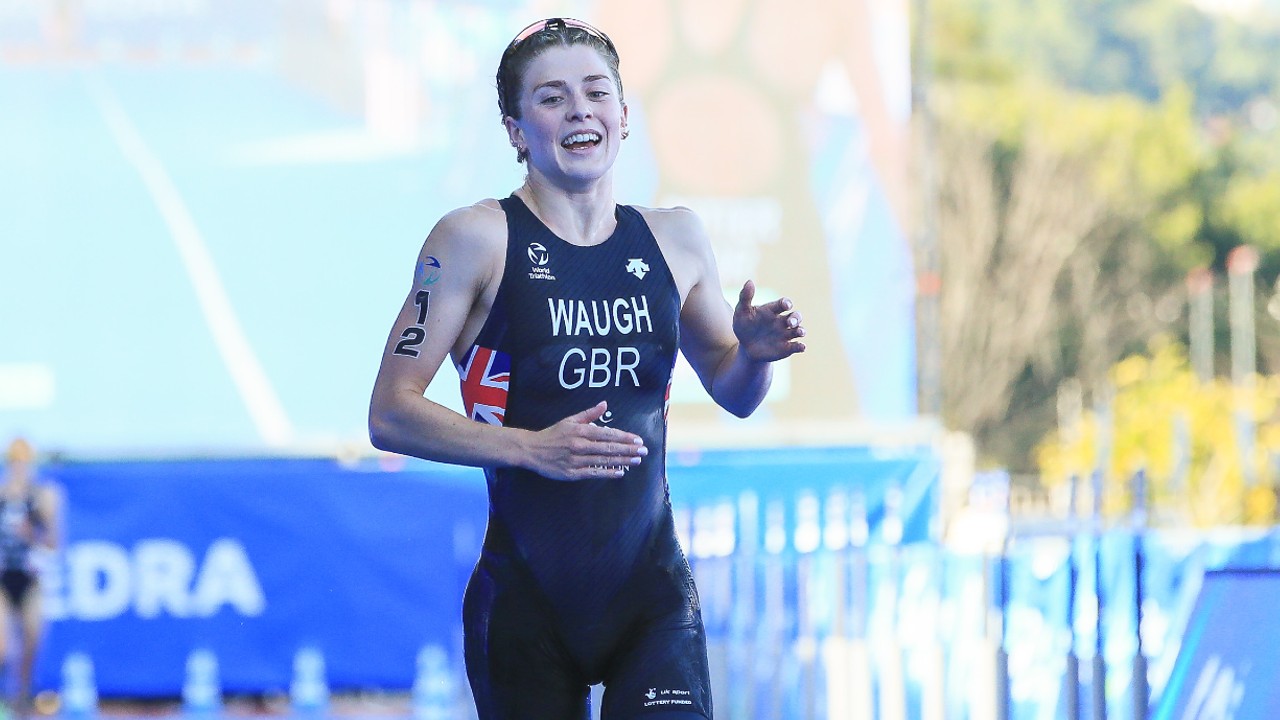
Paulo Sousa, who coaches Kate Waugh along with other members of The Triathlon Squad, says: “VO2max is important for every endurance athlete as it determines your performance ceiling.”
In other words, “If you don’t work on that top end to push it up, you can’t push that bottom end up either,” adds Newbery.
To illustrate the point that VO2 max can raise your performance ceiling, Newbery uses the three-zone intensity domain model based on lactate thresholds.
Below lactate threshold 1 (LT1) is an easy or moderate pace at which lactate levels (a proxy for but not cause of fatigue) in the blood remain constant. At higher intensity between LT1 and LT2, blood lactate levels start to rise until they increase unsustainably quickly above LT2 in zone 3.
Therefore, a higher LT2 means you can swim, run and ride more intensely and faster before you produce fatiguing metabolites (mainly hydrogen ions) at a quicker rate than you can clear them from your blood.
Although long-course triathletes will mainly race at around LT1, Newbury thinks it’s a mistake to solely focus on raising this threshold. “If you only work at LT1 and you don’t push your LT2 threshold up, your LT1 threshold could only get so close to LT2,” she says.” This reduces your scope to push on at moderately hard ‘tempo’ without rapidly tiring.
Health and general fitness benefits of VO2 max
Besides race performance, VO2 max training delivers myriad benefits to general fitness and health.
Newbery says: “Working your heart and lungs harder than they’re used to working will make them stronger: it improves your red blood cell capacity, improves your oxygen delivery to your muscles under fatigue, it improves your tolerance to lactate and muscular endurance”
“You don’t need to be smashing yourself all the time but if you’re taking up triathlon just to generally improve your overall health then doing a session every week or two of VO2 and threshold training will deliver health benefits.”
VO2 max is also an efficient way to train.
“It’s not like it can replace doing the steady state stuff, which you need to do as well,” she adds. “But it’s a really efficient way to train because you don’t have to do loads of it. On the turbo you can do a VO2 max or threshold session in under an hour.”
How to incorporate VO2 max work into a triathlon training plan

Newbury recommends spreading VO2 training across all three sports.
“But you shouldn’t do a VO2 max session in each in the same week because you’ll just be training too hard,” she says.
“If you’re just training for cycling, you can probably manage to fit two in because your body’s very efficient at that one sport.
“But when you’re training across three, you’re probably not going to be efficient enough to be able to recover and to do two really hard sessions.”
In a specific VO2 max block, for example, Newbery recommends doing a VO2 max swimming session in week one, a running workout in week two and cycling intervals in week three followed by a deload week.
However, Sousa says some amateur triathletes lack the swim technique to effectively to VO2 max intervals in the pool.
He adds: “For those athletes, it’s far better to prioritise volume at low-intensity and short-distance repetitions at around race pace, which allows them to focus on developing a swimming technique they can employ in racing.”
What are the best ways to improve VO2 max?
World-class endurance athletes will have been born with a naturally high VO2 max they have likely optimised through years of endurance training.
For amateurs not blessed with such good genetics, there is good news, however.
Sousa says: “For recreational athletes, VO2 max is very trainable and even small improvements can represent significant performance gains.”
HIIT it

Triathletes have an array of V02 max intervals at their disposal, from long blocks at a constant speed or intensity to shorter bursts, like HIIT (high-intensity interval training).
“Cycling is the sport where it’s safer to use HIIT to improve VO2 max,” says Sousa.
“There is strong evidence that shows that time spent at a high percentage of VO2 max is the most efficient way to improve not just VO2 max but also power at lactate threshold.
As for running, he adds: “Performing HIIT sessions can represent a significant injury risk for some athletes.
Run hills
“One way to mitigate that risk is to perform HIIT using hill training, which is not only a great way to develop your VO2 max but also builds specific strength and has a positive impact on running technique.”
Newbery recommends mixing the types and lengths of VO2 max intervals so your body doesn’t become efficient at just one thing.
“In a race you might have to hold an effort for longer or do a harder, shorter effort and your body might not be so good at that,” she says.
She generally goes off a 1:1 work to rest ratio with VO2 max intervals (four minutes on, four minutes off, for example, as opposed to 2:1 with threshold intervals (four minutes on, two minutes off).
Time-crunched triathletes should consider combining different lengths of VO2 max intervals into a pyramid workout, says Newbery. This would entail doing five-minute, three-minute and one-minute blocks before working back up the duration pyramid.
After a VO2 max block involving different types of intervals in your three sports, Newbery recommends reviewing which worked best for you. For example, if you can hold higher power or swim faster at the same exertion after mainly doing shorter VO2 max intervals, you could prioritize these in future.
Stay pyramidal
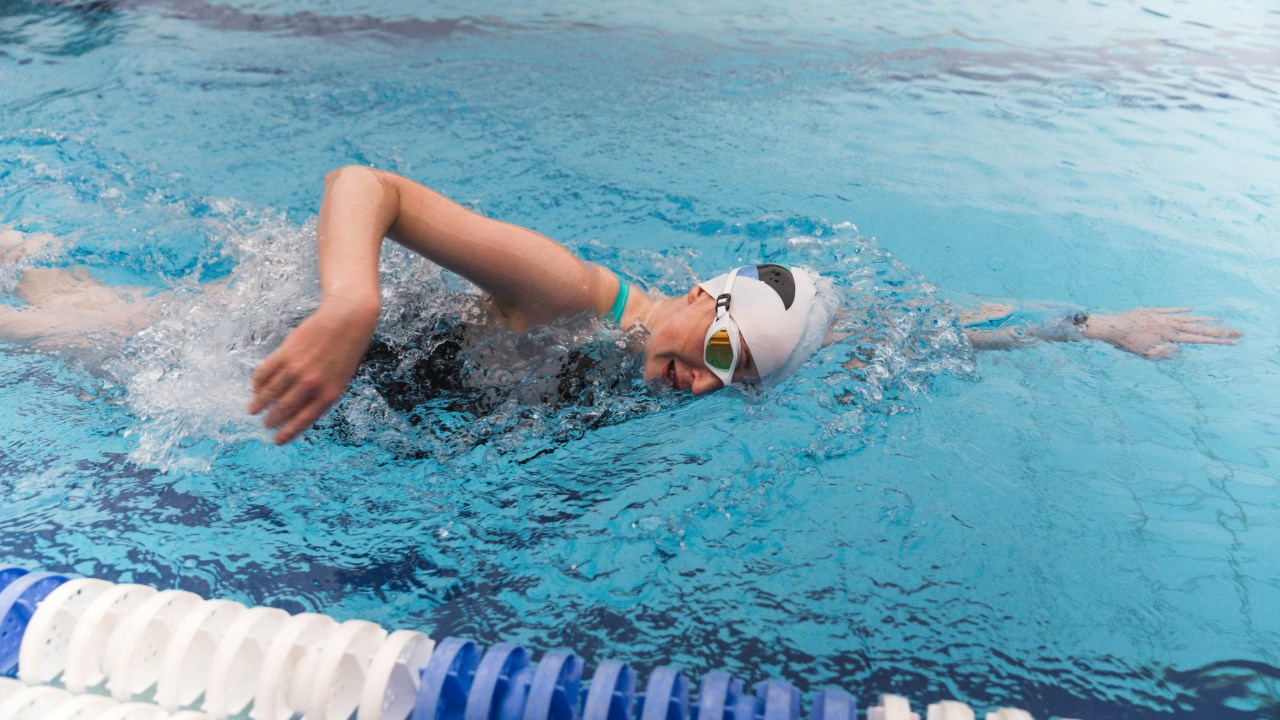
Sousa says you can weave VO2 max intervals into pyramidal training – the intensity distribution that appears to work best for amateur endurance athletes.
He adds: “A recent meta-analysis (Rosenblat et al, 2025) showed that following a pyramidal intensity distribution — majority of training time in zone 1 (low intensity), a moderate amount in zone 2 (moderate intensity), and the least in zone 3 (high intensity) — is the best approach for recreational athletes.
“This means that including both moderate intensity training (typical lactate threshold training) and high intensity (typical VO2 max training) appears to be the best way to develop the physiological and performance level of recreational athletes.”
The meta-analysis Sousa cites underscores the importance of low intensity training. By enabling you to accumulate volume while producing minimal training stress, this boosts not only your endurance but aerobic capacity through peripheral adaptations.
How to find your VO2 max?
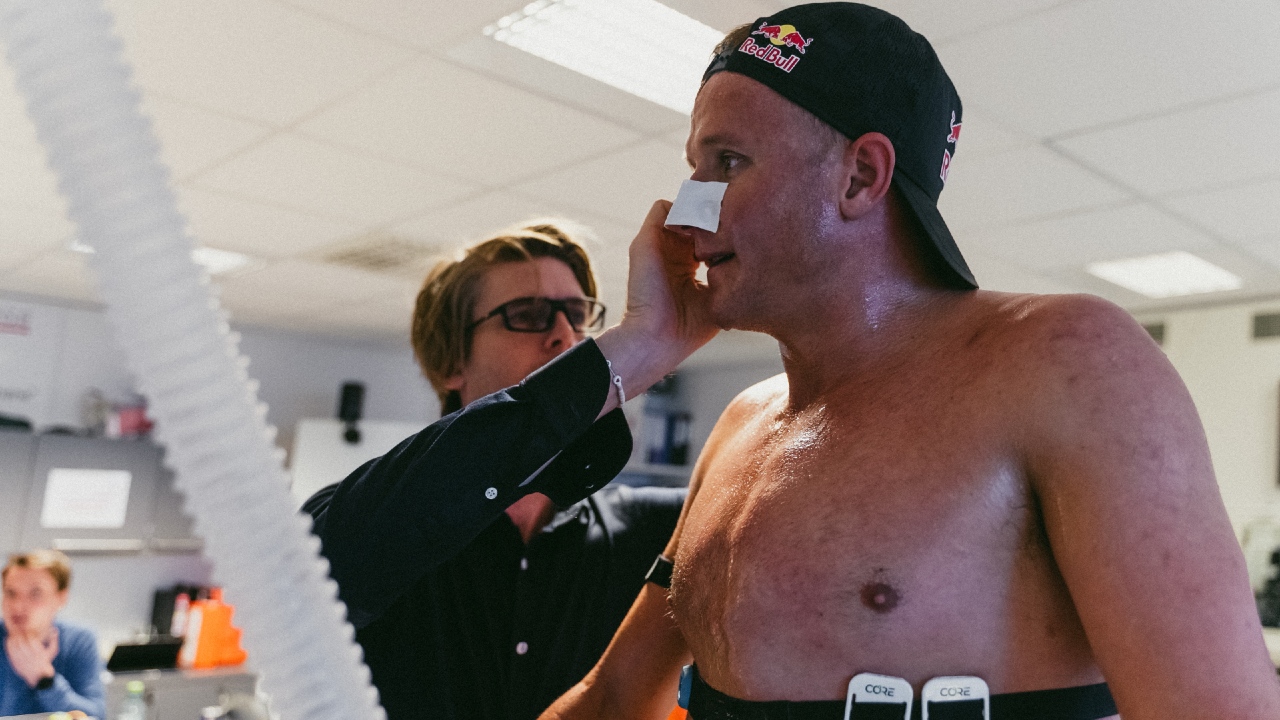
To improve your VO2 max, you’ll need to know roughly what it is so you can train at the correct intensity to stimulate adaptations.
In terms of heart rate, VO2 max is widely considered to equate to 90% of your maximum heart rate or 100% of your lactate threshold heart rate. Your heart-rate zones can differ for swimming, cycling and running, so it’s worth testing in each discipline.
If you’re training with power on the bike, as a percentage of Functional Threshold Power (FTP), VO2 max ranges from 106-130% – that’s zone 5 in Dr Andy Coggan’s seven-zone training zone model. Longer VO2 max intervals are generally set at the lower end of this range while shorter blocks might be right at the top.
The downsides of approximating VO2 max from training zones is that they rely on your threshold heart rate and power being accurate.
In Newbery’s experience, field-based FTP tests, for example, often overstate an athlete’s threshold, leading to them performing VO2 max intervals at too high an intensity. As a result, they’ll struggle to complete sessions and fatigue over time.
If you have the budget and facilities near to you, she recommends undergoing physiological testing to identify your actual heart rate and power at VO2 max as well as your real lactate thresholds.