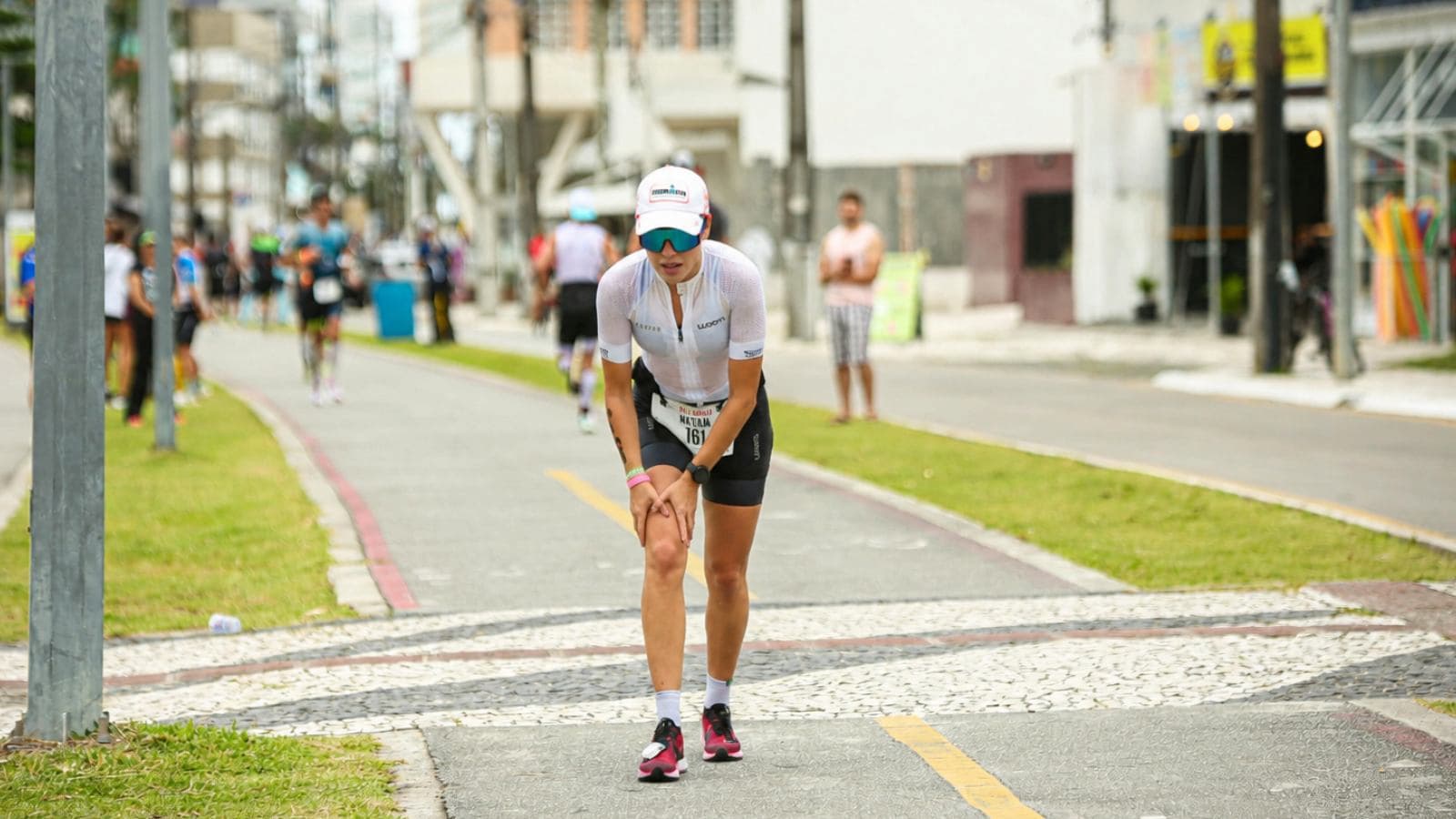


Patellar tendonitis is an overuse injury involving the patellar tendon, the strong tissue connecting the kneecap to the shinbone. It commonly causes pain just below the kneecap and may become noticeable during running, cycling, jumping, squatting, or climbing stairs. In triathletes, symptoms can develop when training stress increases faster than the tendon can adapt. Running volume, hills, harder cycling, strength training, and insufficient recovery can all contribute to the total load placed on the knee. Treatment usually involves managing that load rather than simply stopping all activity. Progressive strengthening, appropriate recovery, and a gradual return to normal swim, bike, and run training can help restore the tendon’s ability to tolerate exercise.
In Short
- Patellar tendonitis typically causes localized pain below the kneecap.
- Sudden increases in running, cycling, or strength workload can contribute.
- Continuing to overload a painful tendon can prolong symptoms.
- Complete rest is not always the best long-term solution.
- Persistent or severe knee pain should be professionally assessed.
What Is Patellar Tendonitis?
The patellar tendon transfers force from the quadriceps through the kneecap to the shin, helping extend the knee. It works repeatedly during running and cycling and experiences particularly high loads during activities involving forceful knee extension. The term patellar tendonitis is widely used, although persistent cases are often described clinically as patellar tendinopathy because long lasting tendon problems are not necessarily driven primarily by inflammation. For a triathlete, the important point is that the tendon has become unable to comfortably tolerate the amount or type of load currently being placed on it.
substantial swelling, locking or instability, or continues to worsen should be medically assessed.
Why Do Triathletes Develop Patellar Tendonitis?
The problem is often related to training load exceeding the tendon’s current capacity. A triathlete might increase running mileage while simultaneously adding hill sessions, harder bike intervals, and strength work. Each session may look reasonable individually, but together they can create a rapid increase in knee loading.
Common contributors include:
- Sudden increases in running volume.
- More speed or hill training.
- Increased cycling intensity.
- Heavy strength work added too quickly.
- Inadequate recovery.
- Returning too aggressively after time off.
This is why the principles in how to avoid running injuries as mileage increases in a triathlon are important when building endurance. Progression should consider the total stress created by all three disciplines, not running alone.
Do Not Ignore Increasing Knee Pain
Mild discomfort does not always mean serious damage, but repeatedly pushing through worsening pain can make the problem harder to manage. Pay attention to patterns. If pain becomes stronger during training, appears earlier in sessions, remains worse the following day, or starts affecting normal activities, your current workload may be too high. Do not rely on painkillers simply to continue the same training schedule. Reducing symptoms temporarily does not necessarily mean the tendon is ready for the same load.
Adjust Training Rather Than Automatically Stopping Everything
Complete inactivity may reduce symptoms temporarily, but it does not necessarily rebuild the tendon’s capacity for running and cycling. Instead, training often needs to be modified according to symptom severity and professional guidance.
That may involve:
- Temporarily reducing running volume.
- Removing faster running or steep hills.
- Reducing demanding cycling efforts.
- Keeping swimming if it is comfortable.
- Using alternative aerobic exercise when appropriate.
- Gradually rebuilding loading through rehabilitation.
The objective is to reduce aggravating stress while maintaining as much safe activity as possible.
Use Swimming to Maintain Aerobic Fitness
Swimming can sometimes help triathletes maintain cardiovascular training while running is restricted because it generally places less weight-bearing load on the patellar tendon. However, swimming is not automatically pain free. Strong push-offs from the wall or certain kicking movements may still irritate some athletes. Modify anything that reproduces symptoms. The goal is maintaining fitness without repeatedly aggravating the knee.
Adjust Cycling if It Irritates the Tendon
Cycling may feel easier than running for some athletes with patellar tendon pain, but it can still load the knee thousands of times during a ride.
Temporarily reducing:
- High resistance efforts.
- Hard climbing.
- Low cadence grinding.
- Long demanding rides.
- High intensity intervals
may make cycling more manageable. Understanding what is cycling cadence in a triathlon can help you recognize how gearing and cadence influence the way you produce force on the bike.
Check Your Bike Setup
Knee symptoms during cycling can sometimes be influenced by bike position and training load together. Saddle position, cleat setup, gearing, and rapid changes in riding volume may all affect how your knees experience cycling. Avoid making several major fit changes based purely on guesswork, particularly when pain is already present. The guidance in how to prevent your knees from hurting during long cycling can help identify common training and setup factors worth considering.
If symptoms consistently appear on the bike, a qualified bike fitter or appropriate healthcare professional may help identify whether your position is contributing.
Progressive Strengthening Is Important
Tendons need appropriate loading to regain their ability to tolerate exercise. Rehabilitation therefore commonly includes progressive resistance exercises rather than indefinite rest.
Depending on the individual and stage of rehabilitation, a program may use movements such as:
- Isometric knee extension exercises.
- Squats.
- Split squats.
- Leg press variations.
- Controlled knee extension exercises.
- Progressive heavier resistance.
Exercise selection, range of motion, resistance, and progression should reflect your symptoms and current capacity. What strength routine should triathlete runners do to stay injury free provides broader context for using strength training alongside endurance work.
Strength More Than Just the Knee
Rehabilitation should not necessarily focus exclusively on the painful area. Triathletes benefit from maintaining strength through the hips, calves, hamstrings, quadriceps, and trunk because running and cycling involve coordinated movement across multiple joints.
Useful exercises may include:
- Calf raises.
- Hip hinge movements.
- Step-ups.
- Split squats.
- Hip strengthening.
- Trunk stability exercises.
The broader principles in how to prevent running injuries with strength and mobility training in a triathlon can help make strength work part of regular training rather than something used only after injury occurs.
Manage Pain During Rehabilitation
A rehabilitation exercise does not necessarily need to produce zero sensation, but pain should not be ignored either. The appropriate amount of discomfort varies between individuals and injuries, which is why persistent cases benefit from professional assessment. More importantly, consider how the knee responds after the session and the following day.
If symptoms consistently become substantially worse after training, the load may need to be reduced or adjusted.
Return to Running Gradually
Do not use one pain free day as evidence that you are ready to return immediately to your previous mileage. Begin with an amount of running your knee can tolerate and increase gradually according to symptoms and professional guidance.
Early return to running may involve:
- Shorter distances.
- Easy effort.
- Flat terrain.
- Rest or cross training between runs.
- Gradual increases rather than sudden jumps.
Avoid simultaneously increasing distance, speed, and hills. When rebuilding, what training errors slow down running progress in a triathlon is useful because trying to recover missed fitness too quickly can create another spike in workload.
Reintroduce Speed and Hills Later
Faster running and hills can increase the demands placed on the knee, so they may need to return after easier running is already well tolerated. A sensible progression is generally to establish consistent easy running first, then gradually introduce more demanding work. Do not try to compensate for lost training by immediately adding intervals.
Recovery Still Matters
Rehabilitation exercises cannot compensate for excessive overall training stress. Sleep, nutrition, easier training days, and appropriate progression all support the recovery process. Triathletes must also consider the combined load of swimming, cycling, running, and strength work. A reduced run schedule can still leave the knee overloaded if cycling intensity and gym training increase dramatically at the same time. Using heart rate and perceived effort to control easier cycling sessions, as discussed in how can heart rate zones improve triathlon cycling speed and fitness, can help prevent every ride from becoming unnecessarily demanding.
Avoid Rushing Back Because a Race Is Approaching
If running needs to be reduced temporarily, maintain safe aerobic fitness through swimming or tolerable cycling where appropriate. Even shorter training options such as those covered in how do triathletes stay fit with one hour indoor workouts can help preserve routine when normal training is temporarily restricted. Adjusting a race goal or missing an event may sometimes be more sensible than turning a manageable problem into a persistent injury.
When Should You Seek Professional Help?
Knee pain should be assessed when the cause is uncertain, symptoms are persistent or worsening, normal walking is affected, or there is significant swelling, instability, locking, weakness, or pain following trauma. A sports medicine clinician or physiotherapist can help distinguish patellar tendon problems from other causes of anterior knee pain and provide an individualized loading plan. This matters because different knee conditions may require different management. Treating every pain below or around the kneecap as patellar tendonitis can delay appropriate care.
Common Mistakes
- Continuing the same workload despite worsening pain.
- Stopping all exercise for weeks without rebuilding tendon capacity.
- Returning immediately to previous running mileage.
- Increasing hills, speed, and volume together.
- Ignoring cycling load because the injury appeared while running.
- Making random bike fit changes.
- Using pain relief simply to train through symptoms.
- Doing rehabilitation exercises inconsistently.
- Rushing recovery because a race is approaching.
Practical Tips
- Track when symptoms appear and how they respond the next day.
- Reduce the activities that consistently aggravate the tendon.
- Maintain safe aerobic training where possible.
- Build strength progressively.
- Reintroduce easy running before demanding sessions.
- Consider the combined load of running, cycling, and strength training.
- Avoid sudden attempts to recover missed mileage.
- Get persistent or uncertain knee pain professionally assessed.
Actionable Takeaways
Patellar tendonitis is commonly associated with pain below the kneecap and often develops when training demands increase faster than the tendon can tolerate. For triathletes, the combined stress of running, cycling, strength training, and limited recovery should be considered rather than blaming one workout. Treatment usually involves reducing aggravating load while progressively rebuilding the tendon’s strength and tolerance. Swimming and modified cycling may help maintain aerobic fitness when comfortable, while structured resistance training supports the return to normal training.
Return to running gradually and reintroduce speed, hills, and harder cycling only as tolerance improves. If pain persists, worsens, or the diagnosis is uncertain, seek professional assessment rather than repeatedly training through it.