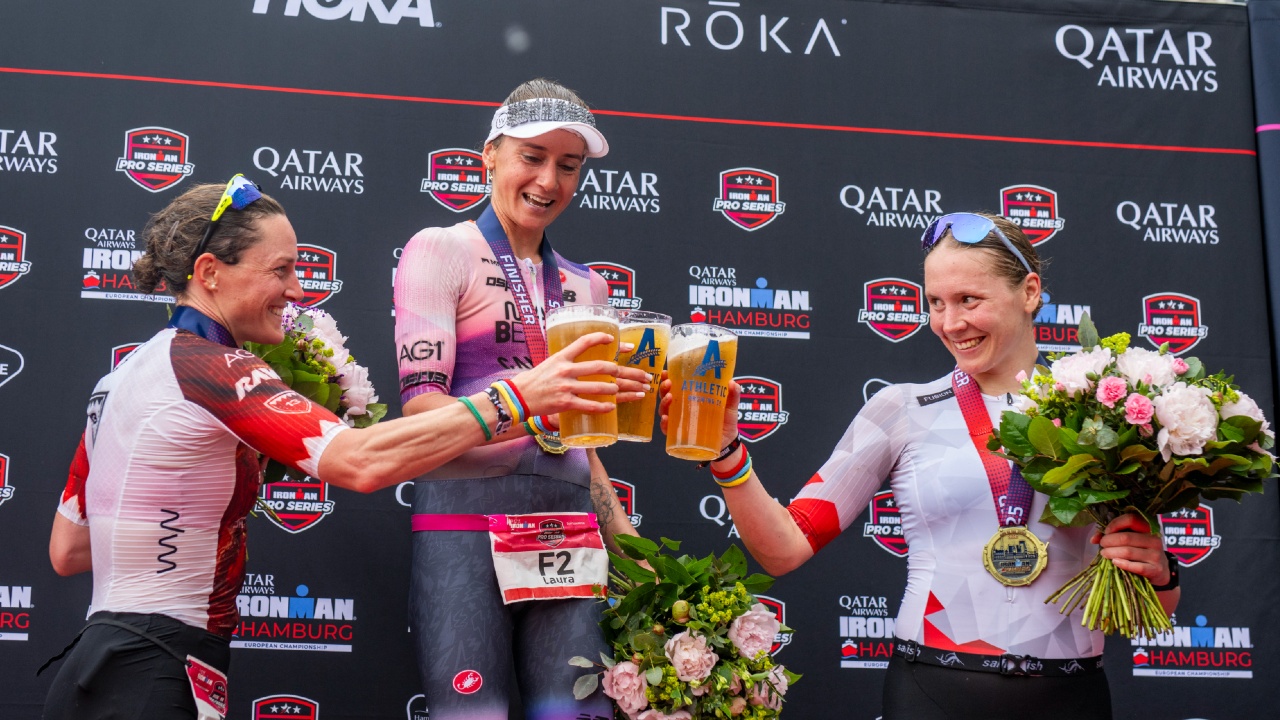


After crossing the finish line of your A race, euphoria can fade quickly into listlessness as you struggle to overcome physiological fatigue and a loss of purpose.
The aftermath of achieving a major goal doesn’t have to be disappointing though. After an appropriate period of recovery while keeping post-race blues at bay, you can recapture your pre-event form, maintain motivation by training for a different sport or race another triathlon sooner than you might think.
We’ve asked Jacob Tipper, of Jacob Tipper Performance Coaching who coaches Lucy Bryam, and Tom Bell, an experienced cycling and running coach from High North Performance, for their expert tips on negotiating the post-race period.
Take it easy but not too much
Recovery is crucial after a half or full IRONMAN and how long you dial things back depends on several factors: your fitness going into the event, the length of your race, whether you fuelled well or not.
Tipper says: “It’s likely recovery will have improved dramatically due to better fuelling and better trainers now compared to 5-10 years ago.
“Pros are turning around top class race performances in two weeks. The odd person can probably even push a week if travel is calm and everything goes well.
“That’s not to say I expect beginners to do this, but two weeks of chilling should be more than ample.”
Within these two weeks, Tipper recommends having three to four very chilled days before doing easy aerobic training for another week.
“Assuming you’re recovered mentally, there’s no reason you can’t start to go again,” he adds.
The risk of not restarting training at this stage could be a loss of progress.
Tipper says: “I do see it as a mistake that a lot of athletes do entirely take their foot off the gas for a sustained period of time, to the point they almost go so far backwards that by the time they go to start a build they’re almost starting from zero.
“They could have been building on the block they have just come out of.”
Expect and prepare for post-race blues
Tom Bell says a drop in mood and motivation after ticking off a big target is hard to avoid.
“A post-event slump is not a sign of weakness. It’s natural and it’s commonplace,” he says. “Remind yourself that feeling a little aimless for a while is normal.”
But he thinks you can mitigate post-race blues by anticipating them and accepting the feeling will almost inevitably arise when you suddenly lose structure.
Having planned an unstructured period post-event, you could then swim, run and ride just for pleasure, explore different routes or do entirely different activities hiking or racquet sports. “This can help you reset mentally while staying active,” he adds. A post-triathlon holiday can also be a good idea.
Bell also recommends reviewing your performance. This should hopefully cast a light on what you’ve achieved, identify areas to improve on and rekindle motivation to eventually target a new goal.
Training diligently for a race can turn you into a bit of a hermit as you skip group training sessions to focus on precise heart-rate and power targets. Once you don’t have to do this for a while, Bell points out you can swim, run and ride again with others, pause for longer at cafés and catch up with non-triathlete friends as well.
Find another, smaller goal
Although taking down time can be “mentally important”, Tipper says: “I would turn that around and say ‘why don’t you look at something else for a few weeks?'”
“Have your week and a half or two weeks’ recovery if you need that from your race and then go into an eight-week block where you focus on a different element of endurance.”
You could try shorter distance running races like 5k, 10k or 10 miles, for example, or try cross-country and track. On the bike, you dabble in cyclocross, club 10-mile TTs, chain gangs and hill climbs. Or why not try to improve your swim by training for an open-water swimming event?

Whatever you switch your concentration to, Tipper says the goal is to “find other ways of creating aerobic stimuli that aren’t mentally frightening and take you out of the cycle of constantly doing race, recover, race, recover.”
Put your form to good use
After some post-event recovery, you could capitalise on your form to attempt challenges you deemed too high risk in your build phase, such as setting a parkrun PB, taking a Strava segment or riding 100 miles as fast as possible.
“Because your fitness was in a really good place, then two weeks later on, as long as you’ve only taken, say, three or four days off, then kept ticking over, that fitness will 95% still be there,” says Tipper. “Do a couple of sharpening sessions, and you’ll be back where you were.”
Plan your next race
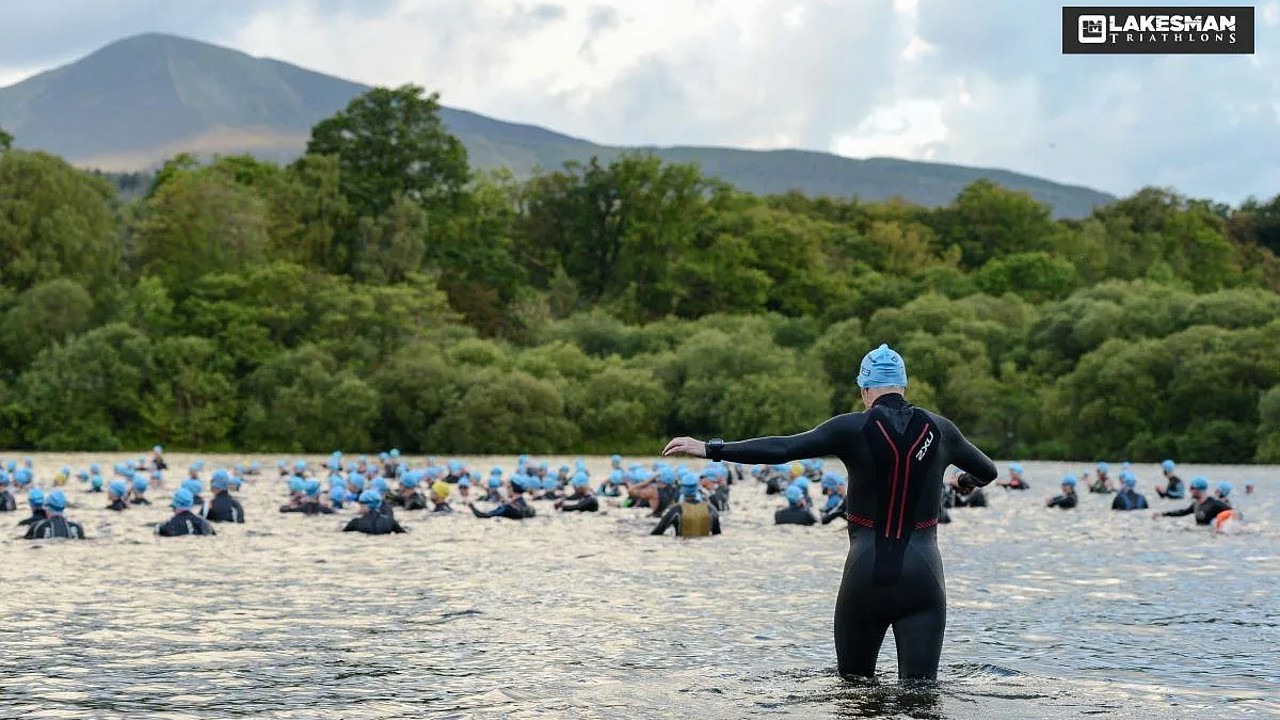
When it comes to scheduling your next race, there are no definitive rules regarding its timing. Traditionally triathletes were advised to leave a certain amount of time between races, but “that’s not really a thing physiologically,” says Tipper. “There’s no reason why you can’t do quite a lot of racing in a year.”
For example, note how pro triathletes like Kat Matthews combine the T100 and IRONMAN Pro Series. And how cyclists and runners race for much of the year in different formats.
In general then, plan your next triathlon according to when a race that appeals to you falls in the calendar. Tipper says this could be within four weeks provided you are satisfied with the way you performed last time.
“There’s no reason why that can’t be in four weeks after the first race, because you can have a couple weeks recover, a couple weeks sharpening up again and you’ll basically go as well as you did before,” he adds.
An exception would be if you wanted to take as much as 20 minutes off your marathon time.
Tipper says: “Then give yourself an appropriate amount of time to try and find that 20 minutes.”