

Triathlon involves discomfort. Your muscles become tired, breathing gets harder, and maintaining pace becomes increasingly difficult as the race progresses. But not every symptom should be pushed through. You should stop or seek immediate assistance when symptoms suggest that continuing could be unsafe. Chest pain, fainting, confusion, severe breathing difficulty, loss of coordination, serious injury, or severe heat related symptoms are very different from normal race fatigue. The ability to distinguish expected discomfort from a genuine warning sign is part of racing responsibly. Finishing is never more important than your immediate safety. Slowing down, walking, stopping at an aid station, or withdrawing from a race can be the correct decision.

In Short
- Normal muscular fatigue does not automatically mean you should stop.
- Chest pain or fainting requires immediate attention.
- Confusion and loss of coordination are serious warning signs.
- Severe breathing difficulty should not be ignored.
- Stop if an injury prevents normal movement.
- Heat illness can become dangerous quickly.
- Severe cold can also make continuing unsafe.
- Stop swimming and signal for help if you cannot continue safely.
- Follow race officials when conditions become unsafe.
Stop for Chest Pain or Fainting
Chest pain during strenuous exercise should not simply be treated as something to push through. Stop exercising and seek immediate medical assistance if you develop concerning chest pressure or pain, particularly when accompanied by symptoms such as:
- Severe shortness of breath
- Dizziness
- Fainting
- Unusual sweating
- Feeling seriously unwell
Fainting during exercise also requires medical attention. Do not continue simply because you are close to transition or the finish. Race position and finishing time become irrelevant when potentially serious symptoms appear.
Severe Breathing Problems Are Different From Hard Effort
Heavy breathing is normal during racing. Severe breathing difficulty is not. You should stop if you cannot regain control of your breathing after reducing effort or if breathing becomes unusually difficult compared with what you normally experience at that intensity. During the run, poor pacing can make breathing unnecessarily difficult. Learning how can you reduce fatigue during the triathlon run leg can help prevent normal race fatigue from becoming overwhelming. But unexpected or severe breathing problems should not be explained away as poor fitness.
Seek medical assistance when appropriate.
Confusion Is a Major Warning Sign
Mental function matters during endurance racing. You should be able to understand where you are, follow the course, communicate clearly, and make sensible decisions.
Warning signs include:
- Confusion.
- Disorientation.
- Inability to follow instructions.
- Stumbling.
- Unusual behavior.
- Loss of coordination.
- Difficulty staying alert.
These symptoms can occur with serious heat illness, medical problems, or severe physiological distress. Do not try to solve significant confusion by simply slowing down and continuing.
Know the Signs of Heat Illness
Hot races increase physiological stress. Athletes may experience declining performance and greater perceived effort as temperatures rise, but more serious symptoms require action.
- Confusion
- Collapse
- Severe weakness
- Loss of coordination
- Altered mental status
can indicate a medical emergency. Hydration planning matters, but drinking more water is not a guaranteed solution to every heat related problem. Understanding how to beat dehydration during an ironman triathlon can help athletes prepare for fluid losses, while appropriate pacing, acclimation, cooling, and race day adjustments are also important. If serious symptoms develop, stop and seek medical help.
Severe Cold Can Also End a Race
Cold, rain, and wind can make triathlon increasingly difficult. Shivering may occur when you become cold, but worsening coordination, confusion, extreme fatigue, or inability to use your hands normally can indicate a more serious problem. The bike leg can be particularly challenging because wind increases cooling. Knowing how can you prepare for extreme weather in a triathlon bike leg can reduce avoidable exposure through better clothing and race planning. Do not continue when cold has significantly impaired your ability to control the bike or make safe decisions.
Stop Swimming if You Cannot Continue Safely
Open water deserves particular caution because stopping is more complicated than on land. Panic, breathing problems, swallowing water, cramps, dizziness, or exhaustion can make continuing unsafe.
If you are struggling:
- Reduce your effort.
- Roll onto your back if appropriate.
- Use a safe resting stroke if possible.
- Signal race safety personnel.
- Follow their instructions.
Understanding how do you start an open water swim in a triathlon can help reduce early panic by encouraging a controlled start rather than immediately fighting for pace and position. Never hesitate to signal for assistance because you are worried about losing time.
Dizziness After the Swim Needs Attention
Some athletes feel temporarily unsteady when moving from horizontal swimming to standing and running toward transition. However, significant or persistent dizziness deserves caution.
If you cannot:
- Walk safely
- Feel faint
- Remain severely disoriented
stop and ask race staff for help. Understanding why do you feel dizzy after swimming in a triathlon can help athletes recognize possible contributors and prepare for the swim to bike transition. Do not immediately jump onto your bike if your balance and coordination are clearly impaired.
Take enough time to determine whether you can continue safely.
Stop When an Injury Changes Your Movement
Pain alone can be difficult to interpret during a long race. Minor soreness, tired muscles, and general discomfort are common.
More concerning signs include:
- Sharp pain.
- Sudden severe pain.
- Inability to bear weight normally.
- Major swelling.
- Significant loss of movement.
- Pain that forces you to alter your stride substantially.
Running with a major change in movement can increase stress elsewhere. Athletes with previous injuries should be especially cautious. Understanding how can runners recover from a hamstring strain can help reinforce why returning to normal loading should be progressive rather than forced. Walking briefly may help you assess a minor problem, but serious symptoms justify stopping.
Mechanical Problems Can Make Cycling Unsafe
Not every reason to stop is medical.
Stop riding if you experience problems involving:
- Brakes.
- Loose wheels.
- Major tire damage.
- Steering.
- Cracked components.
- Unstable handlebars.
- Serious drivetrain failure.
A basic check before racing can prevent some problems. Following what you should check on your bike before every ride is particularly useful before an event where a mechanical failure could end your race. If you cannot determine whether the bike is safe, get technical assistance rather than continuing at speed.
Stop if You Cannot Control the Bike
Fatigue can reduce concentration, reaction speed, and bike handling. This becomes particularly important on technical descents, in heavy rain, or during strong winds. If you are so fatigued, dizzy, or unwell that you cannot reliably steer, brake, or respond to hazards, continuing is unsafe. Understanding how can you improve downhill cycling can build confidence and technique, but skills cannot compensate for severe physical impairment. Get off the bike in a safe location and seek assistance.
Do not take unnecessary risks simply to reach transition.
Walking Does Not Automatically Mean Quitting
Stopping and slowing down are different decisions.
During the run, walking may allow you to:
- Lower effort.
- Eat or drink.
- Cool yourself.
- Manage a steep hill.
- Regain pacing control.
A short walking period can be a sensible race strategy. Understanding why is your starting pace important for long distance running can also help prevent the aggressive early pacing that causes many athletes to slow dramatically later. If symptoms improve and there are no medical warning signs, you may be able to continue. If symptoms worsen, stop.
Fueling Problems Need Early Action
Long distance triathlon requires consistent energy intake. If you become:
- Nauseated
- Lose appetite
immediately forcing large amounts of food may make the situation worse. Reduce intensity and assess what is happening. Good preparation through how to fuel for a 2 hour cycling ride in a triathlon provides a useful foundation for practicing carbohydrate intake and stomach tolerance during training.
- Severe vomiting
- Inability to keep fluids down
- Confusion
- Collapse
- Rapidly worsening symptoms
deserve medical attention. Do not assume every race problem can be solved by another gel.
Race Officials Can Stop You
Race organizers and medical staff may remove athletes when continuing is unsafe.
Reasons can include:
- Severe weather.
- Dangerous water conditions.
- Medical concerns.
- Course hazards.
- Missed cutoff times.
- Unsafe cycling behavior.
Follow their instructions. Athletes sometimes become emotionally committed to finishing after months of preparation, but race officials are responsible for wider course safety. A cancelled or unfinished race is disappointing. A preventable medical emergency is far more serious.
Do Not Let the Finish Line Change Your Decision
Being close to the finish can make athletes ignore symptoms they would normally take seriously. The body does not become safer because only a few miles remain. If serious warning signs develop, stop. Similarly, do not allow sunk cost to influence the decision. The fact that you trained for months, paid for travel, or completed most of the course does not make continuing medically appropriate. There will be other races.
Common Mistakes
- Treating chest pain as normal race discomfort.
- Ignoring confusion or loss of coordination.
- Continuing to swim while panicking badly.
- Riding while severely dizzy.
- Running through an injury that changes your stride.
- Ignoring dangerous heat or cold.
- Riding a mechanically unsafe bike.
- Assuming every problem can be solved with food or water.
- Continuing only because the finish is close.
Practical Tips
- Know your normal race sensations.
- Slow down early when something feels wrong.
- Signal swim safety staff when needed.
- Use aid stations to reassess minor problems.
- Stop immediately for serious warning signs.
- Tell medical staff exactly what you are experiencing.
- Never ride when balance or coordination is impaired.
- Follow race official instructions.
- Put safety ahead of finishing time.
Actionable Takeaways
Triathlon requires athletes to tolerate fatigue, discomfort, and difficult moments, but toughness should not mean ignoring serious warning signs. Chest pain, fainting, confusion, severe breathing problems, loss of coordination, serious injury, severe heat illness, or an inability to safely control your bike are reasons to stop and seek assistance. Other problems may initially justify slowing down, walking, resting briefly, or reassessing at an aid station.
The important skill is recognizing the difference. Prepare for weather, pace appropriately, practice fueling, maintain your equipment, and know what normal race fatigue feels like for you.
If continuing appears unsafe, stop. Finishing one triathlon is never worth risking your long term health or immediate safety.








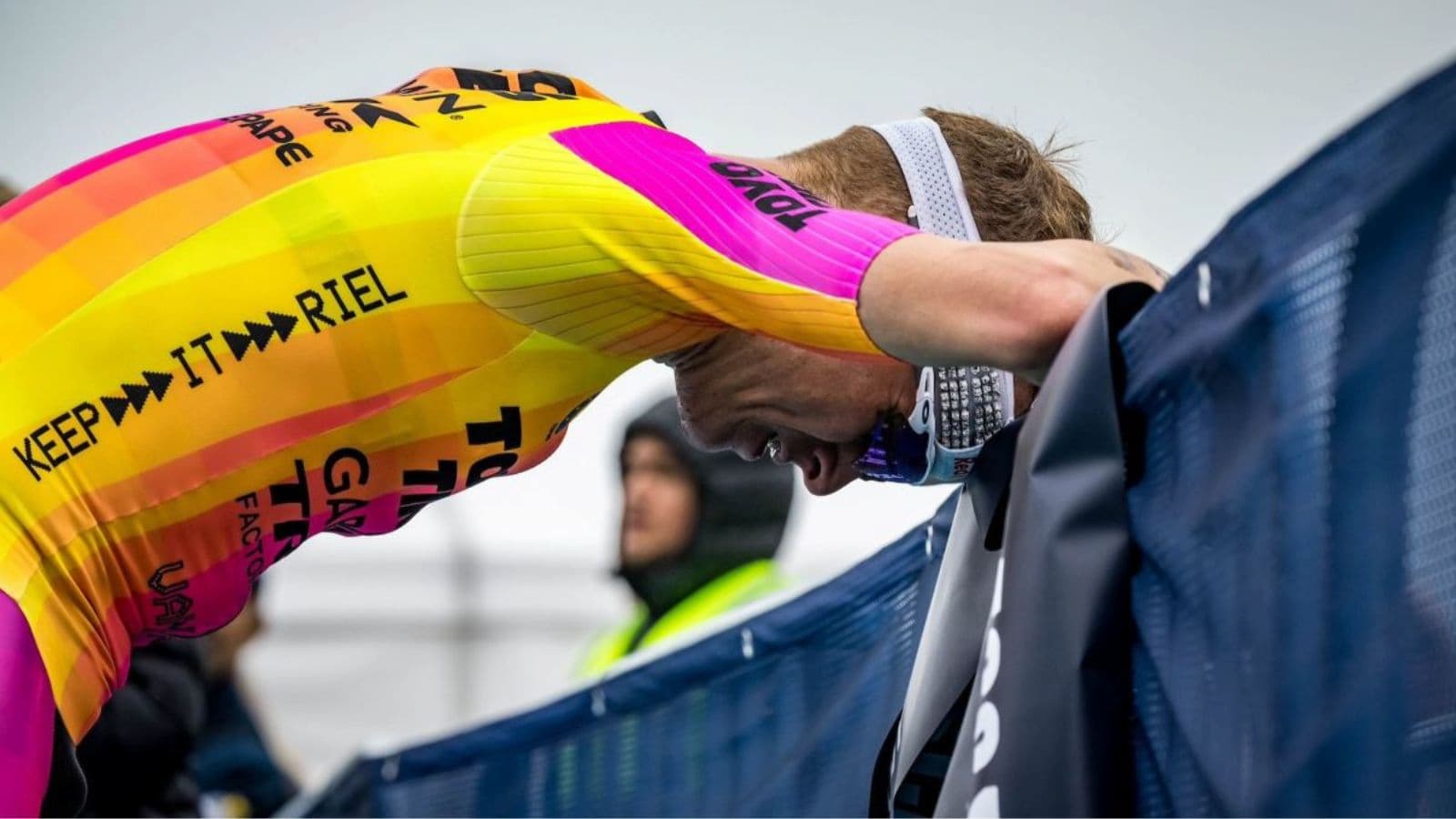
![Jonas Schomburg wins in Kalmar 2026. [Photo credit: IRONMAN]](https://www.tri247.com/wp-content/uploads/2026/08/1H5A7725_Gfhj69jc_20260815012118.jpg)