

Merrell Mudman Run
Sat 22nd November 2008
Merrell Mudman
Sat 22nd November 2008
Ford Ironman Arizona
Sun 23rd November 2008
Kings Wood Mountain ...
Sun 23rd November 2008
Trybike Chilly Duath...
Sun 23rd November 2008
Burntwood Autumn Aqu...
Sun 16th November 2008
Burntwood Autumn Aqu...
Sun 16th November 2008
Cirencester Off-Road...
Sun 16th November 2008
Cirencester Off-Road...
Sun 16th November 2008
Silverman Full Dista...
Sun 9th November 2008
|
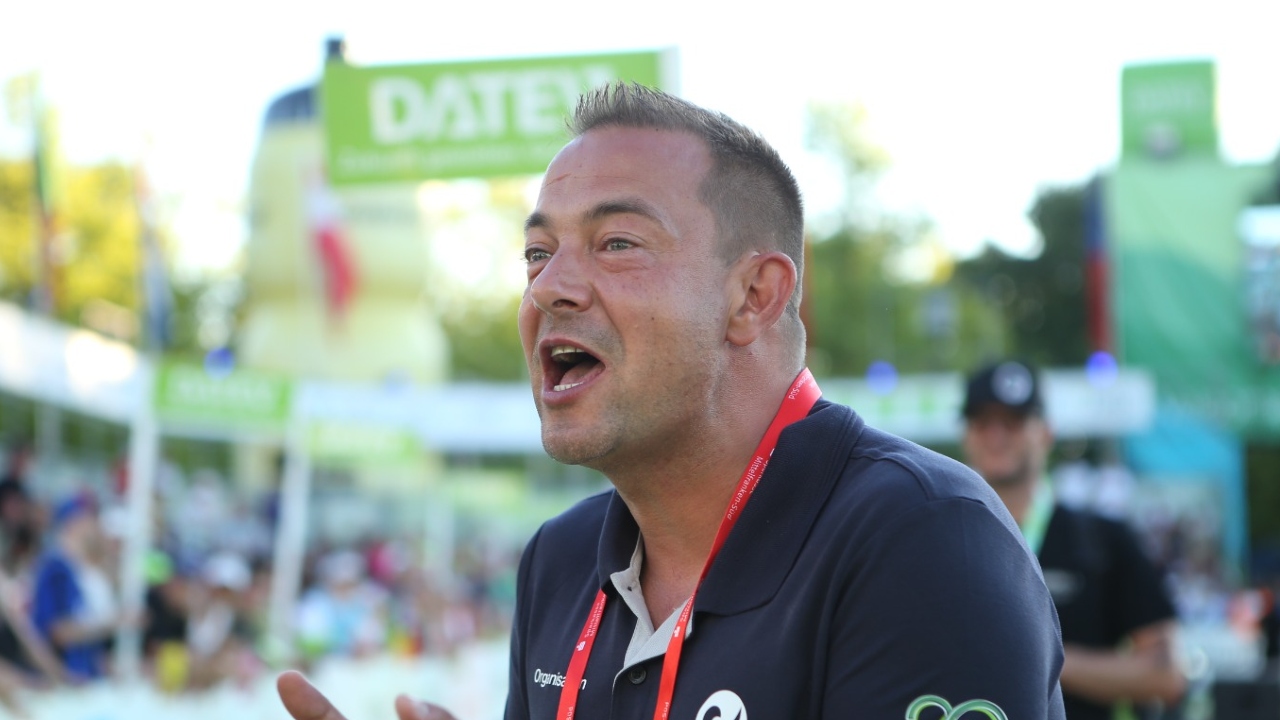
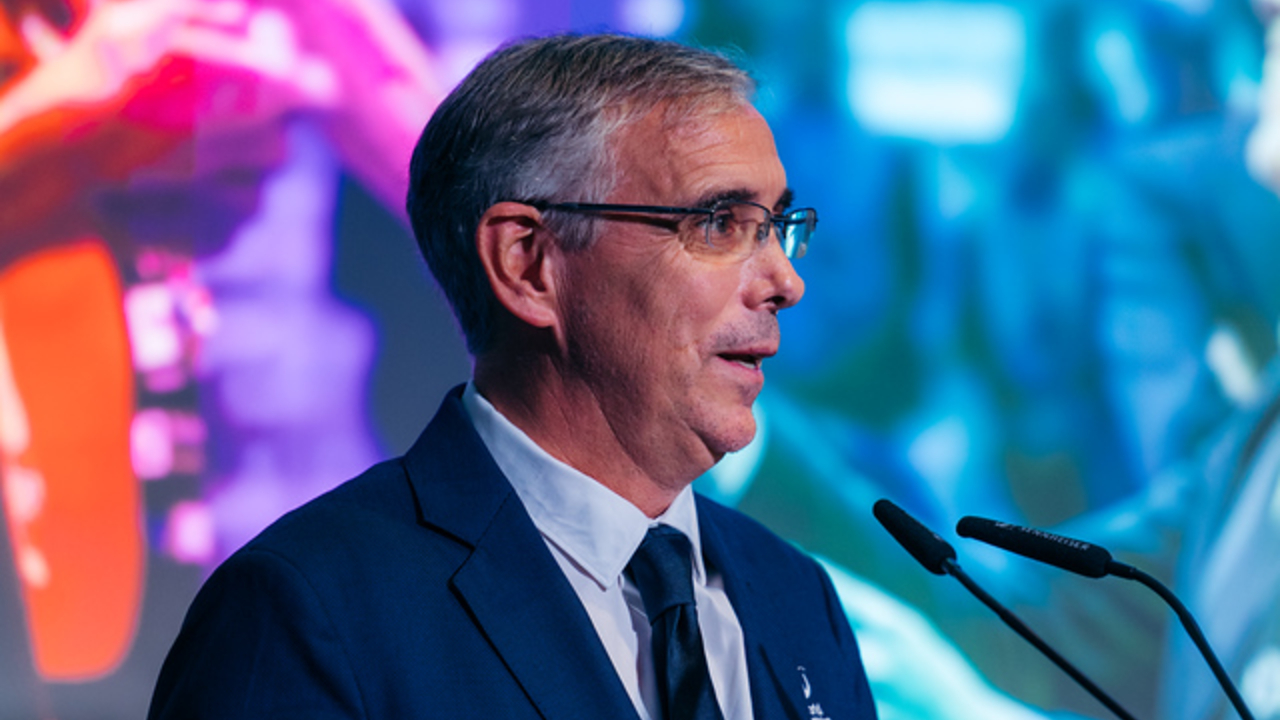
![]() Friday Interview: Don Ryder Posted on: Friday 7th September 2007 Bookmark This | Print This Page | Send To A Friend | Post A Comment Following his third time announcing at the Ironman UK race at Sherborne, Tri247 managed to track down veteran race announcer Don Ryder prior to his departure for the 70.3 event at Monaco. His 20 plus years involvement in the sport as athlete, announcer, volunteer and race owner; combined with an infectious enthusiasm for all things triathlon, make him a fascinating person to talk to, as Mike Clyne found out! Their session contains so much good stuff that rather than edit it down we are running it as a two-parter. Tri247 Don, how did you get caught up in the world of race announcing? DR My first Ironman was Canada in 1986 and then Hawaii the same year. I didn’t really know much about the sport; mind you most people didn’t in those days, but still thought it looked like fun. I made the cut-off in the first event by three minutes on a bike I bought in June and I had only started swimming in May! My main bike training was a 1,100 mile ride from Vancouver to San Francisco in ten days finishing two weeks before the race. After Ironman Canada I became one of the three owners of the race, although I was then living in Vancouver working in my own business. I mainly looked after the business side of the race and we also had a Race Director based in Penticton. Back in those days there were only three qualifiers for Hawaii (NZ, Japan and Canada) whereas now there are 25+ qualifiers all over the world. As we had a RD (Race Director) it meant on race day I could do what I wanted to help and so I used to help Steve King, the ‘voice of Ironman Canada’, monitor the radios for reports of how the race was going, use binoculars to see who was coming and then read off the paper lists that we had so Steve could announce them (no computers or chips then). Steve has such an amazing memory all he needed was a name and he could then reel off facts about them – he was my mentor and I feel like I learned from the best (as we were speaking to Don he was in his hotel room for Monaco 70.3 prepping for the race). In 1989 Steve told us that he would be competing in the race and my partners said you are the only one who knows the announcing system so you’ll have to do it. Back in those days there were only a couple of people doing announcing; one of whom was Mike Plant, the original voice of the Ironman. He wasn’t available due to a previous commitment so I had to do it. I dragged in Tony Davies from my club in Vancouver, he also used to help Steve, to help me and that was my first race announcing. I’m glad it wasn’t recorded as I was so nervous, my voice was shaking and then suddenly I realised that it wasn’t as much about announcing, more just talking to the athletes, to announce them over the line and that helped me relax. Tri247 So after this baptism by fire that you probably thought was a one off, how did you get your next assignment? DR In those days Hawaii was owned and run by Valerie Silk, who I had met at Kona previously. She had Mike Plant doing the main announcing but asked me to help at T2 (in those days it was in a separate location) with a local radio announcer. Then in 1991 the WTC (who had purchased the Hawaii race from Valerie Silk) had Mike Reilly (who now announces Kona and the US races and had been working with Mike Plant), Steve King and I doing the job. And that was the start. Tri247 At races people may wonder why you or one of the other well known announcers is doing the job and not a ‘local’ person. DR The Ironman and 70.3 series are international events with a world championship for both. Not unlike the Olympics, it is important to have someone with experience around the world, whose knowledge can help put the ‘local’ event in context of the overall concept. Someone who has personal knowledge and experience about the ‘big picture’ and who can communicate about the protocols, the other events around the world, the underlying themes, the trends, the origins, the history, the myths, the legends, the athletes previous times, whether they are pro's or age groupers and so on.
There are five international commentators, one of whom who is at the vast majority of every full Ironman and lots of the 70.3s. Starting last year with the addition of the 70.3s and the number of races now on the calendar – some weekends there are three or even four events all on at the same time - it is impossible to get to all of them now. Everyone works at something else as their main source of income and have families and commitments at home to handle. Some of the other names, you would also know, Mike Reilly from the USA, Mike Hamel of Germany, Whit Raymond of the USA, and Tom Ziebart of the USA. All are very professional, experienced announcers who have been around the sport for quite awhile and are very passionate and knowledgeable. Steve King of Canada has just retired after close to 25 years of doing this so I haven’t included him in the current list. I have had the pleasure of working with all of them and I can personally attest to their skill and dedication. Paul Groves, is starting to become one of them as well, having in the past mostly focused on (and still doing) ITU events. He worked his first international WTC other than Sherborne earlier this year when he went to my country, Canada, to announce at the inaugural Newfoundland 70.3 in July. It had been the site of an ITU World Cup for years and he had announced at that event previously. Just as a couple of anecdotes – and to give you an idea of the type of travel international announcers face- when Paul flew from the UK to Newfoundland, the most easterly part of Canada – he was actually closer and spent less time flying there than I would have coming from the most westerly part of Canada which is Vancouver British Columbia.! My two longest trips have been Ironman South Africa and Ironman Western Australia. Both these trips take approximately 32 hours door to door with at least one stop en route as well as numerous time zones – ahhh!, the glamour of travel. Luckily, I am a private pilot and love airplanes and airports so that helps. Also, I have no problem sleeping on planes and actually enjoy the time up there away from mobile phones and emails. I can get caught up on my reading or even just take time to reflect on things and plan things without constant distractions. I don’t even watch the movies, as I like a little quiet time to counterbalance the busy world we all live in. The downside is missing family and friends and staying connected to them on the road…. What helps me to feel connected is the family of triathletes since travelling to a race there always seems to be fellow triathletes doing the same and also the fact that all the race organizers and their team are part of the family as well. For staying in touch with home, I am very thankful for the internet because of email and Skype. In spite of some of these downsides, I so enjoy the sport and the marvellous people and friends I have around the world that I wouldn’t willingly give it up for all the tea in China! Tri247 Your next Ironman was in 1991 back in Canada. How different did it feel after five years having been an owner, race director, volunteer and announcer to then go back to race? DR It was a whole new view – I had an appreciation of what it took to put the race on. I stopped at every aid station to thank the volunteers and was so thankful for what they were doing, to be out all day looking after every one of us. I think I had an improved respect and appreciation for the event. Actually my first exposure to triathlon was when I was living in Hawaii in 1985 and I saw the race as a volunteer at an aid station which is what led me to sign up for the race (no roll down or lottery in those days!). Tri247 So how long were you one of the owners of Ironman Canada? DR We sold it in 1991 to two brothers who had it for a couple of years and then they sold it to Graham Fraser who then built the Ironman North America series. Tri247 Tell us about the Ultraman and your involvement (Ultraman is 6.2 mile swim, 261.4 mile bike ride and a 52.4 mile run (www.ultramanworlds.com). DR Curtis Tyler started Ultraman in 1982. He had been part of Ironman with Valerie Silk, had started the event but by the early 90s wanted to pass it on. My first exposure to Ultraman was in 1986 when living in Hawaii I helped crew for an English guy I had met at the Kona race called Gary Rogers who finished in 13th place. A friend of mine called Jane Bockus, who was friends and neighbours with the Tyler family, had taken it over after Curtis wanted to pass it on. In September 1992 Hurricane Iniki had hit Hawaii and there were still 11 or 12 athletes who wanted to race so we took it over and continued to put it on but trying to keep the original feel to the race which is all about the aloha (love), ohana (family), and kokua (help). By 1994 we were running the event. After this we wanted to have an Ultraman in Penticton so with the aid of Steve Brown and Steve King we started it – Steve Brown is still organizing the event (www.ultramancanada.com). It was great to be involved in both Ultraman and Ironman Canada but I saw my involvement in race ownership as more about helping the events get started rather than a business in itself. My opportunity now to get involved across a large number of events is just perfect. Tri247 I assume that race announcing isn’t your fulltime job? DR I wish! My business was real estate development and now I do some consulting in that field which is very flexible and that allows me to travel to do the announcing which is both my passion and hobby. I love the opportunity to announce at races and hopefully to make a difference to people’s race day. Tri 247 Although not your full time job, it seems it is a time consuming hobby! DR It does occupy a lot of my time and focus, but since I got involved in the sport it always has because I love it and the people involved. Every day, I am keeping up with the world of triathlon either through the web, reading magazines or chatting with friends in the sport. Preparation and the gathering of information and knowledge is a constant year round (because of the southern hemisphere’s race season which is opposite to ours). Then, there is the actual work during my season which typically goes from March to December. This year I started off at Ironman South Africa (March) followed in that country by an amazing seven day mountain bike challenge called the Cape Epic – the Tour de France of mountain bike racing. Then it was announcing with Steve King at the Vancouver Sun Run 10k which has over 50,000 participants (April), then Wildflower in California (May), Escape from Alcatraz (June), Baja 70.3 in Mexico (June), Wimbleball 70.3 (June), Ironman France (June), Ironman Austria (July). I volunteered at and watched Ironman Germany (July) and have just done IMUK (August). Now I’m at Monaco 70.3 as I wasn’t able to go to Penticton this year, then it’s a small triathlon in California in September, the Vancouver Canucks (Ice Hockey) Fun Run in September, the Scott Tinley Adventure races (September), Kona for Hawaii Ironman (October), Treasure Island triathlon in San Francisco (November), helping at Clearwater for the 70.3 World Championships (November), Ultraman Hawaii in November and finally to Ironman Western Australia (December). With the sport and the number of events growing the way it is, there are already discussions with race directors about adding to that schedule. I do obtain a lot of frequent flyer miles as I travelled just over 84,000 miles last year and looks like it will be the same this year. Next year I will probably be based in Europe for the summer and doing some writing for Triathlete magazine here and there. I do love where I live but as someone whose grandparents came to Canada from Liverpool (and not sure where before that) and my degree is in history so being in Europe is just perfect. Europe and its people have been central to the formation and development of the world and in developing the concepts of democracy, industrialization, western culture, architecture and western philosophies. Whenever I travel to an event, I try to fit in at least one day or visit to something that is culturally significant- museums, places of historical or cultural significance or natural beauty. For example, after Sherborne, I drove down to the Jurassic Coast – unbelievably beautiful and unique. Tri247 What were your thoughts about the concept of Team Zero2Hero that supported IMUK winner Scott Neyedli? DR I think this encapsulates the essence of what triathlon is all about – the idea that the camaraderie of the sport that can support the fastest and the slowest. I still enjoy sports that are win / lose but for most people there is a chance that everyone can be a winner in whatever they are aiming for. This doesn’t take away for people competing for age group positions or Hawaii slots but it still offers everyone the chance to achieve their goals. Part two of this interview will run next Friday, don't miss it! ![]()
![]() 3 comments | Post a comment Re: Friday Interview: Don Ryder Posted by ultraman1992Posted at 00:15:00 20th Nov 2008 Reply to this Hello Don nice to see you at several websides now I know you are great man I remember our happy time ULTRAMAN 1992 hawaii I am looking for your @ address I want to cvisit Vancouver next weeks with best regards from beer area bavaria Landshut Volker volker502000@yahoo.de Re: Friday Interview: Don Ryder Posted by ChrissoPosted at 00:15:00 20th Nov 2008 Reply to this Don Ryder is legend. He is a credit to the sport of Ironman and is inspirational in the words in which he uses to not only athletes, but to volunteers and spectators alike. His encouraging style and dedicated calling to all athletes, regardless of time, is absolutely brilliant and could never be faulted. His anouncing efforts in the 2004 and 2005 Ironman Western Australian events is still spoken about now within the WA community - some 2 years later - and was a highlight in a fantastic day. Don - don't lose the humour! The vast majority of us truly enjoy a good laugh - especially after completing an ironman. The sport requires some serious training and there is a tendency for us athletes to take ourselves too seriously at times - you are able to remind us that we should enjoy it as we really don't know when it will stop. And i personally was more than happy to recieve a medal from you - you have completed the ironman event on multiple occassions and truly know what is involved in leading up to the event as well as on race day. Don - we hope to see you back at Ironman WA From one of the "Awesome Aussie Athletes" you bought home, Thanks a million Don - and please don't ever change! We love your style!! |
Posted at 00:15:00 20th Nov 2008
Reply to this
Ironman pasta party is hardly a place for such humor - in my opinion.
However I am not aware of the demographics of the sport. It is my impression that most Ironmen and Ironwomen do not get drunk or care much about sexual innuendos, but care about active and healthy lifestyles.
Also I would prefer if people who do give medals and announce winners were at least respectable athletes. I would be proud to receive a medal from Norman Stadler or Peter Reid, Dan Ryder is not my first choice for a prize-giver.