Tue 22nd May 2012
EventsResultsTrainingSwimBikeRunProductsNutrition
©
The art of cycling: cornering
Posted by: Editor
Posted on: Monday 15th November 2010


Tags  Art Of Cycling  |  Cornering  |  Mark McKay


Bookmark This  |  Print This Page  |  Send To A Friend  |  Post A Comment

Following on from Mark McKay's last article on climbing, this week he takes a look at faster and better techniques for cornering, and explains how to improve your performance without spending more energy.

Cornering faster

This is a great area in which to improve cycling performance, which does not depend on better fitness in order to achieve results. It is something to practise every time you go out on the bike anytime of year. Practise your technique on your own or in a group; maybe you could join a group of local bikies on a Sunday ride, or maybe progress to a higher pace with a chaingang or even some bike race events. Again – practise, practise, practise.
Your emphasis in seeking to improve your cornering technique (including descending) should be on adopting the correct body position in addition to taking the right line for smoothing out the corners. It helps to get a true feel for what your bike can do when leant over into corners and the more you ride on the road the more you will get this feel. Turbo trainer work will simply not help here.

Getting your bike set-up right is very important to your cornering technique and general bike handling. Even slightly out and optimum balance will be impossible to achieve, especially as speeds increase. Correct saddle height, saddle set-back, handlebar stem length and height, handlebar width, brake lever position, shoe-plate positioning and even tyre pressure – all have a bearing on how your bike feels and handles under race pace pressure. It is certainly worth spending a lot of time making sure that your bike set up is the best it can be for you and this may mean continuing to make minor adjustments after every ride for as much as six months or more. So in short; the better bike riders think like and act like the bike is an extension of themselves, and this is what you should be aiming for too, if you are to go faster on race day.
The technique

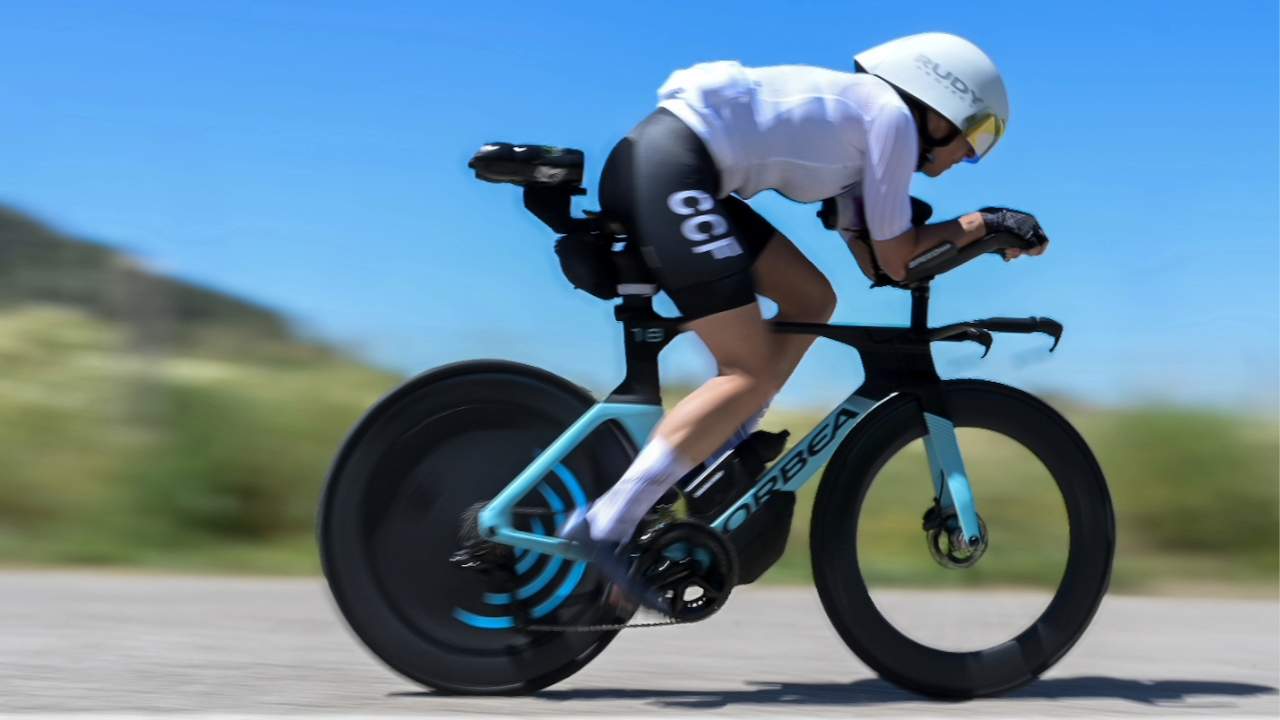
Even if you do most of your racing on an aero-bike set up, you should still do most of your road based training on a normal road bike set up with dropped bars. This (normal riding) is where you should start to practise getting your cornering/descending technique perfected.

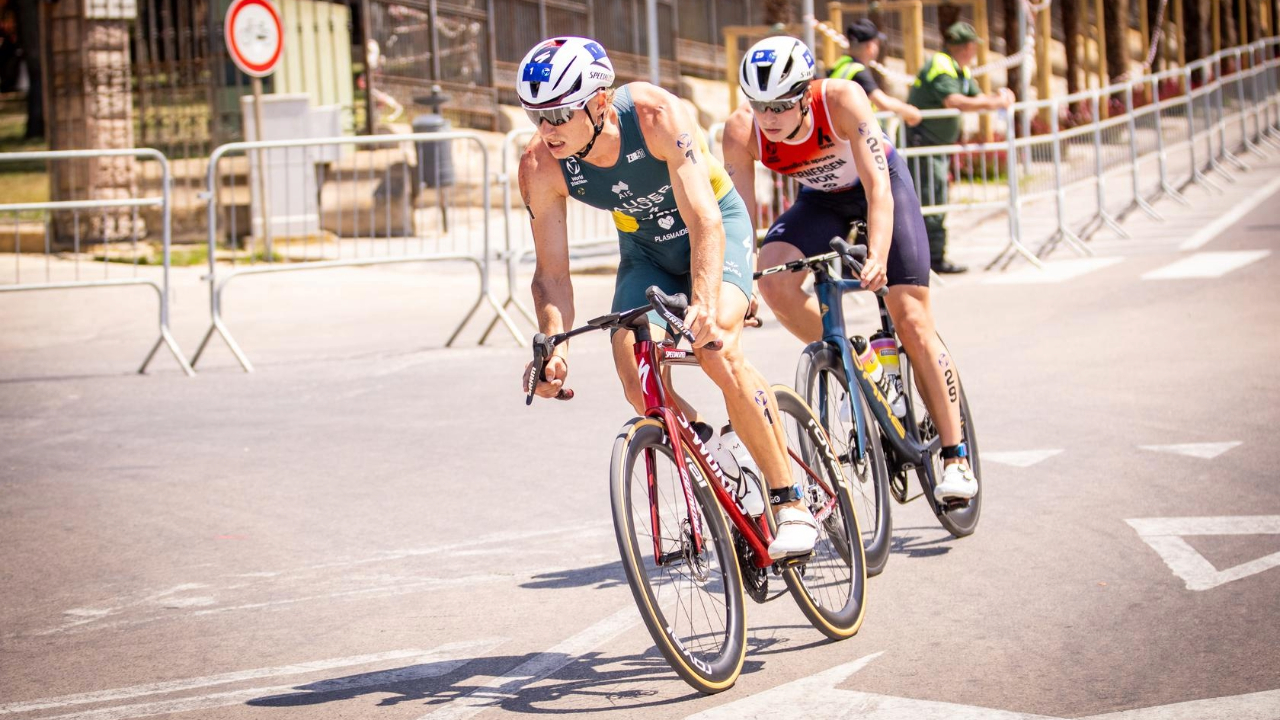
Above the waist: try and spend at least some time on your rides cornering/descending on the drops, away from the brake hoods. This will give you your lowest centre of gravity – especially if you can get your head as low down as possible too (with your chin only a few inches from the stem). Although this may feel strange at first, leading you to feel uncomfortable, it is in fact the most stable position for cornering because of the lower center of gravity. Try to keep your arms almost straight too, with maybe just a slight bend to promote relaxation in the shoulders. Practise adopting this position on a straight road first and when you feel more comfortable with it (this may take several days or weeks), you can progress to using it for improved cornering.

Below the waist: all but the tightest of bends can usually be pedaled all the way through. For those that can’t, on your approach to the corner, raise your inside foot to the 12 o’clock position so that you are ready to lean into the bend. As you do lean, stick your raised knee out (away from the bike) and as your outside foot is now in the 6 o’clock position, you should gently push down on this pedal (as if trying to push the pedal to the ground) as you go round the corner before starting to pedal again. This pushing down with the outside foot improves grip on the bend. When approaching a bend or corner it is important not to just look at the road only a few metres in front, but to look ahead for your exit out. You don’t want any surprises as you come out of the corner – especially if you are cornering at pace.

Get into the habit of cornering in the saddle and changing down a gear just before you enter the corner so that you can pedal out at a good cadence as you exit the corner. This is good technique, as getting out of the saddle to accelerate in a big gear after every corner will mean that you fatigue quicker. There are obviously certain other factors that you will need to perfect such as taking the racing line and judging when to brake, etc, but that may be for discussion on another day.

Mark's next article will focus on group riding.


Mark Mckay is a British Cycling Coach and was also a Cycling Coach to the British Triathlon Performance Programme. He is a former professional/elite racing cyclist and represented GB for eight years to World Championship level. Winner of the 1992 Star Trophy (Premier Calendar) and over 100 bike races he is also a former elite duathlete with several wins including the 2004 National Championship and a Bronze medal at the 2005 World Long Course Duathlon Championship.


Related Articles
©
Over the last couple of months with the help...
Posted on: Thu, Dec 30, 2010 at 08:59
©
Over the last few months you will have read...
Posted on: Sun, Oct 31, 2010 at 08:30
From Tri247's video sofa at TCR08 we bring you another of our series of interviews...
Posted on: Thu, Feb 28, 2008 at 11:21
Welcome to our new Friday lunchtime feature: the Instant Interview. A little...
Posted on: Fri, Jan 25, 2008 at 11:28

 
Have Your Say
 
Speedo Triathelite App - Find Out More

Official Results Service - British Triathlon