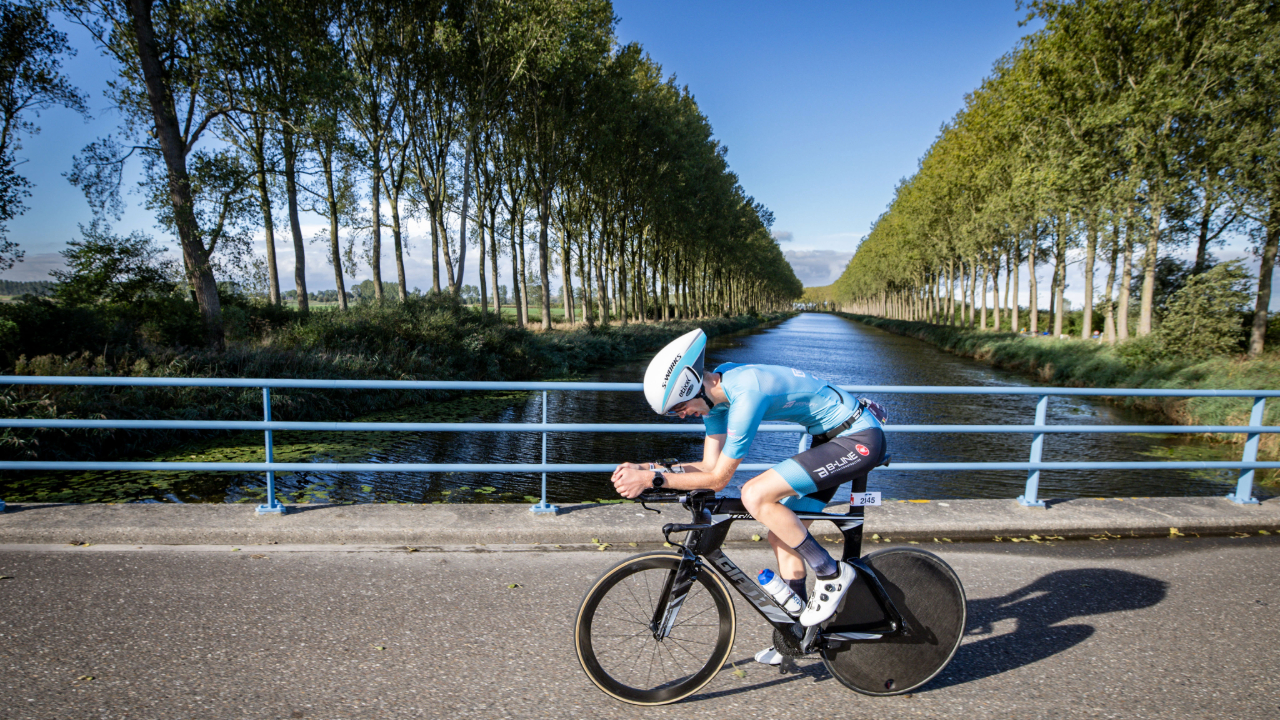


Big gear training can improve cycling strength by requiring you to produce more force during each pedal stroke while riding at a lower cadence. Rather than spinning quickly in an easier gear, you use greater resistance and maintain a controlled effort for a set period. For triathletes, this type of training is mainly useful for developing cycling specific muscular endurance. It can prepare the legs to maintain force during long rides, sustained climbs, headwinds, and demanding sections of a race. Big gear work should not mean selecting the hardest possible gear and grinding at an extremely low cadence. Excessive resistance can reduce pedaling quality, create unnecessary fatigue, and place more stress on the knees. The best approach is controlled resistance, a deliberately lower cadence, and an intensity that allows you to maintain stable technique. Big gear sessions should complement normal endurance, cadence, threshold, and race specific training rather than replace them.
In Short
- Big gear training uses higher resistance.
- Cadence is usually lower than normal.
- Force per pedal stroke increases.
- It develops cycling specific muscular endurance.
- It can prepare you for sustained climbs.
- It may help with headwind riding.
- Technique should remain smooth.
- Extremely low cadence is unnecessary.
- Knee discomfort is a reason to reduce resistance.
- Big gear work should complement normal cycling.
What Is Big Gear Training?
Big gear training means deliberately riding in a harder gear at a lower cadence than you would normally choose.
A typical interval might involve:
- Moderate intensity.
- Lower cadence.
- Steady resistance.
- Controlled upper body.
- Smooth pedal strokes.
The purpose is not simply to make cycling feel difficult. You are increasing the force required during each pedal stroke while keeping the overall effort controlled. Understanding what is cycling cadence in a triathlon provides useful context because big gear work intentionally moves away from your normal preferred cadence for a specific training purpose.
How Does It Build Cycling Strength?
Cycling requires repeated muscular contractions rather than one maximal strength effort. Big gear intervals increase the force demand of each pedal stroke.
This places greater emphasis on muscles involved in cycling, including the:
- Quadriceps.
- Glutes.
- Hamstrings.
- Calves.
Repeated controlled efforts can improve your ability to continue producing force as the session progresses. This is better described as cycling specific muscular endurance than maximal strength.
Big Gear Training Develops Torque
Torque describes the rotational force applied to the drivetrain. When cadence falls while resistance increases, each pedal stroke generally requires greater force. Big gear work therefore allows you to practice producing higher torque repeatedly.
This can be useful when:
- Climbing.
- Accelerating.
- Riding into headwinds.
- Riding rolling terrain.
- Maintaining speed under resistance.
However, higher torque does not mean you should always race in a large gear.
The training stimulus and your preferred race cadence are separate considerations.
It Can Help With Sustained Climbing
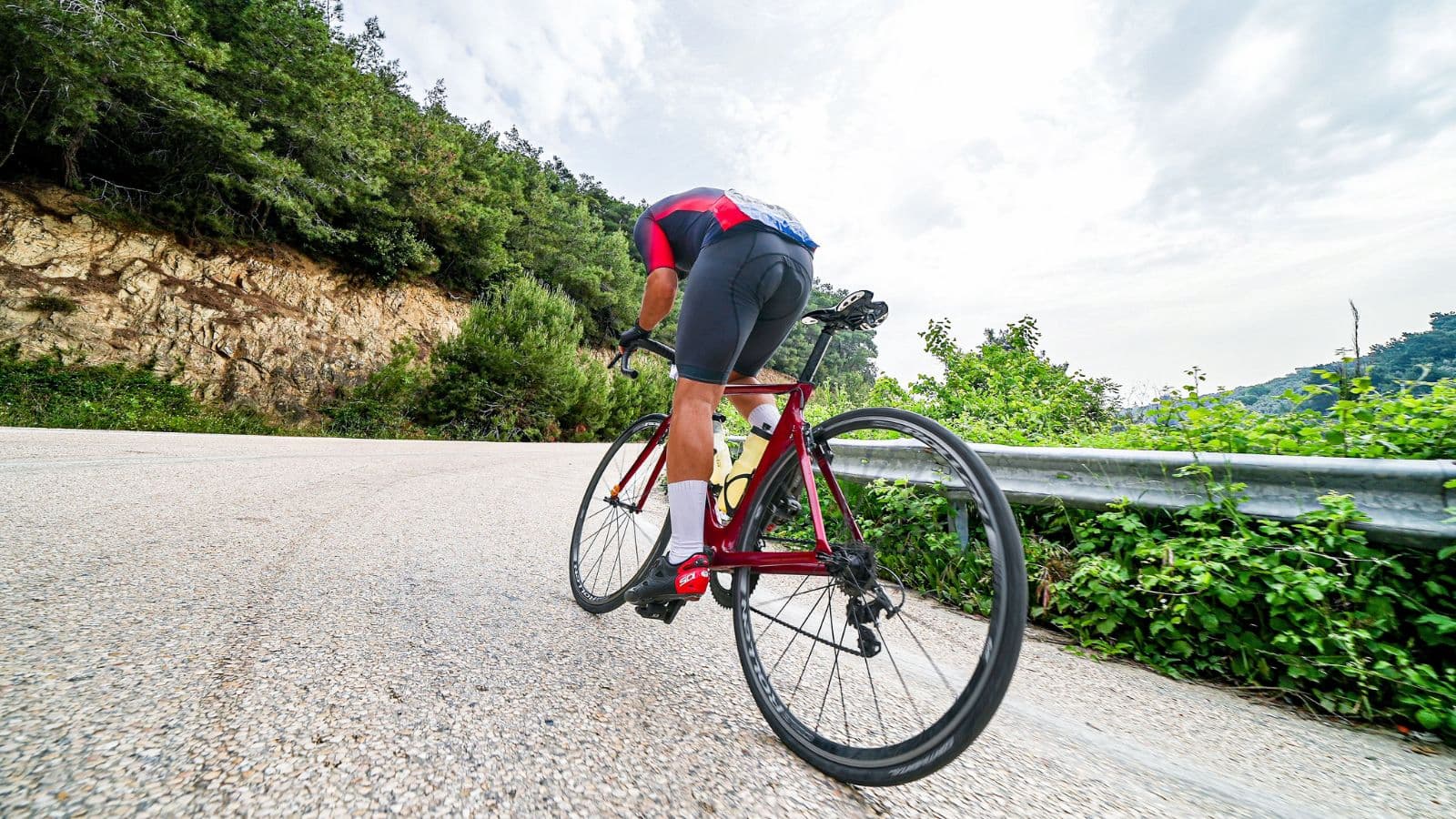
Climbing often requires more force through the pedals, particularly on steeper gradients. Big gear training can prepare your legs for this demand even when you do not have access to long outdoor climbs. A controlled trainer session can simulate some of the muscular demands of climbing without needing mountainous terrain. You still need appropriate outdoor skills, and when should you climb seated vs standing on a bike can help you decide how to manage different gradients during real rides.
Big Gear Work Can Prepare You for Headwinds
A strong headwind increases the resistance you experience while moving forward. Many cyclists respond by pushing harder while allowing cadence to fall. Big gear training can make sustained resistance feel more familiar. However, the goal in a headwind is not necessarily to preserve your normal speed. Using how to ride in headwinds and crosswinds on a bike can help you manage effort and position instead of wasting energy fighting to maintain a fixed pace.
How Low Should Your Cadence Be?
There is no single correct cadence for every big gear workout.
The cadence should be low enough to increase muscular demand but not so low that you:
- Rock excessively on the saddle.
- Lose smooth pedaling.
- Strain through every revolution.
- Develop knee discomfort.
- Cannot maintain the planned intensity.
Moderately reduced cadence is usually sufficient.
Extremely low cadence does not automatically create a better training effect.
What Should a Big Gear Workout Look Like?
A simple session could include:
- Easy warm up.
- Several controlled low cadence intervals.
- Easy spinning between efforts.
- Normal cadence riding afterward.
- Easy cool down.
For example, a triathlete might perform several blocks of 4 to 8 minutes at a controlled moderate intensity.
As fitness develops, progression can come from:
- Slightly longer intervals.
- More repetitions.
- Less recovery.
- More total work.
Do not increase every variable at once.
Keep Your Upper Body Stable
Big gear riding should not involve wrestling with the bike.
During seated intervals, aim for:
- Relaxed shoulders.
- Stable hips.
- Controlled trunk.
- Smooth pedaling.
- Consistent breathing.
If your body rocks from side to side, the resistance may be too high. Efficient force production matters more than simply turning over the hardest gear available. The strength principles in what strength training helps cyclists ride faster can complement this work by developing force away from the bike as well.
Big Gear Training Is Not the Same as Strength Training
Big gear cycling and gym based strength training provide different stimuli. Heavy resistance exercises can develop maximal force production more directly. Big gear intervals develop the ability to apply force repeatedly within the specific movement of cycling.
Triathletes may benefit from combining:
- Cycling specific work.
- Appropriate gym strength.
- Aerobic endurance.
- Higher intensity cycling.
You do not need to choose only one method.
Can Big Gear Training Improve FTP?
Big gear work is not automatically an FTP workout. The effect depends on the intensity and duration of the intervals. If performed near threshold, the session may also provide a substantial aerobic stimulus. If performed at moderate intensity, the focus may be more strongly on muscular endurance. For athletes specifically targeting threshold development, how to increase your cycling ftp provides a more direct framework for structuring training.
Combine It With Normal Cadence Work
Do not complete all cycling at low cadence simply because big gear sessions feel productive.
Normal cadence riding remains important for:
- Race specificity.
- Comfortable endurance riding.
- Efficient pedaling.
- Higher intensity sessions.
You can also use cadence changes within the same workout.
For example:
- Low cadence interval.
- Easy recovery.
- Normal cadence interval.
- Repeat.
This gives your legs experience producing power through different movement speeds.
Do Not Ignore Aerobic Endurance
Strong legs alone are not enough for long course triathlon. You still need the aerobic capacity to continue producing useful power for several hours. Easy endurance riding develops the foundation that supports harder and more muscular cycling work. Following how to build an aerobic base for triathlon cycling ensures that big gear intervals are added to a strong endurance program rather than used as a substitute for one.
Big Gear Training and Race Specific Fitness
Big gear training can be especially useful when your race includes:
- Long climbs.
- Rolling terrain.
- Exposed windy roads.
- Repeated changes in resistance.
As race day approaches, combine muscular endurance work with sustained race intensity. Using how should cycling workouts change for different race distances can help determine how much emphasis to place on strength, endurance, and higher intensity work for your event.
Be Careful With Knee Discomfort
High resistance combined with low cadence increases the force required at the pedals.
If you experience knee pain:
- Reduce resistance.
- Increase cadence.
- Check your bike setup.
- Stop the interval if pain continues.
Do not treat joint pain as evidence that the workout is effective. If knee discomfort repeatedly appears during cycling, how to prevent your knees from hurting during long cycling can help you examine training load, cadence, and bike fit.
How Often Should You Do Big Gear Training?
There is no universal frequency. For many triathletes, occasional big gear intervals within a structured cycling plan are enough.
Frequency depends on:
- Training experience.
- Race demands.
- Current cycling volume.
- Strength training.
- Recovery.
- Other hard sessions.
Avoid placing demanding big gear sessions immediately around every hard run or bike workout.
Big Gear Work Should Not Become a Race Strategy
A workout can deliberately use low cadence to create a training stimulus. That does not mean you should deliberately grind a huge gear throughout a triathlon. Race cadence should allow you to produce sustainable power without creating unnecessary muscular fatigue. This is especially important because you still need to run afterward. Using how should you pace the bike to run better in a triathlon can help keep cycling strength from becoming an excuse to overbike.
Common Mistakes
- Selecting an excessively hard gear.
- Using extremely low cadence.
- Rocking on the saddle.
- Ignoring knee discomfort.
- Turning every ride into big gear training.
- Starting intervals too hard.
- Confusing muscular endurance with maximal strength.
- Ignoring aerobic training.
- Using low cadence simply to chase higher resistance.
Practical Tips
- Warm up at normal cadence first.
- Reduce cadence gradually.
- Keep resistance controlled.
- Maintain stable hips.
- Keep pedaling smooth.
- Recover with easier spinning.
- Increase workload gradually.
- Stop if knee pain develops.
- Combine big gear work with normal cadence riding.
Actionable Takeaways
- Use big gears to develop cycling specific muscular endurance.
- Keep cadence low but controlled.
- Prioritize smooth force production over extreme resistance.
- Combine muscular work with aerobic and race specific training.
Big gear training can also complement how can interval training improve triathlon cycling speed when different interval types are used across a balanced cycling program.