

Descending is one of the most intimidating parts of triathlon cycling for many athletes. While some riders gain free speed and conserve energy on descents, others lose time through excessive braking, poor positioning, or lack of confidence. Strong descending skills are not just about going faster—they are about staying controlled, efficient, and safe while maintaining momentum.
In triathlon, efficient descending can significantly improve overall bike performance without increasing effort. The key is learning how to manage speed, body position, braking, and confidence effectively.
Why Descending Matters in Triathlon?
Many triathletes focus heavily on climbing and power output but overlook technical riding skills. However, descents are often where athletes lose the most free speed. Riders who brake excessively or tense up waste energy and disrupt rhythm.
Efficient descending helps:
- Maintain momentum
- Conserve energy
- Reduce braking losses
- Improve overall bike split
- Increase confidence on technical courses
This becomes especially important in longer races where maintaining efficiency matters, similar to strategies discussed in pacing and fueling the bike leg in a triathlon, where smooth effort management improves performance across the entire race.
Why Many Triathletes Struggle With Descending?
Most descending problems come from fear and lack of practice rather than fitness limitations. Riders often become tense at higher speeds, which reduces bike control and confidence.
Common issues include:
- Braking too aggressively
- Poor cornering technique
- Looking too close to the front wheel
- Holding excessive upper-body tension
- Entering descents too cautiously or too aggressively
The good news is that descending confidence can improve quickly with structured practice.
Start With Better Bike Positioning
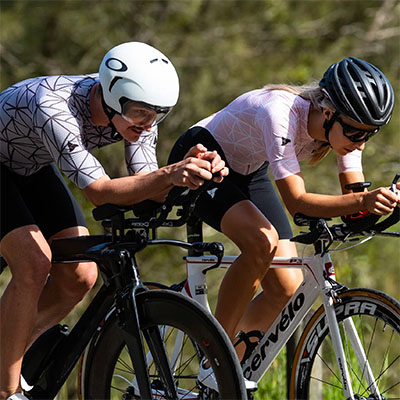
Body position plays a major role in descending safely and efficiently. A stable position improves control and aerodynamics while reducing unnecessary tension.
Key positioning tips include:
- Keep elbows slightly bent
- Relax your shoulders and hands
- Lower your centre of gravity slightly
- Stay balanced over the bike
A relaxed, controlled posture allows the bike to move naturally underneath you instead of fighting against it.
Look Further Ahead on Descents
One of the biggest mistakes riders make is staring directly in front of the bike. This limits reaction time and increases anxiety.
Instead:
- Look further down the road
- Focus through corners rather than at them
- Scan ahead for hazards or road changes
Your bike naturally follows your line of vision. Looking ahead improves smoothness and confidence significantly.
Brake Smoothly and Early
Braking technique is one of the biggest differences between confident and nervous descenders. Sudden braking mid-corner reduces traction and destabilises the bike.
The safest approach is to:
- Brake before entering corners
- Release brakes gradually into the turn
- Use smooth, controlled pressure
Efficient braking preserves momentum and improves stability. This type of control is also essential in improving bike handling and cornering confidence, where smooth movement and timing improve overall efficiency.
Trust the Bike More
Modern road and triathlon bikes are capable of handling far more speed and lean angle than many athletes realise. Most descending issues are caused by rider tension rather than lack of grip.
Learning to trust your tires, brakes, and body positioning allows smoother movement and better control. Confidence develops gradually through repetition and experience.
Use the Right Line Through Corners
Cornering lines affect both speed and safety during descents.
A smoother line usually means:
- Entering wide
- Apexing naturally through the corner
- Exiting smoothly
This reduces sharp steering inputs and helps maintain momentum. Smooth lines are more efficient and require less braking.
Stay Relaxed at Higher Speeds
Tension is one of the biggest enemies of descending confidence. Tight arms and shoulders make steering less stable and reduce bike responsiveness.
Relaxed riders react more naturally and maintain better control at speed. Breathing steadily and loosening your grip on the bars can immediately improve descending comfort.
Practice Descending in Controlled Situations
Descending confidence improves through repetition, not theory alone.
Find safe, quiet descents and gradually practice:
- Cornering technique
- Braking control
- Body positioning
- Speed management
Start conservatively and increase confidence progressively over time. Consistent practice builds skill and trust naturally.
Understand Weight Distribution
Keeping weight balanced correctly improves traction and stability.
Avoid sitting too upright or shifting excessively backward. Instead:
- Keep pressure balanced between wheels
- Stay stable through corners
- Allow the bike to lean naturally beneath you
Proper balance improves grip and predictability on technical descents.
Use Aerodynamics Without Sacrificing Control
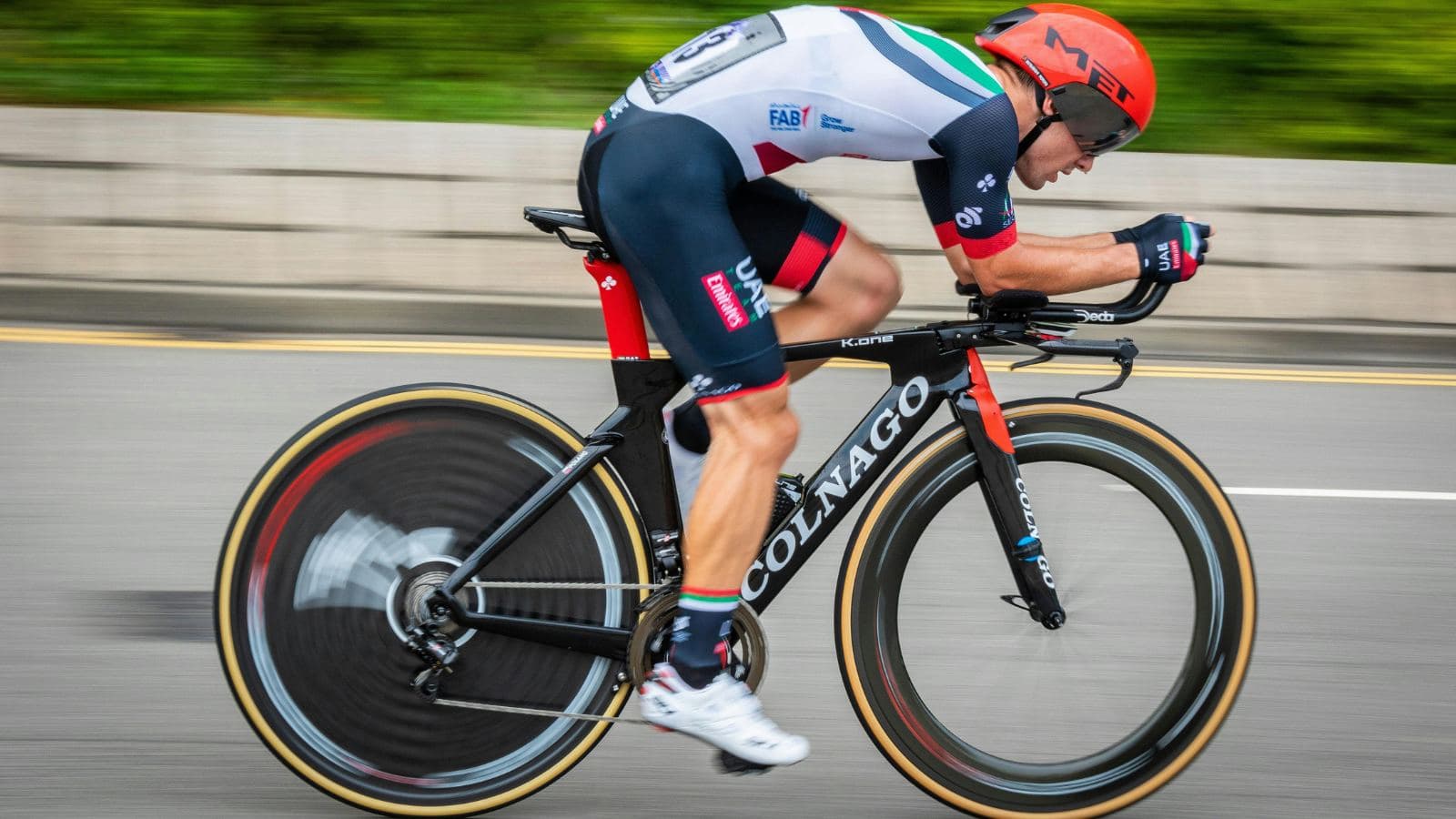
Aerodynamics matter on descents because speed increases quickly. However, aggressive aero positioning should never reduce bike control.
Stay aerodynamic where appropriate, but prioritise stability and braking access on technical sections. Efficient positioning helps conserve energy, similar to strategies discussed in becoming a more efficient cyclist, where smooth riding reduces wasted effort.
Adapt to Weather and Road Conditions
Descending safely depends heavily on road conditions. Wet roads, gravel, painted lines, and strong winds all reduce traction and increase risk.
In difficult conditions:
- Brake earlier
- Reduce cornering speed
- Avoid sudden movements
- Stay extra smooth with inputs
Adapting intelligently is more important than trying to maintain maximum speed. This becomes particularly important in challenging environments, similar to techniques discussed in avoiding dead legs after the bike, where bike control and stability are critical.
Build Confidence Through Consistency
Confidence comes from repeated successful experiences. Riders who avoid descending practice rarely improve because fear remains unfamiliar and unchallenged.
Gradual exposure helps descending feel more natural over time. Even small improvements in confidence can significantly improve race-day performance.
Train Core and Stability Strength
Strong core muscles improve bike stability during fast descents. Better stability allows smoother control and reduces unnecessary upper-body movement.
Strength and mobility training also help maintain posture under fatigue during long races. This is especially useful in endurance events, similar to approaches discussed in how to train for a winter triathlon, where strength and resilience support overall performance.
Avoid Common Descending Mistakes
- Braking heavily during corners
- Looking directly at the front wheel
- Holding excessive upper-body tension
- Entering descents too aggressively
- Ignoring road conditions
Avoiding these mistakes improves both speed and safety significantly.
Practical Tips to Descend Faster and Safer
- Look ahead instead of down
- Brake before corners rather than during them
- Stay relaxed and balanced
- Practice descending regularly
- Use smooth cornering lines
- Adapt to weather and road conditions
What You Should Do?
Start by practicing descending on familiar roads where you feel safe and comfortable. Focus on smooth braking, relaxed posture, and looking ahead rather than trying to increase speed immediately.
As confidence improves, gradually expose yourself to more technical descents and different conditions. Supporting your descending skills with proper race preparation, like strategies discussed in how to reduce injury risk when increasing triathlon volume, helps you stay composed and efficient throughout the bike leg.
Descending well is not about being reckless. It is about riding with control, confidence, and efficiency so you can carry speed safely while conserving energy for the rest of the race.