

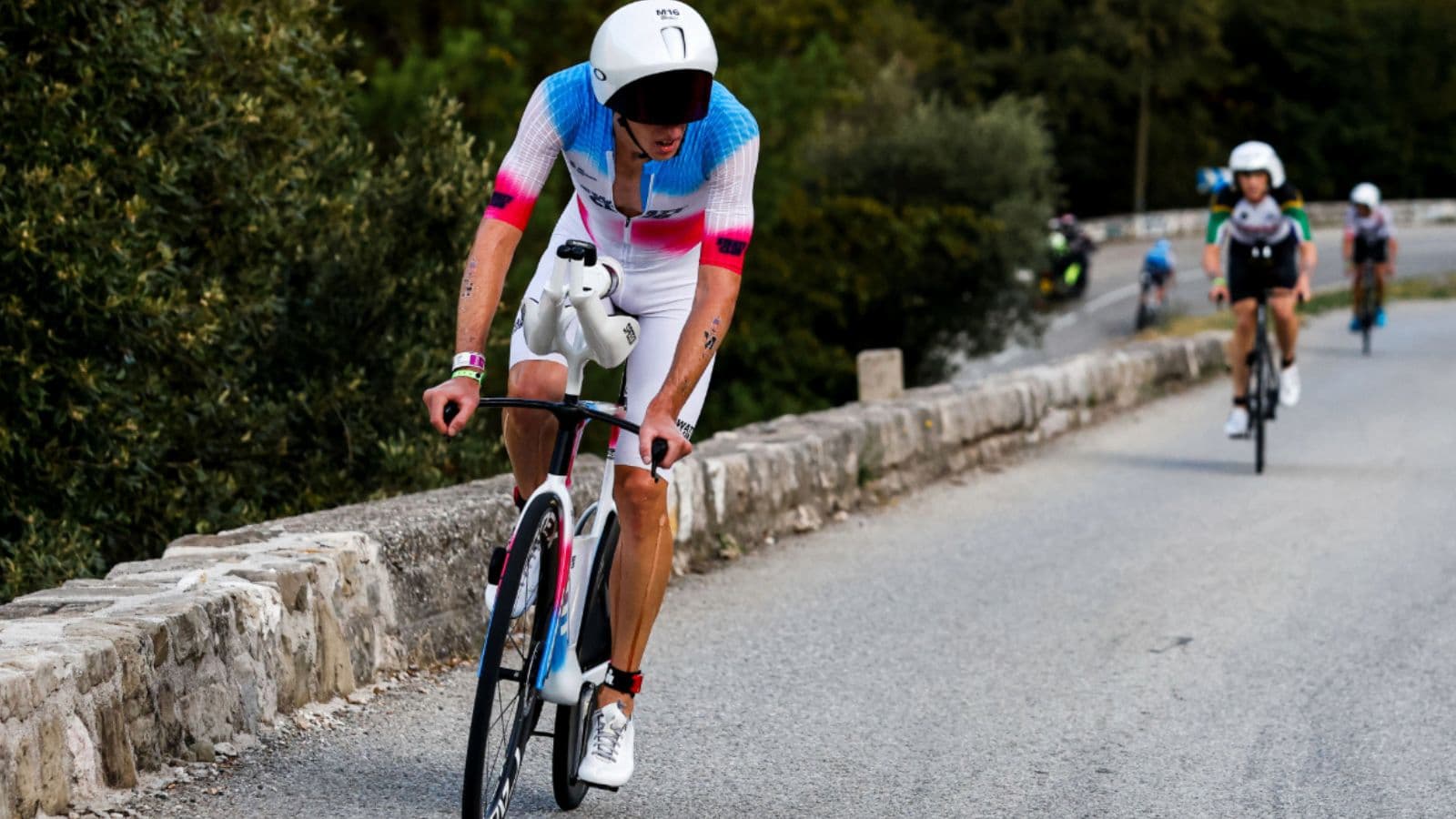
You can improve cycling acceleration by developing the ability to produce power quickly while using the right gear, cadence, and body position. Short acceleration intervals, strength training, cadence drills, and repeated practice leaving corners or low speed sections are the most useful ways to improve it. Acceleration is different from top speed. It describes how quickly you increase speed, such as going from 20 mph to 25 mph rather than simply holding 25 mph. For triathletes, efficient acceleration matters more than producing an all out sprint. Repeated unnecessary surges can consume energy that is needed later for the run. The aim is to accelerate smoothly and quickly when the course requires it, then return to a sustainable effort.
In Short
- Acceleration is how quickly you increase cycling speed.
- Producing more power can improve acceleration.
- Correct gear selection helps you apply power effectively.
- Very heavy gears can make acceleration slow.
- Very light gears can cause excessive cadence before useful speed develops.
- Short intervals can train rapid power production.
- Strength training can improve your ability to produce force.
What Determines Cycling Acceleration?
Acceleration depends largely on how much useful force you can apply to move the combined mass of you and your bike forward. On the road, the situation is more complicated because gradient, wind, rolling resistance, aerodynamics, gearing, speed, and momentum also influence how quickly the bike gains speed.
From a training perspective, the key factors are simpler:
- Power production.
- Gear selection.
- Cadence.
- Strength.
- Pedaling technique.
- Body position.
- Current speed.
- Terrain.
- Fatigue.
Improving how can triathletes increase the average cycling speed requires sustained performance, while acceleration emphasizes increasing speed quickly. Both abilities matter, but they should not be trained as though they are identical.
Choose the Right Gear Before You Accelerate
Gear selection can determine whether an acceleration feels smooth or awkward. If the gear is too hard, cadence can become very low and you may struggle to get the bike moving quickly. If the gear is too easy, your legs can spin rapidly before you generate enough speed. The best gear depends on your:
- Speed
- Gradient
- Strength
- The type of acceleration required
Anticipate the change whenever possible.
Cadence Matters During Acceleration
Cadence is the number of pedal revolutions completed per minute. During an acceleration, cadence generally rises as speed increases. You may then shift into a harder gear to continue building speed without spinning excessively fast. There is no single ideal acceleration cadence for every rider. The important skill is being comfortable producing power across a useful range. The principles in what is cycling cadence in a triathlon help explain why triathletes should develop cadence flexibility rather than forcing one exact number in every situation. Practice accelerating from different starting cadences so changes in speed feel natural.
Build Power With Short Acceleration Intervals
Short intervals are one of the most direct ways to improve acceleration. After a suitable warm up, accelerate strongly for a short period, then recover fully enough to produce another high quality effort. For example, an athlete might use several short accelerations lasting roughly 10 to 30 seconds. The exact duration and intensity should match the training goal and athlete’s experience. Quality matters more than accumulating large amounts of fatigue. Training based on how can interval training improve triathlon cycling speed can develop the ability to produce higher power, but acceleration-focused efforts should emphasize rapidly reaching the target output rather than simply surviving a long interval.
Practice Accelerating From Lower Speeds
Acceleration is highly dependent on the starting situation.
Concentrate on:
- Selecting the correct gear.
- Applying power without excessive upper-body movement.
- Increasing cadence smoothly.
- Shifting as speed rises.
- Settling quickly into the target effort.
These repetitions build practical acceleration skills without requiring every effort to become an all out sprint.
Strength Training Can Improve Force Production
Stronger muscles can help a cyclist generate the force needed for harder accelerations. Useful exercises commonly include:
- Squats
- Split squats
- Deadlift variations
- Step ups
- Other movements targeting the hips and legs
The goal is not simply to build larger muscles. Cyclists need strength they can apply efficiently on the bike. A structured approach to what strength training should cyclists do to ride faster in a triathlon can complement cycling specific acceleration work.
Strength training is particularly useful when performed consistently rather than added aggressively immediately before important races.
Improve Your Pedaling Technique
Acceleration can expose weaknesses in pedaling technique because force increases quickly. Avoid trying to consciously produce a perfectly circular pedal stroke. Instead, focus on stable contact with the pedals and smooth force application as cadence rises.
- Excessive bouncing
- Rocking
- Uncontrolled upper body movement
can make acceleration less efficient. Technique exercises from what cycling drills help improve triathlon bike technique can help develop coordination across different cadences and workloads. Your pedaling should remain controlled even when the effort becomes harder.
Know When to Accelerate Seated or Standing
You can accelerate both seated and standing. Seated acceleration usually provides a stable, aerodynamic position and can be useful when increasing speed progressively. Standing allows you to use body weight and upper body leverage during harder efforts. Neither option is always superior. A short, steep rise may encourage standing, while a gradual acceleration on flat terrain may be more efficient when seated. The same decision making described in when should you climb seated vs standing on a bike applies to acceleration: use the position that suits the:
- Gradient
- Intensity
- Traction
- Duration of the effort
Practice both so neither feels unfamiliar.
Carry Speed Through Corners
- The less unnecessary speed you lose, the less acceleration you need afterward. Braking too early or excessively before every corner means you must repeatedly spend energy rebuilding speed. Safe cornering is therefore part of good acceleration performance. Enter at a speed that allows you to: Maintain control
- Look through the turn
- Choose a predictable line
- Accelerate only when it is safe
Improving how can you improve downhill cycling can help develop better braking judgment, cornering confidence, and speed control.
Never sacrifice safety simply to avoid slowing down.
Improve Your Ability to Produce Higher Power
Cycling acceleration ultimately requires a temporary increase in power. Raising your general cycling power can therefore improve your ability to accelerate, even if acceleration itself is not the main focus of every workout. FTP is not a direct measurement of sprint acceleration, but stronger aerobic cycling performance gives you a better foundation for repeated efforts. Training aimed at how to increase your cycling ftp can improve sustained power, while shorter high-intensity work develops the ability to change speed more aggressively. Triathletes benefit from both rather than relying exclusively on sprint sessions.
Aerobic Fitness Helps You Repeat Accelerations
One acceleration is rarely the problem in a triathlon. The challenge is responding to repeated:
- Corners
- Short climbs
- Changes in wind
- Overtaking situations
- Variations in terrain
without accumulating excessive fatigue. A strong aerobic system helps you recover between these efforts. Building the foundation described in how do you build an aerobic base for triathlon cycling allows you to return to sustainable output more effectively after a surge.
This is particularly important in longer races, where dozens of unnecessary accelerations can become expensive.
Acceleration Into Headwinds Requires Control
Wind changes the cost of gaining speed. Accelerating hard into a headwind can require substantially more power because aerodynamic resistance increases as speed rises. Do not automatically fight to regain the same speed you would hold in calm conditions. The techniques in how to ride in headwinds and crosswinds on a bike help triathletes adjust effort and positioning when wind conditions change. Use power or perceived effort to control the surge rather than chasing speed regardless of conditions.
Do Not Accelerate Harder Than the Race Requires
Triathletes need to distinguish between useful acceleration and wasted power. An explosive surge out of every corner may feel fast, but it can repeatedly push effort far above sustainable race intensity. Instead, accelerate enough to return efficiently to target speed or power.
- Short course athletes may tolerate more aggressive changes in intensity.
- Long course triathletes generally benefit from smoother power delivery because preserving energy for later cycling and running matters more.
Good acceleration is not always maximum acceleration. It is the ability to reach the required speed quickly without spending more energy than necessary.
A Simple Acceleration Workout
After warming up thoroughly, a basic acceleration session could include:
| Set | Effort | Recovery | Focus |
|---|---|---|---|
| 4 to 6 reps | 10 seconds | 2 to 3 minutes easy | Fast, controlled acceleration |
| 4 reps | 20 seconds | 3 minutes easy | Build speed and shift smoothly |
| 3 to 4 reps | 30 seconds | 3 to 4 minutes easy | Strong acceleration into sustained power |
Beginners can start with fewer repetitions. These should be quality efforts rather than a session designed to create maximum exhaustion. Stop the set if power, coordination, or technique deteriorates substantially.
Common Mistakes
- Starting an acceleration in a gear that is too hard.
- Spinning an excessively easy gear without producing useful speed.
- Treating every acceleration as an all-out sprint.
- Shifting under extremely heavy pedal pressure.
- Allowing the upper body to move excessively.
- Practicing only seated acceleration.
- Practicing only standing acceleration.
- Braking unnecessarily and repeatedly rebuilding speed.
- Ignoring aerobic fitness while focusing only on sprint power.
Practical Tips
- Shift before you need to accelerate.
- Practice accelerations from several starting speeds.
- Keep short efforts focused on quality.
- Allow enough recovery between hard repetitions.
- Develop both seated and standing acceleration.
- Practice smooth shifting as cadence increases.
- Strength train consistently.
- Carry safe momentum through corners.
- Accelerate according to race demands rather than ego.
Actionable Takeaways
Cycling acceleration improves when you can rapidly produce useful power while selecting the correct gear and maintaining smooth technique. Short acceleration intervals provide the most specific training. Strength work, cadence practice, pedaling drills, aerobic development, and better cornering skills support that ability. Triathletes should not confuse acceleration with sprinting.
You rarely need maximum power every time speed drops. The better skill is quickly returning to an appropriate race speed or power without producing an unnecessarily expensive surge. Practice acceleration from realistic speeds, learn to shift smoothly as cadence rises, and develop both seated and standing techniques. When acceleration becomes controlled and repeatable, you can respond to corners, hills, overtaking, and changes in terrain without wasting energy needed later in the race.