
Choosing the right triathlon for your first race starts with finding an event that matches your current fitness, swimming ability, training time, and confidence. A shorter distance, manageable course, and supportive race environment can make your first experience more enjoyable and less stressful. Triathlons vary considerably in distance, terrain, swim conditions, and organization. Some events feature calm pool swims and flat roads, while others involve open water, challenging climbs, and more demanding weather conditions. For beginners, the biggest or most popular event is not necessarily the best choice. A well organized local sprint triathlon may provide a better introduction than a longer race that requires months of demanding preparation. The goal of your first triathlon should be to gain experience, understand how the three disciplines work together, and finish feeling confident about future races. Choosing an event that suits your abilities can help you prepare consistently and enjoy the process.
In Short
- Start with a manageable race distance.
- Consider your swimming confidence.
- Review bike and run course difficulty.
- Choose an event with suitable weather conditions.
- Allow enough time for training.
- Check race organization and safety arrangements.
- Consider travel costs and logistics.
- Prioritize a positive first race experience.
Understanding Triathlon Race Distances
Triathlon events come in several distances, each requiring different levels of preparation. For beginners, shorter races are generally more manageable because they involve less training volume and shorter race durations.
Common distances include:
| Race type | Swim | Bike | Run |
|---|---|---|---|
| Super sprint | Around 400m | Around 10km | Around 2.5km |
| Sprint | 750m | 20km | 5km |
| Olympic | 1.5km | 40km | 10km |
| 70.3 | 1.9km | 90km | 21.1km |
| Ironman | 3.8km | 180km | 42.2km |
Super sprint distances vary by event, and organizers may offer modified formats. Understanding triathlon distances explained: sprint, olympic, 70.3 and ironman can help beginners compare the demands of different events. For most first time triathletes, a super sprint or sprint distance is a practical starting point.
Choose a Distance That Matches Your Fitness
Your current fitness should influence your race selection. A strong runner may already feel comfortable covering the running distance but need more time to develop swimming and cycling skills.
Consider:
- Your ability to swim continuously.
- Your longest comfortable bike ride.
- Your current running endurance.
- Your experience combining disciplines.
- Your weekly training availability.
Understanding how do you know if you are ready for a triathlon can help you assess whether your fitness matches the demands of your chosen event. You do not need to be exceptionally fast, but you should be capable of preparing safely for every discipline.
Consider Pool Swimming Versus Open Water
Swimming is often the most intimidating part of a first triathlon. Some beginner events take place in swimming pools, while others use lakes, rivers, reservoirs, or the sea.
Pool swimming
Pool based events may offer:
- Controlled swimming conditions.
- Clear lane markings.
- No waves or currents.
- Familiar surroundings.
- Easier access to poolside support.
Open water swimming
Open water events introduce additional challenges, including:
- Limited underwater visibility.
- Water temperature changes.
- Waves and currents.
- Swimming near other competitors.
- Navigating around buoys.
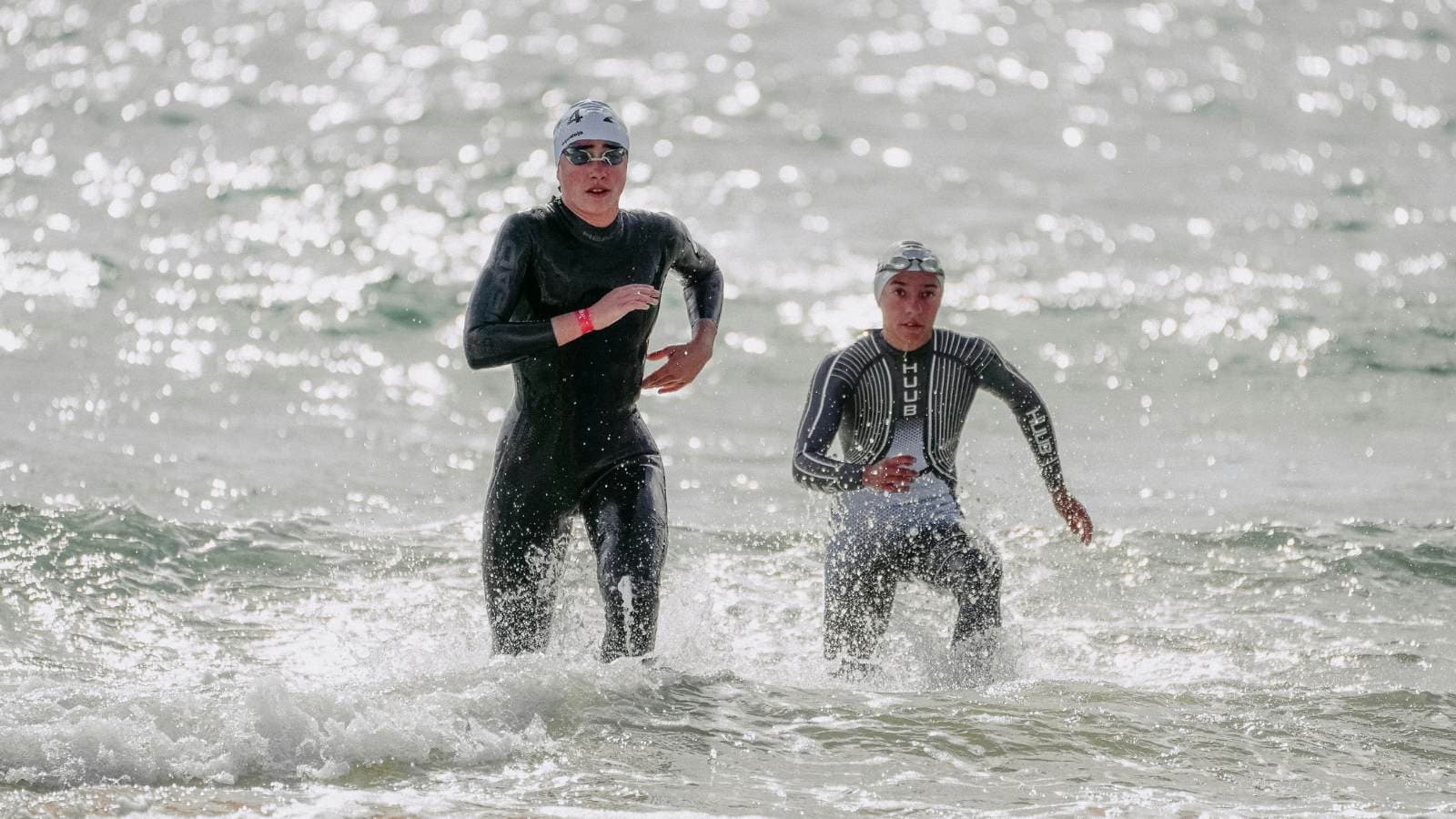
Understanding how to transition from pool swimming to open water for triathlon can help beginners prepare for these differences. If you are uncomfortable in open water, a pool based triathlon may be a better first choice.
Review the Swimming Course and Safety Arrangements
Before registering, examine the swim course information provided by the organizer.
Important details include:
- Water temperature.
- Expected water conditions.
- Swim start format.
- Wetsuit regulations.
- Safety support.
- Course navigation.
- Swim cut-off times.
A rolling start may feel less intimidating than a mass start because competitors enter the water in smaller groups or at intervals. Understanding how do you start an open water swim in a triathlon can help first time athletes prepare for the opening discipline. Always assess whether the swim conditions match your ability, rather than assuming every short swim is easy.
Check the Bike Course Difficulty
The cycling section can vary significantly between events. Some races use flat, closed roads, while others involve hills, sharp corners, technical descents, or sections shared with traffic.
Review:
- Total elevation gain.
- Road surface quality.
- Number of sharp turns.
- Traffic arrangements.
- Technical descents.
- Course distance.
- Bike cut-off times.
Understanding how can beginners improve their confidence on technical bike courses in a triathlon can help riders prepare for more demanding routes. A relatively flat course with straightforward navigation is often suitable for a first race.
Choose a Manageable Running Course
The run comes after swimming and cycling, which makes it different from a normal standalone running race. Even a familiar 5K distance can feel challenging after the bike leg.
Look for:
- Moderate elevation changes.
- Clearly marked routes.
- Suitable running surfaces.
- Available aid stations.
- Reasonable cut off times.
- Limited technical terrain.
Understanding how to improve your run off the bike can help beginners prepare for the transition between cycling and running. A flat run course may allow you to concentrate on pacing and completing your first triathlon comfortably.
Consider Weather and Race Conditions
Weather can affect all three triathlon disciplines. Hot temperatures increase the demands of hydration and temperature management, while cold conditions can make swimming and cycling uncomfortable.
Important factors include:
- Expected air temperature.
- Water temperature.
- Wind conditions.
- Rainfall.
- Humidity.
- Sun exposure.
Avoid choosing a race with extreme conditions unless you have appropriate experience and preparation. Historical weather patterns can provide useful guidance, but actual race day conditions may differ.
Allow Enough Time for Training
Your race date should provide sufficient time to prepare without rushing. Beginners need time to develop swimming confidence, cycling endurance, running fitness, and transition skills.
A general preparation guide might look like this:
| Starting experience | Possible preparation period |
|---|---|
| Already active in all three sports | 6–8 weeks for a short race |
| Comfortable in one or two disciplines | 8–12 weeks |
| New to endurance training | 12–16 weeks or longer |
These are broad examples rather than fixed requirements. Understanding how do beginners train for a sprint triathlon can help athletes organize their preparation. Choose a race date that allows gradual progression rather than forcing training into an unrealistic schedule.
Evaluate Race Organization and Support
A well organized event can make a significant difference to your first triathlon experience. Look for organizers that provide clear information and appropriate safety arrangements.
Useful features include:
- Detailed course maps.
- Clear race instructions.
- Medical and water safety support.
- Well marked transitions.
- Helpful volunteers.
- Accessible race briefings.
- Beginner waves or categories.
- Transparent cancellation policies.
Check previous participant feedback where available. An event with clear communication and straightforward logistics may be more suitable than a prestigious race with complicated arrangements.
Consider Location and Travel Requirements
Travel can add stress and expense to your first triathlon. A local event often makes preparation easier because you may be familiar with the roads, weather, and surrounding area.
Consider:
- Travel distance.
- Accommodation costs.
- Bike transportation.
- Parking.
- Race registration fees.
- Equipment requirements.
- Time needed before race day.
Choosing a nearby event may also allow you to practice sections of the course before racing.
Check Equipment Requirements
You do not need the most expensive triathlon equipment to complete your first race. Many beginner events allow standard road bikes, provided they meet the organizer’s rules.
Essential equipment generally includes:
- Suitable swimwear.
- Goggles.
- An approved cycling helmet.
- A roadworthy bike.
- Running shoes.
- Comfortable race clothing.
- Required race identification.
A wetsuit may be necessary, optional, or prohibited depending on water temperature and event rules. Understanding triathlon gear mistakes that every beginner triathlete should avoid can help you prepare without unnecessary purchases. Always check the event’s equipment regulations before registering.
Understand Race Cut Off Times
Some triathlons impose time limits for individual disciplines or the overall race. These limits are particularly important for beginners who expect to swim, cycle, or run at a comfortable pace.
Check:
- Swim cut-off time.
- Bike cut-off time.
- Overall race time limit.
- Transition time allowances.
- Rules for athletes who miss a cut off.
Estimate your expected completion time using realistic training paces. Choose an event with limits that allow you to race safely without feeling pressured to exceed your abilities.
Common Mistakes
- Choosing a race that is too long.
- Ignoring open water conditions.
- Underestimating course elevation.
- Registering without enough training time.
- Overlooking cut-off times.
- Choosing an event based only on popularity.
- Forgetting travel and equipment costs.
- Ignoring race safety information.
Practical Tips
- Start with a sprint or super sprint.
- Choose familiar swimming conditions.
- Review every course map.
- Check race cut-off times.
- Read organizer instructions carefully.
- Allow enough preparation time.
- Practice transitions before race day.
- Focus on completing your first event confidently.
Actionable Takeaways
- Choose a race that matches your current ability.
- Prioritize manageable courses and safe conditions.
- Allow enough time for training.
- Check equipment rules and race logistics.
- Make your first triathlon a positive experience.